
Real Heat, No Chimney Needed in Willow Grove.
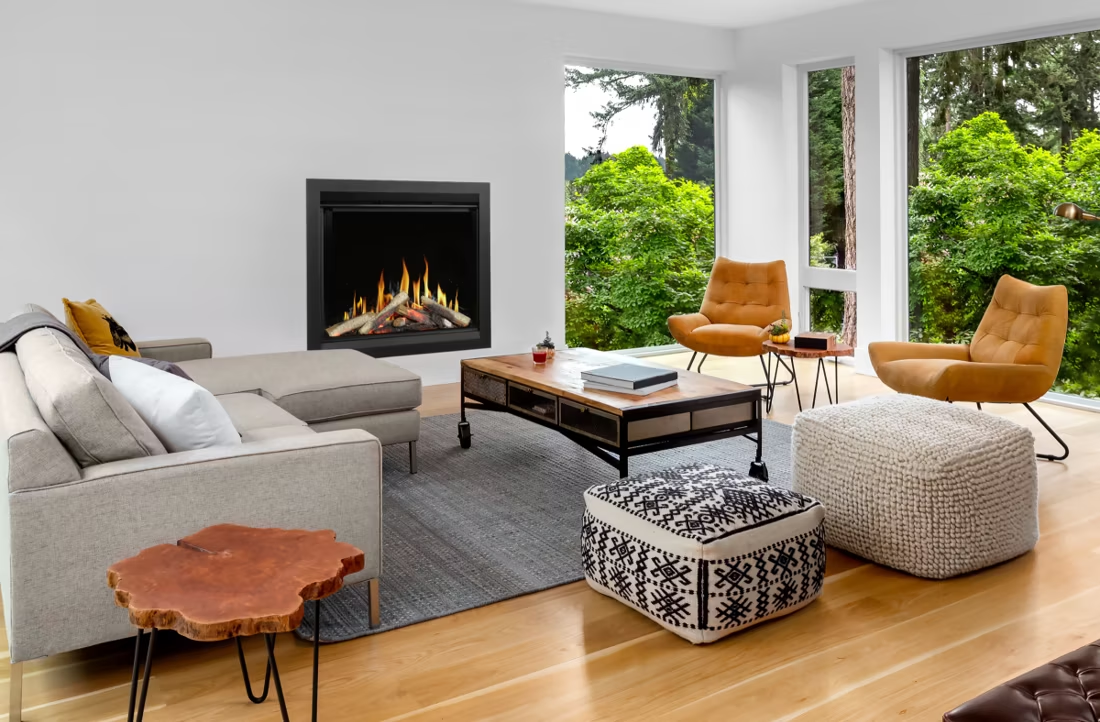
Electric fireplaces and inserts install in older Willow Grove homes without new gas lines, venting, or masonry work—just an outlet and a wall.
Every Project Starts From One of These Five Situations
The easiest upgrade for Montgomery County's older housing stock.
Willow Grove sits inside Upper Moreland Township in Montgomery County, at 323 feet elevation in climate zone 4A, with about 5,008 heating degree days a year and winter lows averaging 24°F. That's colder than a Mid-Atlantic city like D.C. but nowhere near the sustained cold of Burlington VT or Buffalo NY. Much of the housing stock here dates to the 1940s through 1960s—Cape Cods, brick Colonials, and twins—and a lot of them have an existing masonry fireplace that hasn't held a real fire in years, or no chimney at all.
PECO Energy Co serves the area at roughly $0.1474 per kWh, on the higher side for the region, which is worth knowing before you plan to run an electric heater as your main source of heat. Gas service is also standard in Willow Grove for homeowners chasing real BTU output, but electric fireplaces solve a different problem: no gas line, no venting, no chimney work—just a unit that mounts, slides into an existing firebox, or plugs in. That's why electric is the common answer in finished basements, converted dens, and older homes where relining a chimney or running new gas piping isn't worth the disruption.
Three steps. No salesperson until you're ready.
Tell us about your project
Your zip code, your situation, and the fuel you're leaning toward—or let the answers point you to one.
See what's actually available
The brands dealers within 100 miles genuinely carry—real options, never a catalog mirage.
Get your dealer & Project Guide
A trusted local dealer, plus the free Project Guide & Parts List that names every component of the job.
Frequently Asked Questions
How much does an electric fireplace installation cost in Willow Grove?
Plug-in freestanding units or simple inserts that slide into an existing firebox typically run $300 to $800 installed, since there's no venting or gas line to deal with—just outlet access. Built-in wall units or mantel packages that require framing and a dedicated circuit run $1,200 to $3,000 depending on the electrical work and finish carpentry. Converting an existing masonry fireplace in one of Willow Grove's older Colonials or Cape Cods into an electric insert with a custom surround usually lands between $1,000 and $2,500. Either way, costs stay well below gas or wood installs because there's no chimney or gas line involved.
Do I need a permit to install an electric fireplace in Willow Grove?
Most plug-in electric fireplaces need no permit at all—they don't alter structure or add wiring. Built-in units that require a new dedicated circuit or wall modification typically need an electrical permit through Upper Moreland Township's Building & Zoning Department. A licensed electrician usually pulls that permit as part of the installation, so it's rarely something the homeowner has to handle directly.
How much space can an electric fireplace actually heat?
A standard 1,500-watt electric fireplace puts out roughly 5,000 to 5,200 BTU, enough to noticeably warm a 300 to 400 square foot room as supplemental heat—a family room, a finished basement, or a bedroom. It's not meant to replace a furnace or heat pump in a 5,008-HDD climate like Willow Grove's, but it works well as a zone heater in the room you actually live in, especially on the many winter days here that sit in the mid-20s to low-30s rather than the deep cold you'd see in a place like Duluth MN.
What will an electric fireplace add to my PECO bill?
PECO Energy bills residential customers around $0.1474 per kWh in Willow Grove. A 1,500-watt heater run six hours an evening uses roughly 9 kWh, or about $1.33 a day—near $40 a month if it runs nightly through the winter. Many owners run the flame effect on its own most of the time; LED-only mode draws under 50 watts and costs pennies a day, which is part of why electric units get used as much for ambiance as for heat.
Will my electric fireplace still work if the power goes out?
No. Electric fireplaces run entirely on grid power, so when a nor'easter or ice storm knocks out PECO service, the unit shuts down with everything else in the house. Willow Grove homeowners who want heat that survives an outage typically pair an electric fireplace for daily ambiance and zone heat with a generator, battery backup, or a separate gas appliance for real emergency heat. Electric buys convenience and an easy install, not storm resilience.
Insert, built-in, or wall-mounted—which fits my Willow Grove home?
For the 1940s-to-1960s Cape Cods and Colonials common around Willow Grove that already have a masonry fireplace sitting unused, an electric insert that slides into the existing firebox opening is the simplest fix—no chimney relining, no gas line. For newer construction, a finished basement, or a room with no fireplace at all, a built-in wall unit or wall-mounted linear model gives more design flexibility, at the cost of some carpentry or an electrician running a new circuit. A local dealer can measure your exact opening and tell you which fits.
Gas vs. electric—which is right for my home?
Gas fireplaces put out real heat—20,000 to 30,000-plus BTU—enough to function as legitimate supplemental heat during Willow Grove's coldest stretches, and gas service is standard in the area. But adding one means running a gas line and venting. Electric skips all of that—mount it or plug it in and you're done—but tops out around 5,200 BTU and won't carry a room the way a vented gas unit will. Homeowners chasing genuine heat lean gas; homeowners wanting a fast, low-permit upgrade with realistic flame visuals lean electric. Wood and pellet stoves are uncommon on Willow Grove's tighter suburban lots, so most local decisions come down to this gas-versus-electric question.
How long do electric fireplaces last, and what maintenance do they need?
The heating element and blower typically last 10 to 15 years with normal use, and LED flame panels can run for decades before a bulb needs swapping. There's no chimney to sweep, no glass to reseal, and no combustion byproducts to vent—maintenance is mostly dusting the vents and occasionally replacing an LED strip. That low upkeep is a big reason electric inserts are popular in Willow Grove's older homes, where nobody wants to inherit chimney maintenance on a fireplace they were never going to burn real wood in anyway.
Can I put an electric fireplace in my finished basement or condo?
Yes—this is exactly the situation electric fireplaces are built for in Willow Grove. Townhouses, condos, and finished basements often have no chimney, no clearance for a wood or gas flue, and HOA or lease restrictions on anything requiring venting. A plug-in or built-in electric unit needs only wall or floor space and access to a standard outlet, or a dedicated circuit for larger built-ins, which sidesteps venting and gas-line restrictions entirely.
Does an electric fireplace need a vent or chimney?
No—that's its superpower. An electric fireplace needs a wall and an outlet, period. No vent pipe, no gas line, no clearances to design around, which is why it works in bedrooms, offices, apartments, and walls where venting a gas or wood unit would be impractical or impossible. Installation is typically the simplest and least expensive of any fireplace type.
Can I put a TV above my fireplace?
Yes—with an asterisk. Fireplaces are hot and TVs don't like heat. Either put a mantel between them to deflect rising warmth, or choose a fireplace with heat-management technology that creates a cool zone on the wall above—the wall stays around 125 degrees, barely warm, while the room still gets full heat. If you like clean lines and don't want a mantel, heat management is the answer.
Can a fireplace actually lower my heating bill?
Yes—by creating a comfort zone. A furnace heats every square foot of the house just to warm the one room you're in; a gas fireplace on low burns roughly a sixth of the gas a typical furnace does. Set the furnace around 55–60 degrees as a baseline, then heat the rooms your family actually uses. Families who heat this way commonly save $20–$60 a month.
How much should I budget for a fireplace?
For an average home—covering the fireplace, the vent pipe, and basic installation—a budget between $3,900 and $5,500 gives you a lot of options across wood, gas, and pellet. By the time you add finish work, gas line, and electrical, the average complete installation lands between $5,000 and $12,000 all-in. In a remodel or new build, a good rule is to put about 2.5% of the total project cost toward the fireplace.
Nearby Dealers
Hearth shops serving Willow Grove and the surrounding area. Every listing shows whether it is a WhyFire partner, a dealer we have verified as authorized for the brands we recommend, or a local business carrying hearth products. No manufacturer pays for placement. How we verify dealers →
Kester Fireplace
Maple Glen Mechanical
Ambler Fireplace And Patio
Estates Chimney & Fireplace
Hearth & Stove LLC
Norristown Chimney
Plumbarama Co. Inc.
Estates Chimney Sweep
Ambler Fireplace & Patio - Chalfont
E & E Stoves & Fireplaces
Sequoia Supply Hatfield Showroom
Tor Chimney & Fireplace
Better Homes Hearth & Patio
Tri County Hearth & Awning
Rattan Patio & Fireplace Shoppe
Electric Service in Willow Grove
An electric fireplace's heater draws about 1,500 watts—pennies per hour at local rates.
Peco Energy Co
Find your electric fireplace in Willow Grove.
Tell us about your home and we'll match you with a trusted local dealer and send a free Project Guide & Parts List—the exact unit, insert or mounting kit, and electrical requirements for your Willow Grove project.
Find Your Fireplace →