
Real Warmth, No Chimney Required in North Wales.
Zone heat and real ambiance for North Wales twins, rowhomes, and townhomes—no venting, no gas line, no masonry chimney needed. Find the right unit and connect with a trusted local dealer.
Every Project Starts From One of These Five Situations
No venting, no permits, no waiting on electric heat.
North Wales sits in climate zone 4A at 410 feet elevation, with winters averaging a 24°F low and about 5,008 heating degree days—cold enough to want supplemental heat in the evenings, but nowhere near the extremes that push homeowners toward wood or pellet as a primary heat source. A lot of the borough's housing stock is older twins, rowhomes, and Cape Cods built without a masonry chimney, plus newer townhome developments off Sumneytown Pike and Swedesford Road where HOA rules often restrict venting or exterior modifications entirely.
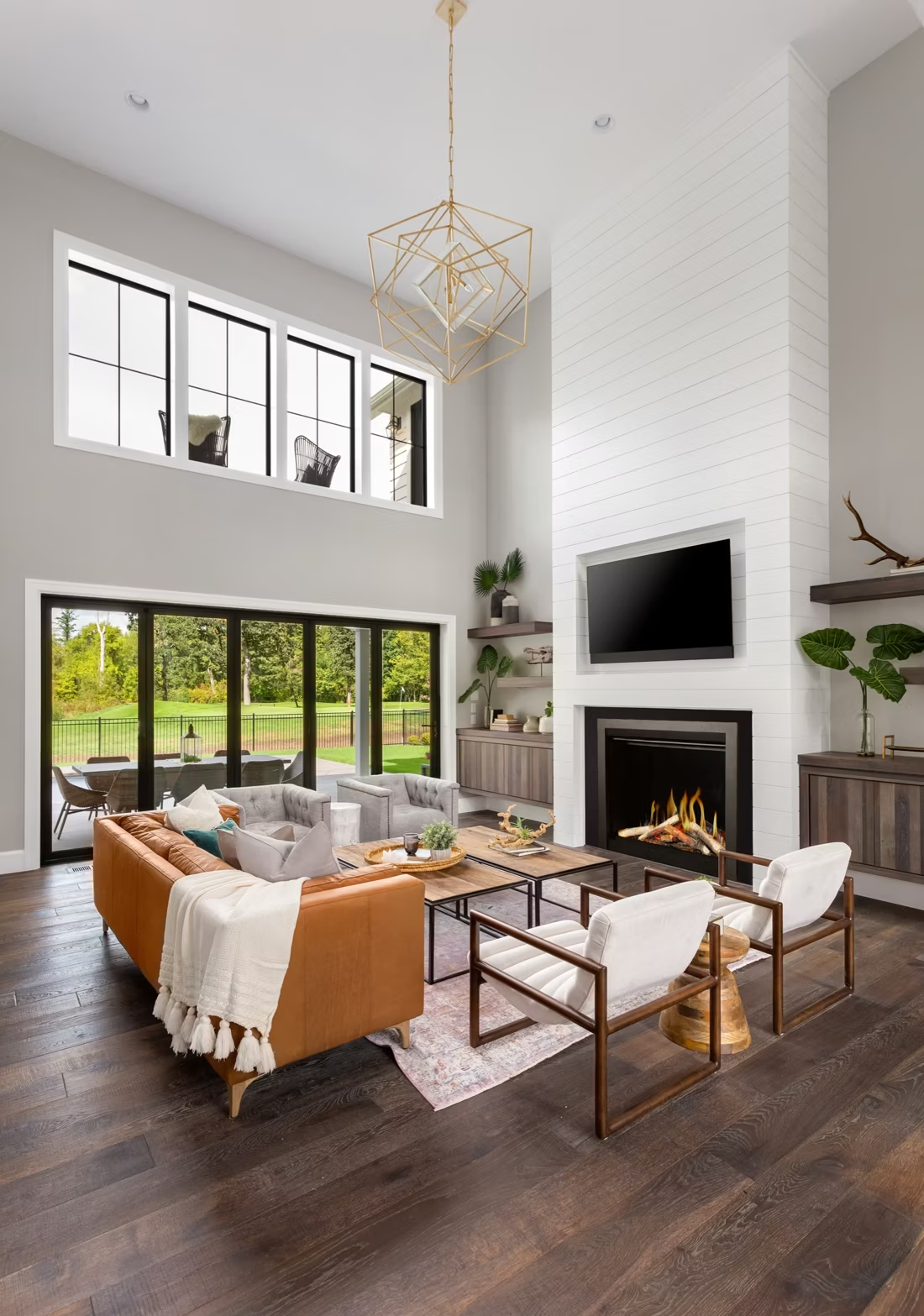
That's exactly where electric fireplaces do their best work. A wall-mounted linear unit or an insert that drops into an existing fireplace opening needs nothing more than a standard outlet or a dedicated circuit run by an electrician—no gas line, no chimney liner, no combustion byproducts to vent outside. PECO Energy serves North Wales at a residential rate around $0.1474 per kWh, which makes running the numbers on a supplemental heater straightforward before you buy, and it's one reason electric has become the default choice for finished basements, condos, and older homes here where retrofitting a chimney just isn't practical.
Three steps. No salesperson until you're ready.
Tell us about your project
Your zip code, your situation, and the fuel you're leaning toward—or let the answers point you to one.
See what's actually available
The brands dealers within 100 miles genuinely carry—real options, never a catalog mirage.
Get your dealer & Project Guide
A trusted local dealer, plus the free Project Guide & Parts List that names every component of the job.
Frequently Asked Questions
How much does it cost to install an electric fireplace in North Wales?
A plug-in freestanding or wall-mounted unit that runs off a standard 120V outlet is the cheapest path—often just the cost of the appliance itself, roughly $300 to $1,500, plus minor mounting labor if you're hanging it on the wall. Built-in models or larger units that need a dedicated 240V circuit run higher, typically $1,500 to $3,500 once you factor in an electrician running new wire from the panel. That last part matters in North Wales: many of the borough's older twins and rowhomes still have 100-amp electrical service, and a licensed electrician may need to confirm the panel has capacity before adding a dedicated circuit.
What does it actually cost to run an electric fireplace here?
With PECO Energy's residential rate around $0.1474 per kWh, a typical 1,500-watt electric fireplace costs about $0.22 an hour to run on the heater setting. Used for ambiance a few hours most evenings—say six hours a day through a cold stretch—that works out to roughly $1.32 a day, or about $35 to $45 over a winter month. Run on flame-only mode with the heater off, the draw is a few watts and the cost is negligible. That makes electric one of the cheapest supplemental heat sources to operate in North Wales, though it's not meant to replace your furnace on the coldest nights.
Do I need a permit to install an electric fireplace in North Wales?
A simple plug-in unit that uses an existing outlet doesn't require a permit. If your installer needs to run a new dedicated 240V circuit from your panel—common for larger built-in units—that electrical work does require a permit through North Wales Borough's codes office, and it needs to be pulled and inspected by a licensed electrician. There's no building or venting permit involved the way there is with wood or gas, which is one of the reasons electric installs move faster than other fuel types here.
Can I install an electric fireplace in my condo or townhome if my HOA restricts fireplaces?
In most cases, yes—electric is often the only fuel type HOAs in North Wales' newer townhome communities will approve without a fight, precisely because it doesn't touch the building's exterior, roofline, or shared gas lines. A plug-in or wall-mounted unit typically doesn't require HOA approval at all. If you're planning a built-in installation that involves cutting into a wall or adding a mantel surround, it's worth checking your association's architectural guidelines first, since those changes can fall under exterior or common-element review even when no venting is involved.
Can I convert my existing fireplace to electric?
Yes—this is a common project in North Wales' older Colonials and Cape Cods that still have a functioning masonry fireplace and chimney. An electric insert slides into the existing firebox opening without needing a liner, damper work, or any chimney modification, and it plugs into an outlet or a new outlet added inside the firebox. It's a popular option for homeowners who want the look of the mantel and hearth they already have without the ash cleanup, cordwood storage, or annual chimney sweep that oak and hickory burners require.
What's the best type of electric fireplace for an older North Wales home without a chimney?
For twins and rowhomes without an existing chimney, a wall-mounted linear electric fireplace is usually the easiest fit—it hangs like a large flat panel, needs zero clearance to combustibles on most models, and can go into a finished basement or a living room wall where framing a real fireplace would be impractical. Freestanding electric stoves are another option for a room that needs a self-contained heat source without any wall modification at all, which works well in North Wales' smaller rowhome floor plans.
Electric vs. gas—which makes more sense for a North Wales home?
Gas delivers more real heat output and can serve as a genuine backup heat source, which matters more in a climate with 5,008 heating degree days like North Wales. But gas requires a gas line, venting, and a building permit, and it's often restricted in townhome HOAs. Electric skips all of that—plug it in and it works—but it's realistically a supplemental or ambiance heater, not a primary heat source for the coldest weeks of the year. If your home is already on PECO's electric-only setup with no easy gas access, or you're in a unit where HOA rules limit venting, electric is usually the practical answer.
What size electric fireplace do I need for my room?
Most electric fireplace heaters are rated around 4,600 to 5,000 BTU (roughly 1,500 watts), which comfortably heats a single room of 400 to 1,000 square feet depending on insulation and ceiling height—plenty for a North Wales living room or finished basement rec room. Larger linear units and multi-room open layouts sometimes call for two heat zones or a unit with a higher-output heater. Since the heat output is capped by the electrical circuit rather than the flame size, a local dealer can walk through your room dimensions and recommend a wattage that actually keeps up rather than one chosen for the flame display alone.
How much maintenance does an electric fireplace need?
Very little compared to wood or gas. There's no chimney to sweep, no gas lines to inspect, and no ash or soot to clean up. Maintenance is mostly dusting the unit, occasionally cleaning the glass front, and replacing the LED flame bulbs every several years as they dim—most last 8,000 to 10,000 hours of use. Because there's no combustion involved, there's also no annual safety inspection required the way there is for wood stoves or gas inserts, which keeps the ongoing cost of owning one close to zero.
Can I put a TV above my fireplace?
Yes—with an asterisk. Fireplaces are hot and TVs don't like heat. Either put a mantel between them to deflect rising warmth, or choose a fireplace with heat-management technology that creates a cool zone on the wall above—the wall stays around 125 degrees, barely warm, while the room still gets full heat. If you like clean lines and don't want a mantel, heat management is the answer.
Do electric fireplaces actually produce heat?
Yes—most put out around 4,800–5,000 BTUs from a standard outlet, which comfortably warms a bedroom, office, or den as a comfort-zone heater. What they won't do is carry a whole house the way wood, gas, or pellet can. Think of electric as ambiance-first with honest supplemental heat: flames on with no heat in July, flames plus warmth in January.
Can a fireplace actually lower my heating bill?
Yes—by creating a comfort zone. A furnace heats every square foot of the house just to warm the one room you're in; a gas fireplace on low burns roughly a sixth of the gas a typical furnace does. Set the furnace around 55–60 degrees as a baseline, then heat the rooms your family actually uses. Families who heat this way commonly save $20–$60 a month.
Can I install a fireplace myself?
If you're putting a fire in your house on purpose, it's best to work with an expert. Unless you're genuinely experienced in framing, gas line, vent pipe, and the national code on clearances to combustibles, have a professional do it—and ideally the same company that sells you the fireplace, so warranty, service, and liability all live under one roof.
Nearby Dealers
Hearth shops serving North Wales and the surrounding area. Every listing shows whether it is a WhyFire partner, a dealer we have verified as authorized for the brands we recommend, or a local business carrying hearth products. No manufacturer pays for placement. How we verify dealers →
Ambler Fireplace And Patio
Ambler Fireplace & Patio - Chalfont
Norristown Chimney
Sequoia Supply Hatfield Showroom
Estates Chimney Sweep
Maple Glen Mechanical
Kester Fireplace
Tor Chimney & Fireplace
Independence Propane
Hearth & Stove LLC
Estates Chimney & Fireplace
Atlantic Building Prodcuts Inc
Pennsburg Ace Hardware
Tri County Hearth & Awning
Electric Service in North Wales
An electric fireplace's heater draws about 1,500 watts—pennies per hour at local rates.
Peco Energy Co
Find your electric fireplace in North Wales.
Tell us a bit about your home and we'll put together a free Project Guide & Parts List for your North Wales electric fireplace project, then match you with a trusted local dealer who can install it right.
Find Your Fireplace →