
Real Ambiance for Penn Wynne's Older Homes—No Chimney Required.
Electric fireplaces and inserts that drop into an existing firebox or basement wall—no venting, no gas line, no disruption to a Main Line home's plaster and stone. Find the right unit and connect with a trusted local dealer.
Every Project Starts From One of These Five Situations
The simplest way to add real warmth to an older home.
Penn Wynne is a small residential community within Lower Merion Township, tucked between Wynnewood and Overbrook on Philadelphia's Main Line. Most of the housing stock here dates to the 1920s through the 1950s—stone Colonials, Tudors, and center-hall homes with the kind of masonry fireplaces builders included as a matter of course, not because anyone expected them to carry the heating load. With average winter lows around 28°F and a winter heating season on the milder side, this is a moderate mid-Atlantic climate—nothing like the sub-zero stretches of Duluth or Fargo—but cold enough that a working fireplace still gets real use from November through March.
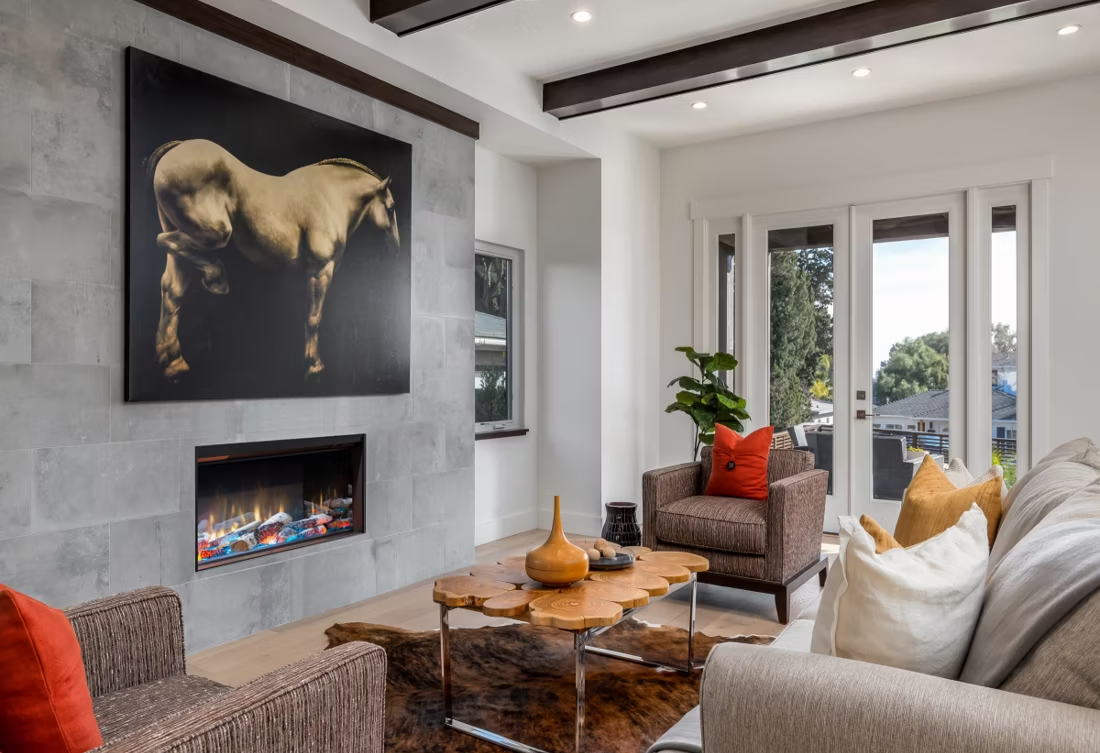
For homeowners here, electric fireplaces have become the practical answer to a specific set of local realities: narrow lots and finished basements where running new gas line or venting isn't simple, older 100-amp electrical services that make a full-scale hearth remodel a bigger project than it needs to be, and a housing stock where a masonry firebox already exists but nobody wants to deal with cutting, stacking, or permitting firewood in a township with no cutting-permit culture at all. PECO Energy serves the area at a residential rate of about $0.1474 per kWh, and a modern electric insert or wall unit gives Penn Wynne homeowners real supplemental warmth and the look of a fire without touching the chimney or the gas meter.
Three steps. No salesperson until you're ready.
Tell us about your project
Your zip code, your situation, and the fuel you're leaning toward—or let the answers point you to one.
See what's actually available
The brands dealers within 100 miles genuinely carry—real options, never a catalog mirage.
Get your dealer & Project Guide
A trusted local dealer, plus the free Project Guide & Parts List that names every component of the job.
Frequently Asked Questions
How much does an electric fireplace installation cost in Penn Wynne?
Most electric fireplace projects in Penn Wynne run $500 to $1,500 for a freestanding or plug-in insert that simply drops into an existing masonry firebox—no electrician required beyond confirming you're on a dedicated outlet. Built-in wall units or full mantle surrounds that need a new dedicated 20-amp circuit run higher, typically $1,800 to $3,500, once you factor in a licensed electrician and, in some of Lower Merion Township's older homes, a panel upgrade from a legacy 100-amp service. Local dealers will scope your home's existing electrical capacity before quoting a firm number.
Do I need a permit for an electric fireplace in Penn Wynne?
A plug-in freestanding unit that uses an existing outlet doesn't require a permit. But if you're installing a built-in wall unit or adding a new dedicated circuit, Lower Merion Township's Building & Planning Department requires an electrical permit, and the work needs to be done by a licensed electrician. Most local dealers coordinate this as part of the installation, so you're not left tracking down the paperwork yourself.
What does it cost to run an electric fireplace with PECO's rates?
PECO's residential rate runs about $0.1474 per kWh in this area. A typical electric fireplace heater draws around 1,500 watts on its highest heat setting, which works out to roughly $0.22 an hour of run time—a few dollars for an evening of use. That makes it an inexpensive way to add zone heat to a den or finished basement without running the whole-house system harder, though it's worth remembering that's supplemental heat, not a replacement for your furnace or heat pump on the coldest nights.
Electric vs. gas fireplace—which makes more sense for a Penn Wynne home?
Gas fireplaces put out significantly more real heat and work well in the many Penn Wynne homes that already have gas service for a furnace or water heater, but they require venting and, if you don't already have a gas line to the room, some plumbing work. Electric fireplaces skip all of that—no venting, no gas line, no combustion byproducts—which makes them the simpler retrofit for a finished basement, a bedroom, or an older stone Tudor where running new gas line means opening up plaster walls. If you want serious heat output, gas wins. If you want ambiance and modest supplemental warmth with the least disruption to an older home, electric is usually the better fit.
Can I put an electric insert into my existing masonry fireplace?
Yes, and it's one of the most common projects local dealers handle in this part of Lower Merion Township, where so many 1920s-1950s Colonials and Tudors came with a masonry firebox built in. An electric log or insert unit drops into the existing opening, uses your existing mantle, and plugs into a standard outlet or a new dedicated circuit if the unit calls for it—no chimney work, no liner, no sweep required, since there's no combustion happening at all.
What's the best electric fireplace option for a finished basement?
Built-in wall-mount units are popular for Main Line basement finishing projects because they don't need venting and can be framed directly into a stud wall like a flat-screen TV, which suits below-grade rooms where running a chimney or gas line isn't practical. A linear wall unit with a supplemental heater gives a finished basement real ambiance and a few thousand BTUs of zone heat, which is often exactly the boost a below-grade room needs given Penn Wynne's moderate winter heating season.
Will an electric fireplace actually heat a room in Penn Wynne's winters?
It will take the chill off, but it's supplemental heat, not primary heat. Most residential electric fireplace heaters are rated around 4,600 to 5,000 BTUs, enough to warm a single room a comfortable 8-10 degrees above ambient—useful on a 28°F average winter night, but not a substitute for your furnace or heat pump when temperatures really drop. Homeowners here typically run one in a den, home office, or basement to cut down on how hard the central system has to work in that space.
What happens to my electric fireplace during a power outage?
It goes dark along with everything else on the circuit—electric units have no battery backup and no standalone heat source, which is the main tradeoff against a wood-burning unit (uncommon in Penn Wynne's tight suburban lots and lack of any local cutting-permit infrastructure) or a battery-ignition gas fireplace. Montgomery County sees the occasional ice storm that knocks out power for a day or more, so if backup heat during an outage matters to you, that's worth discussing with a local dealer—some homeowners here pair an electric fireplace for daily ambiance with a portable generator or a battery-backed gas unit for true outage coverage.
Where can I find someone to install an electric fireplace near Penn Wynne?
Look for a hearth dealer who routinely works in Lower Merion Township, since older homes here often have legacy 100-amp electrical panels that need evaluating before a built-in unit goes in. A dealer familiar with the area's housing stock—stone Tudors, Colonials with existing fireboxes—can tell you quickly whether your project is a simple insert or one that needs an electrician and a permit. Find My Fireplace matches you with a trusted local dealer who already knows what Lower Merion's permitting process requires, rather than leaving you to figure it out with a big-box installer unfamiliar with the township.
Can I put a TV above my fireplace?
Yes—with an asterisk. Fireplaces are hot and TVs don't like heat. Either put a mantel between them to deflect rising warmth, or choose a fireplace with heat-management technology that creates a cool zone on the wall above—the wall stays around 125 degrees, barely warm, while the room still gets full heat. If you like clean lines and don't want a mantel, heat management is the answer.
Does an electric fireplace need a vent or chimney?
No—that's its superpower. An electric fireplace needs a wall and an outlet, period. No vent pipe, no gas line, no clearances to design around, which is why it works in bedrooms, offices, apartments, and walls where venting a gas or wood unit would be impractical or impossible. Installation is typically the simplest and least expensive of any fireplace type.
What is an in-home preview and do I need one?
It's a visit where a hearth professional measures your space, confirms the model you picked actually works in your home, and walks the specs—framing, gas line, venting, finish work—before anything is ordered. Some details you just can't know until you see the house. Never make a down payment without one; it's the single most-skipped step that burns buyers.
Can I install a fireplace myself?
If you're putting a fire in your house on purpose, it's best to work with an expert. Unless you're genuinely experienced in framing, gas line, vent pipe, and the national code on clearances to combustibles, have a professional do it—and ideally the same company that sells you the fireplace, so warranty, service, and liability all live under one roof.
Nearby Dealers
Hearth shops serving Penn Wynne and the surrounding area. Every listing shows whether it is a WhyFire partner, a dealer we have verified as authorized for the brands we recommend, or a local business carrying hearth products. No manufacturer pays for placement. How we verify dealers →
Norristown Chimney
Ambler Fireplace And Patio
Maple Glen Mechanical
Kester Fireplace
Comfort Home & Hearth
Halligan's Hearth And Home
Halco Grills And Fireplaces
Electric Service in Penn Wynne
An electric fireplace's heater draws about 1,500 watts—pennies per hour at local rates.
Peco Energy Co
Find your electric fireplace in Penn Wynne.
Tell us a bit about your home and we'll match you with the right electric fireplace or insert, plus a free Project Guide & Parts List—and connect you with a trusted local dealer who knows Lower Merion Township's permitting requirements.
Find Your Fireplace →