
Real warmth for Main Line homes without a chimney.
Ardmore's older twins, rowhomes, and condos weren't all built with working flues, and PECO Energy's grid makes plug-in warmth affordable. I'll match you with a trusted local dealer who knows what actually fits your house.
Every Project Starts From One of These Five Situations
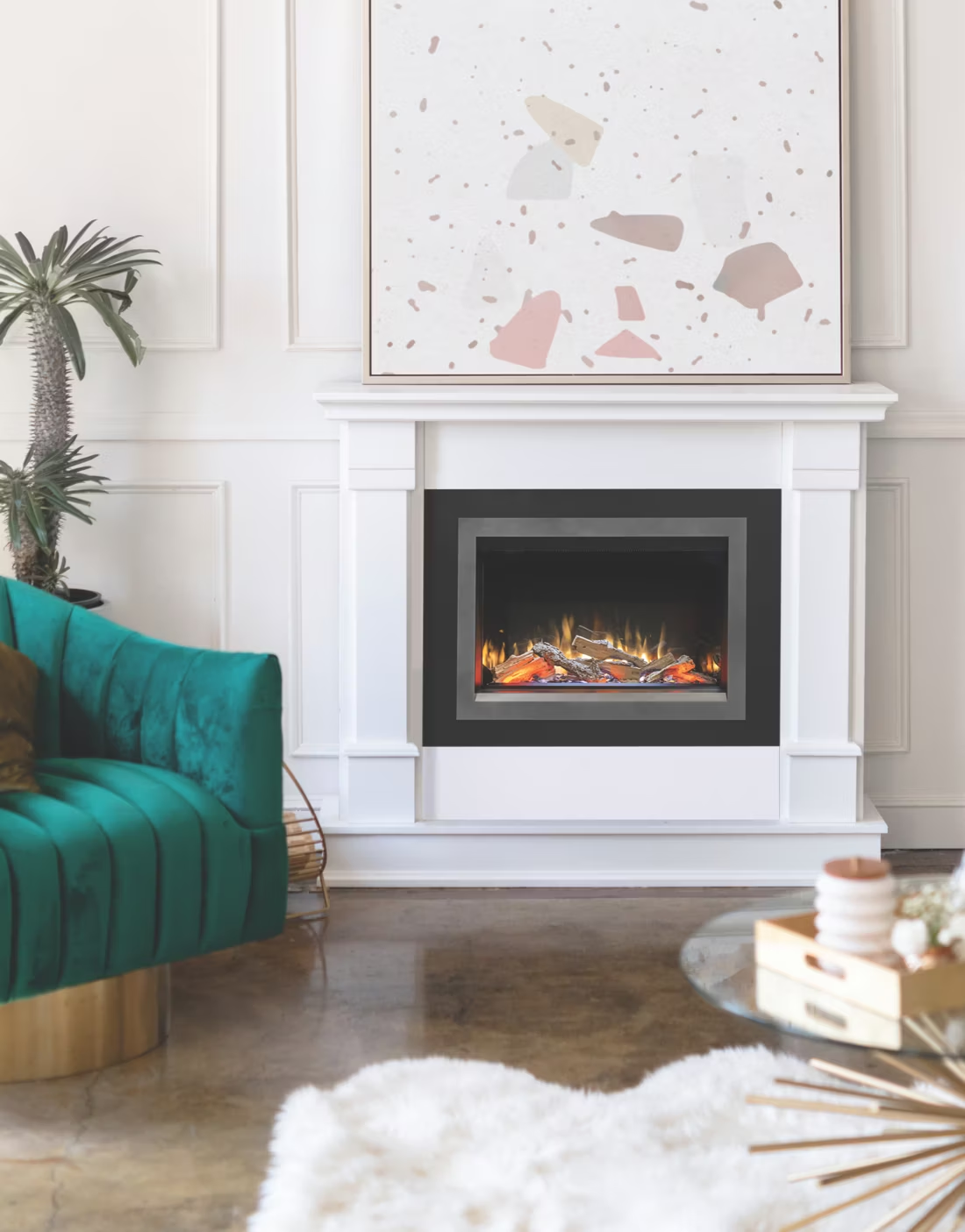
The easiest upgrade for older Main Line housing stock.
Ardmore sits at 313 feet in climate zone 4A, with an average winter low of 28°F and about 4,212 heating degree days a year—a real but moderate heating season, nowhere near what a place like Buffalo deals with, but still five or six months where supplemental heat in a bedroom, sunroom, or den gets used regularly. That mildness is part of why electric fireplaces have become the default choice for a lot of homeowners here rather than a niche one.
A large share of Ardmore's housing stock is early-1900s twins, rowhomes, and Main Line apartments and condos, many without a usable masonry chimney or with a flue that was capped decades ago. Cutting your own firewood isn't realistic this close to Philadelphia—there's no national forest permit office nearby the way there is in rural Pennsylvania—and bulk pellet delivery and storage, even with regional brands like Energex, Hamer Pellet Fuel, and Greene Team Pellet Fuel available elsewhere in the state, doesn't work well on a small Ardmore lot or in a condo unit. Electric sidesteps all of it: no venting, no gas line, no chimney, and at PECO Energy's residential rate of about $0.1474 per kWh, running one for zone heat in a single room costs a fraction of firing up whole-house heat.
Three steps. No salesperson until you're ready.
Tell us about your project
Your zip code, your situation, and the fuel you're leaning toward—or let the answers point you to one.
See what's actually available
The brands dealers within 100 miles genuinely carry—real options, never a catalog mirage.
Get your dealer & Project Guide
A trusted local dealer, plus the free Project Guide & Parts List that names every component of the job.
Frequently Asked Questions
How much does an electric fireplace cost to install in Ardmore?
A plug-in electric insert or freestanding unit typically runs $300 to $1,200 installed, since it just needs a standard outlet and a mounting bracket or a slide into an existing firebox opening. A built-in wall unit or a linear electric fireplace framed into new construction or a renovation costs more—often $1,500 to $3,500—because it usually calls for a dedicated 20-amp circuit run by a licensed electrician, plus finish carpentry around the unit. Older Ardmore twins with plaster walls and older panels sometimes need a panel upgrade too, which an electrician will flag during the estimate.
What size electric fireplace do I need for my Ardmore home?
Most electric fireplaces are rated to comfortably heat 400 to 1,000 square feet as supplemental heat, which lines up with how they're actually used here—warming a den, sunroom addition, or main-floor living area rather than replacing central heat. Given Ardmore's moderate 4,212 heating degree days, a mid-size 1,500-watt unit is usually plenty for a single room; you don't need the largest model on the floor unless you're trying to heat an open-concept space with high ceilings, which some of the newer Main Line construction has.
Do I need a permit for an electric fireplace in Ardmore?
A plug-in electric fireplace or insert that runs off an existing outlet doesn't need a permit. A built-in unit that requires a new dedicated circuit does need an electrical permit, which in Ardmore goes through Lower Merion Township's building and code department since Ardmore is unincorporated within the township. Most installers who do this work regularly pull the permit as part of the job, so it's worth confirming that's included before you sign a quote.
Why don't more Ardmore homes use wood or pellet stoves?
It comes down to the housing stock and the setting, not the winters being too mild. Many Ardmore twins and rowhomes never had a working masonry chimney, or it was capped when the home was converted to gas or oil heat decades ago, and reopening one is expensive. There's also no nearby national forest issuing cutting permits the way there is in rural parts of the state, so firewood isn't the cheap local resource it is elsewhere in Pennsylvania. Pellet stoves need bulk fuel storage—even with regional suppliers like Energex or Hamer Pellet Fuel selling into the broader market—that doesn't fit a small Main Line lot or a condo association's rules. Electric and gas end up being the practical options here.
How much does it cost to run an electric fireplace at PECO's rates?
At PECO Energy's residential rate of roughly $0.1474 per kWh, a typical 1,500-watt electric fireplace costs about 22 cents an hour to run on its heat setting. Used for five hours a night as supplemental warmth in a den or bedroom during Ardmore's cooler months, that's around $1.10 a day, or roughly $33 a month—far less than most homeowners expect, and one reason electric zone heating is a popular way to take some load off a furnace or heat pump.
Can I put an electric insert into my old, non-working fireplace?
Yes, and it's one of the most common Ardmore installs. Many older twins have a masonry firebox that hasn't functioned as a real fireplace in years—the flue capped, the damper rusted shut, or the chimney simply not up to current code for solid fuel. An electric insert slides into that same opening, plugs into a nearby outlet or a new dedicated circuit, and gives you the look and ambiance of a fire without touching the chimney at all. It's usually the lowest-disruption way to bring a dead fireplace back to life in a pre-war Main Line house.
Electric or gas—which makes more sense for an Ardmore home?
Gas fireplaces put out more real heat and can serve as a legitimate secondary heat source during a cold snap, which matters for some of Ardmore's larger, older homes with drafty rooms. Electric wins on simplicity: no gas line, no venting, and it works in a rental, a condo, or a unit where running new gas isn't practical or allowed by an association. For a homeowner who wants ambiance and light supplemental warmth without construction, electric is usually the easier, cheaper path; for someone actively trying to reduce reliance on their furnace, a trusted local dealer can walk through whether the gas option pencils out for your specific house.
How much maintenance does an electric fireplace need?
Very little compared to a wood or gas unit—there's no chimney to sweep and no burner to service annually. Most upkeep is wiping dust off the heating element and vents a couple times a season and occasionally replacing an LED ember bed light, which usually lasts years. It's a good fit for anyone who wants the look of a fireplace in an Ardmore rowhome or condo without adding an annual service call to the calendar.
Are there rebates available for electric fireplaces through PECO?
PECO's efficiency rebate programs are generally aimed at heat pumps, smart thermostats, and insulation upgrades rather than electric fireplaces specifically, since a fireplace is typically supplemental rather than primary heat. That said, using an electric insert to zone-heat a single room while keeping the thermostat lower elsewhere can meaningfully reduce whole-home electric or oil usage over a Main Line winter—worth mentioning to your utility or installer, since incentive programs do shift from year to year.
Does an electric fireplace need a vent or chimney?
No—that's its superpower. An electric fireplace needs a wall and an outlet, period. No vent pipe, no gas line, no clearances to design around, which is why it works in bedrooms, offices, apartments, and walls where venting a gas or wood unit would be impractical or impossible. Installation is typically the simplest and least expensive of any fireplace type.
Do electric fireplaces actually produce heat?
Yes—most put out around 4,800–5,000 BTUs from a standard outlet, which comfortably warms a bedroom, office, or den as a comfort-zone heater. What they won't do is carry a whole house the way wood, gas, or pellet can. Think of electric as ambiance-first with honest supplemental heat: flames on with no heat in July, flames plus warmth in January.
What is an in-home preview and do I need one?
It's a visit where a hearth professional measures your space, confirms the model you picked actually works in your home, and walks the specs—framing, gas line, venting, finish work—before anything is ordered. Some details you just can't know until you see the house. Never make a down payment without one; it's the single most-skipped step that burns buyers.
How much should I budget for a fireplace?
For an average home—covering the fireplace, the vent pipe, and basic installation—a budget between $3,900 and $5,500 gives you a lot of options across wood, gas, and pellet. By the time you add finish work, gas line, and electrical, the average complete installation lands between $5,000 and $12,000 all-in. In a remodel or new build, a good rule is to put about 2.5% of the total project cost toward the fireplace.
Nearby Dealers
Hearth shops serving Ardmore and the surrounding area. Every listing shows whether it is a WhyFire partner, a dealer we have verified as authorized for the brands we recommend, or a local business carrying hearth products. No manufacturer pays for placement. How we verify dealers →
Norristown Chimney
Ambler Fireplace And Patio
Maple Glen Mechanical
Kester Fireplace
Halligan's Hearth And Home
Comfort Home & Hearth
Halco Grills And Fireplaces
Ambler Fireplace & Patio - Chalfont
Electric Service in Ardmore
An electric fireplace's heater draws about 1,500 watts—pennies per hour at local rates.
Peco Energy Co
Get your free Project Guide & Parts List for an electric fireplace in Ardmore.
Tell me about your home—twin, rowhome, or condo—and I'll match you with a trusted local dealer and send a free Project Guide & Parts List sized to your space, with the exact unit and mounting parts your project needs.
Find Your Fireplace →