
No-vent warmth built for Rosemont's stone Main Line homes.
With winter lows averaging 23°F and a real but moderate heating season each year, Rosemont needs supplemental heat that doesn't require a chimney, a gas line, or a permit fight with the township. I'll match you with a vetted local dealer who knows exactly what fits your home.
Every Project Starts From One of These Five Situations
A village built in stone, not built for new venting.
Rosemont is a small, tightly built Main Line village of under 4,000 residents tucked into Lower Merion Township—a place of stone Colonial Revival and Tudor homes on modest lots near Rosemont College and Villanova, many with historic-district considerations that make exterior venting or new masonry work a genuine headache. Climate zone 4A here is milder than inland Pennsylvania—Rosemont's moderate winter climate and 23°F average winter low look closer to Philadelphia proper than to the harder winters you'd find in, say, Bismarck or Duluth—but the heating season is still real, and a lot of Rosemont homeowners want zone heat for a study, sunroom, or converted fireplace opening without touching the chimney.
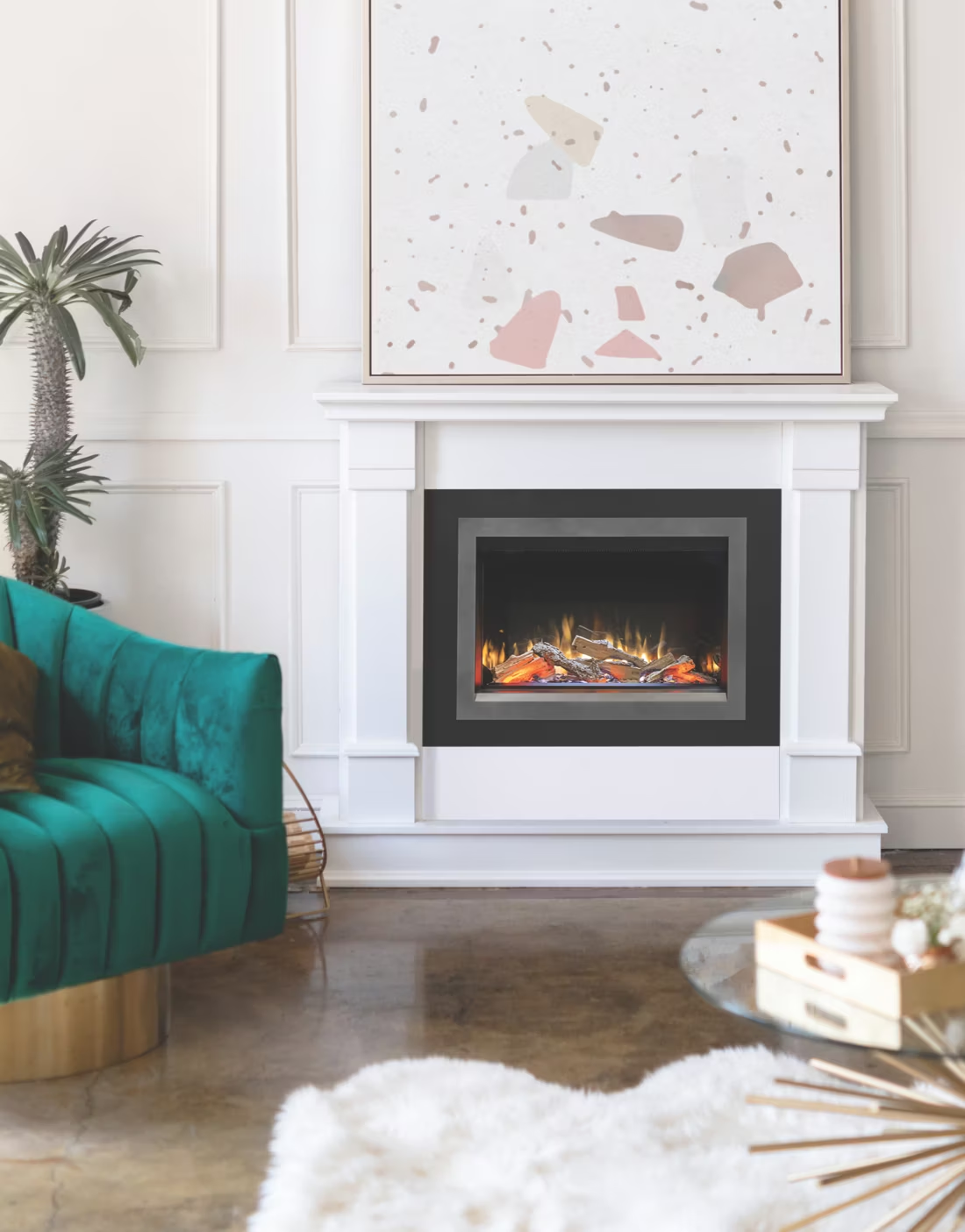
That's where electric fireplaces and inserts do their best work here: no flue, no gas line, no combustion byproducts to vent, and often no building permit at all for a plug-in unit. Electric service comes through PECO Energy Co at a residential rate around $0.1474 per kWh, which is dependable, grid-based, and doesn't ask you to store fuel on a small lot. Wood and pellet stoves, by contrast, are essentially absent from Rosemont's newer installs—there's no nearby cutting-permit infrastructure since this is a dense suburban village rather than a forested county, and most lots and historic facades aren't set up for a new chimney. A few grand older estate properties still have a working wood fireplace, but for the typical Rosemont home, electric and gas are what dealers are actually installing.
Three steps. No salesperson until you're ready.
Tell us about your project
Your zip code, your situation, and the fuel you're leaning toward—or let the answers point you to one.
See what's actually available
The brands dealers within 100 miles genuinely carry—real options, never a catalog mirage.
Get your dealer & Project Guide
A trusted local dealer, plus the free Project Guide & Parts List that names every component of the job.
Frequently Asked Questions
How much does an electric fireplace installation cost in Rosemont?
A plug-in electric insert dropped into an existing masonry firebox—common in Rosemont's older stone homes—typically runs $400 to $1,200 including a hearth pad and cosmetic surround work. A built-in wall unit for a remodel or new construction, which needs a dedicated 120V or 240V circuit run by an electrician, lands higher, often $1,500 to $2,500 depending on wall access and finish work. Because there's no venting or gas line involved, electric installs are consistently the fastest and least invasive option for the older homes around Rosemont College and the surrounding Main Line streets.
Do I need a permit to install an electric fireplace in Rosemont?
Usually not for a simple plug-in insert or freestanding unit—most jurisdictions, including Lower Merion Township, don't require a building permit for an appliance that just plugs into an existing outlet. If your installer needs to run a new dedicated circuit or open a wall for a built-in unit, that electrical work typically does need a permit through Lower Merion Township's Building & Planning Department. Given Rosemont's number of historic-district-adjacent properties, it's worth asking your dealer to confirm before work starts, especially if the home's exterior appearance is protected.
Can I convert my old wood-burning fireplace to electric?
Yes, and it's one of the more common projects in Rosemont's older stone housing stock, where many original fireboxes built for oak or hickory fires haven't been used in years and aren't code-current for wood burning anyway. An electric insert slides into that existing opening, uses the same footprint, and skips the chimney liner and clearance work a wood conversion would require. Most homeowners are surprised at how little demolition is involved compared to a gas insert conversion, since there's no gas line to run.
What size electric fireplace do I need for a Rosemont home?
Most electric units here are chosen for supplemental zone heat rather than whole-house heating, since Rosemont's winter climate is moderate compared to colder inland Pennsylvania towns. A 1,500-watt insert comfortably takes the chill off a single room—a sunroom, converted fireplace nook, or home office—in a typical Main Line house. For an open-concept living and dining area in one of Rosemont's larger stone homes, a dealer may recommend two smaller units or a wider linear model rather than one oversized unit, since electric heat output doesn't scale the way gas BTU output does.
Electric vs. gas fireplace—which makes more sense in Rosemont?
Both are genuinely standard choices here, and PECO serves the area for both electric and natural gas, so availability isn't the deciding factor. Gas gives you higher heat output and a more traditional flame, which matters if you want the fireplace to functionally heat a room during a cold snap. Electric wins on install simplicity and running cost predictability—no venting, no annual gas line inspection, and a fixed $0.1474/kWh rate you can calculate exactly. A lot of Rosemont homeowners choose electric for secondary rooms and reserve gas for the main living space if they're doing a fuller renovation.
Will an electric fireplace noticeably raise my PECO bill?
It's fairly predictable math. A standard 1,500-watt electric fireplace running on high draws 1.5 kWh per hour, which at PECO's residential rate of $0.1474/kWh works out to about 22 cents an hour, or roughly $1.75 for an 8-hour evening of use. Most owners run the heater intermittently and the flame-only mode essentially draws nothing, so the actual monthly bump is usually modest—well below what a comparable amount of gas or oil heating would cost for the same room.
Will an electric fireplace work with Rosemont's historic-district or HOA rules?
Generally, yes—that's a big part of why electric is popular here. Because there's no chimney, exterior vent, or flue termination required, an electric insert or built-in unit doesn't alter a home's exterior appearance, which matters in a village with as many protected stone and Tudor-style facades as Rosemont has. If your street or property falls under a historic overlay through Lower Merion Township, it's still worth a quick check before any exterior electrical work, but the fireplace itself typically isn't the issue that a new chimney or vent pipe would be.
How much maintenance does an electric fireplace need?
Very little compared to wood or gas. There's no chimney to sweep, no gas line to inspect, and no combustion byproducts to manage. Periodically dusting the heating element and vacuuming the vent grille keeps airflow clean, and LED flame components rarely need attention beyond an occasional bulb replacement on older models. For a Rosemont homeowner who wants ambiance and zone heat without an annual service call, that low-maintenance profile is one of the strongest arguments for going electric over a wood or gas alternative.
Why don't more Rosemont homes have wood or pellet stoves?
It comes down to Rosemont's density and layout more than climate—the winters here, while real, aren't extreme, and this is a tightly built village of stone homes on small lots rather than a wooded, rural area with nearby cutting-permit land. There's no local forest-service infrastructure for firewood permits the way you'd find further out in Pennsylvania, and adding a new chimney or pellet vent to a historic-adjacent facade is a harder sell than a vent-free electric or an existing gas line. A handful of larger older estates in the area still keep a working wood fireplace, but for most Rosemont households, electric or gas covers the need without the wood supply or venting hassle.
Does an electric fireplace need a vent or chimney?
No—that's its superpower. An electric fireplace needs a wall and an outlet, period. No vent pipe, no gas line, no clearances to design around, which is why it works in bedrooms, offices, apartments, and walls where venting a gas or wood unit would be impractical or impossible. Installation is typically the simplest and least expensive of any fireplace type.
Can I put a TV above my fireplace?
Yes—with an asterisk. Fireplaces are hot and TVs don't like heat. Either put a mantel between them to deflect rising warmth, or choose a fireplace with heat-management technology that creates a cool zone on the wall above—the wall stays around 125 degrees, barely warm, while the room still gets full heat. If you like clean lines and don't want a mantel, heat management is the answer.
Can a fireplace actually lower my heating bill?
Yes—by creating a comfort zone. A furnace heats every square foot of the house just to warm the one room you're in; a gas fireplace on low burns roughly a sixth of the gas a typical furnace does. Set the furnace around 55–60 degrees as a baseline, then heat the rooms your family actually uses. Families who heat this way commonly save $20–$60 a month.
What is an in-home preview and do I need one?
It's a visit where a hearth professional measures your space, confirms the model you picked actually works in your home, and walks the specs—framing, gas line, venting, finish work—before anything is ordered. Some details you just can't know until you see the house. Never make a down payment without one; it's the single most-skipped step that burns buyers.
Nearby Dealers
Hearth shops serving Rosemont and the surrounding area. Every listing shows whether it is a WhyFire partner, a dealer we have verified as authorized for the brands we recommend, or a local business carrying hearth products. No manufacturer pays for placement. How we verify dealers →
Norristown Chimney
Ambler Fireplace And Patio
Maple Glen Mechanical
Halligan's Hearth And Home
Halco Grills And Fireplaces
Kester Fireplace
Comfort Home & Hearth
Ambler Fireplace & Patio - Chalfont
Electric Service in Rosemont
An electric fireplace's heater draws about 1,500 watts—pennies per hour at local rates.
Peco Energy Co
Get your free Project Guide & Parts List for an electric fireplace in Rosemont.
Tell me about your room, your existing fireplace opening or wall, and your goals, and I'll match you with a trusted local Main Line dealer and send a free Project Guide & Parts List with the exact unit and parts your Rosemont home needs.
Find Your Fireplace →