
Add Warmth Anywhere, No Chimney Required.
Zone heat and real ambiance for Halfway House homes, without gas lines or masonry work. Find the right unit and connect with a trusted local dealer.
Every Project Starts From One of These Five Situations
Simple heat for a moderate Montgomery County winter.
Halfway House sits along the Schuylkill River corridor in Montgomery County, near Pottstown, at about 449 feet of elevation. Winters here average lows around 22 degrees, and the area sees a real, solidly cold heating season—but noticeably milder than places like Buffalo, NY, with its much longer, harsher winters. That combination makes electric a practical, standard option for homeowners here, not a novelty.
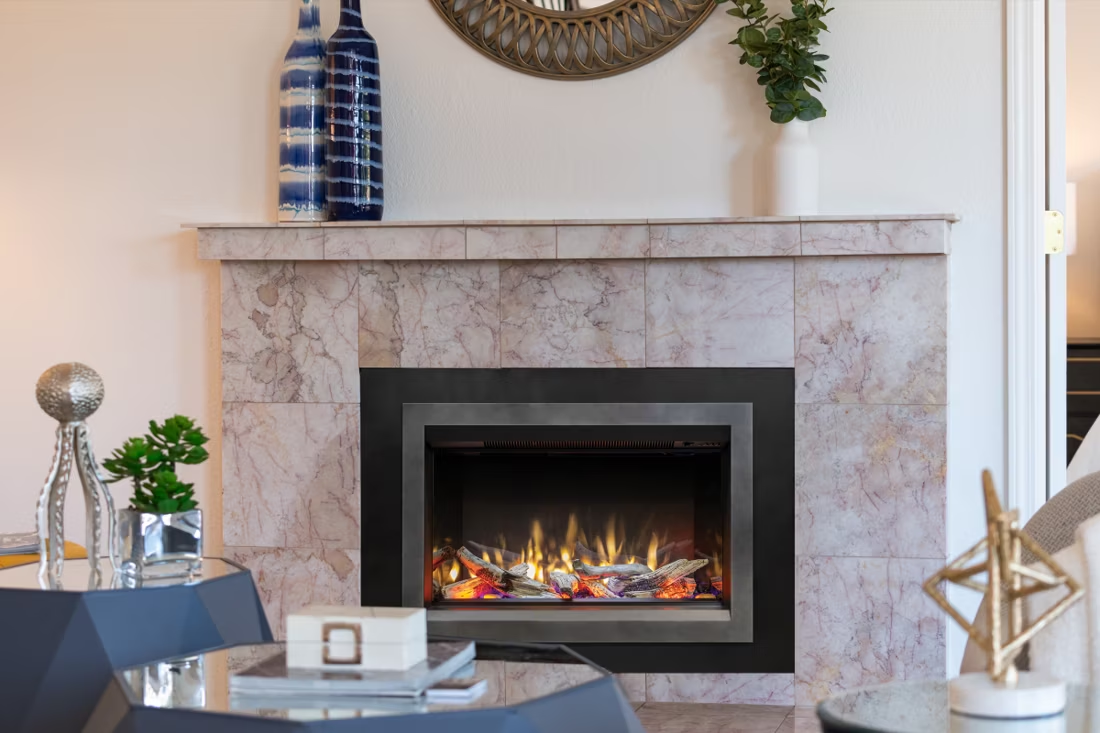
Electric fireplaces solve a specific problem: no chimney, no gas line, no venting to plan around. Metropolitan Edison Co serves the area at roughly $0.1545 per kWh, so a typical 1,500-watt electric insert costs about 23 cents an hour to run—cheap, targeted supplemental heat for a bedroom, den, or finished basement while the central furnace handles the rest of the house. That makes electric popular in Montgomery County townhomes, condos, and rental units where a masonry retrofit or new gas line just isn't practical or allowed by a lease.
Three steps. No salesperson until you're ready.
Tell us about your project
Your zip code, your situation, and the fuel you're leaning toward—or let the answers point you to one.
See what's actually available
The brands dealers within 100 miles genuinely carry—real options, never a catalog mirage.
Get your dealer & Project Guide
A trusted local dealer, plus the free Project Guide & Parts List that names every component of the job.
Frequently Asked Questions
How much does an electric fireplace installation cost in Halfway House?
Costs vary a lot by type. A plug-in freestanding or mantel unit runs $150 to $600 and needs no installation beyond an outlet. An electric insert that drops into an existing fireplace opening or a wall-mounted unit typically runs $300 to $2,500 installed, especially if it needs a dedicated 120V or 240V circuit run by an electrician. Full built-in units with custom framing and a mantel surround can reach $2,500 to $5,000. Since there's no venting or gas line involved, electric is consistently the least expensive fireplace fuel to install in this area.
Do I need a permit to install an electric fireplace in Halfway House?
Most plug-in electric fireplaces need no permit at all—they're treated like any other appliance you plug into a wall outlet. If your unit requires a new dedicated circuit or panel work, your electrician will typically pull an electrical permit through your local township building department as part of the job. There's no chimney, gas line, or combustion venting to inspect, which is part of why electric installs move faster than wood, gas, or pellet projects here.
Will an electric fireplace actually heat my home?
An electric fireplace is a zone heater, not a whole-home solution. Most units put out around 5,000 BTU (roughly 1,500 watts) and comfortably heat a single room of 300 to 400 square feet. With Halfway House facing a real, solidly cold heating season and winter lows around 22 degrees, your furnace or heat pump still needs to carry the whole house—the electric unit is best used to take the edge off a specific room, cut your thermostat setback in that space, or add ambiance without touching your primary heating system.
Electric vs. gas fireplace—which is right for my home?
Gas delivers more real heat output and can run during a power outage with the right ignition system, which matters for a Montgomery County winter. Electric costs far less to install, requires no gas line or venting, and can go almost anywhere on a standard outlet—attic apartments, condos, and rentals included. At Metropolitan Edison's residential rate of about $0.1545 per kWh, electric heat costs more per BTU than natural gas over a full winter, but for supplemental or ambiance use in one or two rooms, most Halfway House homeowners find the lower upfront cost and zero-venting install outweigh the higher per-hour running cost.
Electric vs. wood—which makes more sense here?
Montgomery County has good access to seasoned oak, hickory, maple, and cherry firewood, and a wood stove or insert delivers real radiant heat and works during a power outage—something an electric unit can't do since it needs power to run. But wood means chimney maintenance, ash cleanup, and cutting or buying cordwood. Electric skips all of that: no flue, no creosote, no smoke, and it can be installed in units where a chimney was never an option to begin with, like a second-floor bedroom or a condo. If backup heat during outages matters to you, wood or a battery-backed gas unit is the better call; if convenience and low maintenance matter more, electric wins.
What types of electric fireplaces are available?
There are four common formats: plug-in freestanding stoves that look like a traditional wood stove, wall-mounted units that hang like a flat-screen TV, inserts sized to slide into an existing masonry fireplace opening, and full built-in units framed into a wall with a custom mantel. For Halfway House homes with an existing fireplace you want to modernize, an insert is usually the simplest path. For homes or apartments without a fireplace at all, a wall-mount or freestanding unit gets you real supplemental heat and flame effect with no construction involved.
What does it cost to run an electric fireplace in Halfway House?
At Metropolitan Edison's residential rate of roughly $0.1545 per kWh, a typical 1,500-watt electric fireplace costs about 23 cents an hour on the heat setting, or a little over $2 for a full evening of use. Running it flame-only without heat draws far less power—usually under 100 watts—for pennies an hour. Compared to running a whole-house furnace longer to cover the same room, most homeowners find using an electric unit to heat one occupied room while setting back the thermostat elsewhere actually saves money over a winter.
Can I install an electric fireplace in a rental or condo in Halfway House?
Yes—this is one of the most common uses for electric fireplaces in Montgomery County. Because there's no venting, chimney, or gas line required, a plug-in or wall-mounted unit can go into an apartment, condo, or rental home without any structural changes or landlord-approved construction. Check your lease for any restrictions on wall-mounted units that require anchoring into drywall, but a freestanding electric stove needs nothing more than floor space and an outlet.
How much maintenance does an electric fireplace need?
Very little. There's no chimney to sweep, no creosote to worry about, and no annual inspection required the way gas and wood units need. Basic upkeep is dusting the unit, occasionally cleaning the interior fan or heating element per the manufacturer's manual, and replacing an LED bulb or fan motor if it eventually wears out after years of use. That low-maintenance profile is a big part of why electric is a popular choice for Halfway House homeowners who want fireplace ambiance without an ongoing service commitment.
Can I put a TV above my fireplace?
Yes—with an asterisk. Fireplaces are hot and TVs don't like heat. Either put a mantel between them to deflect rising warmth, or choose a fireplace with heat-management technology that creates a cool zone on the wall above—the wall stays around 125 degrees, barely warm, while the room still gets full heat. If you like clean lines and don't want a mantel, heat management is the answer.
Do electric fireplaces actually produce heat?
Yes—most put out around 4,800–5,000 BTUs from a standard outlet, which comfortably warms a bedroom, office, or den as a comfort-zone heater. What they won't do is carry a whole house the way wood, gas, or pellet can. Think of electric as ambiance-first with honest supplemental heat: flames on with no heat in July, flames plus warmth in January.
What is an in-home preview and do I need one?
It's a visit where a hearth professional measures your space, confirms the model you picked actually works in your home, and walks the specs—framing, gas line, venting, finish work—before anything is ordered. Some details you just can't know until you see the house. Never make a down payment without one; it's the single most-skipped step that burns buyers.
How much should I budget for a fireplace?
For an average home—covering the fireplace, the vent pipe, and basic installation—a budget between $3,900 and $5,500 gives you a lot of options across wood, gas, and pellet. By the time you add finish work, gas line, and electrical, the average complete installation lands between $5,000 and $12,000 all-in. In a remodel or new build, a good rule is to put about 2.5% of the total project cost toward the fireplace.
Nearby Dealers
Hearth shops serving Halfway House and the surrounding area. Every listing shows whether it is a WhyFire partner, a dealer we have verified as authorized for the brands we recommend, or a local business carrying hearth products. No manufacturer pays for placement. How we verify dealers →
Krings Hearth & Home - Bechtelsville
Independence Propane
Pennsburg Ace Hardware
A Chimney King
Halligan's Hearth And Home
Atlantic Building Prodcuts Inc
Scandia Stoves Of Pa Inc.
Sequoia Supply Hatfield Showroom
Norristown Chimney
Halco Grills And Fireplaces
Progressive Propane
Ambler Fireplace & Patio - Chalfont
Stoves N Stuff Ltd
Estates Chimney Sweep
Keystone Custom Decks
Ambler Fireplace And Patio
Sauder's Hardscape Supply
Electric Service in Halfway House
An electric fireplace's heater draws about 1,500 watts—pennies per hour at local rates.
Metropolitan Edison Co
Find your electric fireplace in Halfway House.
Tell us a bit about your space and we'll match you with the right electric fireplace or insert, plus a free Project Guide & Parts List with your recommended local dealer.
Find Your Fireplace →