
Instant heat, no chimney required, in Trappe, PA.
Zone heat that plugs into a wall outlet or a dedicated circuit—no flue, no gas line, no wood permit. Find the right unit for your Trappe home and connect with a trusted local dealer.
Every Project Starts From One of These Five Situations
Zone heat for a borough of tight lots and older homes.
Trappe is a small, dense Montgomery County borough of colonial-era homes, newer townhome developments near Collegeville, and lots that rarely leave room for a woodpile or a masonry chimney addition. With winters averaging 20 degrees and a solidly moderate heating season lasting into spring, the borough sees a real but moderate heating season—cold enough to want supplemental warmth in a family room or sunroom, not cold enough to require a whole-home wood-burning setup. That combination is exactly where electric fireplaces do their best work.
Because Trappe's older colonial homes and rowhome-style construction rarely have an existing chimney to convert, and many of the borough's newer developments carry HOA rules that rule out solid-fuel burning, electric is often the only fireplace option that can be installed without a permit fight or masonry work. PECO Energy serves the borough with reliable grid power, and at a residential rate of roughly 14.7 cents per kWh, running an electric insert for supplemental heat is inexpensive compared to retrofitting gas line or venting into a home that was never built for it.
Three steps. No salesperson until you're ready.
Tell us about your project
Your zip code, your situation, and the fuel you're leaning toward—or let the answers point you to one.
See what's actually available
The brands dealers within 100 miles genuinely carry—real options, never a catalog mirage.
Get your dealer & Project Guide
A trusted local dealer, plus the free Project Guide & Parts List that names every component of the job.
Frequently Asked Questions
How much does an electric fireplace installation cost in Trappe?
A plug-in electric insert or freestanding unit runs $300 to $1,500 for the unit itself and typically needs no professional installation beyond mounting—it plugs into a standard 120V outlet. A built-in wall unit or a larger insert that draws more than 1,500 watts often needs a dedicated 20-amp circuit, which adds $200 to $600 for an electrician depending on how far the panel is from the install location. Most Trappe projects, especially in the borough's older colonials, land in the $500 to $2,000 range all-in. A local dealer can tell you within a few minutes whether your planned spot needs new wiring.
Will an electric fireplace actually heat a room in a Trappe winter?
Yes, for the room it's in—but treat it as zone heat, not a whole-home solution. Most electric fireplaces put out 4,600 to 5,000 BTU (about 1,500 watts), enough to comfortably warm a 400 to 600 square foot space even when outdoor temperatures sit at the borough's typical 20-degree winter lows. They won't replace a furnace across a solidly moderate heating season lasting into spring of Montgomery County winter, but they're well suited to taking the chill off a sunroom, finished basement, or home office without running the central system harder than it needs to.
Do I need a permit to install an electric fireplace in Trappe?
Usually not for a plug-in unit—it's treated like any other appliance. If your installation requires a new dedicated circuit or panel work, that electrical work needs to be pulled by a licensed electrician and typically requires an electrical permit through Trappe Borough or Montgomery County, depending on your address. Built-in units set into a wall cavity may also need a basic building permit if framing is altered. Most local dealers coordinate this as part of the install so you're not chasing paperwork yourself.
What's the difference between an electric insert, a wall-mount unit, and a freestanding electric stove?
An electric insert is built to slide into an existing fireplace opening—a good fit if a Trappe colonial has an old masonry firebox that's no longer used for wood. A wall-mount or built-in unit is designed into new construction or a remodel, often flush with the wall for a modern look. A freestanding electric stove sits on the floor like a traditional wood stove but plugs in, which works well in townhomes or condos where there's no fireplace opening at all. All three run off standard household current—the difference is really about what opening, or lack of one, you're working with.
How much does it cost to run an electric fireplace with PECO rates?
At PECO's residential rate of about 14.7 cents per kWh, a typical 1,500-watt electric fireplace costs roughly 22 cents an hour to run on full heat. Most units let you run the flame effect alone, with the heater off, for pennies an hour—useful if you want the ambiance without the electric bill of a space heater. Compared to running a whole-house furnace to warm one room, an electric insert used a few hours a night in a den or sunroom is a modest add to a PECO bill, typically $10 to $25 a month in regular winter use.
Are electric fireplaces a good fit for Trappe's older colonial homes?
Often, yes. Many of Trappe's historic and colonial-style homes near the borough center have old masonry fireplaces that were closed off or capped decades ago, and reopening them for wood or running new gas line through original plaster walls gets expensive fast. An electric insert slides into that existing opening with no venting, no chimney liner, and no gas permit—just power. It's also the most practical option for additions and finished basements in these homes, where there's no chimney chase to work with at all.
Electric vs. gas fireplace—which is right for my Trappe home?
Gas delivers higher heat output and a more realistic flame, and it's a standard, well-supported option in the borough for homes already on natural gas service. But gas installation means running a gas line and venting, which can be disruptive and costly in an older colonial with tight wall cavities. Electric skips all of that—plug it in or add a single dedicated circuit and you're running. For primary supplemental heat in a family room, gas often wins on output. For a quick, permit-light upgrade to a bedroom, basement, or a home without existing gas service, electric is usually the simpler and cheaper path. Some Trappe homeowners install gas in the main living space and electric elsewhere in the house.
Will my electric fireplace work during a power outage?
No—electric fireplaces require grid power to run the heating element, blower, and flame effect, so they shut off during an outage just like any other electric appliance. If backup heat during PECO outages is a priority for your Trappe home, a battery-backed gas fireplace with intermittent pilot ignition is a better match for that specific need. Electric fireplaces are best thought of as everyday convenience heat, not emergency heat.
Are there any rebates for electric fireplaces or heating upgrades in Trappe?
PECO runs seasonal Smart Ideas rebate programs that occasionally cover electric heating equipment and efficiency upgrades, though electric fireplaces specifically are usually treated as supplemental heat rather than a primary system, so they don't always qualify. It's worth checking PECO's current Smart Ideas offerings before you buy, and asking your local dealer whether the specific model you're considering is on any active rebate list—eligibility changes from year to year.
Does an electric fireplace need a vent or chimney?
No—that's its superpower. An electric fireplace needs a wall and an outlet, period. No vent pipe, no gas line, no clearances to design around, which is why it works in bedrooms, offices, apartments, and walls where venting a gas or wood unit would be impractical or impossible. Installation is typically the simplest and least expensive of any fireplace type.
Can I put a TV above my fireplace?
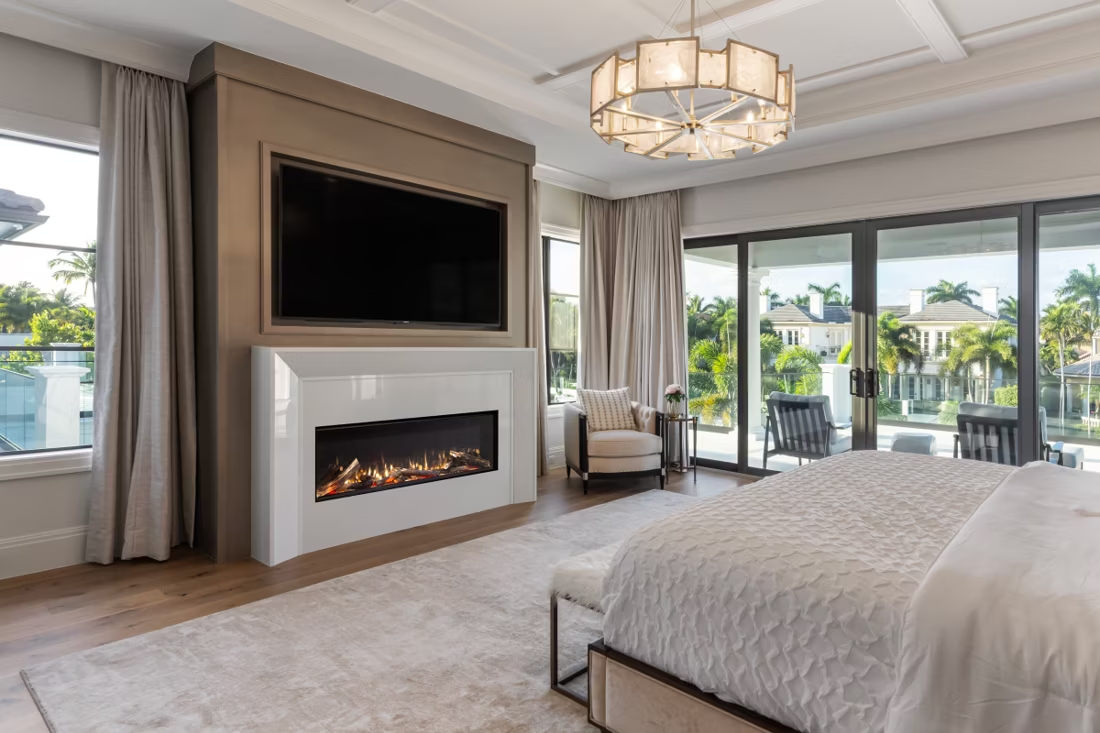
Yes—with an asterisk. Fireplaces are hot and TVs don't like heat. Either put a mantel between them to deflect rising warmth, or choose a fireplace with heat-management technology that creates a cool zone on the wall above—the wall stays around 125 degrees, barely warm, while the room still gets full heat. If you like clean lines and don't want a mantel, heat management is the answer.
Can a fireplace actually lower my heating bill?
Yes—by creating a comfort zone. A furnace heats every square foot of the house just to warm the one room you're in; a gas fireplace on low burns roughly a sixth of the gas a typical furnace does. Set the furnace around 55–60 degrees as a baseline, then heat the rooms your family actually uses. Families who heat this way commonly save $20–$60 a month.
Can I install a fireplace myself?
If you're putting a fire in your house on purpose, it's best to work with an expert. Unless you're genuinely experienced in framing, gas line, vent pipe, and the national code on clearances to combustibles, have a professional do it—and ideally the same company that sells you the fireplace, so warranty, service, and liability all live under one roof.
Nearby Dealers
Hearth shops serving Trappe and the surrounding area. Every listing shows whether it is a WhyFire partner, a dealer we have verified as authorized for the brands we recommend, or a local business carrying hearth products. No manufacturer pays for placement. How we verify dealers →
Norristown Chimney
Independence Propane
Krings Hearth & Home - Bechtelsville
Halligan's Hearth And Home
Sequoia Supply Hatfield Showroom
Ambler Fireplace & Patio - Chalfont
Pennsburg Ace Hardware
Ambler Fireplace And Patio
Estates Chimney Sweep
Halco Grills And Fireplaces
Maple Glen Mechanical
Atlantic Building Prodcuts Inc
Kester Fireplace
Progressive Propane
Tor Chimney & Fireplace
Electric Service in Trappe
An electric fireplace's heater draws about 1,500 watts—pennies per hour at local rates.
Peco Energy Co
Find your electric fireplace in Trappe.
Tell us a bit about your home and we'll match you with the right electric fireplace or insert, plus a free Project Guide & Parts List and a trusted local Montgomery County dealer to install it.
Find Your Fireplace →