
Clean, flip-the-switch warmth for Tucson's mild desert winters.
With just 1,332 heating degree days a year and winter lows averaging 41°F, Drexel Heights rarely needs serious heat—it needs a fireplace that looks right and takes the chill off a cool evening. I'll match you with a trusted local dealer who can size and install one correctly.
Every Project Starts From One of These Five Situations
Desert winters don't need a furnace-grade fireplace.
Drexel Heights sits in Pima County southwest of Tucson at about 2,654 feet, in climate zone 2B—hot and dry, with winters that barely qualify as cold. An average winter low of 41°F and only 1,332 heating degree days a year puts this area in a different universe from a place like Duluth or Bismarck, where homeowners rack up 8,000-plus HDD and need a heat source that can run around the clock. That's also why wood stoves and pellet stoves are essentially absent here—mesquite, pinyon, and juniper are the woods locals know, but they show up in the grill and the backyard fire pit far more often than in a home heating appliance, and the local climate simply doesn't generate enough cold days to justify a wood-burning system for most households.
Electric fireplaces fit this climate well for a different reason: Pima County is a designated non-attainment area with winter inversions that trap pollutants over the Tucson basin, and wildfire smoke season adds to that concern most years. An electric unit adds zero combustion byproducts on the handful of nights you actually want extra warmth. Tucson Electric Power serves most of Drexel Heights, with Ajo Improvement Co and Tohono O'odham Utility Authority covering pockets of the wider area; residential rates run roughly 12.6 to 15.6 cents per kWh depending on provider, which makes running a 1,500-watt insert for a few hours on a cool evening cost pennies rather than dollars.
Three steps. No salesperson until you're ready.
Tell us about your project
Your zip code, your situation, and the fuel you're leaning toward—or let the answers point you to one.
See what's actually available
The brands dealers within 100 miles genuinely carry—real options, never a catalog mirage.
Get your dealer & Project Guide
A trusted local dealer, plus the free Project Guide & Parts List that names every component of the job.
Frequently Asked Questions
How much does it cost to install an electric fireplace in Drexel Heights?
Plug-in electric inserts and freestanding stoves typically run $300 to $900 installed, since most just need a standard outlet and a hearth pad or mantel surround—no gas line, no chimney. Built-in electric fireplaces or wall-mount units that require a dedicated 120V or 240V circuit run higher, often $1,000 to $2,500, mostly for the electrician's time fishing a new circuit through stucco or block walls, which is common construction throughout Drexel Heights. A local dealer can tell you within a few minutes which category your project falls into.
Do I need a permit to install an electric fireplace here?
Since Drexel Heights is unincorporated, electrical permits fall under Pima County Development Services rather than a city building department. A simple plug-in unit on an existing circuit usually doesn't trigger a permit requirement, but any project that adds a new dedicated circuit or involves opening a wall for a built-in unit typically does. Most licensed electricians who do fireplace installs in this area pull the permit as part of the job, so you're not left figuring out county requirements on your own.
What size electric fireplace do I actually need?
Given that Drexel Heights only logs 1,332 heating degree days a year, most homeowners are shopping for supplemental zone heat and ambiance, not a whole-house heat source—your central HVAC heat pump is still doing the real work on the coldest nights. A unit in the 4,600 to 5,200 BTU range comfortably takes the chill off a living room or bedroom during the occasional 30s-and-40s cold snap. Larger 9,000+ BTU units exist, but few homes here need one; a local dealer will size it against your room, not against a Minnesota winter.
Insert, built-in, or freestanding stove—which fits my home?
A lot of Drexel Heights housing stock is single-story ranch and manufactured homes, and electric inserts that slide into an existing decorative fireplace opening are a common, low-disruption upgrade for those. Built-in wall units work well in newer stucco construction or during a remodel where you're framing a feature wall from scratch. Freestanding electric stoves are the simplest option for manufactured and mobile homes, since they need no wall modification at all and can be relocated if you move—worth asking your dealer about given how many manufactured homes sit in the 85746 and 85757 zips.
How much does it cost to run an electric fireplace on my utility bill?
Most homes here are on Tucson Electric Power, where residential rates run around 15.6 cents per kWh; some pockets served by Ajo Improvement Co or Tohono O'odham Utility Authority see closer to 12.6 cents. A typical 1,500-watt insert running on medium heat for three hours costs roughly 35 to 60 cents depending on your provider—genuinely negligible given how few nights a year you'd run it, since winter lows here average 41°F rather than the 20s or teens that push heating bills up elsewhere.
Why don't more homes in Drexel Heights use wood or pellet stoves?
The math doesn't favor them here. With only 1,332 heating degree days and winter lows averaging 41°F, there simply aren't enough cold days to make a wood or pellet heating system worth the investment, chimney, and fuel storage. Mesquite, pinyon, and juniper are cut locally under Coronado National Forest permits for $5-$20 a cord, but nearly all of it goes to grilling and backyard fire pits rather than home heating. Pima County's non-attainment status and winter inversion pattern give homeowners another reason to skip combustion appliances altogether—electric sidesteps both the smoke and the permitting entirely.
Does an electric fireplace help with Tucson's air quality concerns?
Yes, in a real way. Pima County is a designated non-attainment area, and winter inversions periodically trap smoke and particulates low over the Tucson basin, made worse in some years by wildfire smoke drifting in from surrounding forests. An electric fireplace produces no combustion byproducts at all—no smoke, no particulate matter, nothing venting into the airshed—which makes it the cleanest heat-and-ambiance option available if you're mindful of inversion-day air quality or have family members sensitive to smoke.
Are electric fireplaces a good fit for manufactured and mobile homes in the area?
Often, yes—Drexel Heights has a substantial share of manufactured housing, and freestanding electric stoves or low-profile wall units are generally easier to install in these homes than wood or gas appliances, which require venting penetrations that can be tricky in manufactured-home construction. Most plug directly into a standard outlet with no structural modification, though it's still worth having a local dealer confirm your home's electrical panel has the capacity, especially in older manufactured units.
Electric vs. gas fireplace—which makes more sense here?
Gas is a viable option in Drexel Heights and gives you a more fireplace-like flame and higher heat output, but it requires a gas line, venting, and typically a larger upfront investment. Electric skips all of that—no venting, usually no gas permit, and installation costs that run well under a gas unit in most cases. Given how mild the climate is here, with heating degree days a fraction of what colder states see, most homeowners choosing between the two end up picking electric for the lower cost and simpler install, reserving gas for households that want a stronger visual flame or plan to use the fireplace more as a design centerpiece than a heat source.
Does an electric fireplace need a vent or chimney?
No—that's its superpower. An electric fireplace needs a wall and an outlet, period. No vent pipe, no gas line, no clearances to design around, which is why it works in bedrooms, offices, apartments, and walls where venting a gas or wood unit would be impractical or impossible. Installation is typically the simplest and least expensive of any fireplace type.
Can I put a TV above my fireplace?
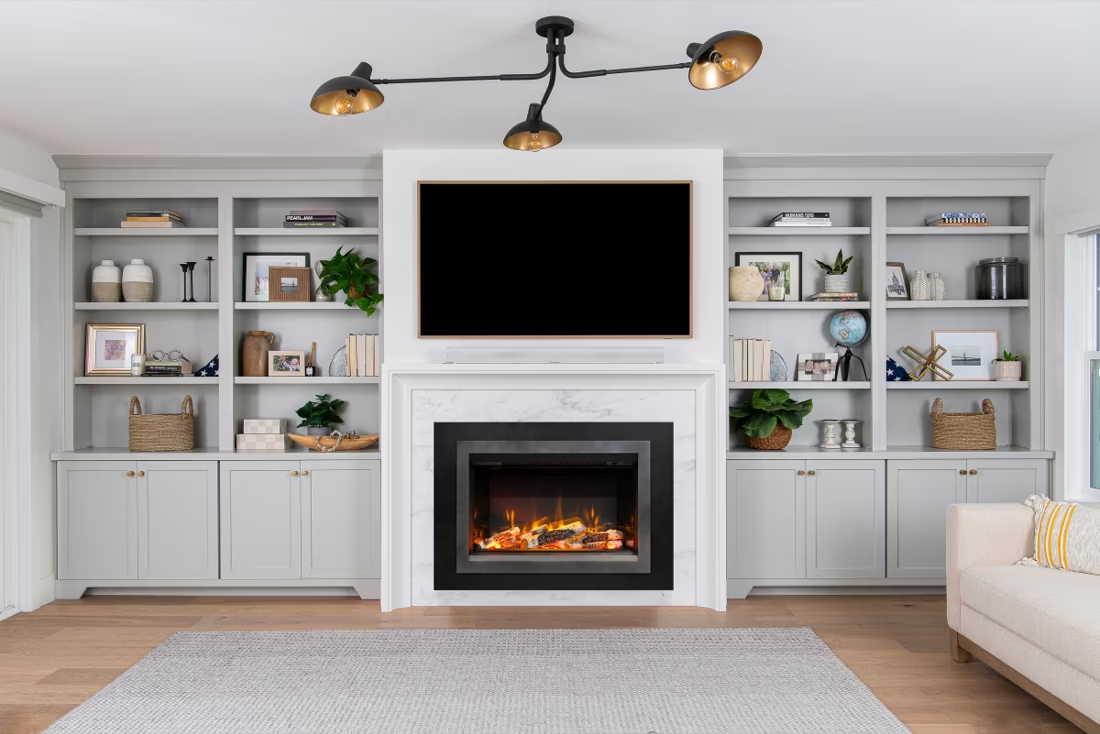
Yes—with an asterisk. Fireplaces are hot and TVs don't like heat. Either put a mantel between them to deflect rising warmth, or choose a fireplace with heat-management technology that creates a cool zone on the wall above—the wall stays around 125 degrees, barely warm, while the room still gets full heat. If you like clean lines and don't want a mantel, heat management is the answer.
How much should I budget for a fireplace?
For an average home—covering the fireplace, the vent pipe, and basic installation—a budget between $3,900 and $5,500 gives you a lot of options across wood, gas, and pellet. By the time you add finish work, gas line, and electrical, the average complete installation lands between $5,000 and $12,000 all-in. In a remodel or new build, a good rule is to put about 2.5% of the total project cost toward the fireplace.
What is an in-home preview and do I need one?
It's a visit where a hearth professional measures your space, confirms the model you picked actually works in your home, and walks the specs—framing, gas line, venting, finish work—before anything is ordered. Some details you just can't know until you see the house. Never make a down payment without one; it's the single most-skipped step that burns buyers.
Nearby Dealers
Hearth shops serving Drexel Heights and the surrounding area. Every listing shows whether it is a WhyFire partner, a dealer we have verified as authorized for the brands we recommend, or a local business carrying hearth products. No manufacturer pays for placement. How we verify dealers →
Earth Energy's Hearth & Patio
Electric Service in Drexel Heights
An electric fireplace's heater draws about 1,500 watts—pennies per hour at local rates.
Tucson Electric Power Co
Ajo Improvement Co
Tohono O'Odham Utility Authority
Get your free Project Guide & Parts List for an electric fireplace in Drexel Heights.
Tell me about your home and your electrical setup, and I'll match you with a trusted local dealer and send a free Project Guide & Parts List—sized right for a mild desert climate, with the exact unit and mounting parts your project needs.
Find Your Fireplace →