
Fireplace Warmth, Without the Smoke or the Chimney.
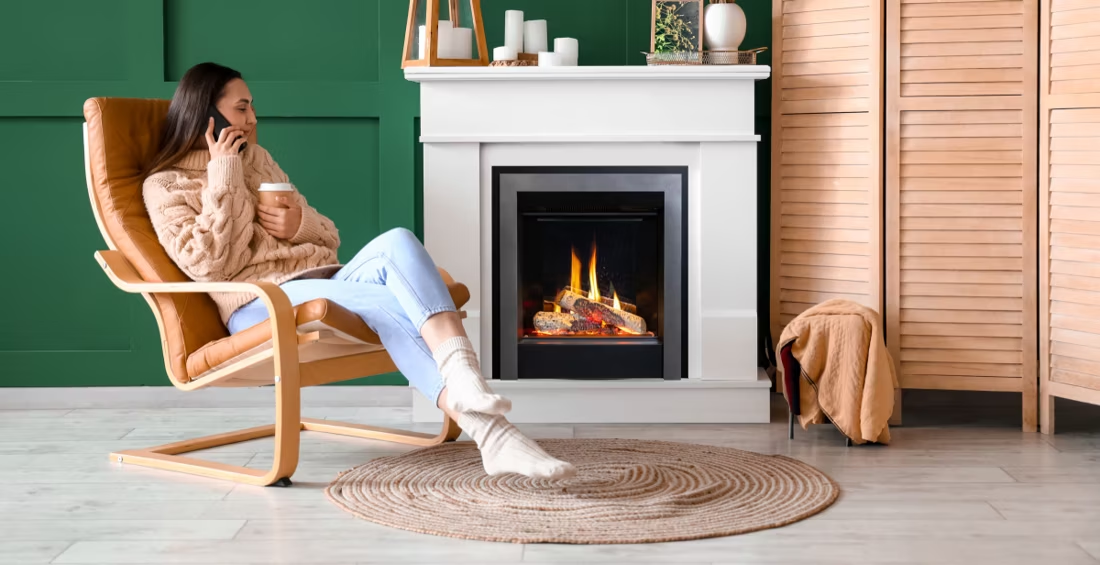
Corona de Tucson winters rarely demand a furnace, but desert evenings still get cold. Find the right electric fireplace or insert, and connect with a trusted local dealer.
Every Project Starts From One of These Five Situations
A desert climate that rarely needs a furnace.
Corona de Tucson sits at 3,318 feet in the foothills southeast of Tucson, where winter lows average a mild 36 degrees and the whole heating season adds up to just 1,631 heating degree days. Compare that to a place like Bozeman, Montana, which can rack up that many degree days in a matter of weeks, and it's clear why nobody here is sizing a furnace for sub-zero nights. What Corona de Tucson homes actually want is supplemental warmth for the shoulder-season evenings—December and January nights when it dips into the 30s—plus the visual centerpiece a fireplace adds to a living room or primary bedroom.
Pima County is also a designated non-attainment area with winter inversions and wildfire smoke intrusion during the dry months, which is part of why wood stoves never really caught on here and pellet appliances are essentially absent from local dealer lineups. Electric fireplaces sidestep that problem entirely—no combustion, no venting, no smoke to trap under an inversion layer. With a residential electric rate around $0.1256 per kWh through the local utilities, running a 1,500-watt unit costs roughly 19 cents an hour, making electric heat an easy, low-maintenance add for a casita, guest room, or main living space.
Three steps. No salesperson until you're ready.
Tell us about your project
Your zip code, your situation, and the fuel you're leaning toward—or let the answers point you to one.
See what's actually available
The brands dealers within 100 miles genuinely carry—real options, never a catalog mirage.
Get your dealer & Project Guide
A trusted local dealer, plus the free Project Guide & Parts List that names every component of the job.
Frequently Asked Questions
How much does an electric fireplace installation cost in Corona de Tucson?
Plug-in electric fireplace inserts and mantel packages typically run $300 to $1,200 installed, since most units run on a standard 120-volt outlet and don't require an electrician. Built-in wall units or larger linear electric fireplaces that need a dedicated 240-volt circuit run higher, often $1,200 to $2,500, once you add the electrician's time to run a new circuit and the carpentry to frame a wall opening or mantel surround. Because there's no gas line, no chimney, and no combustion venting involved, electric installs in Corona de Tucson are consistently the fastest and least invasive of any fireplace fuel option.
Will an electric fireplace actually heat a room here, or is it just for looks?
Both, depending on the unit. A typical 1,500-watt electric fireplace puts out around 5,000 BTU, which is enough to noticeably warm a bedroom or den on a chilly desert evening without straining the circuit. Given Corona de Tucson's mild 1,631 heating-degree-day climate, that's usually plenty—most households aren't trying to heat an entire home with it, they're taking the edge off a cool night in one room while the flame effect runs whether the heater is on or off. If you want ambiance without the heat output (common in warmer months), most models let you run the flame with the heater switched off entirely.
Do I need a permit to install an electric fireplace in Corona de Tucson?
Usually not for a plug-in insert or mantel unit—it's treated like any other appliance you plug into an outlet. If you're installing a built-in electric fireplace that requires a new dedicated circuit, Pima County Development Services generally requires an electrical permit for that circuit work, which a licensed electrician pulls as part of the job. There's no combustion appliance, so none of the wood-stove or gas-line permitting that applies to other fuels comes into play here.
Who provides electricity in Corona de Tucson, and how does that affect running costs?
Electric service in the area runs through Ajo Improvement Co. and the Tohono O'odham Utility Authority, with a residential rate around $0.1256 per kWh. At that rate, a 1,500-watt electric fireplace costs about 19 cents an hour to run on the heater setting, and only a fraction of that if you're running the flame effect alone without heat. Because the local heating season is short, most households find the annual operating cost of an electric fireplace is modest compared to running central AC through a Corona de Tucson summer.
Electric vs. gas fireplace—which makes more sense for a Corona de Tucson home?
Gas is the standard choice locally for homeowners who want a fireplace that puts out real, sustained heat and a more convincing flame—propane is common here since piped natural gas service is limited outside the Tucson metro core. Electric is the better fit when you want a fast, low-cost install with zero venting, zero gas line work, and the flexibility to put a fireplace almost anywhere in the house, including interior walls or a guest casita where running gas or venting isn't practical. Given the area's mild winters, plenty of homeowners choose electric specifically because they don't need the higher heat output gas provides.
What about a wood stove instead—is that an option here?
It's uncommon, and for good reason. Corona de Tucson's mild climate (1,631 heating degree days) doesn't generate the kind of sustained cold that makes a wood stove worth the investment, and Pima County's non-attainment status with winter inversions and wildfire smoke concerns makes wood burning a harder sell on air-quality grounds. Mesquite, pinyon, and juniper are available through Coronado National Forest cutting permits ($5–$20 per cord, May through October season), and some residents do burn wood seasonally for an outdoor fire pit or occasional ambiance, but it's not a practical primary or supplemental indoor heat source here the way electric or gas is.
What type of electric fireplace works best for a Corona de Tucson home?
Wall-mounted linear electric fireplaces are popular for main living areas and primary bedrooms since they deliver a modern flame effect without any structural changes to an existing wall. Mantel-style electric inserts work well for homeowners who want a more traditional look, often set into a built-in surround. For guest casitas and detached spaces—common on larger Corona de Tucson lots—a smaller freestanding electric stove-style unit is an easy way to add heat and ambiance without extending gas lines or venting to a separate structure.
What do I need in place before installing a built-in electric fireplace?
For a larger built-in unit, you'll typically need a dedicated 240-volt circuit run by a licensed electrician, proper wall framing or a mantel surround sized to the unit's specifications, and clearance from combustible materials per the manufacturer's listing. None of this involves venting, gas piping, or chimney work, which is why electric installs move faster than gas or wood projects. A local dealer can confirm exact electrical and framing requirements for the specific model you choose.
How much does it cost to run an electric fireplace day to day?
At the local rate of roughly $0.1256 per kWh, a 1,500-watt unit running on heat costs about 19 cents per hour, or roughly $1.50 for an eight-hour evening of use. Running the flame effect alone, without the heater engaged, draws only a small fraction of that—often under 50 watts—so many Corona de Tucson homeowners leave the flame on for ambiance through the evening without worrying much about the electric bill.
Can I put a TV above my fireplace?
Yes—with an asterisk. Fireplaces are hot and TVs don't like heat. Either put a mantel between them to deflect rising warmth, or choose a fireplace with heat-management technology that creates a cool zone on the wall above—the wall stays around 125 degrees, barely warm, while the room still gets full heat. If you like clean lines and don't want a mantel, heat management is the answer.
Do electric fireplaces actually produce heat?
Yes—most put out around 4,800–5,000 BTUs from a standard outlet, which comfortably warms a bedroom, office, or den as a comfort-zone heater. What they won't do is carry a whole house the way wood, gas, or pellet can. Think of electric as ambiance-first with honest supplemental heat: flames on with no heat in July, flames plus warmth in January.
Can a fireplace actually lower my heating bill?
Yes—by creating a comfort zone. A furnace heats every square foot of the house just to warm the one room you're in; a gas fireplace on low burns roughly a sixth of the gas a typical furnace does. Set the furnace around 55–60 degrees as a baseline, then heat the rooms your family actually uses. Families who heat this way commonly save $20–$60 a month.
What is an in-home preview and do I need one?
It's a visit where a hearth professional measures your space, confirms the model you picked actually works in your home, and walks the specs—framing, gas line, venting, finish work—before anything is ordered. Some details you just can't know until you see the house. Never make a down payment without one; it's the single most-skipped step that burns buyers.
Nearby Dealers
Hearth shops serving Corona de Tucson and the surrounding area. Every listing shows whether it is a WhyFire partner, a dealer we have verified as authorized for the brands we recommend, or a local business carrying hearth products. No manufacturer pays for placement. How we verify dealers →
Earth Energy's Hearth & Patio
Electric Service in Corona de Tucson
An electric fireplace's heater draws about 1,500 watts—pennies per hour at local rates.
Ajo Improvement Co
Tohono O'Odham Utility Authority
Find your electric fireplace in Corona de Tucson.
Tell us a bit about your home and we'll put together a free Project Guide & Parts List—the right electric fireplace or insert for your space, the exact parts you'll need, and a trusted local dealer who can install it.
Find Your Fireplace →