
Ambient heat that skips the smoke in Tanque Verde.
With winter lows averaging 41°F in the Rincon foothills, most Tanque Verde homes don't need a furnace-replacing heat source—they need clean, controllable warmth. Find the right electric unit and get matched with a trusted local dealer.
Every Project Starts From One of These Five Situations
A desert climate that favors clean, simple heat.
Tanque Verde sits at about 2,665 feet in the foothills east of Tucson, where winters are short and mild—an average low of 41°F and only around 1,400 heating degree days a year. Compare that to a place like Bozeman, Montana, which racks up close to 8,000 HDD, and it's clear why nobody here is sizing a whole-home wood furnace. Most Tanque Verde households want supplemental warmth for the occasional 30-degree desert morning and a good-looking focal point for the living room, not a primary heat source.
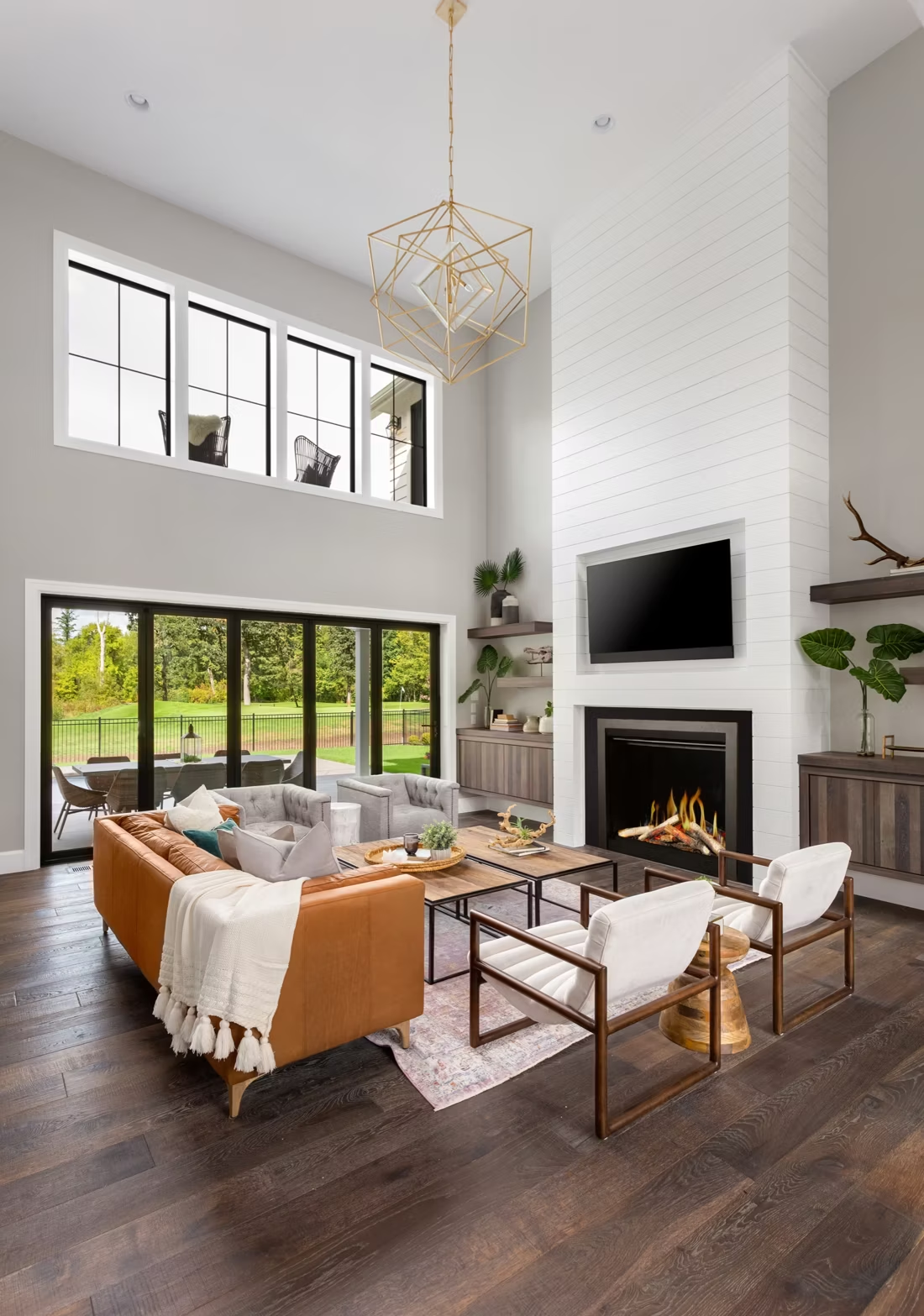
Pima County is also a designated non-attainment area with a history of winter inversions and wildfire smoke drifting in from summer burns across southern Arizona. That combination makes an electric fireplace an easy call for a lot of homeowners here: no chimney, no smoke, no cutting permits through Coronado National Forest, and no exposure to the burn restrictions that occasionally apply to wood-burning appliances during inversion events. It plugs in, it heats a room in minutes, and it never triggers an air-quality advisory.
Three steps. No salesperson until you're ready.
Tell us about your project
Your zip code, your situation, and the fuel you're leaning toward—or let the answers point you to one.
See what's actually available
The brands dealers within 100 miles genuinely carry—real options, never a catalog mirage.
Get your dealer & Project Guide
A trusted local dealer, plus the free Project Guide & Parts List that names every component of the job.
Frequently Asked Questions
How much does an electric fireplace installation cost in Tanque Verde?
Plug-in electric inserts and freestanding units are the cheapest path—typically $300 to $900 for the unit itself, with no electrician required if you're using an existing outlet. Built-in wall units and mantel packages that need a dedicated 120V or 240V circuit run higher, generally $1,500 to $4,000 once a licensed electrician is involved for the circuit run and any wall framing. Because Tanque Verde homes rarely need permits for electrical work at this scale, most of that cost is labor and the unit itself rather than code compliance.
Will an electric fireplace actually heat a room in Tanque Verde, or is it just for looks?
Most electric fireplaces put out 4,000–5,000 BTU on the heat setting—enough to comfortably warm a 400 to 1,000 square foot room, which lines up well with how mild it gets here. On a 41-degree morning in the Rincon foothills, a good electric insert in the family room will genuinely take the chill off without running central heat. What it won't do is replace a furnace for a whole house during a rare hard freeze—for that, most local homes still lean on their existing HVAC.
Do I need a permit to install an electric fireplace in Tanque Verde?
Plug-in units need no permit at all—you're just adding an appliance to an existing outlet. If you're installing a built-in unit that requires new wiring or a dedicated circuit, Pima County Development Services typically requires an electrical permit, and the work should be done by a licensed electrician regardless of permit status. Unlike a wood stove or gas insert, there's no venting, gas line, or clearance-to-combustibles inspection involved, which is a big part of why electric installs move faster than other fuel types here.
Which utility will power my electric fireplace, and what will it cost to run?
Most of Tanque Verde is served by Tucson Electric Power, with a residential rate around $0.1563 per kWh; some outlying Pima County parcels fall under Ajo Improvement Co. or the Tohono O'odham Utility Authority, where rates run closer to $0.1256 per kWh. A typical 1,500-watt electric fireplace on the heat setting costs roughly 19 to 23 cents an hour to run depending on which utility serves your address—cheap enough that most owners run it on cool evenings without a second thought about the bill.
What's the difference between an electric insert, a built-in, and a freestanding electric stove?
An electric insert drops into an existing fireplace opening—a common upgrade for older Tanque Verde homes with a dated masonry fireplace nobody uses. A built-in wall unit is framed into new construction or a remodel and creates a true focal-point fireplace with a flush finish. A freestanding electric stove looks like a wood stove but plugs into a standard outlet, which makes it the simplest option for renters or homes without an existing fireplace opening. All three use the same core heating element; the difference is really about the look you want and how much construction you're willing to take on.
Electric vs. wood—which makes more sense for a Tanque Verde home?
Wood is still viable here—mesquite, pinyon, and juniper are all common locally, and Coronado National Forest issues cutting permits for $5 to $20 per cord during the May-to-October season. But Pima County's non-attainment status and periodic winter inversions mean wood smoke draws more scrutiny here than in a lot of places, and wood requires venting, clearances, and annual chimney inspection that electric skips entirely. For homes that want ambiance and light supplemental heat without dealing with smoke, ash, or air-quality timing, electric is usually the lower-friction choice. For homes that want serious BTU output or off-grid backup heat, wood still has an edge.
Electric vs. pellet stove—which fits Tanque Verde better?
Pellet stoves burn cleaner than wood and regional brands like Forest Energy and Lignetics are available through area dealers, but they still require venting, a hopper to load, and electricity to run the auger and blower—so you get the maintenance of a solid-fuel appliance without full independence from the grid. Given how mild Tanque Verde winters run, most homeowners here don't need the higher heat output pellet stoves are built for. Electric fireplaces skip the venting and fuel handling altogether, which is why they're the more common pick for supplemental, ambiance-driven heat in this climate.
Will my electric fireplace work during a monsoon-season power outage?
No—this is the one honest tradeoff worth knowing up front. Electric fireplaces need grid power to run the heating element, fan, and flame effect, so during a summer monsoon outage or a rare winter grid interruption, an electric unit goes dark along with everything else in the house. If backup heat during outages matters to you, a wood stove or a battery-backed gas unit is a better fit as a supplement to an electric fireplace, not a replacement for it.
What's the best electric fireplace for a home in Tanque Verde?
For most local living rooms, a mid-size insert or built-in with a realistic LED flame and a 4,600 BTU heat setting covers the job—enough supplemental warmth for cool desert mornings without overheating a small space. If you're upgrading an old, unused masonry fireplace, an insert sized to your existing firebox opening is usually the simplest retrofit. Look for models with a thermostat and multiple flame-brightness settings so you can run it purely for ambiance on mild nights and dial up the heat on the rare cold snap. A local dealer can match the unit to your fireplace opening or wall space during an in-home visit.
Can I put a TV above my fireplace?
Yes—with an asterisk. Fireplaces are hot and TVs don't like heat. Either put a mantel between them to deflect rising warmth, or choose a fireplace with heat-management technology that creates a cool zone on the wall above—the wall stays around 125 degrees, barely warm, while the room still gets full heat. If you like clean lines and don't want a mantel, heat management is the answer.
Do electric fireplaces actually produce heat?
Yes—most put out around 4,800–5,000 BTUs from a standard outlet, which comfortably warms a bedroom, office, or den as a comfort-zone heater. What they won't do is carry a whole house the way wood, gas, or pellet can. Think of electric as ambiance-first with honest supplemental heat: flames on with no heat in July, flames plus warmth in January.
What is an in-home preview and do I need one?
It's a visit where a hearth professional measures your space, confirms the model you picked actually works in your home, and walks the specs—framing, gas line, venting, finish work—before anything is ordered. Some details you just can't know until you see the house. Never make a down payment without one; it's the single most-skipped step that burns buyers.
Can I install a fireplace myself?
If you're putting a fire in your house on purpose, it's best to work with an expert. Unless you're genuinely experienced in framing, gas line, vent pipe, and the national code on clearances to combustibles, have a professional do it—and ideally the same company that sells you the fireplace, so warranty, service, and liability all live under one roof.
Nearby Dealers
Hearth shops serving Tanque Verde and the surrounding area. Every listing shows whether it is a WhyFire partner, a dealer we have verified as authorized for the brands we recommend, or a local business carrying hearth products. No manufacturer pays for placement. How we verify dealers →
Earth Energy's Hearth & Patio
Electric Service in Tanque Verde
An electric fireplace's heater draws about 1,500 watts—pennies per hour at local rates.
Tucson Electric Power Co
Ajo Improvement Co
Tohono O'Odham Utility Authority
Find your electric fireplace in Tanque Verde.
Tell us a bit about your home and we'll put together a free Project Guide & Parts List—the right electric fireplace or insert for your space, matched with a trusted local Tanque Verde dealer who can install it correctly.
Find Your Fireplace →