
Ambiance and warmth, without the venting.
Oro Valley's Sonoran Desert winters rarely call for a furnace-grade heat source—just something to take the edge off a 40-degree evening in the foothills. Find the right electric fireplace or insert, and connect with a trusted local dealer.
Every Project Starts From One of These Five Situations
Mild desert winters call for supplemental heat, not a furnace.
Oro Valley sits at 2,747 feet in the foothills of the Santa Catalina Mountains, in climate zone 2B—one of the mildest heating climates in the country. With an average winter low of 31°F and roughly 2,180 heating degree days a year, Oro Valley uses a fraction of the heating energy that a place like Duluth, Minnesota burns through in a single cold month. That changes what a fireplace is for here: it's rarely about keeping a house from freezing, and much more about ambiance, zone heat on the occasional cool evening, and the look of a fireplace in a great room or primary suite.
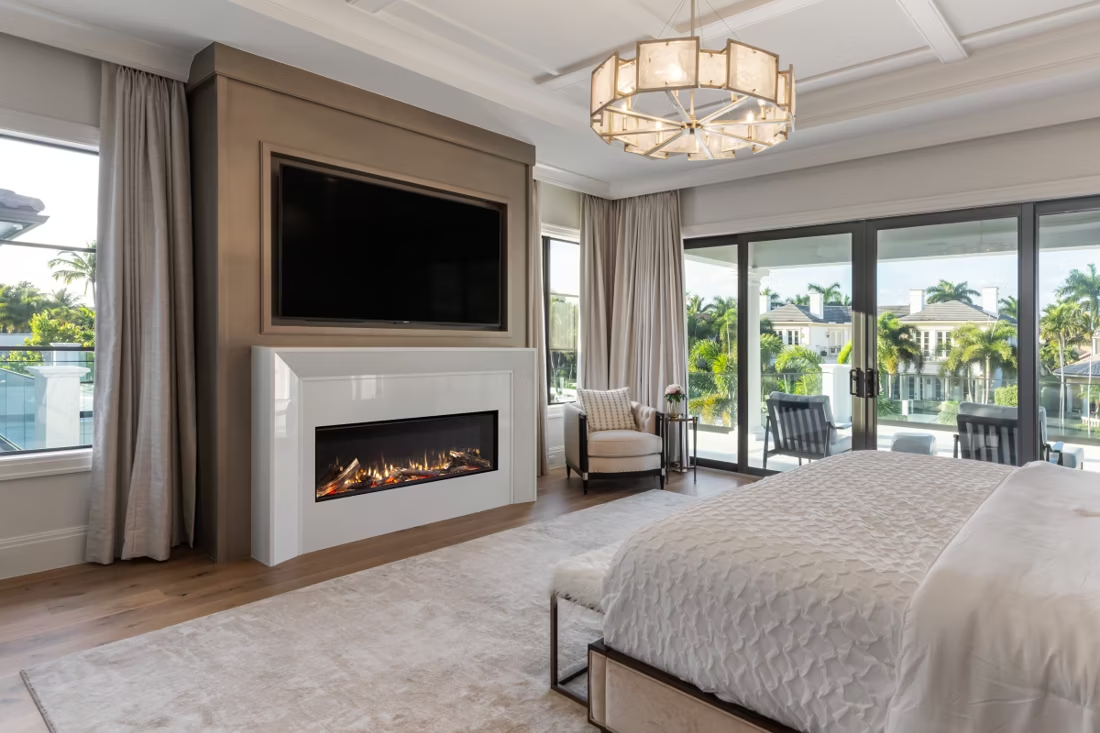
Tucson Electric Power serves most of Oro Valley's zip codes (85755, 85704, 85742, 85737), with residential rates running around $0.156 per kWh; a handful of homes near Ajo Improvement Co. and Tohono O'odham Utility Authority territory see rates closer to $0.126. Because electric fireplaces need nothing more than a standard or dedicated circuit—no chimney, no gas line, no venting through the roof—they're often the fastest and least invasive upgrade for Oro Valley homes, whether that's a wall-mounted unit in a den, a full insert replacing an unused masonry fireplace, or a built-in linear unit in new construction.
Three steps. No salesperson until you're ready.
Tell us about your project
Your zip code, your situation, and the fuel you're leaning toward—or let the answers point you to one.
See what's actually available
The brands dealers within 100 miles genuinely carry—real options, never a catalog mirage.
Get your dealer & Project Guide
A trusted local dealer, plus the free Project Guide & Parts List that names every component of the job.
Frequently Asked Questions
How much does an electric fireplace installation cost in Oro Valley?
Costs vary widely by unit type. A plug-in electric insert that drops into an existing fireplace opening runs $300 to $1,200 installed, since it typically just needs a nearby outlet. A built-in wall-mounted or linear electric fireplace with a dedicated 120V or 240V circuit, framing, and a finished surround runs $1,500 to $3,500 in most Oro Valley homes, depending on the unit size and whether an electrician needs to run new circuitry from the panel. Because there's no venting or gas line to plan around, electric installs are almost always the fastest and least disruptive option a local dealer can quote.
What size electric fireplace do I need for my Oro Valley home?
Most electric fireplaces are rated for zone heating of a single room—typically 400 to 1,000 square feet—rather than whole-house heat, which fits how they're used locally. A 1,500-watt insert or wall unit comfortably supplemental-heats a great room or primary suite on a cool January evening without needing to run the HVAC system. If you're after a specific room's worth of heat, a local dealer can match wattage and BTU output to your square footage during a quick walk-through; if you mainly want the visual of a fire with the option of heat, sizing is more about matching the opening or wall space than hitting a heating target.
What's the difference between an electric insert, a wall-mounted unit, and a built-in linear fireplace?
An electric insert is built to slide into an existing fireplace opening—common in Oro Valley homes with an unused wood-burning firebox that residents want to convert without chimney work. A wall-mounted unit hangs on any interior wall like a large flat-screen TV, needing only a nearby circuit, and works well in a den or bedroom with no existing fireplace. A built-in linear fireplace is framed into a wall during new construction or remodel, often spanning 40 to 72 inches, and is typically wired to a dedicated circuit for a cleaner, more custom look. Most Oro Valley projects fall into the first two categories since so few homes here have existing masonry chimneys to work around.
Do I need a permit to install an electric fireplace in Oro Valley?
A plug-in electric insert or freestanding unit generally doesn't require a permit since it's not a fixed electrical or gas installation. A built-in or wall-mounted unit that requires new wiring or a dedicated circuit typically does require an electrical permit through the Town of Oro Valley Building Safety Division, since any new circuit run from the panel needs inspection. Most local dealers coordinate this permit as part of the installation, so it's rarely something homeowners have to manage themselves.
Can an electric fireplace actually heat a room in Oro Valley, or is it just for looks?
Both, depending on the model. Most electric fireplaces include a 1,500-watt heater—comparable to a space heater—that's genuinely effective for zone heating a single room on the kind of 35-to-45-degree mornings and evenings Oro Valley sees from December through February. Given the area's mild 2,180 heating degree days, that's usually plenty; nobody in Oro Valley needs a fireplace to carry a whole house through winter the way a home in Flagstaff or Bozeman might. Many homeowners also run the flame effect without the heat turned on for ambiance during the other nine months of the year.
What does it cost to run an electric fireplace on Tucson Electric Power's rates?
At Tucson Electric Power's residential rate of roughly $0.156 per kWh, a 1,500-watt electric fireplace running on the heat setting costs about 23 cents an hour to operate—around $2.80 for a full evening's use. Run a few hours a night through Oro Valley's cooler months (November through February), and you're looking at roughly $15 to $30 a month in added electricity cost, far less than most gas or wood alternatives once fuel and maintenance are factored in. Homes served by Ajo Improvement Co. or Tohono O'odham Utility Authority, with rates closer to $0.126 per kWh, run slightly cheaper.
Should I get an electric fireplace or a gas fireplace instead?
Gas fireplaces make sense in Oro Valley homes with natural gas already run to the house and a want for a more realistic flame with higher heat output—gas remains a standard option here. Electric fireplaces win on installation simplicity (no venting, no gas line, no combustion byproducts), lower upfront cost, and flexibility to install almost anywhere with an outlet, including rentals and condos where gas line work isn't practical. Given how mild Oro Valley's winters run, many homeowners find the ambiance and light supplemental heat of an electric unit is enough, and skip the gas line work entirely. A local dealer can walk through both if you're weighing the decision for a specific room.
Why don't more Oro Valley homes have wood-burning fireplaces?
Wood heat is genuinely rare here, and for good reason. Oro Valley sits in a designated non-attainment area for air quality, with winter inversions and wildfire smoke already a concern in the Tucson basin—adding regular wood smoke doesn't fit well with local air quality goals or many HOA rules common in Oro Valley's planned communities. A small number of properties near the Santa Catalinas still burn mesquite, pinyon, or juniper picked up with a Coronado National Forest cutting permit ($5–$20 per cord, May through October), usually for occasional ambiance rather than heat. For most homes, electric or gas fireplaces are simply the more practical fit for this climate and this air quality picture.
What features should I look for in an electric fireplace for a desert climate like Oro Valley's?
Look for models with LED flame technology that runs independently of the heater—since Oro Valley's mild winters mean you'll likely run the flame effect for ambiance far more often than the heat itself, especially spring through fall. A built-in thermostat with a digital display lets you dial in low, targeted heat for the handful of genuinely cool weeks each winter without overheating a small room. Because there's no combustion, electric units also don't add particulates to indoor air—a real plus in a region already dealing with winter inversion and wildfire smoke concerns. Local dealers can show you flame realism side-by-side, which varies more between electric fireplace brands than most people expect.
Can I put a TV above my fireplace?
Yes—with an asterisk. Fireplaces are hot and TVs don't like heat. Either put a mantel between them to deflect rising warmth, or choose a fireplace with heat-management technology that creates a cool zone on the wall above—the wall stays around 125 degrees, barely warm, while the room still gets full heat. If you like clean lines and don't want a mantel, heat management is the answer.
Does an electric fireplace need a vent or chimney?
No—that's its superpower. An electric fireplace needs a wall and an outlet, period. No vent pipe, no gas line, no clearances to design around, which is why it works in bedrooms, offices, apartments, and walls where venting a gas or wood unit would be impractical or impossible. Installation is typically the simplest and least expensive of any fireplace type.
Can I install a fireplace myself?
If you're putting a fire in your house on purpose, it's best to work with an expert. Unless you're genuinely experienced in framing, gas line, vent pipe, and the national code on clearances to combustibles, have a professional do it—and ideally the same company that sells you the fireplace, so warranty, service, and liability all live under one roof.
Can a fireplace actually lower my heating bill?
Yes—by creating a comfort zone. A furnace heats every square foot of the house just to warm the one room you're in; a gas fireplace on low burns roughly a sixth of the gas a typical furnace does. Set the furnace around 55–60 degrees as a baseline, then heat the rooms your family actually uses. Families who heat this way commonly save $20–$60 a month.
Nearby Dealers
Hearth shops serving Oro Valley and the surrounding area. Every listing shows whether it is a WhyFire partner, a dealer we have verified as authorized for the brands we recommend, or a local business carrying hearth products. No manufacturer pays for placement. How we verify dealers →
Earth Energy's Hearth & Patio
Electric Service in Oro Valley
An electric fireplace's heater draws about 1,500 watts—pennies per hour at local rates.
Tucson Electric Power Co
Ajo Improvement Co
Tohono O'Odham Utility Authority
Find your electric fireplace in Oro Valley.
Tell us about your room and we'll match you with the right electric fireplace or insert, plus a free Project Guide & Parts List with the exact parts and your recommended local Oro Valley dealer.
Find Your Fireplace →