
Real Flame Look, Zero Smoke, Zero Venting.
With winter lows averaging 37°F, Catalina Foothills homes rarely need serious heat—just clean ambiance and the occasional evening warm-up. Find the right electric unit and connect with a trusted local dealer.
Every Project Starts From One of These Five Situations
A climate that barely needs heat, and air that stays cleaner without smoke.
At 2,797 feet on the north side of Tucson, Catalina Foothills sees a mild winter heating load—a fraction of what a place like Duluth, MN or Bismarck, ND sees in a single hard winter. Most homes here need real heat for maybe eight to ten weeks, and even then it's evening chill more than sustained cold. That changes the math on what kind of fireplace actually makes sense.
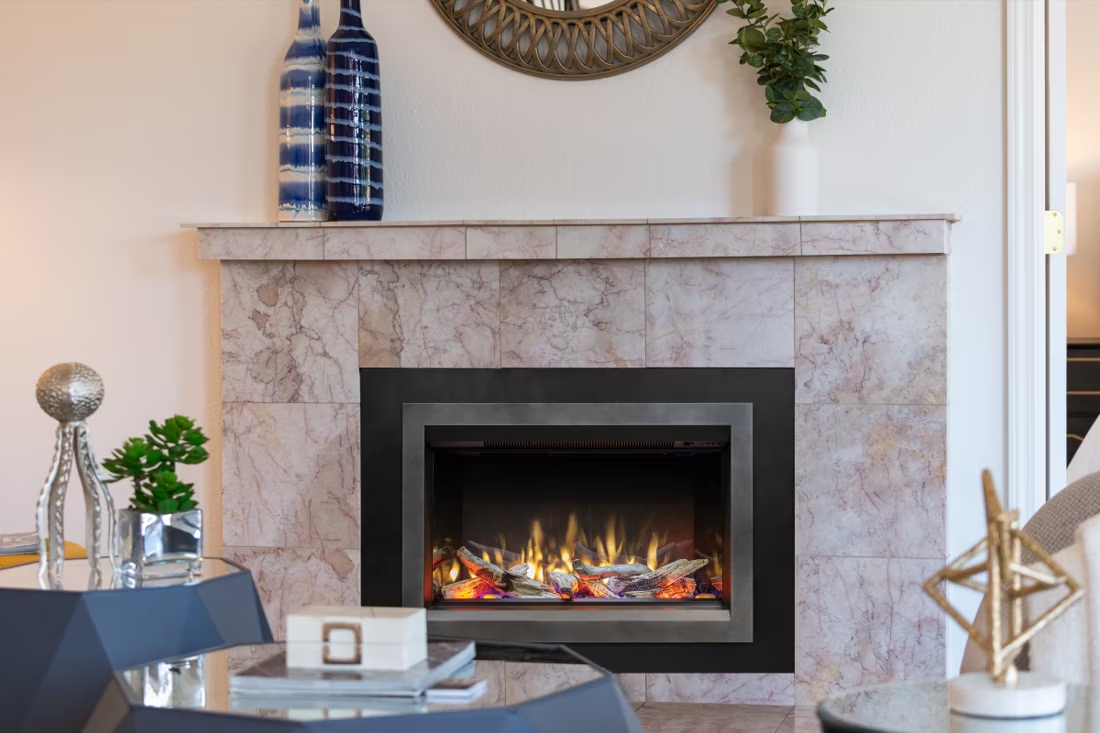
The Tucson basin is also a non-attainment area, with winter inversions and wildfire smoke that periodically trigger burn advisories from Pima County air quality officials. Wood and pellet appliances see little demand here as a result—most Catalina Foothills homes go without them entirely. Electric fireplaces sidestep the issue altogether: no combustion, no chimney, no smoke to trap under an inversion layer. For custom homes built to Catalina Foothills' architectural and dark-sky standards, a zero-clearance electric unit installs into a wall or existing firebox without the venting changes a gas or wood retrofit would require, and it runs on power from Tucson Electric Power, the area's primary utility.
Three steps. No salesperson until you're ready.
Tell us about your project
Your zip code, your situation, and the fuel you're leaning toward—or let the answers point you to one.
See what's actually available
The brands dealers within 100 miles genuinely carry—real options, never a catalog mirage.
Get your dealer & Project Guide
A trusted local dealer, plus the free Project Guide & Parts List that names every component of the job.
Frequently Asked Questions
How much does an electric fireplace installation cost in Catalina Foothills?
Plug-in electric fireplace inserts and freestanding units run $300 to $900 installed, since they use an existing 120V outlet and need no electrical work. Built-in wall units or mantel packages that require a dedicated circuit and a licensed electrician typically run $1,000 to $2,500, depending on whether new wiring has to be run through stucco or block walls common in Foothills construction. Because there's no venting or gas line involved, electric installs are consistently the fastest and least invasive option local dealers quote.
Can an electric fireplace actually heat a room, or is it just for looks?
Most electric fireplaces include a built-in heater rated around 4,000 to 5,000 BTU, which is modest compared to a gas or wood appliance—but given Catalina Foothills' mild winter lows near 37°F, that's often enough to take the chill off a living room or primary bedroom on a cool desert evening. Homeowners here typically run the flame effect year-round for ambiance and switch on the heat function only during the coldest stretches of December and January. It's supplemental heat, not a whole-home solution, which matches how little heating this climate actually demands.
Do I need a permit to install an electric fireplace in Catalina Foothills?
A simple plug-in unit needs no permit at all. If you're installing a built-in electric fireplace that requires a new dedicated circuit, Pima County Development Services Department requires an electrical permit, and the work has to be done by a licensed electrician. There's no combustion involved, so there's no mechanical inspection, no venting review, and no interaction with the county's air quality rules—which is one of the reasons local dealers steer undecided homeowners toward electric when the goal is a fast, low-friction remodel.
Why don't more Catalina Foothills homes have wood-burning fireplaces?
The Tucson basin sits in a designated non-attainment area, and winter inversions trap smoke close to the ground, which makes wood burning a poor fit here even though mesquite and pinyon are locally available through Coronado National Forest cutting permits ($5–$20 per cord, May through October). Most Foothills subdivisions and custom-home HOAs also restrict or discourage open wood burning. A small number of homeowners still install wood stoves for rustic character or a secondary property elsewhere in Arizona, but it's a niche choice here, not the default.
What's the difference between an electric insert, a wall-mount unit, and a mantel package?
An electric insert is built to slide into an existing masonry firebox—a common option in older Foothills homes with a fireplace that's rarely used for real fire. A wall-mount unit sits flush or recessed into a wall, popular in newer construction and remodels for a clean, linear look. A mantel package pairs a freestanding or built-in unit with a surround, giving you a traditional fireplace look without any structural fireplace behind it. Local dealers can walk your specific wall or firebox to confirm which format fits.
Electric vs. gas—which is right for my Catalina Foothills home?
Gas fireplaces deliver more real heat output and are common in Tucson-area homes that already have gas service, making them the better choice if you want a fireplace to genuinely warm a room during a rare hard freeze. Electric fireplaces cost less to install, need no venting or gas line, and run on Tucson Electric Power with no combustion byproducts to manage under a winter air-quality advisory. Given how few weeks a year Catalina Foothills homes need real heat, many homeowners choose electric for the look and light supplemental warmth, reserving central HVAC for the handful of genuinely cold nights.
What does an electric fireplace cost to run each month?
Tucson Electric Power residential rates run roughly $0.1256 to $0.1563 per kWh depending on your rate plan. A typical 1,500-watt electric fireplace heater costs about $0.19 to $0.23 per hour to run on high heat, or well under $0.02 per hour with the heater off and just the flame effect on. Even running the heat function every evening through the cooler months, most Foothills homeowners see only a modest bump on their TEP bill.
How long do electric fireplaces last, and what maintenance do they need?
A quality electric fireplace typically lasts 10 to 15 years with minimal upkeep—there's no chimney to sweep, no gas line to inspect, and no combustion byproducts to clean. Maintenance amounts to occasionally dusting the unit, cleaning the glass front, and replacing the LED light strip if it dims over time, which is a straightforward DIY swap on most models. Local dealers can also service or replace the heating element if it eventually wears out, without touching the rest of the unit.
Can I have an electric fireplace installed into an existing fireplace opening?
Yes—this is one of the most common projects local dealers handle in Catalina Foothills, especially in Sonoran and territorial-style homes built with a traditional masonry firebox that homeowners no longer use for real wood fire. An electric insert slides into that existing opening, often with a surround kit to finish the look, and needs only a nearby outlet or a short electrical run. It's usually the fastest way to bring a dormant fireplace back to life without any venting or structural work.
Do electric fireplaces actually produce heat?
Yes—most put out around 4,800–5,000 BTUs from a standard outlet, which comfortably warms a bedroom, office, or den as a comfort-zone heater. What they won't do is carry a whole house the way wood, gas, or pellet can. Think of electric as ambiance-first with honest supplemental heat: flames on with no heat in July, flames plus warmth in January.
Can I put a TV above my fireplace?
Yes—with an asterisk. Fireplaces are hot and TVs don't like heat. Either put a mantel between them to deflect rising warmth, or choose a fireplace with heat-management technology that creates a cool zone on the wall above—the wall stays around 125 degrees, barely warm, while the room still gets full heat. If you like clean lines and don't want a mantel, heat management is the answer.
How much should I budget for a fireplace?
For an average home—covering the fireplace, the vent pipe, and basic installation—a budget between $3,900 and $5,500 gives you a lot of options across wood, gas, and pellet. By the time you add finish work, gas line, and electrical, the average complete installation lands between $5,000 and $12,000 all-in. In a remodel or new build, a good rule is to put about 2.5% of the total project cost toward the fireplace.
Can a fireplace actually lower my heating bill?
Yes—by creating a comfort zone. A furnace heats every square foot of the house just to warm the one room you're in; a gas fireplace on low burns roughly a sixth of the gas a typical furnace does. Set the furnace around 55–60 degrees as a baseline, then heat the rooms your family actually uses. Families who heat this way commonly save $20–$60 a month.
Nearby Dealers
Hearth shops serving Catalina Foothills and the surrounding area. Every listing shows whether it is a WhyFire partner, a dealer we have verified as authorized for the brands we recommend, or a local business carrying hearth products. No manufacturer pays for placement. How we verify dealers →
Earth Energy's Hearth & Patio
Electric Service in Catalina Foothills
An electric fireplace's heater draws about 1,500 watts—pennies per hour at local rates.
Tucson Electric Power Co
Ajo Improvement Co
Tohono O'Odham Utility Authority
Find your electric fireplace in Catalina Foothills.
Tell us a bit about your home and we'll put together a free Project Guide & Parts List—the exact unit, mounting or insert kit, and electrical requirements for your space—and match you with a trusted local dealer.
Find Your Fireplace →