
Fireplace ambiance for a county that barely needs the heat.
With a 44°F average winter low and only 1,202 heating degree days a year, Maricopa County homes don't need a furnace-grade fireplace—they want the glow. Electric inserts and wall-mount units deliver it with no venting, no smoke, and no combustion permit to chase.
Every Project Starts From One of These Five Situations
The fireplace that fits Phoenix's climate, not Duluth's.
Maricopa County is home to more than 6.7 million people across a Sonoran Desert climate zone (2B) where winter almost never bites. A 44°F average overnight low and roughly 1,200 heating degree days a year means most homes here run a heat pump or furnace for a handful of weeks, not a whole season. Wood heat is essentially not-applicable at this scale—mesquite, pinyon, and juniper cut through Tonto and Prescott National Forest permits get used far more for grilling and smoking than for home warmth, and the county's PM2.5 non-attainment status and winter inversion pattern make open wood burning something regulators actively discourage rather than encourage.
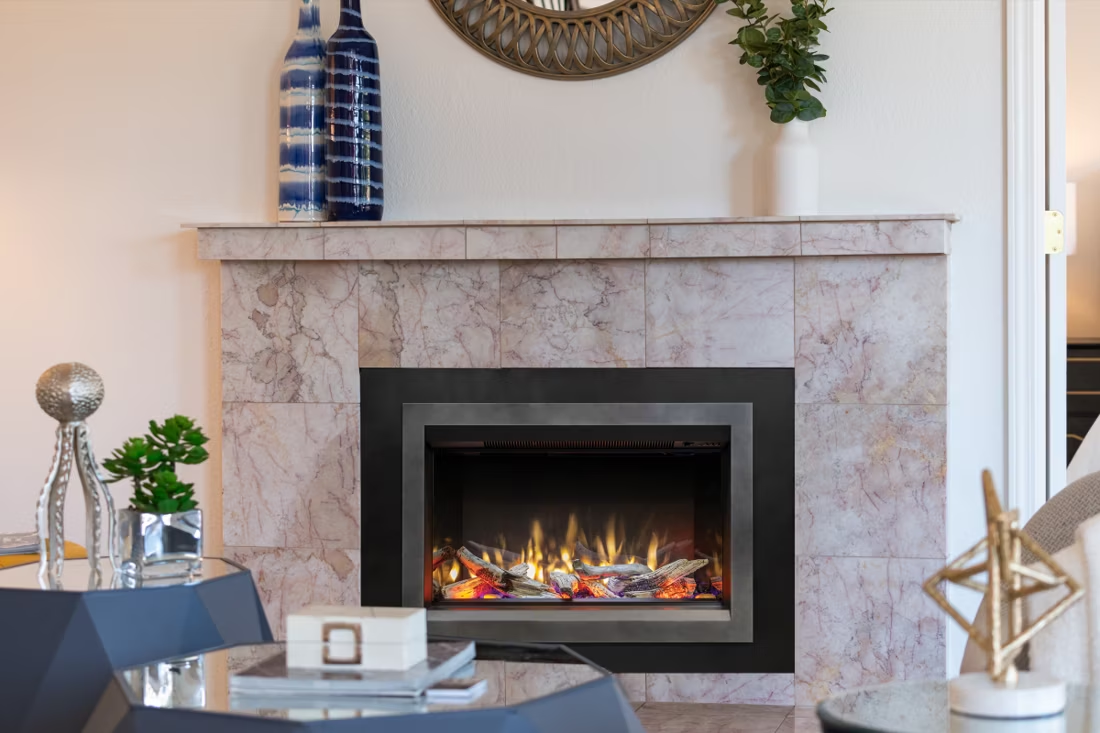
That combination—mild winters plus real air quality pressure—is exactly why electric fireplaces have found a solid niche across the Valley. There's no flue, no combustion byproduct, and no exposure to a No Burn Day under Maricopa County's Ordinance P-26, because there's nothing burning. A typical electric fireplace or insert installs for $400 to $1,200, a fraction of the $4,500-plus you'd budget for gas or wood, and running one off APS or SRP power for the occasional cool desert evening costs pennies compared to the systems built for places that actually see real winter.
Three steps. No salesperson until you're ready.
Tell us about your project
Your zip code, your situation, and the fuel you're leaning toward—or let the answers point you to one.
See what's actually available
The brands dealers within 100 miles genuinely carry—real options, never a catalog mirage.
Get your dealer & Project Guide
A trusted local dealer, plus the free Project Guide & Parts List that names every component of the job.
Frequently Asked Questions
How much does an electric fireplace installation cost in Maricopa County?
Most electric fireplace and insert installations in Maricopa County run $400 to $1,200. A plug-in log insert or freestanding unit that uses an existing outlet sits at the low end. Built-in wall-mount units or inserts that need a dedicated 120V or 240V circuit run higher, since that requires an electrician and, in some cases, an electrical permit through Maricopa County Planning & Development or your city's building department if you're inside Phoenix, Mesa, Scottsdale, or another incorporated city. Either way, it's dramatically less than the $4,500 to $10,000 typical for a gas installation in this county, since there's no gas line, no venting, and no masonry work involved.
Do I need a permit for an electric fireplace in Maricopa County?
Usually not. A freestanding or plug-in electric fireplace that draws from a standard outlet typically requires no permit at all. If you're having a built-in unit hardwired into a new dedicated circuit, that electrical work generally does require a permit—through Maricopa County Planning & Development in unincorporated areas, or through your local city building department if you're within Phoenix, Mesa, Chandler, Scottsdale, or similar. That's a much lighter process than a wood or gas installation, which triggers EPA 2020 NSPS compliance checks or gas-line inspections. There's no venting to inspect and nothing subject to the county's No Burn Day restrictions under Ordinance P-26.
Electric vs. gas fireplace—which makes more sense in Maricopa County?
Gas is standard here, and natural gas service is widely available across the Phoenix metro, so it's a real option—expect $4,500 to $10,000 installed for a direct-vent gas fireplace or insert. But given that Maricopa County only logs about 1,202 heating degree days a year, most homeowners aren't chasing serious heat output; they want the visual. Electric fireplaces give you realistic flame effects, an optional 4,000 to 9,000 BTU supplemental heater for the rare 30s-and-40s overnight, and a $400 to $1,200 install cost with none of the gas line or venting work. If you already have gas piped to the house and want a fireplace that can genuinely warm a room on a rare cold snap, gas still has a place. If ambiance and low cost are the priority, electric is usually the better fit for this climate.
What size electric fireplace do I need for a Phoenix-area home?
Sizing here is less about heat load and more about the space you're filling, since Maricopa County's mild winters rarely demand serious supplemental heat. Most units include a 4,000 to 9,000 BTU heater, which is more than enough to take the edge off a living room on a cool desert evening—you won't need the oversized, all-night-burn capacity that a Bozeman or Duluth homeowner would size for. Focus instead on matching the unit width to your wall or existing firebox opening, and confirm the electrical circuit can handle the heater option if you plan to use it for more than ambiance.
Is wood heat realistic anywhere in Maricopa County?
It's uncommon, and for good reason. Maricopa County is a PM2.5 non-attainment area with winter inversion episodes that trap smoke close to the ground, and the county actively discourages new wood-burning installations—including offering a rebate of up to $2,000 to convert an existing wood fireplace to gas. Mesquite, pinyon, and juniper are cut locally through Tonto and Prescott National Forest permits, but that wood is used far more often for grilling and smoking than for home heating. A handful of rural or higher-elevation pockets of the county still run wood stoves, but for the vast majority of Phoenix-area homes, electric or gas is the practical and code-friendlier choice.
Can I convert an old wood-burning fireplace to electric?
Yes, and it's a common project for older Maricopa County homes with a masonry firebox that's rarely used. An electric log insert or panel drops into the existing opening, the chimney can be capped or left as-is, and there's no gas line or venting to add. It's typically the least expensive conversion path in the county—often under $1,000 installed—compared to a gas conversion, which runs $4,500 to $9,500 and may qualify for the county's wood-to-gas rebate if you go that route instead.
How much maintenance does an electric fireplace need?
Very little. There's no chimney to sweep, no gas line to inspect, and no combustion byproducts to worry about. Maintenance is mostly dusting the unit, occasionally replacing an LED module or ember bed light, and checking that the electrical connection stays secure. Compare that to the annual chimney inspection recommended for wood units or the annual burner and pilot check for gas—electric is by far the lowest-upkeep option available through local Maricopa County hearth dealers.
What brands are available through local dealers in Maricopa County?
Phoenix-area hearth dealers carry a wide range of electric fireplace lines given the size of the market here—brands like Dimplex, Napoleon, and Amantii show up regularly across Phoenix, Mesa, Scottsdale, and Chandler showrooms, from built-in linear units to freestanding stove-style models and mantel packages. Because Maricopa County is one of the largest metro markets in the Southwest, availability and selection tend to be better here than in smaller counties—a local dealer can walk you through options in person rather than off a catalog page.
Does an electric fireplace actually lower my utility bill?
It won't move the needle much either way, and that's part of the appeal. Because Maricopa County only sees about 1,202 heating degree days a year, an electric fireplace's supplemental heater gets used sparingly—a handful of cool evenings rather than a full winter season. Running it off APS or SRP power costs only a few cents per hour on the heater setting, and most owners run it flame-only, with no heat, for the ambiance. There's no dedicated electric rebate parallel to the county's $2,000 wood-to-gas conversion incentive, but the low install cost and negligible operating cost make the math easy either way.
Can I put a TV above my fireplace?
Yes—with an asterisk. Fireplaces are hot and TVs don't like heat. Either put a mantel between them to deflect rising warmth, or choose a fireplace with heat-management technology that creates a cool zone on the wall above—the wall stays around 125 degrees, barely warm, while the room still gets full heat. If you like clean lines and don't want a mantel, heat management is the answer.
Does an electric fireplace need a vent or chimney?
No—that's its superpower. An electric fireplace needs a wall and an outlet, period. No vent pipe, no gas line, no clearances to design around, which is why it works in bedrooms, offices, apartments, and walls where venting a gas or wood unit would be impractical or impossible. Installation is typically the simplest and least expensive of any fireplace type.
What is an in-home preview and do I need one?
It's a visit where a hearth professional measures your space, confirms the model you picked actually works in your home, and walks the specs—framing, gas line, venting, finish work—before anything is ordered. Some details you just can't know until you see the house. Never make a down payment without one; it's the single most-skipped step that burns buyers.
Can I install a fireplace myself?
If you're putting a fire in your house on purpose, it's best to work with an expert. Unless you're genuinely experienced in framing, gas line, vent pipe, and the national code on clearances to combustibles, have a professional do it—and ideally the same company that sells you the fireplace, so warranty, service, and liability all live under one roof.
Stove and Fireplace Dealers in Maricopa County
Listings include WhyFire partner dealers, dealers we have verified as authorized for the brands we recommend, and established local businesses that carry hearth products. Every listing shows which one it is. The ones marked Preferred run on WhyFire's software, so they can show you real pricing and book your appointment right here. No manufacturer pays for placement. How we verify dealers →
Arizona Fire Features
Apache Stone - Phoenix
Green Goddess
EarthCore Industries
All American Outdoor Living
Best BBQ’s & Islands
Southwest Builders & Design, LLC
Bbq Island
Fire By James
Valley Stone
All American Outdoor Living
Diversified Builder Supply
Carefree Outdoor Living
Gilbert Fireplaces & BBQ’s
Brooksies Propane
Electric Service in Maricopa County
An electric fireplace's heater draws about 1,500 watts—pennies per hour at local rates.
Arizona Public Service
Salt River Project
Find your electric fireplace in Maricopa County.
Tell us a bit about your home and we'll match you with a trusted local dealer, plus a free Project Guide & Parts List—a plan for your electric fireplace project in Maricopa County with the exact parts and the dealer we recommend.
Find Your Fireplace →