
Electric warmth built for Citrus Park's mild desert winters.
No chimney, no gas line, no burn restrictions—just ambiance and a little supplemental warmth on the handful of cool desert nights that actually call for it.
Every Project Starts From One of These Five Situations
A climate that barely needs heat—and that's the point.
Citrus Park sits in the low desert of Maricopa County at just over 1,100 feet elevation, where the average winter low hovers around 43°F and the area has a short, mild winter heating season. Compare that to a place like Fargo, ND, which has one of the longest, most demanding winter heating seasons in the country, and it's clear this isn't a wood-stove-and-cordwood climate. Most Citrus Park homes need a heat source for a few cool weeks in December and January, not a system built to survive a hard freeze.
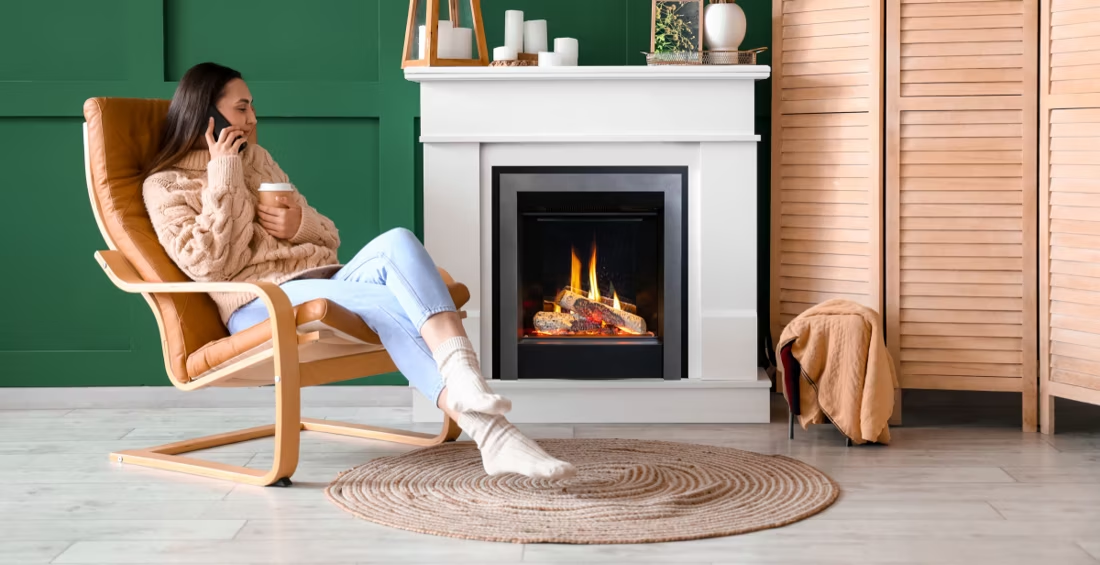
That's exactly the gap an electric fireplace fills. There's no chimney to build, no gas line to run, and no combustion byproducts to worry about in a region already flagged for non-attainment air quality and periodic wildfire smoke. Power comes from Arizona Public Service, Gila River Indian Utility Authority, or Electrical District No. 8 depending on your exact parcel, and residential rates in the area run roughly $0.14 to $0.16 per kWh—cheap enough that running a fireplace a few hours most evenings barely moves the electric bill. For Citrus Park, electric fireplaces are less about survival heat and more about ambiance, zone warmth in a bonus room, or a fireplace look in a home that was never plumbed or vented for one.
Three steps. No salesperson until you're ready.
Tell us about your project
Your zip code, your situation, and the fuel you're leaning toward—or let the answers point you to one.
See what's actually available
The brands dealers within 100 miles genuinely carry—real options, never a catalog mirage.
Get your dealer & Project Guide
A trusted local dealer, plus the free Project Guide & Parts List that names every component of the job.
Frequently Asked Questions
How much does an electric fireplace installation cost in Citrus Park?
A plug-in electric fireplace insert or freestanding unit typically runs $300 to $1,000 for the unit itself, with no real installation cost beyond plugging it in—a project most homeowners handle the same day it arrives. A built-in linear electric fireplace recessed into a wall, framed out with a mantel and a dedicated 120V or 240V circuit, is a different project: expect $1,500 to $4,000 including electrical work, framing, and finish trim. Because there's no venting or chimney involved, electric installs in Citrus Park are almost always faster and less invasive than a wood or gas project.
What size electric fireplace do I need for my home?
Given Citrus Park's mild winters, most homeowners aren't asking an electric fireplace to heat a whole house—they're looking for zone warmth in a living room, primary bedroom, or bonus space plus the visual of a real-looking flame. A standard 1,400–1,500 watt unit comfortably warms a 400–600 square foot room on the occasional cold desert evening, which covers most single rooms. Larger linear units are usually chosen for width and flame presentation rather than raw heat output—a local dealer can help you match unit size to the wall you're working with.
Do I need a permit to install an electric fireplace in Citrus Park?
A plug-in unit that uses an existing outlet doesn't require a permit. If you're having a built-in unit hardwired or a new dedicated circuit run for a linear fireplace, that electrical work falls under Maricopa County's permitting process since Citrus Park is unincorporated—a licensed electrician pulling the permit is standard practice and most hearth dealers coordinate this as part of the install. This is a much lighter lift than the building permits required for wood-burning or gas appliances in the county.
Can an electric fireplace actually heat my house, or is it just for looks?
Given Citrus Park's short, mild winter heating season, an electric fireplace can realistically handle the heating load for most of the winter in the room it's installed in—this isn't a climate that demands whole-home wood or gas heat. Most units put out 4,000–5,000 BTUs, enough to noticeably warm a bedroom or living area on a 40-degree desert night. What it won't do is replace central HVAC for the whole house, but in this climate it rarely needs to.
Is electric a good fit given the area's air quality concerns?
Yes—this is one of the clearest advantages of electric in Citrus Park. The area is flagged as a non-attainment zone with periodic winter inversion and wildfire smoke concerns, both of which can trigger wood-burning restrictions on high pollution advisory days. An electric fireplace produces zero combustion byproducts and isn't subject to any burn curtailment, so it's available for use every day of the year regardless of what Maricopa County's air quality advisory says that afternoon.
How much does it cost to run an electric fireplace in Citrus Park?
Running a typical 1,500-watt electric fireplace for one hour uses 1.5 kWh. At Arizona Public Service's residential rate of about $0.1645 per kWh, that's roughly 25 cents an hour; on GRICUA or Electrical District No. 8 service at closer to $0.1425 per kWh, it's slightly less. Running one for three or four hours most evenings during the cooler months typically adds only a few dollars a month to the electric bill—a fraction of what heating with a gas or wood appliance costs to install and maintain.
What's the best electric fireplace for a Citrus Park home?
For most desert homes here, a linear electric fireplace from a brand like Dimplex, Napoleon, or Touchstone offers realistic flame technology, adjustable heat output (including a flame-only, no-heat mode for use in summer), and a low-profile design that fits well in newer stucco-and-drywall construction common in Citrus Park and the surrounding Waddell-Surprise area. Since heat output matters less here than in colder regions, many homeowners prioritize flame realism and size over raw BTU output—a local dealer can walk you through the current lineup in person.
Can I put an electric fireplace on my patio?
Standard indoor electric fireplaces aren't rated for outdoor exposure to Arizona's heat, dust, and monsoon humidity swings, so they're not a fit for an open patio. Homeowners in Citrus Park who want fire feature ambiance on a covered, enclosed patio or sunroom sometimes install a weather-rated electric unit designed for semi-outdoor use, but for a true outdoor gathering space, a gas fire pit or gas outdoor fireplace is usually the more durable choice. A local dealer can tell you which electric models, if any, are rated for your specific setup.
Electric vs. wood—which makes more sense in Citrus Park?
Wood is available here—mesquite, pinyon, and juniper can be self-cut with a permit from Tonto or Prescott National Forest for $5 to $20 per cord during the May-to-October season—but wood heat in Citrus Park is really about the outdoor fire pit or occasional indoor ambiance rather than necessity, given how few genuinely cold nights the area sees. Electric skips the smoke, the chimney, and the wildfire-smoke-season burn concerns entirely, and it costs pennies per hour to run on APS or GRICUA power. For most Citrus Park homeowners who want a low-maintenance fireplace look with occasional real warmth, electric is the simpler, lower-commitment choice; wood remains popular mainly for backyard fire pits and weekend ambiance.
Can I put a TV above my fireplace?
Yes—with an asterisk. Fireplaces are hot and TVs don't like heat. Either put a mantel between them to deflect rising warmth, or choose a fireplace with heat-management technology that creates a cool zone on the wall above—the wall stays around 125 degrees, barely warm, while the room still gets full heat. If you like clean lines and don't want a mantel, heat management is the answer.
How much does an electric fireplace cost to run?
With the heater on, a typical unit draws about 1,500 watts—at average electric rates that's roughly 20 cents an hour. Run the flame effect alone and it costs pennies; the flames are LED-driven and use about as much power as a light bulb. There's no pilot light, no fuel delivery, and essentially no maintenance.
Does a fireplace add value to my home?
On average, a fireplace adds back to the home about the same amount you spent installing it. Add the monthly savings from heating the rooms you actually use instead of the whole house—often hundreds of dollars a year—and the value case is strong before you even count what a fire does for how your family uses the room.
Can a fireplace actually lower my heating bill?
Yes—by creating a comfort zone. A furnace heats every square foot of the house just to warm the one room you're in; a gas fireplace on low burns roughly a sixth of the gas a typical furnace does. Set the furnace around 55–60 degrees as a baseline, then heat the rooms your family actually uses. Families who heat this way commonly save $20–$60 a month.
Nearby Dealers
Hearth shops serving Citrus Park and the surrounding area. Every listing shows whether it is a WhyFire partner, a dealer we have verified as authorized for the brands we recommend, or a local business carrying hearth products. No manufacturer pays for placement. How we verify dealers →
Arizona Fire Features
Apache Stone - Phoenix
EarthCore Industries
All American Outdoor Living
Green Goddess
Fire By James
Bbq Island
Best BBQ’s & Islands
Southwest Builders & Design, LLC
All American Outdoor Living
Carefree Outdoor Living
Valley Stone
Diversified Builder Supply
Brooksies Propane
Gilbert Fireplaces & BBQ’s
Electric Service in Citrus Park
An electric fireplace's heater draws about 1,500 watts—pennies per hour at local rates.
Arizona Public Service Co
Gila River Indian Utility Authority (Gricua)
Electrical Dist No8 Maricopa
Find your electric fireplace in Citrus Park.
Tell us a bit about your home and we'll put together a free Project Guide & Parts List—the right electric fireplace or insert for your space, the parts you'll need, and a trusted local dealer to install it.
Find Your Fireplace →