
Ambiance and heat, without fighting a Phoenix summer for your HVAC budget.
With only a light winter heating load of about 1,202 a year, Phoenix rarely needs serious supplemental heat—electric fireplaces deliver the look and occasional warmth without a chimney, gas line, or wood storage.
Every Project Starts From One of These Five Situations
A mild-winter city built for low-commitment heat.
Phoenix sits at 1,244 feet in climate zone 2B, where the average winter low hovers around 44°F and the overall winter heating load adds up to just 1,202 for the entire year—compare that to a place like Bismarck, ND, which racks up over 9,000. Most Phoenix homes barely run their heat pumps a handful of weeks each winter, which makes a full wood or pellet setup overkill for nearly everyone here; both are effectively not applicable to this market, and you won't find much local infrastructure for either (no meaningful cutting-permit culture, and regional pellet supply is thin at best).
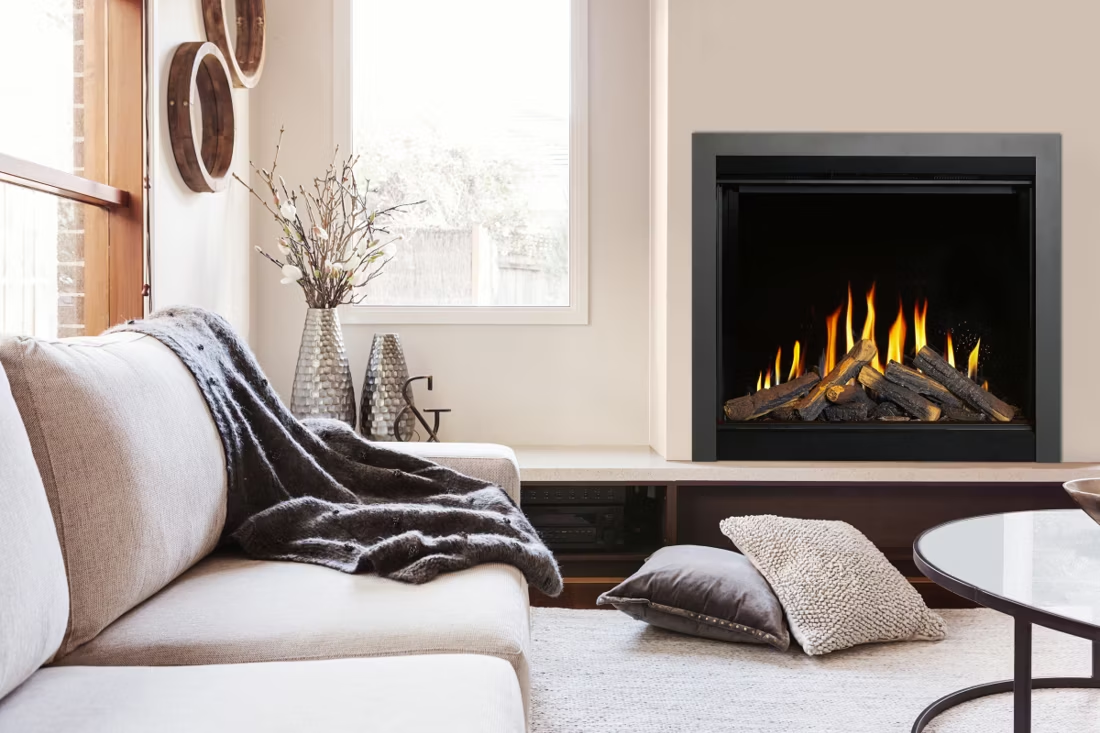
Electric fireplaces fill the gap perfectly: a media-wall insert or freestanding unit plugs into a standard outlet, adds real ambiance to a living room or primary suite, and switches on supplemental heat for the rare cold snap or early-morning chill. There's no gas line, no venting, and no permit headache—Phoenix homeowners get a fireplace that looks the part without asking their HVAC system, or Arizona Public Service, to do much extra work.
Three steps. No salesperson until you're ready.
Tell us about your project
Your zip code, your situation, and the fuel you're leaning toward—or let the answers point you to one.
See what's actually available
The brands dealers within 100 miles genuinely carry—real options, never a catalog mirage.
Get your dealer & Project Guide
A trusted local dealer, plus the free Project Guide & Parts List that names every component of the job.
Frequently Asked Questions
How much does an electric fireplace installation cost in Phoenix?
Most electric fireplace installations in Phoenix run $400 to $1,200, and that range covers the vast majority of projects—a wall-mounted unit, a built-in insert into an existing mantel surround, or a freestanding media console model. There's no venting or gas line to run, so labor is mostly electrical: adding a dedicated 120V or 240V circuit if the unit calls for one, and any carpentry for a recessed or built-in look. Simple plug-in units at the low end can be a same-day install; a fully recessed wall unit with custom trim runs toward the higher end.
Do I need a permit to install an electric fireplace in Phoenix?
In most cases, no—a plug-in or standard 120V electric fireplace doesn't require a permit through City of Phoenix Planning & Development. If your unit needs a new dedicated circuit or a 240V line, that electrical work typically requires a permit and should be pulled by a licensed electrician regardless of jurisdiction (city limits vs. unincorporated Maricopa County). A local dealer or electrician handling your install will know which category your unit falls into.
Why don't more Phoenix homes have wood stoves or pellet stoves?
Phoenix's climate simply doesn't call for it—with winter lows averaging 44°F and only a light winter heating load of about 1,202 a year, a wood or pellet appliance sized for serious heat output would run maybe a few weeks a year here. On top of that, Maricopa County is a PM2.5 non-attainment area, which means wood burning restrictions (No Burn Days) apply outside of EPA-certified appliances, and the county actually offers a rebate of up to $2,000 to convert existing wood units to gas. A handful of Phoenix homeowners keep wood stoves for cabin properties up north or for the occasional cool desert evening, but it's a niche choice here, not the default.
What's the difference between an electric fireplace and a gas fireplace for a Phoenix home?
Gas fireplaces in Phoenix typically run $4,500 to $10,000 installed, since they involve a gas line (Southwest Gas serves most of the metro), venting or direct-vent work, and framing. Electric fireplaces run $400 to $1,200 because there's no combustion, no venting, and minimal electrical work. Given how light the winter heating load is in Phoenix in a typical winter, most homeowners here choose electric purely for ambiance and occasional warmth, and reserve gas for homes that want a stronger visual flame and more heat output for entertaining spaces or primary living areas.
Will an electric fireplace actually heat a room in Phoenix, or is it just for looks?
Most electric fireplaces sold today include a real heating element—typically 1,500 watts, enough to warm a single room 300 to 400 square feet, which covers the occasional cool Phoenix morning or the rare night that dips near freezing in the low desert. You can also run most units with the heater off and just the flame visual on, which is actually how many Phoenix homeowners use them nine months out of the year given how mild winters here tend to be.
What electric utility rate should I expect running a fireplace in Phoenix?
Depending on where you're located, you'll likely be served by Arizona Public Service (around $0.1645/kWh), the City of Mesa utility (around $0.1693/kWh), or in a small area, Gila River Indian Utility Authority (around $0.1425/kWh). A 1,500-watt electric fireplace running on high for a few hours an evening costs roughly 25 to 35 cents an hour at APS rates—modest compared to running a full HVAC heat cycle, which is part of why electric fireplaces are popular as supplemental or zone heat in Phoenix rather than a whole-home heating strategy.
Can I install an electric fireplace insert into an existing masonry fireplace?
Yes, and it's a common retrofit for older Phoenix homes with a builder-grade masonry or gas fireplace that's rarely used. An electric insert slides into the existing firebox opening, plugs into a nearby outlet (or a new dedicated circuit if the unit requires more amperage), and gives you flame ambiance and light heat without needing to run a gas line or maintain a chimney. It's typically the fastest and least expensive way to bring an unused fireplace back into daily use.
What size electric fireplace do I need for my Phoenix home?
For most great rooms and open-concept living areas common in newer Phoenix construction, a 50 to 60-inch wall-mounted or built-in unit provides enough visual presence without overwhelming the room. Smaller bedrooms or home offices are usually well served by a 36 to 42-inch unit or a compact freestanding stove-style model. Because heat output matters less here than it would in a colder climate, sizing in Phoenix is driven mostly by the wall or surround dimensions and the look you want—a local dealer can measure your space and recommend the right width.
Are there rebates available for electric fireplace installs in Phoenix?
There's no direct electric fireplace rebate through APS or the other local utilities, but Maricopa County does offer up to $2,000 toward converting an existing wood-burning fireplace to a cleaner-burning option, which some homeowners apply toward a gas conversion rather than electric. If you're removing an old wood unit and replacing it with electric, it's worth asking your local dealer whether that conversion incentive applies to your specific project, since program details can shift year to year.
Can I put a TV above my fireplace?
Yes—with an asterisk. Fireplaces are hot and TVs don't like heat. Either put a mantel between them to deflect rising warmth, or choose a fireplace with heat-management technology that creates a cool zone on the wall above—the wall stays around 125 degrees, barely warm, while the room still gets full heat. If you like clean lines and don't want a mantel, heat management is the answer.
Does an electric fireplace need a vent or chimney?
No—that's its superpower. An electric fireplace needs a wall and an outlet, period. No vent pipe, no gas line, no clearances to design around, which is why it works in bedrooms, offices, apartments, and walls where venting a gas or wood unit would be impractical or impossible. Installation is typically the simplest and least expensive of any fireplace type.
Can a fireplace actually lower my heating bill?
Yes—by creating a comfort zone. A furnace heats every square foot of the house just to warm the one room you're in; a gas fireplace on low burns roughly a sixth of the gas a typical furnace does. Set the furnace around 55–60 degrees as a baseline, then heat the rooms your family actually uses. Families who heat this way commonly save $20–$60 a month.
What is an in-home preview and do I need one?
It's a visit where a hearth professional measures your space, confirms the model you picked actually works in your home, and walks the specs—framing, gas line, venting, finish work—before anything is ordered. Some details you just can't know until you see the house. Never make a down payment without one; it's the single most-skipped step that burns buyers.
Nearby Dealers
Hearth shops serving Phoenix and the surrounding area. Every listing shows whether it is a WhyFire partner, a dealer we have verified as authorized for the brands we recommend, or a local business carrying hearth products. No manufacturer pays for placement. How we verify dealers →
Arizona Fire Features
Green Goddess
Apache Stone - Phoenix
EarthCore Industries
All American Outdoor Living
Best BBQ’s & Islands
Southwest Builders & Design, LLC
Bbq Island
Fire By James
Carefree Outdoor Living
Valley Stone
Diversified Builder Supply
All American Outdoor Living
Gilbert Fireplaces & BBQ’s
Brooksies Propane
Electric Service in Phoenix
An electric fireplace's heater draws about 1,500 watts—pennies per hour at local rates.
Arizona Public Service Co
Gila River Indian Utility Authority (Gricua)
City Of Mesa - (Az)
Find your electric fireplace in Phoenix.
Tell us a bit about your home and we'll help you find a trusted local Phoenix dealer and send you a free Project Guide & Parts List—the right unit, the electrical requirements, and what it actually takes to get it installed.
Find Your Fireplace →