
Add Fireplace Ambiance Without Adding Heat Load.
Surprise winters rarely dip below the high 30s, so the appeal of an electric fireplace here is atmosphere and zone comfort, not survival heat. Find the right unit and connect with a trusted local dealer.
Every Project Starts From One of These Five Situations
Built for desert homes, not cold nights.
Surprise sits at just 1,382 feet in the West Valley with an average winter low of 39°F and only about 1,532 heating degree days a year—a fraction of what a place like Bozeman, Montana racks up in a single hard winter. There simply isn't enough sustained cold here to justify a wood stove or pellet appliance as a real heat source, which is why both are essentially absent from local building plans. Electric is the fuel that actually fits how people in Surprise use a fireplace: for the glow and focal point in a great room, not for keeping the house from freezing.
That's part of why electric has become the default choice in Surprise's fast-growing master-planned communities, from the newer builds near Marley Park to homes throughout the 85374 and 85388 zip codes. There's no chimney, no gas line, and no combustion byproducts to vent through a stucco exterior wall—just a unit that plugs in or ties into a dedicated circuit. Depending on where your home falls, your utility is either Arizona Public Service, Electrical District No. 8, or Gila River Indian Utility Authority, with residential rates in the area running roughly $0.14 to $0.165 per kWh—low enough that even daily use for ambiance costs pennies an hour.
Three steps. No salesperson until you're ready.
Tell us about your project
Your zip code, your situation, and the fuel you're leaning toward—or let the answers point you to one.
See what's actually available
The brands dealers within 100 miles genuinely carry—real options, never a catalog mirage.
Get your dealer & Project Guide
A trusted local dealer, plus the free Project Guide & Parts List that names every component of the job.
Frequently Asked Questions
How much does an electric fireplace installation cost in Surprise?
Plug-in electric inserts and freestanding units typically run $300 to $1,500 installed, since most just need a standard 120V outlet and no permit at all. Built-in linear or wall-mounted units—the kind commonly framed into a media wall in newer Surprise construction—usually run $1,500 to $4,000 once you factor in a dedicated 20-amp circuit, an electrician's time, and any custom framing or trim work. Compared to gas or wood installs elsewhere in the country, electric is by far the least invasive and least expensive path to a fireplace feature in a Surprise home.
Do I need a permit to install an electric fireplace in Surprise?
A simple plug-in unit generally requires no permit—it's treated like any other appliance. If you're installing a built-in or wall-mounted electric fireplace that needs a new dedicated circuit run from your panel, that electrical work typically does require a permit through the City of Surprise, and it should be pulled by a licensed electrician rather than a handyman. Most local hearth dealers coordinate this as part of the install so you're not chasing down inspections yourself.
What kind of electric fireplace works best for a Surprise home?
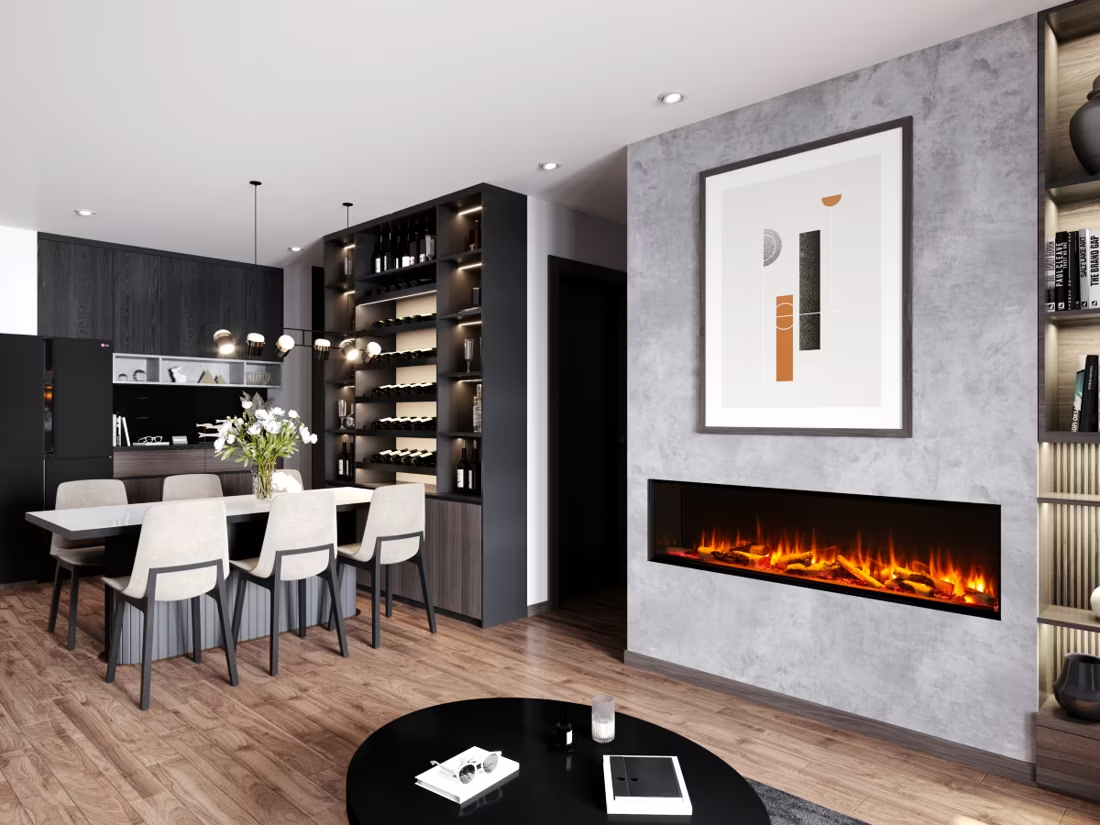
Linear wall-mounted units with LED flame technology are the most popular choice locally, largely because they fit the open-concept, media-wall layouts common in newer Surprise builds. Brands like Dimplex, Napoleon, and Amantii are widely available through hearth retailers and offer flame-only operation, so you can run the visual effect on a 100-degree July evening without kicking on any heat—a real consideration in a climate where the AC is working overtime most of the year. For homes wanting some supplemental warmth on the occasional cold desert night, look for a model with a separate heater function rated around 1,500 watts.
How much does it cost to run an electric fireplace in Surprise?
At Arizona Public Service's residential rate of roughly $0.1645 per kWh, a typical 1,500-watt electric fireplace running on heat mode costs about $0.25 per hour. In areas served by Electrical District No. 8, where rates run closer to $0.1425 per kWh, that drops to about $0.21 per hour. Most Surprise homeowners run these units flame-only without heat for the majority of the year, which draws only 30 to 100 watts—a cost so low it barely shows up on the bill.
Can I convert an old wood-burning fireplace to electric?
Yes, and it's a common project in some of Surprise's older neighborhoods, including parts of Sun City-adjacent areas built with a traditional masonry firebox that rarely if ever gets used. An electric insert slides into the existing opening, requires no chimney or venting, and can be wired to a nearby outlet or dedicated circuit. It's one of the simplest fireplace upgrades available since there's no need to address flue condition, creosote, or clearance issues the way a wood or gas conversion would require.
Electric vs. gas fireplace—which makes more sense in Surprise?
Gas gives you more real heat output and a closer-to-natural flame, which matters on the handful of nights each winter when temperatures drop into the 30s. But gas installation requires venting and a gas line, which adds cost and complexity, especially in homes without existing natural gas service—common in parts of unincorporated Maricopa County where propane is the norm instead. Electric skips all of that: no venting, no gas line, no combustion byproducts to manage in a sealed stucco home. For a climate with only about 1,500 heating degree days a year, most Surprise homeowners find electric delivers the look they want without paying for heating capacity they'll rarely use.
Why don't more Surprise homes use wood-burning fireplaces?
Surprise's climate just doesn't call for it—winter lows average 39°F, elevation is only 1,382 feet, and heating degree days sit around 1,532 for the whole year, a small fraction of what cold-climate cities like Duluth, Minnesota see in a single January. On top of that, Maricopa County is a non-attainment area for air quality, with winter inversions and wildfire smoke already a concern, which makes wood smoke an unwelcome addition on top of existing haze. A small number of homeowners keep an existing wood-burning fireplace for occasional ambiance, but almost no one in Surprise installs a new wood stove or insert as a heat source—electric and gas cover that need far more practically here.
What electrical circuit does an electric fireplace need?
Most plug-in electric fireplace inserts and freestanding units run fine on a standard 120V, 15-amp household circuit—the same as any major appliance. Built-in wall-mounted or linear units, especially larger models with a 1,500-watt heater function, often call for a dedicated 20-amp circuit to avoid tripping breakers when the heat element and other devices share a line. A licensed electrician can confirm what your specific model needs and whether your Surprise home's panel has capacity for a new circuit.
Are electric fireplaces safe for homes with kids and pets?
Electric fireplaces are generally considered the safest hearth option for households with young kids or pets, since there's no open flame, no hot glass in most models, and no combustion gases to manage—a meaningful plus in the tightly sealed, energy-efficient stucco homes common throughout newer Surprise developments. Many units also feature cool-touch surfaces and automatic shutoff timers. That said, always check the specific model's glass temperature rating, since some higher-end linear units do produce a warm front panel during heater operation.
Can I put a TV above my fireplace?
Yes—with an asterisk. Fireplaces are hot and TVs don't like heat. Either put a mantel between them to deflect rising warmth, or choose a fireplace with heat-management technology that creates a cool zone on the wall above—the wall stays around 125 degrees, barely warm, while the room still gets full heat. If you like clean lines and don't want a mantel, heat management is the answer.
Does an electric fireplace need a vent or chimney?
No—that's its superpower. An electric fireplace needs a wall and an outlet, period. No vent pipe, no gas line, no clearances to design around, which is why it works in bedrooms, offices, apartments, and walls where venting a gas or wood unit would be impractical or impossible. Installation is typically the simplest and least expensive of any fireplace type.
Does a fireplace add value to my home?
On average, a fireplace adds back to the home about the same amount you spent installing it. Add the monthly savings from heating the rooms you actually use instead of the whole house—often hundreds of dollars a year—and the value case is strong before you even count what a fire does for how your family uses the room.
What is an in-home preview and do I need one?
It's a visit where a hearth professional measures your space, confirms the model you picked actually works in your home, and walks the specs—framing, gas line, venting, finish work—before anything is ordered. Some details you just can't know until you see the house. Never make a down payment without one; it's the single most-skipped step that burns buyers.
Nearby Dealers
Hearth shops serving Surprise and the surrounding area. Every listing shows whether it is a WhyFire partner, a dealer we have verified as authorized for the brands we recommend, or a local business carrying hearth products. No manufacturer pays for placement. How we verify dealers →
All American Outdoor Living
EarthCore Industries
Apache Stone - Phoenix
Arizona Fire Features
Green Goddess
Best BBQ’s & Islands
Southwest Builders & Design, LLC
Carefree Outdoor Living
Fire By James
Bbq Island
Valley Stone
All American Outdoor Living
Diversified Builder Supply
Brooksies Propane
Gilbert Fireplaces & BBQ’s
Electric Service in Surprise
An electric fireplace's heater draws about 1,500 watts—pennies per hour at local rates.
Arizona Public Service Co
Gila River Indian Utility Authority (Gricua)
Electrical Dist No8 Maricopa
Find your electric fireplace in Surprise.
Tell us a bit about your home and we'll put together a free Project Guide & Parts List—the right electric fireplace or insert, the exact parts needed, and a trusted local dealer in Surprise to install it.
Find Your Fireplace →