
Ambiance for Cave Creek, without the smoke or the chimney.
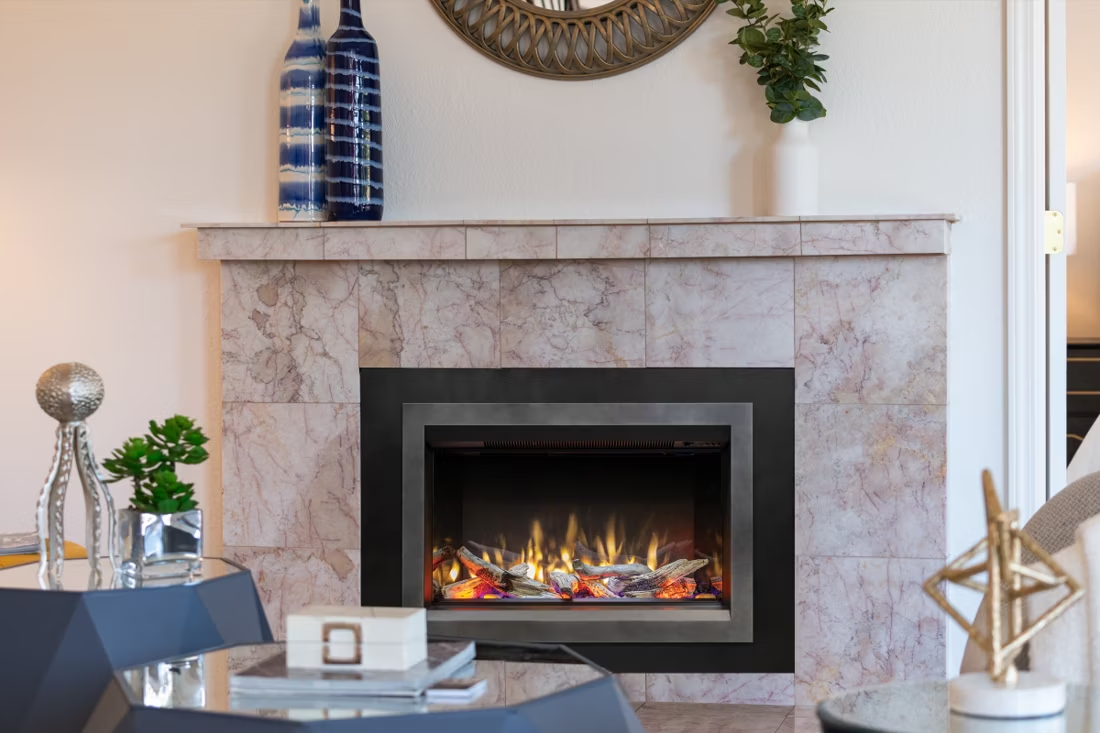
Desert evenings cool down fast in the foothills north of Scottsdale. Electric fireplaces deliver instant glow and zone heat with no venting, no gas line, and none of Maricopa County's wood-burning restrictions.
Every Project Starts From One of These Five Situations
Warmth that skips Maricopa County's clean-air rules.
Cave Creek sits at 2,546 feet in the Sonoran Desert foothills, where winter lows average a mild 42°F and the town has a light, short winter heating season—a fraction of what a place like Bozeman, MT sees in a single cold month. Most homes here don't need a heating system running through a fireplace; they need something that looks good in a great room with exposed vigas or a territorial-style mantel and takes the edge off a cool desert evening. That's exactly the niche electric fireplaces fill, and it's why they're a genuinely standard choice here, not a novelty.
There's a second, more practical reason electric wins in Cave Creek: Maricopa County is a federal non-attainment area for PM10 and ozone, and the county's Air Quality Department calls mandatory No-Burn Days throughout winter during temperature inversions—restrictions that apply to wood stoves and fireplaces, sometimes even EPA-certified ones. Electric fireplaces produce zero emissions, so they run on any day regardless of the burn-ban board. Most Cave Creek homes are served by Arizona Public Service (residential rate around $0.1645/kWh), with a smaller area served by Electrical District No. 8 Maricopa (around $0.1425/kWh)—either way, running one costs pennies compared to firewood or a gas line install.
Three steps. No salesperson until you're ready.
Tell us about your project
Your zip code, your situation, and the fuel you're leaning toward—or let the answers point you to one.
See what's actually available
The brands dealers within 100 miles genuinely carry—real options, never a catalog mirage.
Get your dealer & Project Guide
A trusted local dealer, plus the free Project Guide & Parts List that names every component of the job.
Frequently Asked Questions
How much does it cost to install an electric fireplace in Cave Creek?
A plug-in wall-mount or freestanding electric unit typically runs $300 to $1,200 installed, since most just need a standard outlet and mounting hardware—no chimney, gas line, or venting involved. A built-in linear electric fireplace set into custom cabinetry or a stone surround (popular in Cave Creek's territorial and Southwestern-style great rooms) runs $1,500 to $4,000 once framing, a dedicated 20-amp circuit, and finish work are factored in. A local dealer can give you a firm number after seeing your wall and electrical panel.
Do I need a permit to install an electric fireplace in Cave Creek?
Usually not for a self-contained, plug-in unit—it's treated like any other appliance. If you're hardwiring a built-in unit or adding a new dedicated circuit, a licensed electrician will typically pull an electrical permit through Maricopa County, but there's no building permit, chimney inspection, or air-quality sign-off required the way there is for a wood-burning installation. That's one of the biggest practical advantages of going electric here.
What's the difference between an electric fireplace, insert, and stove?
A wall-mount or built-in electric fireplace functions almost like framed art on a wall—thin profile, no existing firebox needed. An electric insert is sized to slide into an existing masonry firebox, which is a common retrofit for older Cave Creek homes near downtown that still have an original wood-burning fireplace opening but no interest in burning wood or dealing with a chimney. A freestanding electric stove mimics a wood or pellet stove's footprint and can sit anywhere near an outlet, which works well in casitas or additions where running new gas or masonry isn't practical.
Will an electric fireplace actually heat my house?
Most electric fireplaces put out roughly 5,000 to 9,000 BTU from a standard 1,500-watt heating element—enough to comfortably warm a single room of 400 to 1,000 square feet, not a whole house. Given Cave Creek's mild profile (42°F average winter low, with only a light, short winter heating season), that's usually exactly the amount of heat homeowners want: supplemental warmth for a great room, primary suite, or covered patio on the occasional cold desert night, not a replacement for central HVAC.
What does it cost to run an electric fireplace here?
On Arizona Public Service's residential rate of about $0.1645 per kWh, a standard 1,500-watt unit running on its heat setting costs roughly $0.25 per hour. Homes served by Electrical District No. 8 Maricopa, at closer to $0.1425 per kWh, run about $0.21 per hour. Either way, that's inexpensive compared to the ongoing cost of firewood permits through Tonto or Prescott National Forest, and there's no fuel to haul or store.
Is electric heat or ambiance the main draw in a climate this mild?
Mostly ambiance, with heat as a bonus. With winter lows averaging 42°F, Cave Creek homeowners generally aren't leaning on a fireplace to keep a room warm overnight the way a household in Duluth or Fargo would. Instead, electric units get used for the flame effect on cool evenings, during the handful of nights that dip into the 30s, and on covered patios where a weatherproof outdoor-rated model extends the outdoor living season without smoke drifting over a neighbor's yard.
How do Maricopa County's No-Burn Days affect my fireplace choice?
Maricopa County's Air Quality Department issues mandatory No-Burn Day restrictions during winter inversions, when the area—designated a non-attainment zone for PM10 and ozone—traps smoke and particulates close to the ground. On posted No-Burn Days, wood-burning fireplaces and stoves can't legally operate, including many EPA-certified models. Electric fireplaces are exempt from all of it since they produce no combustion byproducts, which is a real reason more Cave Creek homeowners are choosing electric over a wood-burning mesquite or pinyon fire for their primary living space fireplace, even if they still keep a wood stove for backup.
Will my electric fireplace work during a power outage?
No—electric fireplaces need continuous power to run the heating element, blower, and flame display, so they shut off during an APS or Electrical District No. 8 outage just like any other appliance. Outages in Cave Creek are typically short, but if backup heat during a storm matters to you, a small wood stove burning local mesquite or pinyon (cut under a Tonto National Forest permit for $5 to $20 per cord) gives you a fuel source that doesn't depend on the grid.
Electric vs. gas vs. wood—which is right for my Cave Creek home?
Wood delivers the most heat and works during power outages, but it's subject to Maricopa County's No-Burn Day restrictions and requires sourcing mesquite, pinyon, or juniper and dealing with ash and chimney maintenance. Gas gives instant, code-compliant heat and can be run on propane where natural gas isn't available, but it requires a gas line or tank and typically a bigger installation budget. Electric is the simplest and cleanest option—no fuel, no venting, no emissions, and no exposure to burn bans—which is why it's become a standard, not a niche, choice for the great rooms and patios common in Cave Creek's custom desert homes. Many homeowners here pair a wood stove for genuine backup heat with an electric unit for everyday ambiance in the main living space.
Can I put a TV above my fireplace?
Yes—with an asterisk. Fireplaces are hot and TVs don't like heat. Either put a mantel between them to deflect rising warmth, or choose a fireplace with heat-management technology that creates a cool zone on the wall above—the wall stays around 125 degrees, barely warm, while the room still gets full heat. If you like clean lines and don't want a mantel, heat management is the answer.
How much does an electric fireplace cost to run?
With the heater on, a typical unit draws about 1,500 watts—at average electric rates that's roughly 20 cents an hour. Run the flame effect alone and it costs pennies; the flames are LED-driven and use about as much power as a light bulb. There's no pilot light, no fuel delivery, and essentially no maintenance.
How much should I budget for a fireplace?
For an average home—covering the fireplace, the vent pipe, and basic installation—a budget between $3,900 and $5,500 gives you a lot of options across wood, gas, and pellet. By the time you add finish work, gas line, and electrical, the average complete installation lands between $5,000 and $12,000 all-in. In a remodel or new build, a good rule is to put about 2.5% of the total project cost toward the fireplace.
Does a fireplace add value to my home?
On average, a fireplace adds back to the home about the same amount you spent installing it. Add the monthly savings from heating the rooms you actually use instead of the whole house—often hundreds of dollars a year—and the value case is strong before you even count what a fire does for how your family uses the room.
Nearby Dealers
Hearth shops serving Cave Creek and the surrounding area. Every listing shows whether it is a WhyFire partner, a dealer we have verified as authorized for the brands we recommend, or a local business carrying hearth products. No manufacturer pays for placement. How we verify dealers →
Carefree Outdoor Living
All American Outdoor Living
EarthCore Industries
Apache Stone - Phoenix
Green Goddess
Best BBQ’s & Islands
Southwest Builders & Design, LLC
Arizona Fire Features
Valley Stone
Bbq Island
Diversified Builder Supply
Fire By James
Gilbert Fireplaces & BBQ’s
All American Outdoor Living
Brooksies Propane
Electric Service in Cave Creek
An electric fireplace's heater draws about 1,500 watts—pennies per hour at local rates.
Arizona Public Service Co
Gila River Indian Utility Authority (Gricua)
Electrical Dist No8 Maricopa
Find your electric fireplace in Cave Creek.
Tell us a bit about your home and we'll put together a free Project Guide & Parts List for your electric fireplace project—sized right and matched with a trusted local dealer in the Cave Creek area.
Find Your Fireplace →