
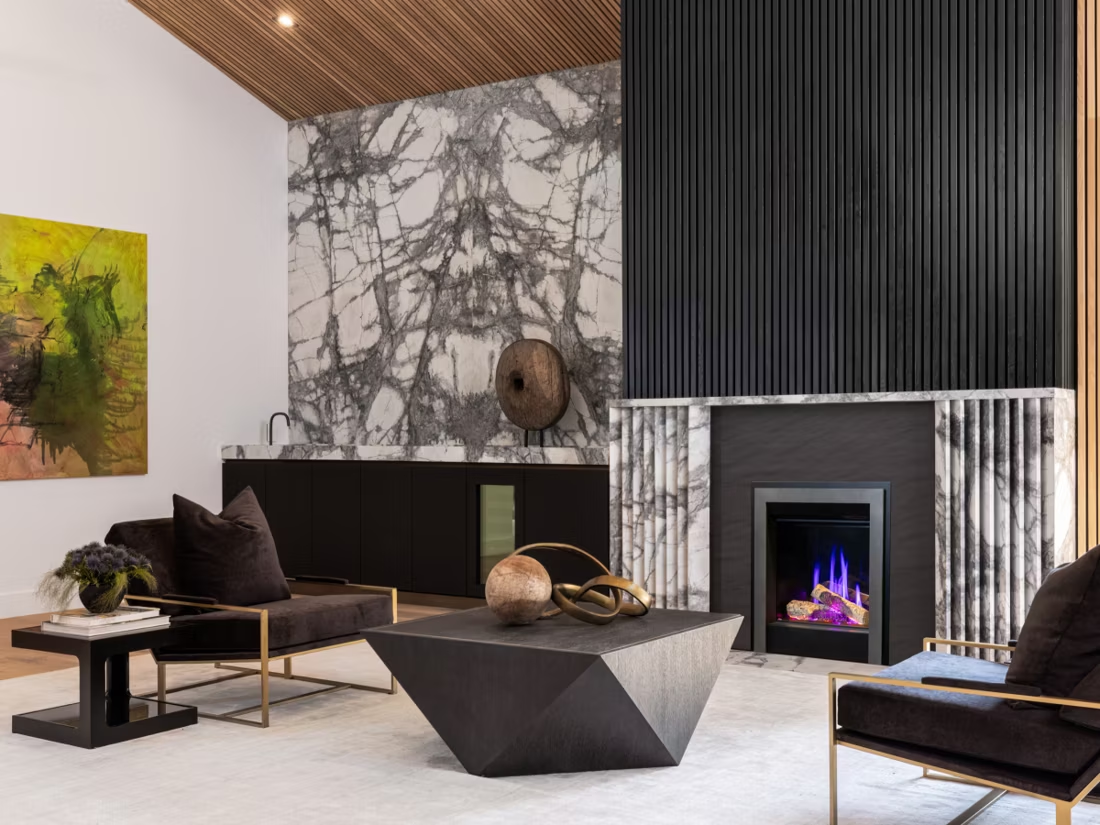
An electric fireplace built for Mesa's mild desert winters.
Winters here rarely dip below the 40s, so Mesa homeowners choose electric fireplaces for ambiance and zone comfort—no gas line, no chimney, and no wood-smoke restrictions to navigate. Find the right unit and connect with a trusted local dealer.
Every Project Starts From One of These Five Situations
The desert doesn't need a wood-burning heat source.
Mesa sits at 1,325 feet in the Sonoran Desert, climate zone 2B, where the average winter low is a mild 41°F and the city has a short, mild heating season—roughly a fifth of the winter heating load a city like Bozeman, Montana racks up in an average winter. Wood stoves and pellet stoves are essentially absent from the local hearth market here, and for good reason: Maricopa County is a federal non-attainment area for fine particulate matter, and the Maricopa County Air Quality Department issues No-Burn Day advisories on the coldest, stillest winter nights specifically because wood smoke settles into the valley air.
That leaves electric as the practical, code-simple choice for homeowners who want the look and feel of a fireplace without adding a heat load their AC has to fight all summer. Electric fireplaces and inserts installed by a local electrician or hearth dealer typically need nothing more than a standard or dedicated outlet—no chimney, no gas line, no venting, and no HOA argument about smoke drifting into a neighbor's yard. Whether your home is served by City of Mesa Electric, Electrical District No. 8, or Gila River Indian Utility Authority, the fireplace itself draws modest power and runs on whatever standard household circuit your electrician specifies.
Three steps. No salesperson until you're ready.
Tell us about your project
Your zip code, your situation, and the fuel you're leaning toward—or let the answers point you to one.
See what's actually available
The brands dealers within 100 miles genuinely carry—real options, never a catalog mirage.
Get your dealer & Project Guide
A trusted local dealer, plus the free Project Guide & Parts List that names every component of the job.
Frequently Asked Questions
How much does an electric fireplace installation cost in Mesa?
Costs vary widely by type. A plug-in freestanding or insert unit runs $300 to $900 installed, since it just needs an existing outlet. A built-in wall unit or a linear electric fireplace set into custom cabinetry or a media wall runs $1,500 to $4,000 once framing, a recessed niche, and a dedicated electrical circuit are factored in. Because Mesa electric installs skip the gas line and chimney work you'd see with other fuels, they're consistently the least expensive hearth upgrade offered through local dealers.
Is an electric fireplace enough heat for a Mesa winter?
For most Mesa homes, yes—and often more than enough. With an average winter low around 41°F and a short, mild heating season, Mesa's cold season is short and mild compared to almost anywhere else in the country. A 1,500-watt electric insert or built-in unit can comfortably take the chill off a living room, bedroom, or den on the handful of nights each winter when temperatures dip into the 30s. Electric fireplaces here get chosen far more often for ambiance and zone comfort than as a primary heat source, since central AC and heat pumps already handle whole-home climate control.
Do I need a permit to install an electric fireplace in Mesa?
In most cases, no separate building permit is required for a plug-in electric fireplace or insert, since there's no gas line, venting, or structural chimney work involved. If your project includes a built-in unit with new framing, a recessed wall niche, or a new dedicated electrical circuit, the City of Mesa Building Safety Division may require an electrical permit for that circuit work. A licensed local electrician or hearth dealer familiar with Mesa's process can usually tell you within a few minutes whether your specific project needs one.
Which electric utility powers my fireplace, and does it affect running cost?
Most Mesa homes are served by City of Mesa Electric, though some areas near the edges of the city fall under Electrical District No. 8 of Maricopa County or Gila River Indian Utility Authority (GRICUA). Residential rates across these providers run roughly 14 to 17 cents per kWh. A typical 1,500-watt electric fireplace run for four hours a night costs somewhere around 85 cents to a dollar a day to operate—inexpensive compared to running central AC, but worth knowing if you're leaning on it as supplemental heat rather than pure ambiance.
What's the difference between an electric insert, a wall-mount, and a freestanding electric fireplace?
An electric insert is built to slide into an existing masonry fireplace opening or a custom-built niche, and it's the most popular option for Mesa homes converting an unused, decorative wood-burning firebox into something that actually gets used. A wall-mount unit hangs flush like a flat-screen TV and works well in bedrooms or dens without an existing hearth opening. A freestanding electric stove or mantel unit needs nothing beyond an outlet and can move between rooms, or even between homes if you rent. Local dealers can walk you through which fits your specific room and any existing fireplace opening.
Can I install a wood-burning fireplace in my Mesa home instead?
You can, but it's uncommon here for a reason. Maricopa County is a federal non-attainment area for fine particulate matter, and the county's Air Quality Department calls No-Burn Days on the stillest, coldest winter nights—exactly when a wood fire would otherwise get the most use. Combined with Mesa's mild winters and short heating season, that's why wood and pellet stoves are essentially absent from the local hearth market, and why most homeowners who want the fireplace look here choose electric or gas instead.
Electric vs. gas fireplace—which makes more sense for a Mesa home?
Gas service is available across most of Mesa and remains a solid choice for homeowners who want a stronger flame presentation and real radiant heat for the handful of genuinely cold mornings each winter. Electric is the lower-cost, lower-maintenance option—no gas line, no annual burner service, and no combustion byproducts to vent. Given how mild Mesa's winters run, plenty of homeowners choose electric purely for the flame effect and ambient glow, leaving actual climate control to the AC and heat pump. If you want real heat output for shoulder-season mornings, gas edges out electric; if you want low-cost ambiance with the simplest install, electric wins.
Does adding an electric fireplace help resale value in Mesa?
Local Realtors and hearth dealers report that a well-placed electric fireplace—especially a linear unit built into a great-room media wall—reads as a modern amenity in Mesa's newer subdivisions, where a lot of homes were built without any fireplace at all. Because installation doesn't require structural chimney work, it's one of the easier upgrades to add to an existing living room or primary bedroom wall, which is part of why it's become a popular pre-listing improvement across East Valley resale markets like Mesa, Gilbert, and Queen Creek.
How much maintenance does an electric fireplace need in a desert climate?
Very little compared to gas or wood. There's no annual chimney sweep, no gas line inspection, and no burner service. Maintenance is mostly limited to dusting the unit, occasionally replacing an LED light strip or heater element after years of use, and keeping the heater fan's intake vents free of dust—a real consideration in Mesa's dry, dusty desert air. Most units carry manufacturer warranties of one to three years on the heating element, and local dealers can handle repairs if something does go wrong.
Can I put a TV above my fireplace?
Yes—with an asterisk. Fireplaces are hot and TVs don't like heat. Either put a mantel between them to deflect rising warmth, or choose a fireplace with heat-management technology that creates a cool zone on the wall above—the wall stays around 125 degrees, barely warm, while the room still gets full heat. If you like clean lines and don't want a mantel, heat management is the answer.
How much does an electric fireplace cost to run?
With the heater on, a typical unit draws about 1,500 watts—at average electric rates that's roughly 20 cents an hour. Run the flame effect alone and it costs pennies; the flames are LED-driven and use about as much power as a light bulb. There's no pilot light, no fuel delivery, and essentially no maintenance.
How much should I budget for a fireplace?
For an average home—covering the fireplace, the vent pipe, and basic installation—a budget between $3,900 and $5,500 gives you a lot of options across wood, gas, and pellet. By the time you add finish work, gas line, and electrical, the average complete installation lands between $5,000 and $12,000 all-in. In a remodel or new build, a good rule is to put about 2.5% of the total project cost toward the fireplace.
Can I install a fireplace myself?
If you're putting a fire in your house on purpose, it's best to work with an expert. Unless you're genuinely experienced in framing, gas line, vent pipe, and the national code on clearances to combustibles, have a professional do it—and ideally the same company that sells you the fireplace, so warranty, service, and liability all live under one roof.
Nearby Dealers
Hearth shops serving Mesa and the surrounding area. Every listing shows whether it is a WhyFire partner, a dealer we have verified as authorized for the brands we recommend, or a local business carrying hearth products. No manufacturer pays for placement. How we verify dealers →
Gilbert Fireplaces & BBQ’s
Valley Stone
Diversified Builder Supply
Brooksies Propane
All American Outdoor Living
Bbq Island
Fire By James
Southwest Builders & Design, LLC
Best BBQ’s & Islands
Green Goddess
Arizona Fire Features
Apache Stone - Phoenix
EarthCore Industries
Carefree Outdoor Living
All American Outdoor Living
Electric Service in Mesa
An electric fireplace's heater draws about 1,500 watts—pennies per hour at local rates.
Gila River Indian Utility Authority (Gricua)
City Of Mesa - (Az)
Electrical Dist No8 Maricopa
Find your electric fireplace in Mesa.
Tell us a bit about your home and room, and we'll send a free Project Guide & Parts List for your Mesa electric fireplace project—plus a match to a trusted local dealer who can install it.
Find Your Fireplace →