
Warm, Bright, and Ready in Minutes—No Chimney Required.
Glendale winters rarely call for serious heat, but an electric fireplace still delivers ambiance and zone warmth on the occasional cool desert night—with no venting, no gas line, and no burn-day restrictions.
Every Project Starts From One of These Five Situations
Heat that matches the desert's mild winters.
Glendale sits at just 1,145 feet in the Sonoran Desert, where winter lows average 41°F and the city logs only about 1,334 heating degree days a year—a fraction of what a cold-climate city like Duluth, MN racks up before Thanksgiving. There's no real need for a whole-home wood or pellet heating system here, and both are effectively off the table for most residents: mesquite, pinyon, and juniper are far more common on the smoker than in a home firebox in Maricopa County.
That's exactly why electric fireplaces do so well in Glendale. They install into stucco and drywall construction without a chimney or gas line, they run clean with zero emissions on the days Maricopa County Air Quality issues a No-Burn advisory during winter inversions, and they give you real supplemental warmth on the handful of nights each winter that dip into the 30s. Whether it's a wall-mounted linear unit in a great room or a freestanding stove-style piece in a den, electric fireplaces here are chosen for ambiance first and backup warmth second—not for carrying the whole heating load, which your HVAC system already handles the rest of the year.
Three steps. No salesperson until you're ready.
Tell us about your project
Your zip code, your situation, and the fuel you're leaning toward—or let the answers point you to one.
See what's actually available
The brands dealers within 100 miles genuinely carry—real options, never a catalog mirage.
Get your dealer & Project Guide
A trusted local dealer, plus the free Project Guide & Parts List that names every component of the job.
Frequently Asked Questions
How much does an electric fireplace installation cost in Glendale?
Plug-in electric fireplace inserts and freestanding units are the least expensive option, often running $300 to $1,200 installed since they don't require an electrician—just an existing outlet. Hardwired built-in wall units or linear fireplaces recessed into drywall or stucco typically run $1,500 to $4,000 once you factor in a licensed electrician for a dedicated circuit and any custom surround or mantel work. Local dealers can walk you through both paths during an in-home or virtual consultation.
Do I need a permit to install an electric fireplace in Glendale?
A simple plug-in unit that uses an existing outlet generally doesn't require a permit. A hardwired, built-in electric fireplace does need an electrical permit through the City of Glendale Building Safety Division, since it involves running a new circuit. Most hearth dealers and electricians who handle these installs pull the permit as part of the job, so it's rarely something you have to manage yourself.
Can an electric fireplace actually heat a room in Glendale?
Most residential electric fireplaces top out around 1,500 watts, which delivers roughly 5,000 BTUs of supplemental heat—enough to comfortably warm a single room during Glendale's cool snaps, when overnight lows drop into the 30s and 40s. It won't replace central heat on the rare freeze warning night, but for the handful of weeks each winter when a little extra warmth is welcome in a living room or bedroom, it does the job well and costs far less to run than cranking the whole-house heat pump.
What's the best type of electric fireplace for a Glendale home?
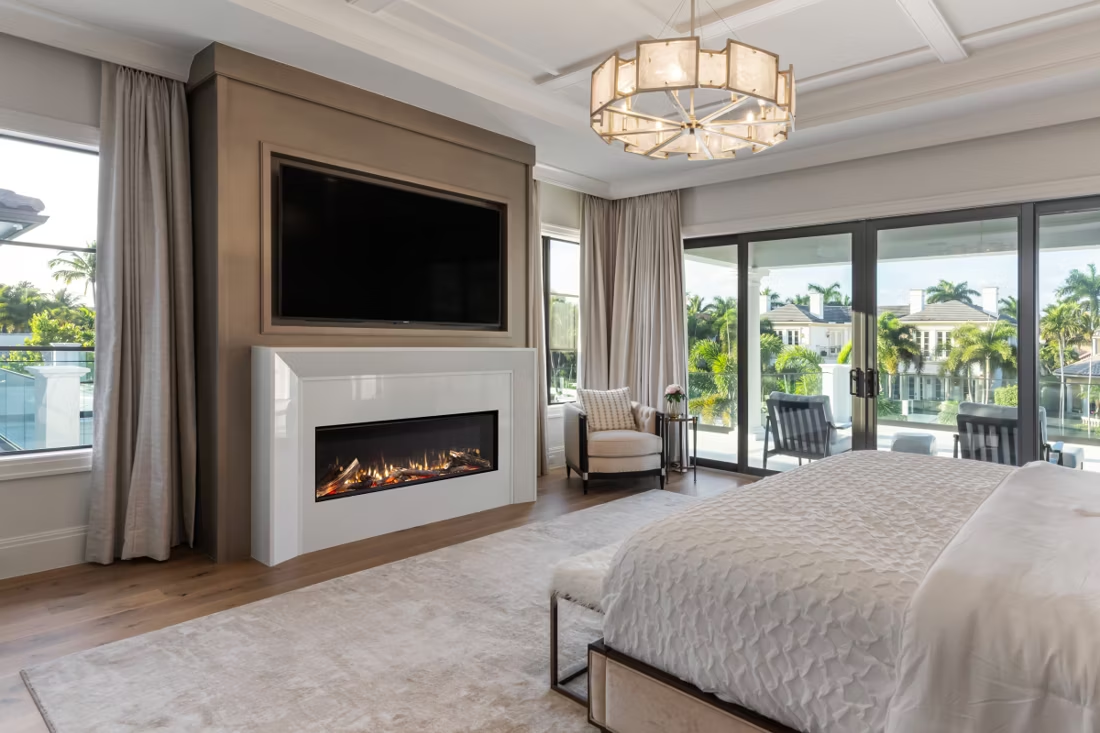
Wall-mounted linear units are popular in Glendale's newer open-concept builds because they hang flush against drywall or stucco without eating up floor space and give a modern look to a great room. For a more traditional den or family room, a freestanding stove-style electric unit offers the same supplemental heat with a classic silhouette. Built-in units set into a custom mantel surround are common in remodels where homeowners want the fireplace to be a focal point rather than an accessory.
Why isn't wood or pellet heat common in Glendale?
With only about 1,334 heating degree days a year and winter lows averaging 41°F, Glendale simply doesn't have the sustained cold that makes wood or pellet heat practical the way it would in a place like Bozeman, MT. Maricopa County is also a non-attainment area for air quality, and winter inversions regularly trigger No-Burn advisories that restrict wood-burning appliances—so even homeowners who like the idea of a wood stove often can't count on being able to use it. Local mesquite, pinyon, and juniper are readily available, but they show up far more often in backyard grills and smokers than in home heating systems.
How much does it cost to run an electric fireplace in Glendale?
Electric rates in the Glendale area run roughly $0.14 to $0.17 per kWh depending on your provider—Electrical District No. 8, City of Mesa Electric, or Gila River Indian Utility Authority, depending on your neighborhood. A 1,500-watt fireplace run for four hours costs somewhere between 85 cents and just over a dollar. Even used nightly through the cooler months, most homeowners see only a modest bump on their electric bill, which is part of the appeal compared to running central heat for the same effect.
Electric vs. gas fireplace—which makes more sense for a Glendale home?
Gas fireplaces deliver more real heat output and a more authentic flame, and they're a standard option throughout the Phoenix metro for homeowners who want a true heating appliance with the ambiance to match. Electric fireplaces cost less to install, need no venting or gas line, and work in nearly any room regardless of exterior wall access—a real advantage in Glendale's stucco and block construction. For most Glendale homes where the fireplace is about ambiance and light supplemental warmth rather than serious heat, electric is the simpler, lower-cost choice. Homeowners who want a more substantial secondary heat source or a more traditional flame often lean gas instead.
Will my electric fireplace work during a power outage?
No—electric fireplaces require power to run the heating element, flame effect, and blower, so they'll shut off along with everything else during an outage. This is a meaningful difference from wood heat, which works entirely off-grid. Since Glendale's power grid is generally reliable and outages tend to be short, most homeowners here choose electric for everyday ambiance and convenience rather than emergency backup heat.
Where should I buy and install an electric fireplace in Glendale?
Big-box stores sell plug-in units off the shelf, but built-in and hardwired installations are where working with a real hearth dealer pays off—proper electrical sizing, surround construction, and code compliance with the City of Glendale Building Safety Division aren't things a general contractor always gets right on the first try. Find My Fireplace doesn't sell or ship product ourselves; we match you with a trusted local dealer who knows what's actually installable in your home and hand you a free planning packet before you commit to anything.
Can I put a TV above my fireplace?
Yes—with an asterisk. Fireplaces are hot and TVs don't like heat. Either put a mantel between them to deflect rising warmth, or choose a fireplace with heat-management technology that creates a cool zone on the wall above—the wall stays around 125 degrees, barely warm, while the room still gets full heat. If you like clean lines and don't want a mantel, heat management is the answer.
Do electric fireplaces actually produce heat?
Yes—most put out around 4,800–5,000 BTUs from a standard outlet, which comfortably warms a bedroom, office, or den as a comfort-zone heater. What they won't do is carry a whole house the way wood, gas, or pellet can. Think of electric as ambiance-first with honest supplemental heat: flames on with no heat in July, flames plus warmth in January.
How much should I budget for a fireplace?
For an average home—covering the fireplace, the vent pipe, and basic installation—a budget between $3,900 and $5,500 gives you a lot of options across wood, gas, and pellet. By the time you add finish work, gas line, and electrical, the average complete installation lands between $5,000 and $12,000 all-in. In a remodel or new build, a good rule is to put about 2.5% of the total project cost toward the fireplace.
Can a fireplace actually lower my heating bill?
Yes—by creating a comfort zone. A furnace heats every square foot of the house just to warm the one room you're in; a gas fireplace on low burns roughly a sixth of the gas a typical furnace does. Set the furnace around 55–60 degrees as a baseline, then heat the rooms your family actually uses. Families who heat this way commonly save $20–$60 a month.
Nearby Dealers
Hearth shops serving Glendale and the surrounding area. Every listing shows whether it is a WhyFire partner, a dealer we have verified as authorized for the brands we recommend, or a local business carrying hearth products. No manufacturer pays for placement. How we verify dealers →
Arizona Fire Features
Apache Stone - Phoenix
EarthCore Industries
All American Outdoor Living
Green Goddess
Best BBQ’s & Islands
Southwest Builders & Design, LLC
Bbq Island
Fire By James
Carefree Outdoor Living
Valley Stone
All American Outdoor Living
Diversified Builder Supply
Gilbert Fireplaces & BBQ’s
Brooksies Propane
Electric Service in Glendale
An electric fireplace's heater draws about 1,500 watts—pennies per hour at local rates.
Gila River Indian Utility Authority (Gricua)
City Of Mesa - (Az)
Electrical Dist No8 Maricopa
Find your electric fireplace in Glendale.
Tell us a bit about your home and we'll put together a free Project Guide & Parts List for your Glendale electric fireplace project, including the exact parts and a recommended local dealer to install it.
Find Your Fireplace →