
Fireplace Ambiance for Tempe's Mild Winters, No Chimney Required.
With winter lows averaging 38°F and only about 1,183 heating degree days a year, Tempe homes don't need a furnace-replacement fireplace—they need ambiance and the occasional evening of real warmth. Find the right electric unit and get matched with a trusted local dealer.
Every Project Starts From One of These Five Situations
Tempe winters call for ambiance, not BTUs.
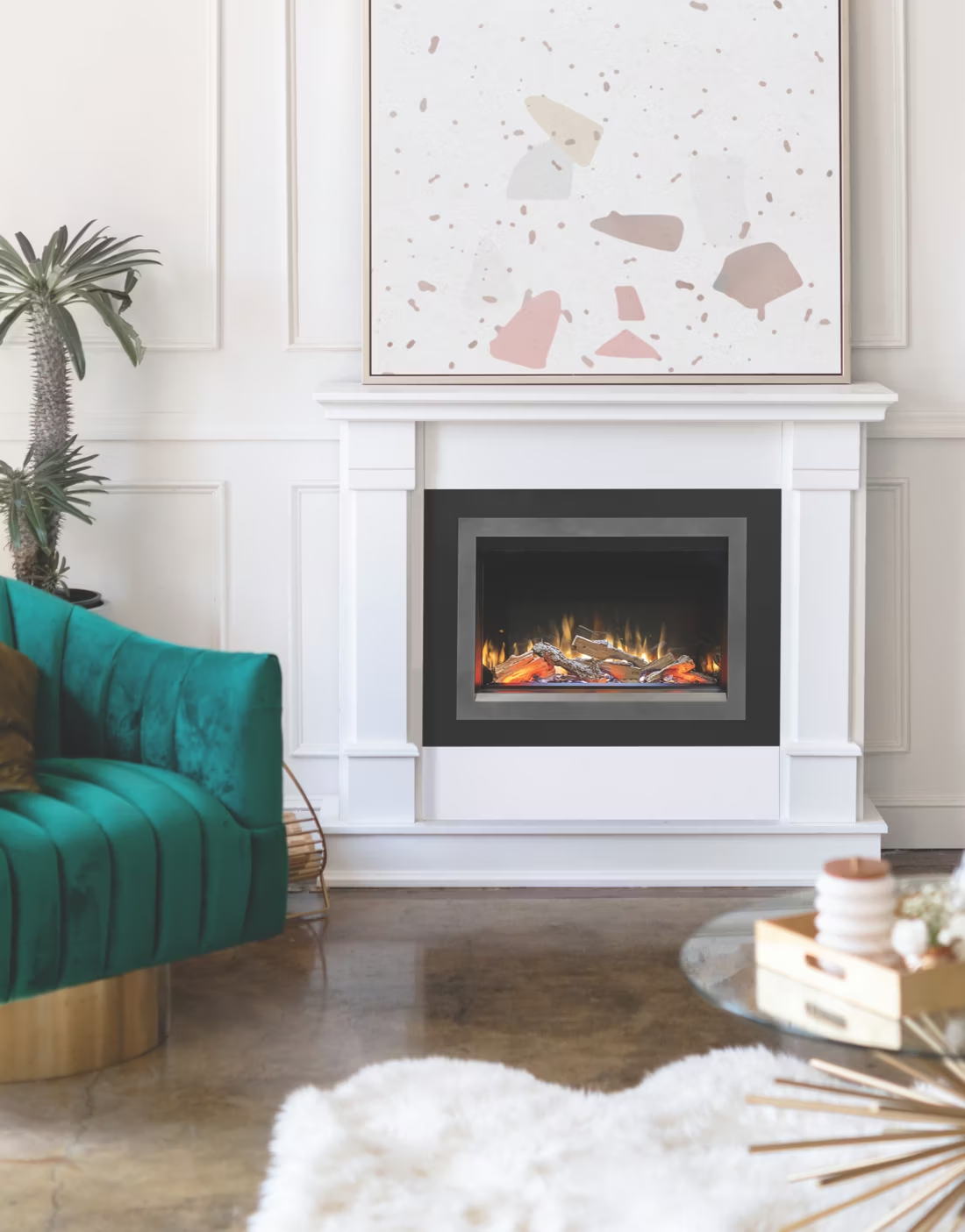
Tempe sits at 1,176 feet in climate zone 2B, where a hard freeze is a novelty and 1,183 heating degree days barely register next to a place like Fargo, ND, which racks up ten times that in a single winter. Most homes here run on heat pumps or mini-splits for the handful of genuinely cold nights, which means a fireplace's job in Tempe is less about survival heat and more about the glow of a media wall, a cozy reading nook, or a rental unit near ASU where tenants want warmth without a gas line or masonry chimney.
It also helps that Maricopa County is a designated non-attainment area for particulate matter, with the Maricopa County Air Quality Department issuing winter 'no-burn' advisories during inversion events—restrictions that simply don't apply to electric units. There's no smoke, no ash, and no cutting permit to track down through Tonto or Prescott National Forest. Depending on your neighborhood, your power comes from GRICUA, City of Mesa Electric, or Electrical District No. 8 Maricopa, with residential rates running roughly $0.1425 to $0.1693 per kWh—cheap enough that even daily use of a 1,500-watt insert adds only a few dollars a month to the bill.
Three steps. No salesperson until you're ready.
Tell us about your project
Your zip code, your situation, and the fuel you're leaning toward—or let the answers point you to one.
See what's actually available
The brands dealers within 100 miles genuinely carry—real options, never a catalog mirage.
Get your dealer & Project Guide
A trusted local dealer, plus the free Project Guide & Parts List that names every component of the job.
Frequently Asked Questions
How much does an electric fireplace installation cost in Tempe?
A plug-in electric insert or freestanding unit that runs off a standard 120V outlet typically costs $300 to $1,200 installed, since there's no venting, gas line, or masonry work involved. A built-in wall unit or linear electric fireplace wired into a dedicated 240V circuit—common in newer Tempe construction and remodels near South Tempe and the Warner Ranch area—runs closer to $1,500 to $4,000 once an electrician runs new wiring and a finish carpenter frames the surround. Either way, costs stay well below a gas or wood install because there's no chimney, flue, or combustion air intake to plan around.
Do I need a permit to install an electric fireplace in Tempe?
In most cases, no. A plug-in or cord-and-outlet electric fireplace is treated like any other appliance and doesn't trigger a permit. Where it changes is if you're adding a new dedicated circuit or moving an outlet behind a built-in unit—that electrical work typically needs sign-off through the City of Tempe's building and electrical permitting process, and it should be pulled by a licensed electrician rather than a handyman. Local dealers who install built-in units routinely coordinate this as part of the job.
Which electric utility serves my home, and what will an electric fireplace actually cost to run?
Depending on your zip code, Tempe homes are served by GRICUA, City of Mesa Electric, or Electrical District No. 8 Maricopa, with residential rates running $0.1425 to $0.1693 per kWh. A typical 1,500-watt electric fireplace costs roughly $0.21 to $0.25 per hour to run at full heat output, and far less on ambiance-only flame settings that use closer to 100 watts. Running one a few hours a night through Tempe's mild winter adds up to single-digit dollars a month on most bills.
Why isn't wood or pellet heat really an option in Tempe?
Between the climate and the air quality rules, wood and pellet appliances don't make much sense here. Winter lows average 38°F and the heating season barely registers at 1,183 degree days, so there's rarely enough sustained cold to justify a wood-burning setup. On top of that, Maricopa County is a federal non-attainment area for particulate matter, and the county's Air Quality Department issues seasonal no-burn advisories during winter inversions that restrict wood smoke. A small number of rural properties near Tonto or Prescott National Forest still burn mesquite or juniper for atmosphere, but for the vast majority of Tempe homes, electric is the practical choice.
What's the difference between a plug-in electric fireplace and a built-in electric insert?
A plug-in unit is freestanding or slides into an existing mantel opening, runs off a standard 120V outlet, and can be unplugged and moved—a good fit for the many Tempe apartments and rentals near ASU where landlords won't allow permanent alterations. A built-in insert is wired directly (often to a 240V circuit for higher heat output) and installed flush into a wall or custom media surround, giving a more finished, architectural look for homeowners doing a remodel. HOA communities around Tempe Marketplace and South Tempe generally allow either, since neither requires exterior venting or a chimney that would change the home's exterior.
Can an electric fireplace actually heat a room, or is it just for looks in a climate like Tempe's?
It can genuinely take the edge off a room on Tempe's coldest nights. A standard 1,500-watt electric fireplace puts out around 5,000 BTU, which is plenty to warm a bedroom or living area when temperatures dip into the high 30s—which is about as cold as it gets here. Most Tempe homeowners use it as zone heat alongside their central heat pump or mini-split rather than as a whole-home heat source, since the real value is being able to skip running the whole system just to take the chill off one room in December and January.
Gas vs. electric—which is right for my Tempe home?
Gas fireplaces give a more authentic flame and higher heat output, but they require a gas line, venting or careful vent-free sizing, and a building permit for the gas work—a bigger project and a bigger bill, typically running well into the thousands. Electric skips all of that: no gas line, no venting, no combustion byproducts, and a fraction of the install cost. For Tempe's mild winters, where a fireplace is mostly about ambiance and occasional supplemental warmth, electric is the lower-cost, lower-hassle choice—especially in condos, apartments, and HOA communities where gas line work isn't practical.
Will my electric fireplace work during a monsoon-season power outage?
No—unlike a wood stove, an electric fireplace depends entirely on grid power, so it will shut off during outages caused by Tempe's summer monsoon storms or any other utility interruption. If backup heat matters to you, that's worth weighing, though it's rarely a major issue here given how mild Tempe winters are. For year-round outage resilience some homeowners pair a small electric unit for daily ambiance with a portable propane or battery heater kept on hand for the rare extended outage.
What electric fireplace styles work best in Tempe homes?
Linear wall-mounted units and media-console inserts are especially popular in Tempe's newer builds and ASU-area rentals, where an open-concept living room benefits from a wide, low-profile flame effect rather than a boxy traditional firebox. For older ranch-style homes around Maple-Ash or Escalante, a mantel-style plug-in insert that drops into an existing opening is often the simplest upgrade. A local dealer can walk through your specific room layout and recommend a size and style that fits your home's finish and electrical setup.
Can I put a TV above my fireplace?
Yes—with an asterisk. Fireplaces are hot and TVs don't like heat. Either put a mantel between them to deflect rising warmth, or choose a fireplace with heat-management technology that creates a cool zone on the wall above—the wall stays around 125 degrees, barely warm, while the room still gets full heat. If you like clean lines and don't want a mantel, heat management is the answer.
Do electric fireplaces actually produce heat?
Yes—most put out around 4,800–5,000 BTUs from a standard outlet, which comfortably warms a bedroom, office, or den as a comfort-zone heater. What they won't do is carry a whole house the way wood, gas, or pellet can. Think of electric as ambiance-first with honest supplemental heat: flames on with no heat in July, flames plus warmth in January.
How much should I budget for a fireplace?
For an average home—covering the fireplace, the vent pipe, and basic installation—a budget between $3,900 and $5,500 gives you a lot of options across wood, gas, and pellet. By the time you add finish work, gas line, and electrical, the average complete installation lands between $5,000 and $12,000 all-in. In a remodel or new build, a good rule is to put about 2.5% of the total project cost toward the fireplace.
Can I install a fireplace myself?
If you're putting a fire in your house on purpose, it's best to work with an expert. Unless you're genuinely experienced in framing, gas line, vent pipe, and the national code on clearances to combustibles, have a professional do it—and ideally the same company that sells you the fireplace, so warranty, service, and liability all live under one roof.
Nearby Dealers
Hearth shops serving Tempe and the surrounding area. Every listing shows whether it is a WhyFire partner, a dealer we have verified as authorized for the brands we recommend, or a local business carrying hearth products. No manufacturer pays for placement. How we verify dealers →
Bbq Island
Fire By James
Valley Stone
All American Outdoor Living
Diversified Builder Supply
Gilbert Fireplaces & BBQ’s
Brooksies Propane
Arizona Fire Features
Southwest Builders & Design, LLC
Best BBQ’s & Islands
Green Goddess
Apache Stone - Phoenix
EarthCore Industries
All American Outdoor Living
Carefree Outdoor Living
Electric Service in Tempe
An electric fireplace's heater draws about 1,500 watts—pennies per hour at local rates.
Gila River Indian Utility Authority (Gricua)
City Of Mesa - (Az)
Electrical Dist No8 Maricopa
Find your electric fireplace in Tempe.
Tell us about your home and we'll put together your free Project Guide & Parts List—the right electric fireplace or insert for your space, the circuit and mounting specs your installer will need, and your recommended local Tempe dealer.6
Find Your Fireplace →