
A Fireplace That Fits the Desert—No Chimney Required.
Buckeye winters rarely dip below freezing, so the fireplace question here isn't about survival heat—it's about ambiance, zone warmth, and finding a unit that installs clean in a stucco new-build. Get matched with a local dealer who knows the difference.
Every Project Starts From One of These Five Situations
Built for warm-weather living, not blizzards.
Buckeye sits in the Sonoran Desert at just over 1,000 feet elevation in the West Valley of the Phoenix metro, where the average winter low is 43°F and the city has one of the shortest, mildest winter heating seasons of any market we cover. Wood stoves and pellet stoves, staples in places like Bozeman or Duluth, simply don't fit here: Maricopa County's PM10 non-attainment status and periodic winter inversions make local air officials actively discourage solid-fuel smoke, and there's rarely enough sustained cold to justify a cordwood or pellet heating appliance in the first place.
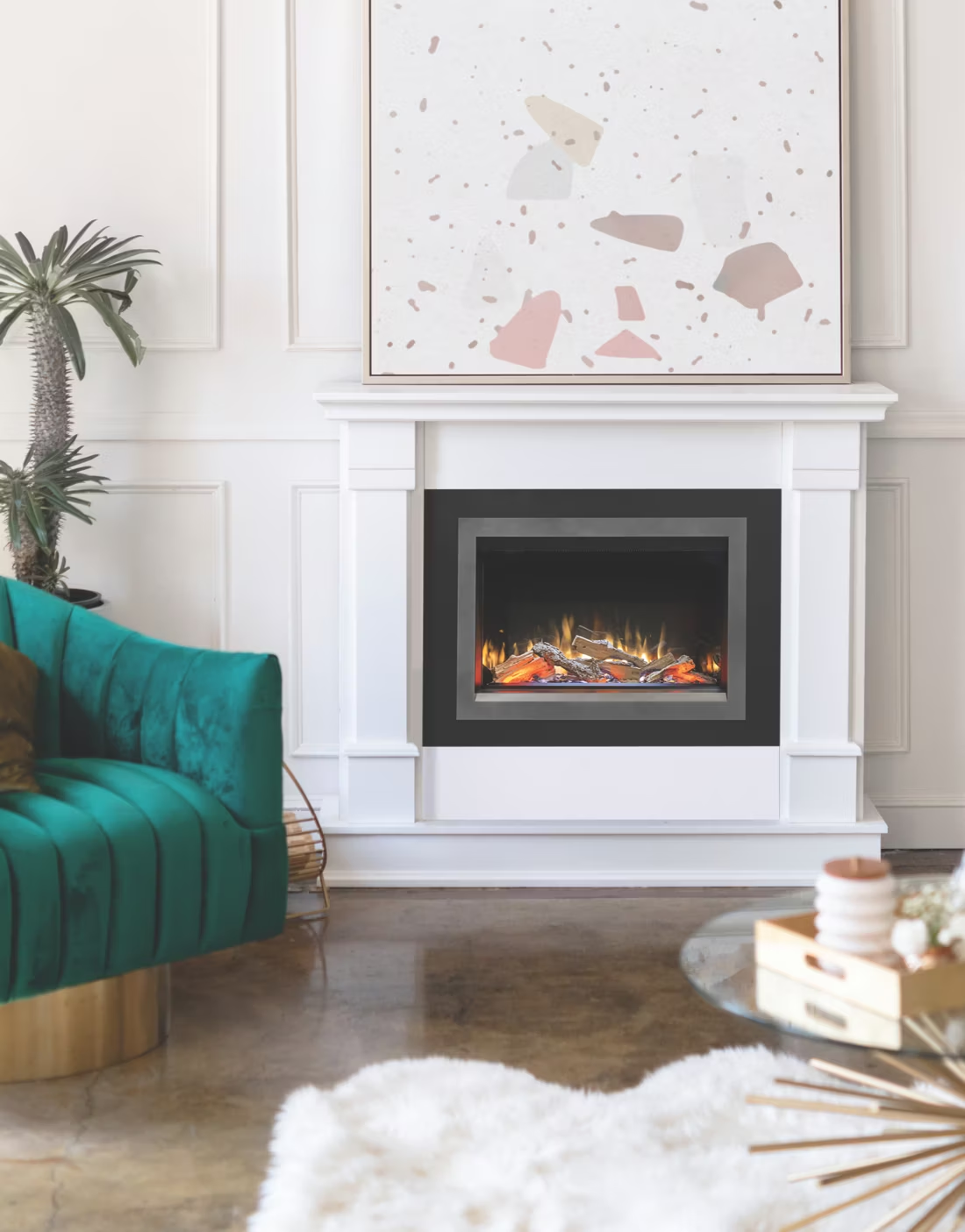
What Buckeye's rapid growth has produced instead—the city has crossed 95,000 residents across master-planned communities like Verrado, Tartesso, and Sundance—is steady demand for electric fireplaces: as design features anchoring a great room, as supplemental warmth on the occasional 30-degree January morning, and as an option that skips gas lines, venting, and chimneys entirely. With three electric providers serving different pockets of the city (Arizona Public Service, Electrical District No. 8, and GRICUA near the Gila River Indian Community), an electric unit installs cleanly in nearly any new build or retrofit without touching combustion equipment at all.
Three steps. No salesperson until you're ready.
Tell us about your project
Your zip code, your situation, and the fuel you're leaning toward—or let the answers point you to one.
See what's actually available
The brands dealers within 100 miles genuinely carry—real options, never a catalog mirage.
Get your dealer & Project Guide
A trusted local dealer, plus the free Project Guide & Parts List that names every component of the job.
Frequently Asked Questions
How much does it cost to install an electric fireplace in Buckeye?
A plug-in electric insert or freestanding unit runs $300 to $900 installed, since it just needs a standard outlet and typically no permit. A built-in, wall-recessed linear electric fireplace—the style you'll see in a lot of new Verrado and Tartesso great rooms—runs $1,200 to $2,500 once you factor in a dedicated 120V or 240V circuit, an electrician's time, and any framing or trim work. There's no venting, chimney, or gas line cost to budget for, which is the main reason electric installs land well below gas or wood projects in Buckeye.
Do I need a permit for an electric fireplace in Buckeye?
A plug-in unit that runs off an existing outlet doesn't require a permit. If your installer is adding a new dedicated circuit for a built-in linear fireplace, that electrical work needs a permit through the City of Buckeye Building Safety Department (or Maricopa County if your property falls outside city limits). Most licensed electricians and hearth dealers handle this filing as part of the installation, so it's rarely something you manage yourself. If you're in a community with an HOA architectural committee—common throughout Verrado and Festival Foundation neighborhoods—check whether a built-in unit needs design approval before installation, particularly if it involves a niche or mantel modification.
Why doesn't Buckeye really do wood or pellet stoves?
Two things work against solid fuel here. First, the climate doesn't call for it—with an average winter low around 43°F and one of the shortest, mildest winter heating seasons around, there's rarely a stretch of cold that a wood or pellet stove would actually be needed to survive. Second, Maricopa County is a designated PM10 non-attainment area, and winter inversions can trap smoke and dust close to the ground across the West Valley. Local air quality officials discourage added solid-fuel smoke, and it's part of why you'll almost never see a wood stove permit pulled in Buckeye subdivisions, even though cutting permits technically exist through Tonto and Prescott National Forest for the mesquite, pinyon, and juniper that grow in the region. If someone wants that ambiance, gas is the far more common local choice—electric even more so.
What's the best electric fireplace for a Buckeye home?
Linear built-in units from brands like Dimplex, Napoleon, and Amantii are what most local dealers install in Buckeye's newer construction—they're wide, low-profile, and fit the modern great-room look common in Verrado and Sundance floor plans. Because there's no venting requirement, they can go on almost any interior wall, including a media wall shared with a TV. For a lower-commitment option, a freestanding electric stove or insert into an existing mantel opening gives you the flicker-and-glow effect with none of the electrical work. Either way, look for a unit with a true 1,500-watt heating element if you want it to do real zone-heating work on cooler mornings, not just run the flame effect.
Does it matter which electric utility serves my house?
It affects your running cost more than your installation. Arizona Public Service, which covers most of Buckeye, bills residential customers around $0.1645 per kWh, while Electrical District No. 8 in the Maricopa-area pockets of the city runs closer to $0.1425 per kWh. A 1,500-watt electric fireplace running on high draws about 1.5 kWh per hour, so running one for a few hours on a cool evening costs somewhere between 21 and 25 cents on either provider—genuinely minor compared to gas or propane running costs. GRICUA customers near the Gila River Indian Community should confirm their specific residential rate schedule with the utility directly.
What's the difference between an electric insert, a wall-mount, and a built-in?
An electric insert drops into an existing fireplace opening—masonry, gas, or otherwise—and is the fastest option if you already have a mantel and firebox you want to reuse. A wall-mount is a slim unit hung directly on the wall like a flat-screen TV, popular in bedrooms and smaller rooms where floor space matters. A built-in linear fireplace is recessed into a framed wall or custom cabinetry during construction or a remodel, and is what most Buckeye production builders now offer as an upgrade option in great rooms. All three plug into standard household current in most sizes; only the larger built-ins typically need a dedicated circuit.
Can an electric fireplace actually heat a room, or is it just for looks?
It can do real zone heating, within limits. A 1,500-watt electric fireplace puts out roughly 5,100 BTUs, enough to comfortably warm a single room of 300-400 square feet on a chilly Buckeye evening—plenty for the handful of nights each winter when the temperature drops into the 30s. It's not designed to replace your home's central heat pump or furnace, and most Buckeye homes don't need it to. Think of it as supplemental comfort for the room you're actually sitting in, with the flame effect running independently of the heater if you just want the visual without the warmth.
Electric vs. gas fireplace—which is right for my Buckeye home?
Gas fireplaces give you a real flame, higher heat output, and work during a power outage if equipped with battery-backup ignition—a genuine consideration during Buckeye's summer monsoon storms that occasionally knock out power. Electric fireplaces skip the gas line and venting entirely, cost less to install, and run on a simple flip of a switch or app control, but the flame is a light effect rather than combustion. Given how mild Buckeye winters are, a lot of homeowners here choose electric purely for the design statement and occasional supplemental warmth, saving the gas-line investment for a kitchen range or water heater instead. Homes that want fireplace ambiance as a year-round centerpiece with real heat behind it on the rare cold snap tend to lean gas.
Does the non-attainment air quality designation affect my electric fireplace choice?
Not in the way it affects wood or pellet appliances. Maricopa County's PM10 non-attainment status and winter inversion pattern are the reasons solid-fuel stoves are so rare in Buckeye, but an electric fireplace produces no combustion byproducts and no particulate emissions at all, so it's unaffected by air quality advisories or burn-day restrictions. If you like the idea of flame ambiance but want to stay on the right side of local air quality guidance—and avoid HOA pushback in communities like Verrado that restrict visible venting on exterior walls—electric is typically the simplest, cleanest path.
Can I put a TV above my fireplace?
Yes—with an asterisk. Fireplaces are hot and TVs don't like heat. Either put a mantel between them to deflect rising warmth, or choose a fireplace with heat-management technology that creates a cool zone on the wall above—the wall stays around 125 degrees, barely warm, while the room still gets full heat. If you like clean lines and don't want a mantel, heat management is the answer.
Do electric fireplaces actually produce heat?
Yes—most put out around 4,800–5,000 BTUs from a standard outlet, which comfortably warms a bedroom, office, or den as a comfort-zone heater. What they won't do is carry a whole house the way wood, gas, or pellet can. Think of electric as ambiance-first with honest supplemental heat: flames on with no heat in July, flames plus warmth in January.
Does a fireplace add value to my home?
On average, a fireplace adds back to the home about the same amount you spent installing it. Add the monthly savings from heating the rooms you actually use instead of the whole house—often hundreds of dollars a year—and the value case is strong before you even count what a fire does for how your family uses the room.
Can I install a fireplace myself?
If you're putting a fire in your house on purpose, it's best to work with an expert. Unless you're genuinely experienced in framing, gas line, vent pipe, and the national code on clearances to combustibles, have a professional do it—and ideally the same company that sells you the fireplace, so warranty, service, and liability all live under one roof.
Nearby Dealers
Hearth shops serving Buckeye and the surrounding area. Every listing shows whether it is a WhyFire partner, a dealer we have verified as authorized for the brands we recommend, or a local business carrying hearth products. No manufacturer pays for placement. How we verify dealers →
Arizona Fire Features
Apache Stone - Phoenix
EarthCore Industries
All American Outdoor Living
Fire By James
Bbq Island
Green Goddess
Best BBQ’s & Islands
All American Outdoor Living
Southwest Builders & Design, LLC
Valley Stone
Diversified Builder Supply
Brooksies Propane
Carefree Outdoor Living
Gilbert Fireplaces & BBQ’s
Electric Service in Buckeye
An electric fireplace's heater draws about 1,500 watts—pennies per hour at local rates.
Arizona Public Service Co
Gila River Indian Utility Authority (Gricua)
Electrical Dist No8 Maricopa
Find your electric fireplace in Buckeye.
Tell us a bit about your home and we'll match you with a trusted local Buckeye dealer and send over a free Project Guide & Parts List—the exact unit, circuit requirements, and install plan for your space.
Find Your Fireplace →