
Pellet stoves in Contra Costa County: an honest look at fit.
With an average winter low near 41°F and just over 2,150 heating degree days a year, most Contra Costa homes never need a hopper-fed heat source. But for Spare the Air days and a handful of cooler foothill pockets, pellet can still make sense—and we'll tell you straight whether it does for your house.
Every Project Starts From One of These Five Situations
Contra Costa's mild Bay climate rarely calls for pellet heat.
Contra Costa County stretches from waterfront cities like Richmond, Martinez, and Antioch along the Carquinez Strait and Suisun Bay to inland valleys around Danville and San Ramon, with Mount Diablo rising above the middle of the county. Winters are mild across nearly all of it—a 41°F average winter low and roughly 2,154 heating degree days a year, a fraction of what a place like Bismarck ND or Duluth MN racks up in a single hard month. Central forced-air furnaces handle the county's modest heating season without much trouble, which is the main reason pellet stoves show up so rarely on local job sites: loading a hopper and running an auger and blower is a lot of appliance for a heating need that's often gone by March.
Where pellet does come up locally, it's usually for one of two reasons. First, Contra Costa sits in a Bay Area Air Quality Management District non-attainment area, and BAAQMD's Spare the Air program can restrict wood-burning devices on high-pollution winter days—EPA-certified pellet stoves from brands sold regionally, like Bear Mountain, Lignetics, and Pacific Pellet, are typically exempt from those curtailments, so a pellet unit stays legal to run when a neighbor's wood stove doesn't. Second, cooler foothill areas near Mount Diablo, Morgan Territory, and the Lamorinda hills get chillier nights than the valley floor and occasionally justify a supplemental unit in a family room or converted garage. One honest caveat: pellet stoves need electricity for the auger and blower, so during a PG&E Public Safety Power Shutoff—a real and recurring event during Contra Costa's wildfire smoke season—a pellet stove goes dark right when you might want backup heat most.
Three steps. No salesperson until you're ready.
Tell us about your project
Your zip code, your situation, and the fuel you're leaning toward—or let the answers point you to one.
See what's actually available
The brands dealers within 100 miles genuinely carry—real options, never a catalog mirage.
Get your dealer & Project Guide
A trusted local dealer, plus the free Project Guide & Parts List that names every component of the job.
Frequently Asked Questions
Does a pellet stove make sense for a home in Contra Costa County?
For most Contra Costa homes, not really—with a 41°F average winter low and about 2,154 heating degree days a year, existing central heat covers the season easily, and a pellet stove ends up being an appliance you use a handful of weeks. Where it does make sense: homes in cooler foothill pockets near Mount Diablo or the Lamorinda hills that run noticeably colder than the valley floor, family rooms or additions without ducted heat, and households that specifically want a unit that stays legal to run during BAAQMD Spare the Air wood-burning curtailments. If none of those apply to your situation, a gas insert or a heat pump is usually the better-fit recommendation, and a local dealer will tell you that honestly during a consult.
How much does a pellet stove installation cost in Contra Costa County?
Because pellet stoves are uncommon in this county, there isn't a deep local pricing history the way there is for gas inserts here. As a general benchmark, a pellet stove or insert installation typically runs $3,500 to $6,500 depending on the unit, whether it's a freestanding stove or an insert into an existing fireplace, and any venting or electrical work needed for the hopper's auger and blower. Because so few Contra Costa dealers stock pellet units regularly, expect fewer competing quotes than you'd get for a gas fireplace—getting an in-home consult from a dealer who actually carries pellet equipment is worth the extra step.
Are pellet stoves exempt from Spare the Air burn bans in Contra Costa County?
Generally yes. The Bay Area Air Quality Management District's Spare the Air program restricts uncertified wood-burning devices—and often all wood devices—on winter days when pollution is forecast to spike, since Contra Costa sits in a designated non-attainment area. EPA-certified pellet stoves are typically treated differently from wood stoves under these rules because they burn more completely and consistently. If avoiding curtailment days is part of why you're considering pellet, confirm the current BAAQMD exemption status for your specific model before you buy, since program rules get updated periodically.
What's the real difference between a pellet stove and a wood stove for a Bay Area home?
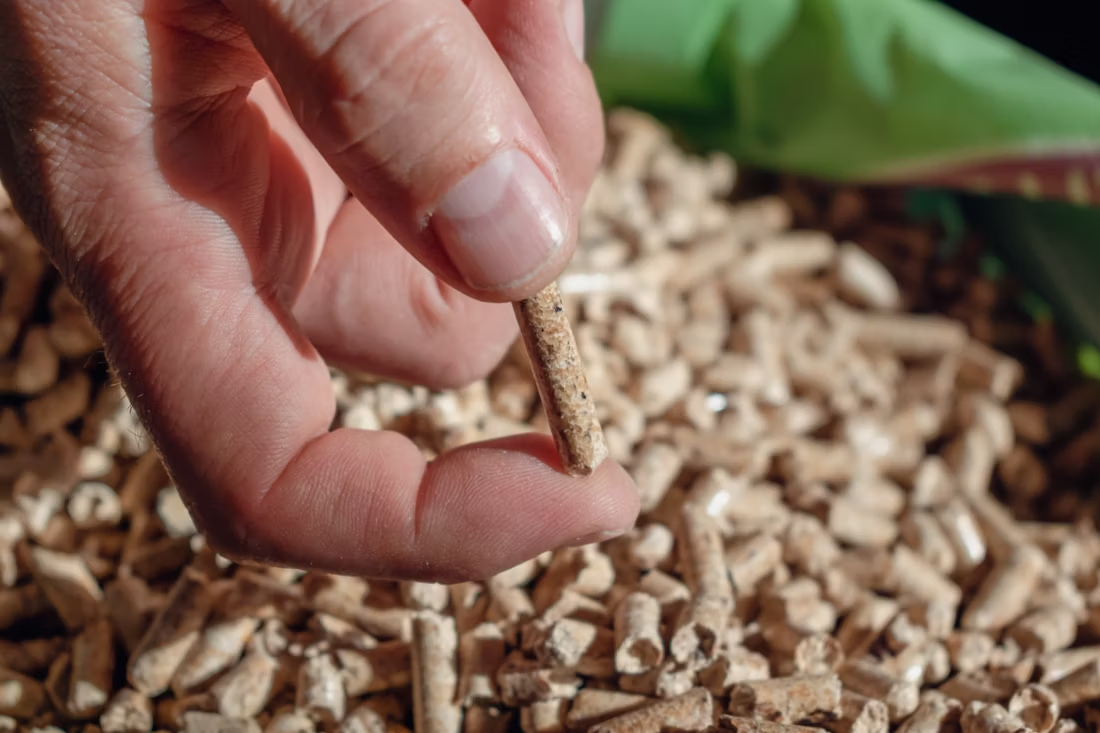
A wood stove burns cordwood—oak, madrone, and Douglas fir are the common species available regionally—and runs with zero electricity, which matters during a power outage but not so much here since Contra Costa winters rarely demand emergency heat. A pellet stove burns bagged, compressed sawdust pellets from brands like Bear Mountain, Lignetics, or Pacific Pellet, is easier to load and cleaner-burning, but needs electricity to run its auger and blower. Given that wood-burning is itself flagged as uncommon in this mild climate, most Contra Costa homeowners weighing this choice are really choosing between pellet and gas—and gas usually wins on convenience and BAAQMD compliance without the outage vulnerability.
Will a pellet stove work during a PG&E power shutoff?
No—this is worth knowing before you buy. Pellet stoves rely on an electric auger to feed fuel and an electric blower to distribute heat, so they shut down the moment power does. Since PG&E's Public Safety Power Shutoffs are a real and recurring feature of wildfire season in Contra Costa County, a pellet stove won't help you through one. If backup heat during an outage is a priority alongside everyday convenience, a wood-burning option or a battery/generator setup paired with your existing gas or electric system is the more reliable path—a local dealer can walk through the trade-offs specific to your situation.
Which pellet brands are available near Contra Costa County?
Regional pellet fuel brands sold in the area include Bear Mountain, Lignetics, and Pacific Pellet. Because pellet appliances themselves are a niche product locally, not every hearth retailer in the county stocks pellet stoves or inserts—some carry them by special order rather than on the showroom floor. If you're set on pellet, it's worth confirming with a dealer that they actually install and service the specific brand you're considering rather than just special-ordering the unit.
Do I need a permit to install a pellet stove in Contra Costa County?
Yes—a new pellet stove or insert installation typically requires a building permit through your city building department if you're within an incorporated city like Concord, Walnut Creek, or Antioch, or through Contra Costa County's building division if you're in an unincorporated area. Most established hearth dealers handle the permit paperwork as part of the installation. Because BAAQMD also regulates wood-burning appliance registration in the district, it's worth confirming with your installer whether your specific pellet model needs to be registered as part of the permit process.
Where can I buy pellet fuel in Contra Costa County?
Pellet fuel from brands like Bear Mountain, Lignetics, and Pacific Pellet is typically available through hardware stores, farm supply retailers, and hearth dealers that also sell the appliances. Given how few homes in the county actually run pellet stoves, don't expect the same year-round retail presence you'd find in a colder climate—stocking often ramps up in fall and can run thin by midwinter, so buying a season's supply early is the safer move rather than restocking bag by bag.
Pellet stove vs. gas insert—which is right for my Contra Costa home?
For the vast majority of Contra Costa homes, gas is the better fit. It's a standard, widely available option in this county, lights instantly with no fuel storage or hopper loading, and most direct-vent units aren't subject to BAAQMD wood-burning curtailments in the first place. Pellet only pulls ahead in narrow cases—a home in a cooler foothill pocket that wants the ambiance of a real flame while staying compliant on Spare the Air days, for instance. If you're not sure which category you fall into, a local dealer walking your specific home is more useful than any general rule of thumb.
What do I measure to size a fireplace insert?
Four numbers tell you what fits: the front width, the front height, the back width, and the overall depth of your existing fireplace opening. Grab a tape measure, jot those down, and snap a photo of the wall—those two things do more to move your project forward than anything else you can do today.
What's the difference between an insert and a zero-clearance fireplace?
An insert is a fireplace that slides into a pre-existing wood-burning fireplace—if you don't have one, there's nothing to insert it into. A zero-clearance fireplace is built into a framed wall, which makes it the answer for remodels and new construction. Simple test: existing masonry fireplace means insert; blank or framed wall means zero-clearance.
How much should I budget for a fireplace?
For an average home—covering the fireplace, the vent pipe, and basic installation—a budget between $3,900 and $5,500 gives you a lot of options across wood, gas, and pellet. By the time you add finish work, gas line, and electrical, the average complete installation lands between $5,000 and $12,000 all-in. In a remodel or new build, a good rule is to put about 2.5% of the total project cost toward the fireplace.
Can I install a fireplace myself?
If you're putting a fire in your house on purpose, it's best to work with an expert. Unless you're genuinely experienced in framing, gas line, vent pipe, and the national code on clearances to combustibles, have a professional do it—and ideally the same company that sells you the fireplace, so warranty, service, and liability all live under one roof.
Stove and Fireplace Dealers in Contra Costa County
Pellet Brands Stocked Around Contra Costa County
Manufacturers will point you to the nearest stocking dealer.
Find your pellet stove in Contra Costa County.
Tell us about your home and we'll give you a straight answer on whether pellet fits—plus a free Project Guide & Parts List with the exact equipment and vent kit for your project, and a match with a trusted local dealer who actually carries pellet gear.
Find Your Fireplace →