
Find Out If a Pellet Stove Fits Danville's Mild Winters.
With average winter lows near 42°F and a winter heating load only about half that of a truly cold-winter city, Danville doesn't lean on solid-fuel heat the way colder regions do. Here's an honest look at where pellet still fits, and where it doesn't.
Every Project Starts From One of These Five Situations
A mild valley climate that doesn't ask much of a stove.
Danville sits at 455 feet in the San Ramon Valley, sheltered by the Diablo Range, with a Zone 3B climate that rarely sees hard freezes. With a mild winter heating load roughly half that of a genuinely cold-winter city, Danville needs much less heating input—for comparison, Duluth, Minnesota faces a winter heating load well over twice as demanding in a typical year. Most Danville homes get by fine on a central gas furnace or heat pump, with a gas fireplace or insert added for ambiance rather than necessity. That's the honest backdrop for pellet stoves here: they're not a mainstream product in this market, and most local hearth retailers sell far more gas units than pellet units.
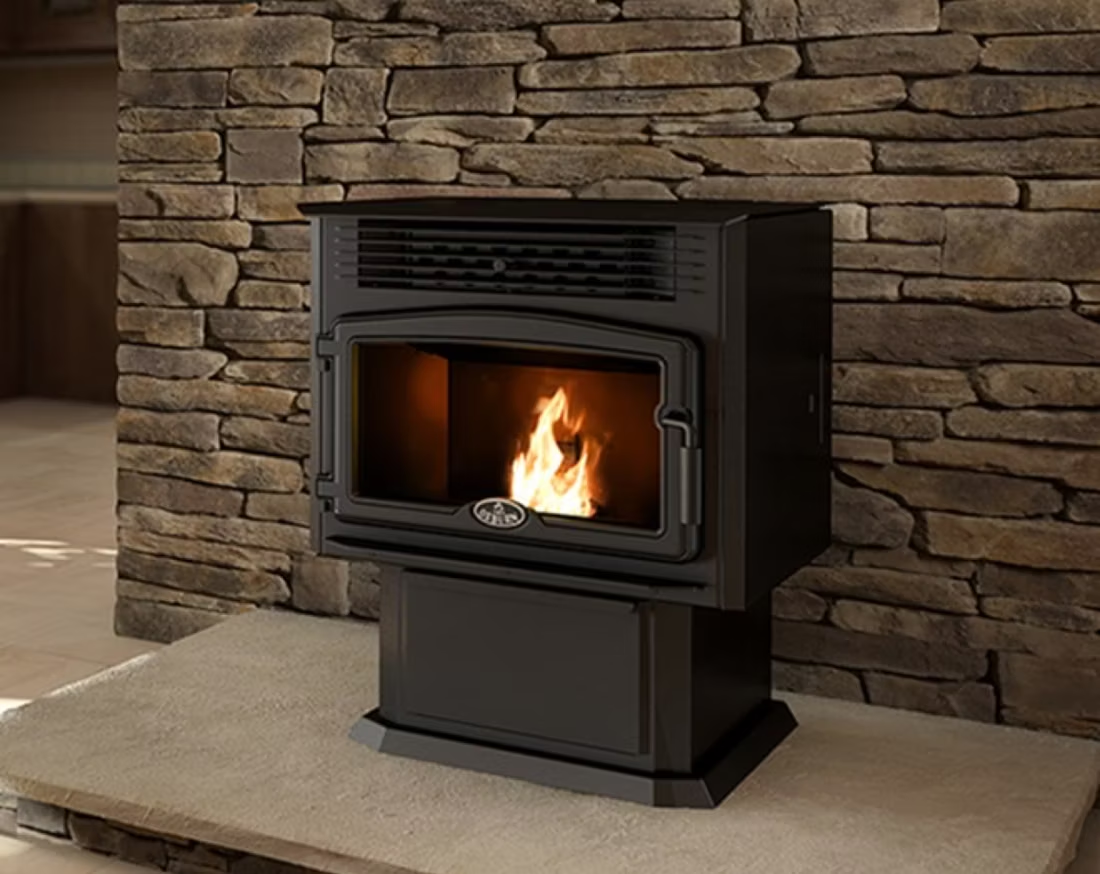
There are two practical wrinkles specific to Danville worth knowing. First, Contra Costa's hills see periodic PG&E Public Safety Power Shutoffs during fire-weather events, and a pellet stove's auger and blower both run on household electricity—so a pellet unit won't function as backup heat during an outage unless it's paired with a battery inverter. Second, Danville falls inside the Bay Area Air Quality Management District's non-attainment zone, and wildfire smoke already stresses local air quality most summers and falls. The upside here is that EPA-certified pellet stoves are typically exempt from BAAQMD's Spare the Air wood-burning curtailments, which is the one place pellet has a real edge over an open wood fireplace. Even so, most homeowners who go this route in Danville are doing it for a specific reason—a detached shop, a vacation property elsewhere, or wildfire-preparedness backup heat—rather than as their main source of warmth.
Three steps. No salesperson until you're ready.
Tell us about your project
Your zip code, your situation, and the fuel you're leaning toward—or let the answers point you to one.
See what's actually available
The brands dealers within 100 miles genuinely carry—real options, never a catalog mirage.
Get your dealer & Project Guide
A trusted local dealer, plus the free Project Guide & Parts List that names every component of the job.
Frequently Asked Questions
Are pellet stoves common in Danville homes?
Not really. Danville's Zone 3B climate and mild 42°F average winter low mean most homes rely on a gas furnace, heat pump, or gas fireplace insert rather than a dedicated solid-fuel appliance. Compare that to a place like Bozeman, Montana, where winter lows regularly sit below zero and pellet or wood heat is a practical necessity—Danville just doesn't generate that kind of heating demand. The handful of pellet installs we see locally tend to go into detached rooms, shops, or homes where the owner specifically wants a backup or supplemental heat source that isn't gas.
What does a pellet stove installation cost in Danville?
There isn't a large enough local install base in Danville to quote a tight local range, but a typical freestanding pellet stove with venting through an exterior wall runs somewhere in the $3,000–$6,000 range across the East Bay, with hearth pad requirements or longer vent runs pushing costs higher. Because pellet installs are less common here than gas, it's worth getting quotes from at least two hearth retailers who regularly install pellet units—not every gas-focused dealer stocks or services them.
Will a pellet stove keep my house warm during a PG&E outage?
Not on its own. Pellet stoves rely on an electric auger to feed fuel and a blower to push heat into the room, so a standard unit shuts down the moment the power does—a real consideration in Contra Costa's hills, where Public Safety Power Shutoffs happen during fire-weather events. Some homeowners pair a pellet stove with a small battery backup or inverter to bridge outages; if backup heat during a PSPS is your main goal, a wood-burning option or a battery-ignition gas fireplace is generally a more direct solution.
Where do Danville homeowners buy pellets?
Danville doesn't have a local pellet mill, so fuel comes from regional distributors carrying brands like Bear Mountain, Lignetics, and Pacific Pellet, typically stocked at Bay Area hearth and hardware retailers or delivered by pallet. Because pellet appliances are uncommon here, availability can be seasonal—it's worth confirming with your installer which brands they stock or can special-order before you commit to a stove.
Do I need a permit to install a pellet stove in Danville?
Yes—a building permit through the Town of Danville or Contra Costa County Building Department is required for any new venting penetration through a wall or roof, the same as it would be for a gas insert. On the air-quality side, BAAQMD generally exempts EPA-certified pellet stoves from the wood-burning device registration and Spare the Air curtailment rules that apply to open wood fireplaces, but your installer should confirm current requirements since air district rules are updated periodically.
Are pellet stoves affected by Spare the Air days in the Bay Area?
Generally, no. BAAQMD's Spare the Air wood-burning bans, which run through the winter Spare the Air Season, are aimed at uncertified wood fireplaces and older wood stoves. EPA-certified pellet stoves are typically exempt from those no-burn provisions because they burn more efficiently and produce far less particulate matter. That exemption is genuinely one of the few practical advantages pellet has over an open wood-burning fireplace in a non-attainment area like Danville—it's just not enough on its own to make pellet a mainstream choice here.
Should I get a pellet stove or a gas fireplace in Danville?
For most Danville homes, gas is the more practical fit: natural gas service is widely available, installation is more straightforward, and local retailers stock far more gas inserts and fireplaces than pellet units. Pellet makes more sense in specific situations—a garage or shop without a gas line, a household that wants a solid-fuel option without wood smoke, or someone specifically motivated by the Spare the Air exemption. With PG&E's residential rate near $0.317/kWh, running a pellet stove's auger and blower is inexpensive compared to electric resistance heat, but a gas fireplace still wins on convenience for most primary living spaces.
Why not just get a wood stove instead of pellet in Danville?
Wood faces the same climate mismatch as pellet in Danville, plus more friction. Cutting your own firewood means driving out to BLM California land for a permit—around $10 per cord, available April through October—which is impractical for most suburban San Ramon Valley households. Open wood-burning fireplaces are also the primary target of BAAQMD's Spare the Air restrictions during winter, unlike EPA-certified pellet stoves, which are typically exempt. If you want the look and feel of a real fire without wood-smoke restrictions or firewood logistics, pellet is the more workable solid-fuel option here—even though both remain niche compared to gas.
Who actually installs a pellet stove in Danville?
The homeowners we see going this route tend to have a specific reason: a detached shop or bonus room without gas service, a wildfire-preparedness backup plan paired with a battery inverter, or a preference for solid fuel that stays exempt from Spare the Air rules. It's a smaller pool than gas fireplace buyers, which is exactly why matching with a dealer who actually installs and services pellet units regularly—rather than one who carries a single floor model—makes a real difference in Danville.
How often does a pellet stove need cleaning?
A clean pellet stove is a happy pellet stove. Plan on cleaning the burn pot about once a week when you're burning regularly—ash and clinkers gum up the air holes just like a pellet barbecue. Most pellet stove problems trace back to skipped cleaning that nobody explained up front. Some designs make it easy with a trapdoor burn pot: pull a lever and the gunk drops into the ash pan.
Why is my open fireplace making my house colder?
Open fireplaces suck—literally. As the fire burns, it consumes air your furnace already paid to heat and pulls it out through the chimney, so the house is actually colder after the fire goes out than before you lit it. An insert fixes this: it seals the chimney, puts fixed glass across the front, and turns that hole in your house into a real heat source.
Can a fireplace actually lower my heating bill?
Yes—by creating a comfort zone. A furnace heats every square foot of the house just to warm the one room you're in; a gas fireplace on low burns roughly a sixth of the gas a typical furnace does. Set the furnace around 55–60 degrees as a baseline, then heat the rooms your family actually uses. Families who heat this way commonly save $20–$60 a month.
How much should I budget for a fireplace?
For an average home—covering the fireplace, the vent pipe, and basic installation—a budget between $3,900 and $5,500 gives you a lot of options across wood, gas, and pellet. By the time you add finish work, gas line, and electrical, the average complete installation lands between $5,000 and $12,000 all-in. In a remodel or new build, a good rule is to put about 2.5% of the total project cost toward the fireplace.
Nearby Dealers
Hearth shops serving Danville and the surrounding area.
Pellet Brands Stocked Around Danville
Manufacturers will point you to the nearest stocking dealer.
See If a Pellet Stove Makes Sense for Your Danville Home.
Tell us about your home and heating goals and we'll give you an honest read on whether pellet fits—plus a free Project Guide & Parts List with the exact parts, including the vent kit, and our recommended local dealer for your Danville project.
Find Your Fireplace →