
Pellet Heat in Pittsburg Is a Niche Choice—Done Right, It Still Works.
With only a short, mild heating season each year and winter lows rarely dipping below 40°F, Pittsburg doesn't need pellet heat to survive winter. But for Spare the Air compliance, ambiance, or a converted fireplace, a pellet insert can still make sense. We'll help you figure out if it's right for your house.
Every Project Starts From One of These Five Situations
Mild winters and grid-tied stoves don't always mix in Pittsburg.
Pittsburg sits at just 60 feet elevation along the Sacramento–San Joaquin Delta, and its winters are mild by any national standard—an average winter low around 40°F and a short, mild heating season overall. Compare that to a place like Duluth, MN or Bismarck, ND, both with long, brutal winter heating seasons, and it's clear why most Pittsburg homes run on a central gas furnace or heat pump rather than a wood or pellet appliance sized for serious cold. There's simply not enough heating load most winters to justify a dedicated solid-fuel heat source.
Contra Costa County also falls under the Bay Area Air Quality Management District's non-attainment status, and wildfire smoke has made local air quality a year-round concern rather than just a winter one. BAAQMD's Spare the Air program restricts wood-burning devices on advisory days each winter, and EPA-certified pellet stoves are typically exempt from those curtailments—which is the main reason a pellet appliance shows up in Pittsburg at all. The catch: pellet stoves need continuous electricity to run the auger and combustion blower, and PG&E's wildfire-season Public Safety Power Shutoffs mean a pellet stove can go dark exactly when a wood stove would keep running. Between the mild climate and the outage risk, pellet heat here is a deliberate, informed choice rather than a default one.
Three steps. No salesperson until you're ready.
Tell us about your project
Your zip code, your situation, and the fuel you're leaning toward—or let the answers point you to one.
See what's actually available
The brands dealers within 100 miles genuinely carry—real options, never a catalog mirage.
Get your dealer & Project Guide
A trusted local dealer, plus the free Project Guide & Parts List that names every component of the job.
Frequently Asked Questions
Are pellet stoves actually common in Pittsburg homes?
Not really, and we'd rather tell you that upfront than pretend otherwise. With average winter lows around 40°F and a short, mild heating season overall, most Pittsburg households heat with a central gas furnace or heat pump and don't need supplemental solid-fuel heat to get through the season. The Pittsburg homeowners who do install a pellet stove or insert are usually doing it for one of three reasons: they want an EPA-certified appliance that's exempt from BAAQMD Spare the Air burn restrictions, they're converting an old open masonry fireplace they never use, or they simply like the look and radiant feel of a real flame in the family room.
What does a pellet stove installation cost in Pittsburg?
Because pellet appliances are a smaller share of the local hearth market here, fewer Bay Area retailers stock a wide selection compared to colder-climate markets, but installed costs still run in a familiar range: roughly $3,500 to $6,500 for a freestanding pellet stove or insert, including venting through an exterior wall and any hearth pad work required for clearance. Converting an existing wood-burning fireplace to a pellet insert is usually on the lower end since the firebox and mantel are already in place. A local dealer can give you a firm number after seeing your fireplace or the room where the stove would go.
Will a pellet stove keep working during a power outage?
No—this is the single biggest thing to understand before choosing pellet heat in Pittsburg. Pellet stoves rely on an electric auger to feed fuel and a blower to distribute heat, so when PG&E cuts power during a Public Safety Power Shutoff in wildfire season, the stove stops working along with everything else. Some households pair a pellet stove with a battery backup or portable generator sized for the appliance's low wattage draw, but if outage-proof backup heat is the priority, a wood stove or a battery-ignition gas fireplace (Valor's pilot-generated ignition needs no batteries at all) is a more reliable choice for this area.
Can I burn a pellet stove during a Spare the Air alert?
Generally, yes. The Bay Area Air Quality Management District issues mandatory Spare the Air alerts on winter days when particulate levels are expected to spike, and those alerts typically prohibit burning in uncertified fireplaces and older wood stoves. EPA-certified pellet stoves are usually exempt from these curtailments because they burn far cleaner than open fireplaces or older wood inserts. That exemption is a real advantage if you want a solid-fuel appliance in Contra Costa County and don't want to worry about checking BAAQMD's daily burn status all winter.
What pellet brands and fuel are available near Pittsburg?
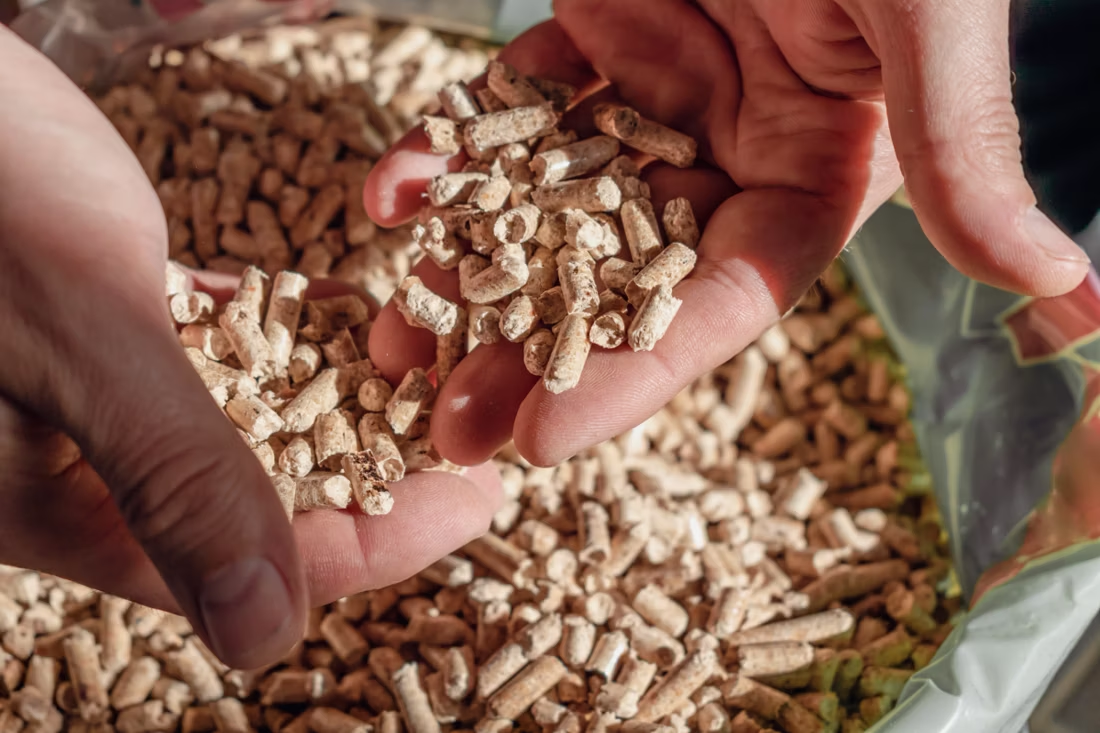
Regional hearth suppliers in the Bay Area typically stock Bear Mountain, Lignetics, and Pacific Pellet, with residential softwood pellets running in the neighborhood of $320 to $420 per ton depending on the retailer and how far it has to travel from the mill. Given Pittsburg's mild winters, most households burning pellets go through far fewer tons per season than a cold-climate home would—often just a pallet or two for occasional supplemental use rather than a full winter's primary heat supply.
Do I need a permit to install a pellet stove in Pittsburg?
Yes. New pellet stove and insert installations require a building permit, and in Pittsburg that means going through the City of Pittsburg Building Division rather than the unincorporated county office, since the 94565 zip code sits within city limits. The permit process confirms proper wall or roof venting termination and clearance to combustibles. Most local hearth dealers handle the permit application as part of the installation, which is one of the practical reasons to work with a licensed installer instead of a big-box DIY kit.
Why are both wood and pellet listed as uncommon fuel choices in Pittsburg?
It comes down to the combination of mild weather and air quality rules. Pittsburg's short, mild heating season means there's rarely enough sustained cold to justify a dedicated solid-fuel heating appliance the way there would be in a place like Helena, MT or Duluth, MN. On top of that, Contra Costa County's non-attainment status under BAAQMD and the region's wildfire smoke problem mean local air quality rules discourage open wood burning specifically. Pellet stoves fare a little better than wood because EPA-certified units are typically exempt from Spare the Air curtailments, but the underlying heating need still isn't there for most homes—which is why gas and electric options dominate the local fireplace market instead.
Is a pellet stove worth it just for ambiance in a mild climate like Pittsburg's?
For a lot of local homeowners, yes—that's actually the honest use case here. Rather than sizing a pellet stove to carry a whole house through winter, most Pittsburg installs are meant to convert a rarely-used masonry fireplace into something that gets lit regularly, or to add real radiant warmth to a family room on the handful of nights each year that actually get cold. If that's the goal, a smaller pellet insert with a modest hopper capacity is usually the right fit rather than a large-BTU unit built for continuous cold-climate heating.
Pellet stove vs. electric fireplace—which makes more sense for Pittsburg?
It depends on what you want out of it. An electric fireplace or insert costs far less to install—typically $400 to $1,200—requires no venting or fuel storage, and runs anytime the power is on. A pellet stove costs more upfront and needs periodic hopper loading and ash cleanup, but produces genuine combustion heat and flame rather than a simulated one, and stays exempt from Spare the Air restrictions on advisory days. One local wrinkle worth knowing: PG&E's residential rate here runs about $0.317 per kWh, among the higher rates in the country, so an electric unit used for real supplemental heat (not just the flame effect) can cost more to run per BTU than a pellet stove burning $350-a-ton fuel. A local dealer can walk through the operating cost math for your specific usage pattern.
How often does a pellet stove need cleaning?
A clean pellet stove is a happy pellet stove. Plan on cleaning the burn pot about once a week when you're burning regularly—ash and clinkers gum up the air holes just like a pellet barbecue. Most pellet stove problems trace back to skipped cleaning that nobody explained up front. Some designs make it easy with a trapdoor burn pot: pull a lever and the gunk drops into the ash pan.
Why is a fireplace insert so efficient?
An insert does two things: it seals the chimney completely, so you stop losing air you already paid to heat, and it radiates warmth into the room through the firebox and glass. Most add a heat-exchange fan that pulls cool room air underneath, wraps it around the hot firebox, and pushes it back out warm. Your home is more efficient before you've even lit the first fire.
Can a fireplace actually lower my heating bill?
Yes—by creating a comfort zone. A furnace heats every square foot of the house just to warm the one room you're in; a gas fireplace on low burns roughly a sixth of the gas a typical furnace does. Set the furnace around 55–60 degrees as a baseline, then heat the rooms your family actually uses. Families who heat this way commonly save $20–$60 a month.
How much should I budget for a fireplace?
For an average home—covering the fireplace, the vent pipe, and basic installation—a budget between $3,900 and $5,500 gives you a lot of options across wood, gas, and pellet. By the time you add finish work, gas line, and electrical, the average complete installation lands between $5,000 and $12,000 all-in. In a remodel or new build, a good rule is to put about 2.5% of the total project cost toward the fireplace.
Nearby Dealers
Hearth shops serving Pittsburg and the surrounding area.
Pellet Brands Stocked Around Pittsburg
Manufacturers will point you to the nearest stocking dealer.
See if pellet heat makes sense for your Pittsburg home.
Tell us about your home and how you'd actually use it, and we'll match you with a trusted local dealer who can tell you honestly whether pellet, gas, or electric is the better fit—plus a free Project Guide & Parts List with the exact parts, vent kit, and recommended installer for your Pittsburg project.
Find Your Fireplace →