
Find your fireplace in Contra Costa County.
From the Carquinez Strait to the San Ramon Valley, get matched with a trusted local dealer who knows exactly which fireplace fits your home—and your air district's rules.
Every Project Starts From One of These Five Situations
Mild bay winters, 2,154 heating degree days, and air-quality rules that steer most households toward gas and electric heat.
Contra Costa County stretches from the Carquinez Strait down through the San Ramon Valley, taking in Richmond, Concord, Walnut Creek, Antioch, and Danville along the way. Winters here are mild by any national standard—average lows around 41°F and just 2,154 heating degree days a year, roughly a fifth the heating load carried by a place like Duluth, Minnesota. Oak, madrone, and Douglas fir grow throughout the county's hills and were the traditional firewood species for generations of masonry fireplaces, but that history runs up against a hard regulatory reality: this is Bay Area Air Quality Management District (BAAQMD) territory, and BAAQMD has spent nearly two decades tightening what wood-burning devices can be installed here.
BAAQMD's Regulation 6 has banned new wood-burning fireplaces in new construction since 2008 and restricts wood stove and pellet stove installations countywide, on top of winter Spare the Air days that can prohibit burning in any device, certified or not, when smoke or wildfire haze pushes particulate levels too high. That's why wood and pellet are genuinely uncommon paths for a new hearth project in Contra Costa County—most of the activity here is gas fireplace and insert conversions (often replacing an old, non-compliant wood-burning fireplace) and electric units, which sidestep the air-district rules entirely. This hub rolls up hearth retailers, service technicians, and fuel suppliers across the whole county, from Richmond and El Cerrito in the west to Antioch, Pittsburg, and Brentwood in the east. Pick your fuel below for local dealers, install costs, and unit recommendations specific to your town.
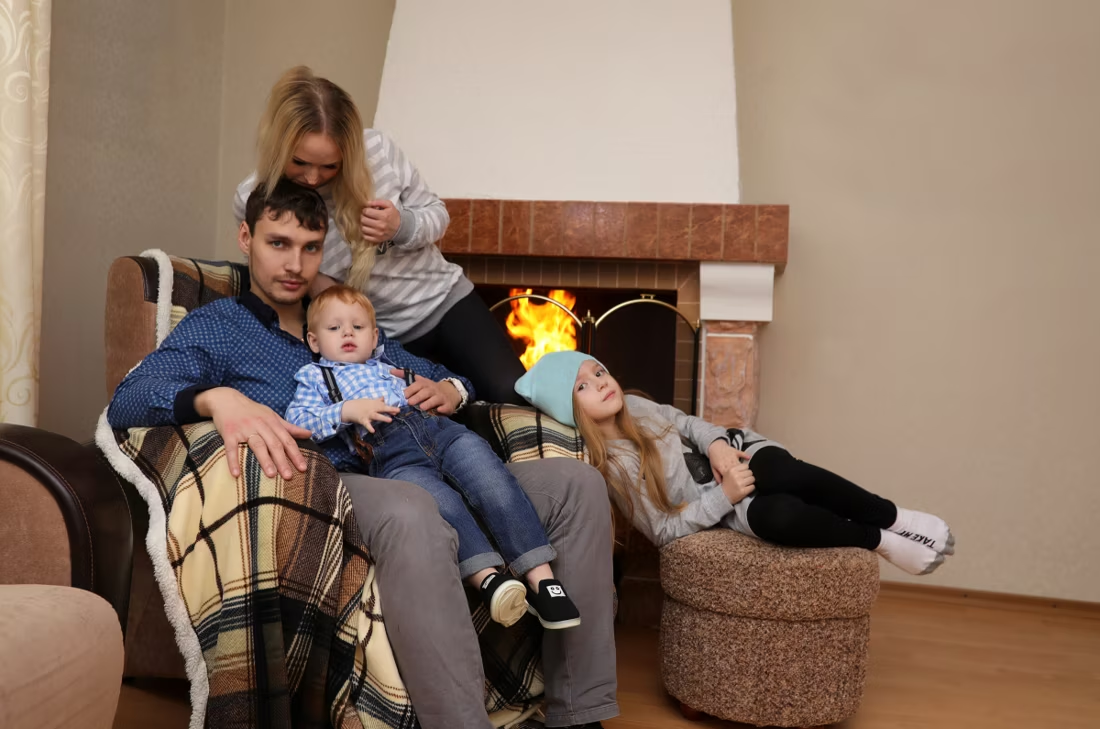
Four fuels. One honest answer for Contra Costa County.
Wood
66 models available near Contra Costa County.
Find your wood stove →Gas
365 models available near Contra Costa County.
Find your gas fireplace →Pellet
See what's available near Contra Costa County.
Find your pellet stove →Electric
11 models available near Contra Costa County.
Find your electric fireplace →Three steps. No salesperson until you're ready.
Tell us about your project
Your zip code, your situation, and the fuel you're leaning toward—or let the answers point you to one.
See what's actually available
The brands dealers within 100 miles genuinely carry—real options, never a catalog mirage.
Get your dealer & Project Guide
A trusted local dealer, plus the free Project Guide & Parts List that names every component of the job.
Frequently Asked Questions
Which fireplace fuel makes the most sense in Contra Costa County?
For the vast majority of homeowners here, it comes down to gas or electric. BAAQMD's Regulation 6 has banned new wood-burning fireplace installs in new construction since 2008 and heavily restricts wood and pellet stove installs countywide, plus winter Spare the Air days can prohibit burning in any wood device regardless of certification. Gas fireplaces and inserts are the most common path—PG&E's natural gas service covers most of the county, and a gas insert conversion into an old, unused masonry fireplace is one of the most requested projects we see from Richmond to Danville. Electric fireplaces are the other real option, especially for condos, homes without a gas line to the fireplace location, or anyone who just wants supplemental warmth and ambiance without touching venting or gas-code work at all.
Can I still install a new wood-burning fireplace or stove in Contra Costa County?
It's very limited. BAAQMD Regulation 6-3 has prohibited installing a wood-burning fireplace in new construction since 2008, and even in existing homes, adding a new wood stove generally requires removing or offsetting an existing device and installing an EPA-certified unit—the days of a standard open masonry fireplace as a new install are effectively over. On top of that, Spare the Air days, called during winter inversions or wildfire smoke events, can bar any wood-burning device from operating regardless of its certification. If you're set on wood heat, talk to a BAAQMD-familiar dealer before you commit to a design; most homeowners we match end up choosing a gas insert instead once they see the restrictions in writing.
Are pellet stoves a workaround for the wood-burning restrictions here?
Not really, at least not in Contra Costa County specifically. In some air districts pellet stoves are exempt from wood-burning curtailment rules because they burn cleaner and more consistently, but BAAQMD's regulations cover pellet appliances under the same wood-burning device framework as cordwood stoves, so you don't get a regulatory advantage by switching fuels. Regional pellet brands like Bear Mountain, Lignetics, and Pacific Pellet are available through Northern California suppliers if you already own a pellet stove, but as a new installation choice here, pellet doesn't offer the loophole it does in stricter-winter, less air-quality-constrained counties.
Do I need a permit to convert my old wood fireplace to gas?
Yes. A gas insert or gas log conversion requires a building permit—through your city's building department if you're in an incorporated city like Walnut Creek, Concord, or Antioch, or through Contra Costa County's building department if your property is in an unincorporated area. You'll also need a licensed gas fitter to run or tap the gas line, since that work falls under the state gas code separately from the fireplace install itself. Most gas insert retailers we match homeowners with handle this permitting as part of the installation, so it's rarely something you're filing on your own.
What does a fireplace conversion or installation typically cost in Contra Costa County?
Gas insert conversions—pulling out an old masonry wood fireplace and installing a direct-vent gas unit—typically run $4,000–$8,500 depending on venting complexity and whether the existing gas line reaches the fireplace or needs to be extended. Standalone gas fireplaces for new locations run higher, often $6,000–$11,000, if a new gas line has to be run. Electric fireplaces are the low-cost, low-disruption option: $200–$3,000 for the unit itself, plus $300–$1,000 in labor for a mantel-mounted or built-in install with a dedicated circuit. Given the mild winters here, most homeowners are choosing based on ambiance and zone heating rather than trying to offset a big central-heat bill.
With such mild winters, is a fireplace even worth installing for heat?
For most Contra Costa households, a fireplace is doing zone-heating and ambiance work rather than carrying the whole house through winter—with average lows around 41°F and only 2,154 heating degree days a year, the county's heating load is a fraction of what a cold-climate home deals with. That said, bay fog and evening chill in towns like Orinda, Moraga, and Lafayette can make a family room genuinely cold after sunset even when the daytime high hit 60, and a gas or electric fireplace lets you heat that one room without running central heat for the whole house. It's less about surviving winter and more about comfort and lower utility bills on the shoulder-season evenings that make up most of the county's heating days.
How much should I budget for a fireplace?
For an average home—covering the fireplace, the vent pipe, and basic installation—a budget between $3,900 and $5,500 gives you a lot of options across wood, gas, and pellet. By the time you add finish work, gas line, and electrical, the average complete installation lands between $5,000 and $12,000 all-in. In a remodel or new build, a good rule is to put about 2.5% of the total project cost toward the fireplace.
Can a fireplace actually lower my heating bill?
Yes—by creating a comfort zone. A furnace heats every square foot of the house just to warm the one room you're in; a gas fireplace on low burns roughly a sixth of the gas a typical furnace does. Set the furnace around 55–60 degrees as a baseline, then heat the rooms your family actually uses. Families who heat this way commonly save $20–$60 a month.
Does a fireplace add value to my home?
On average, a fireplace adds back to the home about the same amount you spent installing it. Add the monthly savings from heating the rooms you actually use instead of the whole house—often hundreds of dollars a year—and the value case is strong before you even count what a fire does for how your family uses the room.
Can I install a fireplace myself?
If you're putting a fire in your house on purpose, it's best to work with an expert. Unless you're genuinely experienced in framing, gas line, vent pipe, and the national code on clearances to combustibles, have a professional do it—and ideally the same company that sells you the fireplace, so warranty, service, and liability all live under one roof.
Stove and Fireplace Dealers in Contra Costa County
Listings include WhyFire partner dealers, dealers we have verified as authorized for the brands we recommend, and established local businesses that carry hearth products. Every listing shows which one it is. The ones marked Preferred run on WhyFire's software, so they can show you real pricing and book your appointment right here. No manufacturer pays for placement. How we verify dealers →
Buck Stove Spa & Fan
Terra Outdoor Living
River City Stoves
Wright Lighting & Fireside
The Irish Sweep, Inc.
Terra Outdoor Living
The Patio & Fire Place
Berkeley Heat, LLC
Terra Outdoor Living
Creative Energy
Kidd Fireplaces
Kidd Services
Hoffman Construction
Jerrys Fireplaces
Village Chimney Services, Inc.
O'Kell's Fireplace
Get matched with a local Contra Costa County dealer.
Tell us your city and fuel preference and we'll put together a free Project Guide & Parts List—the right unit, the vent kit it needs, and the local dealer we recommend for your project.
Find Your Fireplace →