
Pellet Heat Is the Exception in San Pablo—Not the Rule.
With mild bay winters and gas on nearly every block, most San Pablo homes never need a pellet stove. For the households that still want one, we'll match you with a dealer who actually stocks and installs them.
Every Project Starts From One of These Five Situations
San Pablo's climate doesn't call for it—but a few situations still do.
San Pablo sits at just 55 feet of elevation on the eastern shore of San Francisco Bay, in a climate zone (3B) that almost never demands serious home heating. Winter lows average 44°F, and the city racks up only about 2,459 heating degree days a year—compare that to Duluth, MN or Bismarck, ND, where a single January week can log more heating demand than San Pablo sees all winter. Natural gas service reaches nearly every neighborhood here, which is why pellet stoves—built around the promise of efficient, unattended solid-fuel heat through long, brutal winters—simply don't have the job to do that they have in the Sierra foothills or Cascade towns.
There's a real local wrinkle worth knowing, though: PG&E's residential electric rate in San Pablo runs about $0.317 per kWh, among the highest in the country, which makes electric resistance heat expensive to run on the rare cold, damp nights that do show up. That's the scenario where a small pellet stove or insert can still pencil out—a garage conversion, a detached casita, or a drafty older home in San Pablo's non-attainment air basin where a homeowner wants an alternative to a space heater. Contra Costa County falls under the Bay Area Air Quality Management District's Spare the Air program, and EPA-certified pellet appliances are typically exempt from the mandatory burn curtailments that apply to open fireplaces during winter alerts—a detail that matters more here than the cold does. Regional brands like Bear Mountain, Lignetics, and Pacific Pellet are available through Bay Area hearth dealers, just in smaller volume than you'd find in a heating-dependent market.
Three steps. No salesperson until you're ready.
Tell us about your project
Your zip code, your situation, and the fuel you're leaning toward—or let the answers point you to one.
See what's actually available
The brands dealers within 100 miles genuinely carry—real options, never a catalog mirage.
Get your dealer & Project Guide
A trusted local dealer, plus the free Project Guide & Parts List that names every component of the job.
Frequently Asked Questions
How much does a pellet stove installation cost in San Pablo?
Because so few homes in San Pablo install pellet stoves, there isn't a deep local pricing history to draw on the way there is in colder markets—but a typical freestanding pellet stove install, including a hearth pad, wall-through venting, and a dedicated 120V outlet for the auger and blower, generally runs $3,500 to $7,500 in the Bay Area. A pellet insert into an existing fireplace can run higher if the chimney needs relining. Get at least two quotes from local dealers, since low install volume here means pricing varies more than it would in a place where pellet stoves are a routine job.
Why don't more people in San Pablo use pellet stoves?
Mostly climate and infrastructure. San Pablo logs around 2,459 heating degree days a year with winter lows averaging 44°F—mild enough that most homes get by on a furnace or a couple of space heaters for the handful of genuinely cold nights. Natural gas is available almost everywhere in town, so homeowners who do want supplemental heat usually reach for a gas insert instead. Pellet stoves earn their keep in places with real winters—think Bozeman, MT or Burlington, VT—where cordwood or pellets are the backbone of home heating for months at a time. That's just not San Pablo's situation.
Does a pellet stove make sense given how high PG&E's electric rates are?
It can, in specific cases. At roughly $0.317 per kWh, PG&E's residential rate is expensive enough that running electric resistance heaters through even a mild San Pablo winter adds up. A pellet stove burns fuel at a lower cost per BTU than electric heat in most months, which is why a handful of local homeowners install one for a detached workshop, ADU, or an older home with poor insulation rather than running space heaters all winter. The catch is that pellet stoves still need electricity to run the auger and blower—so they don't remove PG&E from the equation entirely, they just shrink your electric heating bill.
Will a pellet stove keep working during a PG&E Public Safety Power Shutoff?
Not on its own. Pellet stoves rely on an electric auger to feed fuel and a blower to circulate heat, so a standard unit shuts down the moment the power does—which matters in a PSPS-prone service area like PG&E's Contra Costa territory. Some manufacturers offer battery backup packs that can run a pellet stove for several hours on stored charge, and a handful of homeowners pair theirs with a portable power station. If outage resilience is the main reason you're considering solid-fuel heat, ask your local dealer about battery backup options specifically—don't assume the stove will run through an outage by default.
Are pellet stoves allowed under Bay Area Air Quality rules?
Generally, yes. San Pablo falls under BAAQMD's non-attainment designation and its Spare the Air winter program, which restricts wood burning on high-pollution advisory days. EPA-certified pellet stoves are typically exempt from those mandatory curtailments because they burn cleaner than open fireplaces or older uncertified wood stoves—the district treats them differently from traditional wood appliances. That said, always confirm current status with BAAQMD before installing, since curtailment rules and device exemptions are revisited periodically, and check with the City of San Pablo's building department on any local permit requirements for new solid-fuel appliances.
What size pellet stove do I need for a San Pablo home?
Smaller than you'd think, given the climate. Most San Pablo installations are supplemental heat for a single room, ADU, or detached structure rather than whole-home heating, so a unit rated for 1,000 to 1,500 square feet is plenty for the vast majority of local use cases. If you're heating an entire older home with poor insulation, a mid-size unit makes sense—but going bigger than that rarely pays off here the way it would in a place with a real heating season. A local dealer can size it properly during an in-home visit.
Where can I buy pellet fuel in San Pablo?
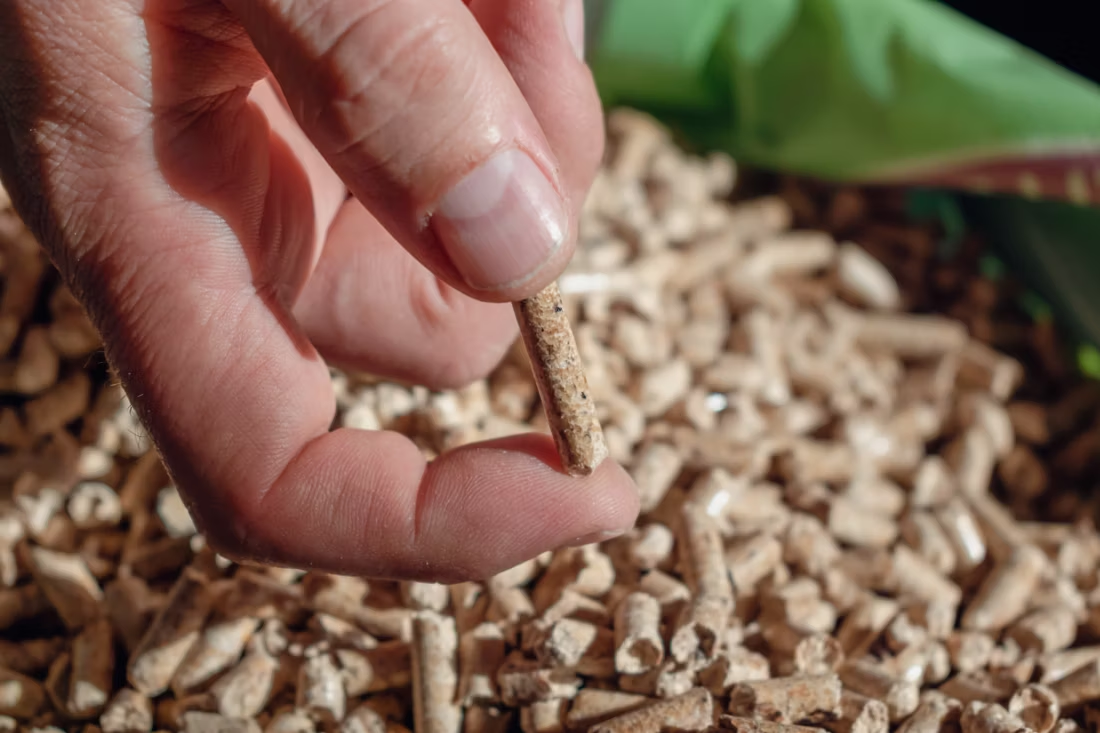
Regional brands like Bear Mountain, Lignetics, and Pacific Pellet are carried by Bay Area hearth and hardware retailers, though stock tends to be thinner and more seasonal here than in markets where pellet heat is a primary fuel source. Because demand is low locally, it's worth buying a season's worth of bags in early fall before suppliers scale back inventory for the winter, rather than assuming you can restock mid-January the way you could in a heavier-demand market.
What's the difference between a pellet stove and a pellet insert?
A pellet stove is a freestanding unit that vents through a wall or existing chimney chase and can go almost anywhere with the right clearances—common for garages, ADUs, or rooms without an existing fireplace. A pellet insert slides into an existing masonry fireplace opening, using the chimney (usually with a liner) as part of the venting path. Since wood-burning fireplaces are uncommon in San Pablo's newer housing stock, most local installs are freestanding stoves rather than insert conversions—but if you do have an older masonry fireplace, an insert is worth asking a dealer about.
Pellet vs. gas—which is the better fit for a San Pablo home?
For most San Pablo homes, gas wins. Natural gas service reaches nearly every neighborhood in town, a gas insert or fireplace installs in a day with no fuel storage or ash cleanup, and it doesn't require the auger and blower electricity a pellet stove needs to run. Pellet heat only really makes sense here in specific situations—a detached structure without gas service, a homeowner trying to avoid PG&E's high electric rates in an uninsulated space, or someone who simply prefers the look and feel of a real-fuel fire. If you're weighing the two, a local dealer can walk through what's actually available for your address and gas line access.
What's the difference between an insert and a zero-clearance fireplace?
An insert is a fireplace that slides into a pre-existing wood-burning fireplace—if you don't have one, there's nothing to insert it into. A zero-clearance fireplace is built into a framed wall, which makes it the answer for remodels and new construction. Simple test: existing masonry fireplace means insert; blank or framed wall means zero-clearance.
Why is my open fireplace making my house colder?
Open fireplaces suck—literally. As the fire burns, it consumes air your furnace already paid to heat and pulls it out through the chimney, so the house is actually colder after the fire goes out than before you lit it. An insert fixes this: it seals the chimney, puts fixed glass across the front, and turns that hole in your house into a real heat source.
What is an in-home preview and do I need one?
It's a visit where a hearth professional measures your space, confirms the model you picked actually works in your home, and walks the specs—framing, gas line, venting, finish work—before anything is ordered. Some details you just can't know until you see the house. Never make a down payment without one; it's the single most-skipped step that burns buyers.
Does a fireplace add value to my home?
On average, a fireplace adds back to the home about the same amount you spent installing it. Add the monthly savings from heating the rooms you actually use instead of the whole house—often hundreds of dollars a year—and the value case is strong before you even count what a fire does for how your family uses the room.
Nearby Dealers
Hearth shops serving San Pablo and the surrounding area.
Pellet Brands Stocked Around San Pablo
Manufacturers will point you to the nearest stocking dealer.
Find your pellet stove in San Pablo.
Tell us a bit about your home and situation and we'll send you a free Project Guide & Parts List—the right pellet stove or insert for your space, the vent kit and parts it needs, and a trusted local San Pablo-area dealer who can install it.
Find Your Fireplace →