
A Pellet Stove in Walnut Creek—When It Actually Makes Sense.
Walnut Creek's winters rarely call for a primary wood-pellet heat source. But for ambiance, an ADU, or backup heat on a hillside lot, a pellet stove can still be the right call—if it's sized and sited correctly.
Every Project Starts From One of These Five Situations
Walnut Creek's mild winters mean pellet heat is the exception, not the rule.
Walnut Creek sits at 201 feet in the East Bay, in climate zone 3B, with average winter lows around 42°F and just a short, mild heating season each year. Compare that to a place like Duluth, MN, which racks up a brutally long, deep-cold heating season, or even Bozeman, MT with a much longer and colder winter—and it's clear why pellet stoves haven't caught on here the way they have in colder markets. Most Walnut Creek homes heat with a gas furnace or a heat pump, and the mild Diablo Valley climate simply doesn't demand the 20-hour hopper burns that make pellet stoves so useful in genuinely cold regions.
That said, pellet stoves do show up in specific Walnut Creek situations: a converted garage or ADU that isn't on the main HVAC zone, a hillside property in the wildland-urban interface where wood smoke restrictions matter, or a household that wants supplemental radiant heat for the handful of cold snaps each winter. Contra Costa County is part of the Bay Area's non-attainment air basin, and wildfire smoke is a recurring seasonal concern—both factors that shape which appliances make sense here more than raw cold ever will. If you're set on pellet heat, a local dealer can tell you honestly whether it's worth it for your specific space, or whether gas or electric will serve you better.
Three steps. No salesperson until you're ready.
Tell us about your project
Your zip code, your situation, and the fuel you're leaning toward—or let the answers point you to one.
See what's actually available
The brands dealers within 100 miles genuinely carry—real options, never a catalog mirage.
Get your dealer & Project Guide
A trusted local dealer, plus the free Project Guide & Parts List that names every component of the job.
Frequently Asked Questions
Does a pellet stove actually make sense for a home in Walnut Creek?
For most Walnut Creek homes, not as a primary heat source. With average winter lows around 42°F and only a short, mild heating season each year, the East Bay's climate is mild enough that a gas furnace or heat pump handles the job without much drama. Pellet stoves earn their keep in places with real sustained cold—a pellet stove that shines in Fargo, ND won't get nearly the same workout here. Where they do make sense locally: a detached ADU or bonus room without central heat, a hillside home in the wildland-urban interface where you want a self-contained heat source, or simply for the ambiance of a real flame with less mess than wood. A local dealer can walk your specific space before you commit.
What does pellet stove installation cost in Walnut Creek?
Because pellet stoves are a niche purchase here rather than a common one, pricing isn't as standardized locally as it is for gas inserts or furnace work. Across Northern California generally, a pellet stove or insert installation—including venting, hearth pad, and electrical for the auger and blower—typically runs in the $3,500 to $6,500 range depending on the unit and whether you're venting through an existing chimney or a new wall penetration. A trusted local dealer can give you a firm number once they've seen your space; ask specifically whether the quote includes the vent kit and any electrical work, since those are the line items that most often get left out of ballpark estimates.
Are pellet stoves affected by Bay Area Spare the Air rules?
Contra Costa County falls under the Bay Area Air Quality Management District, which issues Winter Spare the Air alerts restricting wood-burning devices on high-pollution days. EPA-certified pellet stoves are generally treated more favorably than open wood fireplaces or older wood stoves under BAAQMD's Wood Burning Rule, since they burn cleaner and more efficiently—but rules and exemptions can shift year to year, so it's worth confirming current status with BAAQMD or your installer before you buy. Wildfire smoke is also a recurring issue in the East Bay hills each fall, which is part of why some Walnut Creek homeowners lean toward gas or electric instead of any combustion appliance that adds to the household's particulate load.
Will a pellet stove work during a PG&E power shutoff?
Not without a backup power source, and this is worth knowing before you buy one for that purpose. Pellet stoves rely on an electric auger to feed fuel and a blower to circulate heat—no electricity, no fire. Contra Costa County sees periodic Public Safety Power Shutoffs from PG&E during high fire-risk conditions, often in the same fall weeks when Spare the Air alerts are also in effect. If backup heat during an outage is your main goal, a wood stove or a battery-backed setup handles that job better than a standard pellet unit. Some homeowners pair a pellet stove with a small generator or battery system specifically to bridge PSPS events—ask a local dealer about load requirements if that's the plan.
Why don't more Walnut Creek homes just use wood stoves instead of pellet?
Wood-burning appliances face the same mild-climate math as pellet stoves in Walnut Creek, plus tighter local air quality scrutiny. Contra Costa County sits in a designated non-attainment air basin, and open burning or older uncertified wood stoves draw more restriction under BAAQMD rules than EPA-certified pellet appliances. Add in the county's wildfire-smoke seasons, and most households here that want a hearth appliance for ambiance or occasional supplemental heat lean toward pellet or gas rather than cordwood—even though oak, madrone, and Douglas fir are all available regionally for those who do burn wood on rural county land.
Where do pellet stoves make the most sense in a Walnut Creek home?
The clearest fit is a space that's disconnected from central HVAC—a converted garage, a detached studio, a bonus room addition, or a hillside property in unincorporated Contra Costa County where a self-contained heat source has real value. A pellet stove in a main living room that's already served by a gas furnace is mostly there for atmosphere; that's a legitimate reason to want one, but it's worth going in knowing it's a lifestyle choice here, not a heating necessity the way it would be in a genuinely cold climate.
Pellet vs. gas vs. electric—what's actually the better fit in Walnut Creek?
Gas is the standard choice for most Walnut Creek homes because natural gas service is widely available and a direct-vent gas fireplace or insert delivers instant, consistent heat with minimal maintenance. Electric fireplaces and heat pumps are also common, though PG&E's residential rate—currently around $0.317 per kWh, among the higher rates in the state—makes electric resistance heat comparatively expensive to run for anything beyond occasional use. Pellet sits in between: cleaner and more efficient than wood, but dependent on electricity to operate and not as turnkey as gas in a market where gas infrastructure is already in place. For most primary living spaces, gas wins on convenience; pellet tends to win only when the goal is a specific look, a specific room, or a fuel source you can stockpile.
Where can I buy pellets locally in Walnut Creek?
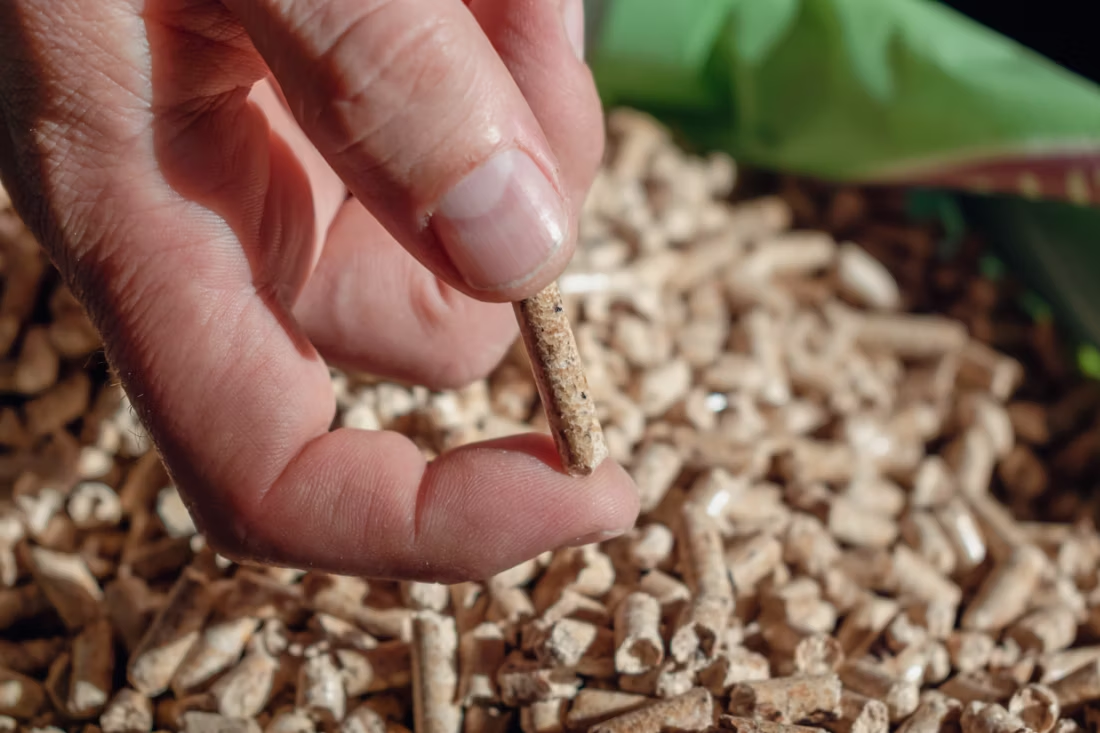
Regional pellet brands including Bear Mountain, Lignetics, and Pacific Pellet are distributed through hardware stores, farm supply outlets, and hearth retailers across the greater Bay Area, and most Walnut Creek-area dealers can point you to a reliable local source or set up seasonal delivery. Because pellet stoves are a smaller category of appliance here than gas fireplaces, it's worth confirming with your dealer that a given retailer keeps consistent stock through the winter rather than assuming every hardware store carries it year-round.
Do I need a permit to install a pellet stove in Walnut Creek?
Yes—a building permit through the City of Walnut Creek Building Division (or Contra Costa County Building Inspection for unincorporated areas) is required for a new pellet stove installation, covering the venting, hearth clearance, and any electrical work for the unit. Most established local dealers handle the permit application and inspection scheduling as part of the installation, so you typically aren't navigating it solo. Because pellet installs are less common locally than gas conversions, it's worth confirming your installer has pulled pellet-specific permits before, not just gas or wood ones.
Why is a fireplace insert so efficient?
An insert does two things: it seals the chimney completely, so you stop losing air you already paid to heat, and it radiates warmth into the room through the firebox and glass. Most add a heat-exchange fan that pulls cool room air underneath, wraps it around the hot firebox, and pushes it back out warm. Your home is more efficient before you've even lit the first fire.
What's the difference between an insert and a zero-clearance fireplace?
An insert is a fireplace that slides into a pre-existing wood-burning fireplace—if you don't have one, there's nothing to insert it into. A zero-clearance fireplace is built into a framed wall, which makes it the answer for remodels and new construction. Simple test: existing masonry fireplace means insert; blank or framed wall means zero-clearance.
What is an in-home preview and do I need one?
It's a visit where a hearth professional measures your space, confirms the model you picked actually works in your home, and walks the specs—framing, gas line, venting, finish work—before anything is ordered. Some details you just can't know until you see the house. Never make a down payment without one; it's the single most-skipped step that burns buyers.
Does a fireplace add value to my home?
On average, a fireplace adds back to the home about the same amount you spent installing it. Add the monthly savings from heating the rooms you actually use instead of the whole house—often hundreds of dollars a year—and the value case is strong before you even count what a fire does for how your family uses the room.
Nearby Dealers
Hearth shops serving Walnut Creek and the surrounding area.
Pellet Brands Stocked Around Walnut Creek
Manufacturers will point you to the nearest stocking dealer.
See if a pellet stove is really right for your Walnut Creek home.
Tell us about your space and we'll connect you with a trusted local dealer who'll give you a straight answer—and a free Project Guide & Parts List covering the exact parts, vent kit, and recommended installer for your project.
Find Your Fireplace →