
Pellet Stoves Are Rare in Richmond—Here's Where They Still Make Sense.
With only about 2,459 heating degree days and winter lows averaging in the mid-40s, most Richmond homes don't need a dedicated pellet appliance—but for the right house, one still makes sense. We'll help you figure out if yours is one of them.
Every Project Starts From One of These Five Situations
Richmond's mild bay climate doesn't call for dedicated pellet heat.
Richmond sits at just 84 feet of elevation right on San Francisco Bay, in climate zone 3B, where winter lows average around 44°F and the heating season is short. Compare that to a genuinely cold-climate town like Duluth, MN, where heating degree days run three to four times higher—Richmond's roughly 2,459 HDD simply doesn't generate the kind of sustained cold that makes a pellet stove someone's primary heat source. Most homes here rely on a furnace or heat pump for the handful of chilly nights each winter, which is exactly why pellet stoves show up so rarely on Richmond rooftops.
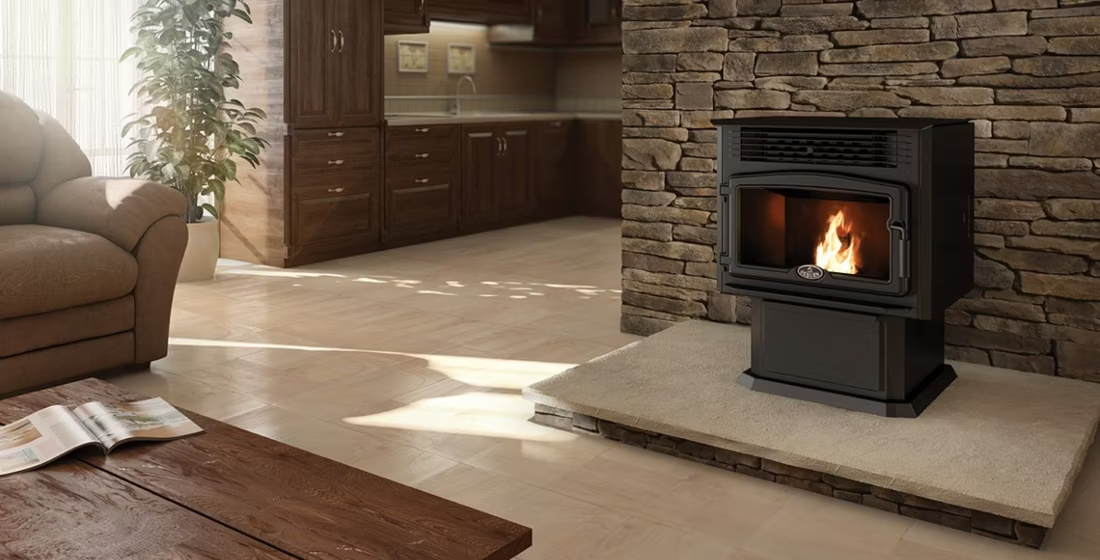
That said, a small number of local homeowners do install pellet stoves—usually in older homes near the Richmond Annex or El Sobrante hills without central heat, in detached ADUs, or simply for the ambiance of a real flame without the smoke management that wood requires. Contra Costa is a Bay Area Air Quality Management District non-attainment area with real wildfire-smoke concerns, and EPA-certified pellet appliances are typically treated more favorably than open wood-burning during Spare the Air advisories. The tradeoff worth knowing: pellet stoves need electricity to run the auger and combustion blower, and with PG&E's residential rate near $0.317/kWh and periodic Public Safety Power Shutoffs during fire season, that's a real consideration before you commit.
Three steps. No salesperson until you're ready.
Tell us about your project
Your zip code, your situation, and the fuel you're leaning toward—or let the answers point you to one.
See what's actually available
The brands dealers within 100 miles genuinely carry—real options, never a catalog mirage.
Get your dealer & Project Guide
A trusted local dealer, plus the free Project Guide & Parts List that names every component of the job.
Frequently Asked Questions
Are pellet stoves actually common in Richmond?
Not really, and it's worth saying plainly: with Richmond's mild bay-influenced climate and roughly 2,459 heating degree days per year, the vast majority of homes here heat with a furnace, heat pump, or gas fireplace rather than a dedicated pellet appliance. Pellet stoves in Richmond tend to show up in specific situations—an older home without central ductwork, a detached studio or ADU, or a homeowner who simply wants supplemental radiant heat and enjoys tending a stove. If that's not your situation, a gas or electric option is usually the more practical fit for this climate.
How much does a pellet stove installation cost in Richmond?
Because pellet installations are uncommon locally, pricing varies more by installer than in markets where pellet heat is standard. As a general planning range, expect equipment, venting, and a hearth pad to run somewhere in the $3,500–$6,500 range for a straightforward install into an existing room, with costs rising if new electrical circuits or masonry work are needed. A trusted local dealer will give you a firm number after seeing your home—that's part of what the free Project Guide & Parts List match is for.
Will a pellet stove work during a PG&E power outage?
Only with help. Pellet stoves rely on an electric auger to feed fuel and a blower to distribute heat, so a standard unit goes dark the moment PG&E cuts power—which matters in Contra Costa County given periodic Public Safety Power Shutoffs during fire season. Homeowners who want pellet heat as backup typically pair the stove with a small battery backup unit or a portable generator sized for the stove's low wattage draw. If outage-proof heat without any workaround is the priority, that's one of the reasons pellet stoves remain a minority choice here compared to non-electric options.
Do I need a permit to install a pellet stove in Richmond?
Yes—a new pellet stove installation typically requires a building permit through the City of Richmond Planning and Building Services Department, or through Contra Costa County if your property sits in an unincorporated pocket like North Richmond. The permit process confirms proper clearances, venting termination, and electrical work for the appliance. A local hearth dealer who regularly works in Richmond and Contra Costa will usually pull the permit as part of the installation rather than leaving you to navigate it solo.
Why don't more Richmond homes burn wood or pellets for heat?
Two things work against solid-fuel heating here: climate and air quality. Richmond's mild winters mean most homes simply don't generate enough heating demand to justify a wood or pellet appliance as a primary source. On top of that, Contra Costa sits in a Bay Area Air Quality Management District non-attainment area, and wildfire smoke is already a recurring seasonal concern—which pushes local building departments and homeowners toward cleaner-burning gas or electric options for everyday heat. Where solid fuel does get used, pellet is generally viewed as the cleaner-burning of the two thanks to its EPA-certified combustion.
Where can I buy pellet fuel near Richmond?
Regional brands like Bear Mountain, Lignetics, and Pacific Pellet are distributed through Northern California hearth and hardware retailers, though because pellet stoves are uncommon locally, stock isn't as deep or as seasonal-sale-driven as it is in colder inland markets. Expect to pay a premium over inland Sierra or Central Valley pricing for delivery into the East Bay. A local dealer who sells you the stove can usually point you to the nearest reliable pellet source or set up a standing order before winter.
Are pellet stoves exempt from Spare the Air burn restrictions?
In most Bay Area Air Quality Management District jurisdictions, EPA-certified pellet stoves are treated differently than open wood-burning fireplaces and non-certified wood stoves during Spare the Air advisories, since pellet combustion burns more completely and produces far less particulate matter. Rules can shift year to year and by device certification, so confirm current status with BAAQMD or your building department before you burn on a Spare the Air day—but this is one of the few practical advantages pellet has over wood in a non-attainment area like Contra Costa County.
Pellet vs. gas—which makes more sense for a Richmond home?
For most Richmond homes, gas is the more practical choice. Natural gas service is standard across the city, a gas fireplace or insert lights instantly with no fuel storage or ash cleanup, and it fits the mild climate here without requiring you to manage pellet bags or hopper refills. Pellet stoves make more sense if you specifically want the visual and radiant character of burning fuel and don't mind the extra handling—but if you're simply trying to add heat efficiently to a room, a gas insert is usually the lower-friction answer in this climate.
Pellet vs. electric—which is the better backup option in Richmond?
Neither is a true no-electricity backup, which is worth knowing given PG&E's Public Safety Power Shutoffs. Electric options—space heaters or electric fireplace inserts—are simple and code-flexible but run entirely on grid power, and at PG&E's residential rate of roughly $0.317/kWh, running one as a primary heat source gets expensive fast. Pellet stoves also need electricity for the auger and blower, but their fuel cost per BTU is typically lower than electric resistance heat over a full winter. If backup heat during an actual outage is the goal, most Richmond homeowners are better served by a battery system or generator paired with whichever appliance they already prefer, rather than choosing pellet or electric for that reason alone.
What's the difference between an insert and a zero-clearance fireplace?
An insert is a fireplace that slides into a pre-existing wood-burning fireplace—if you don't have one, there's nothing to insert it into. A zero-clearance fireplace is built into a framed wall, which makes it the answer for remodels and new construction. Simple test: existing masonry fireplace means insert; blank or framed wall means zero-clearance.
Can a pellet stove heat a whole house?
It genuinely can. I burned a pellet stove as my only heat source for years after a furnace died, and it kept the entire house warm. Pellets feed automatically from a hopper, so you get wood-heat economics with thermostat-style control. Two honest caveats: it needs weekly cleaning during the season, and most models need electricity to run—ask about battery backup if outages are a concern.
Can I install a fireplace myself?
If you're putting a fire in your house on purpose, it's best to work with an expert. Unless you're genuinely experienced in framing, gas line, vent pipe, and the national code on clearances to combustibles, have a professional do it—and ideally the same company that sells you the fireplace, so warranty, service, and liability all live under one roof.
Does a fireplace add value to my home?
On average, a fireplace adds back to the home about the same amount you spent installing it. Add the monthly savings from heating the rooms you actually use instead of the whole house—often hundreds of dollars a year—and the value case is strong before you even count what a fire does for how your family uses the room.
Nearby Dealers
Hearth shops serving Richmond and the surrounding area.
Pellet Brands Stocked Around Richmond
Manufacturers will point you to the nearest stocking dealer.
Find out if pellet heat makes sense for your Richmond home.
Tell us about your home and heating goals, and we'll match you with a trusted local Richmond-area dealer and send over a free Project Guide & Parts List—a clear plan with the exact parts, including venting, and an honest read on whether pellet is the right call for your space.
Find Your Fireplace →