Saint-Jérôme, Quebec · Since 2008
Renaissance
In February 2008, a Quebec chimney maker brought an open wood-burning fireplace to the hearth industry's big trade show, built to beat a brand-new low-emission test standard.[14][13] In May 2009, the U.S. Environmental Protection Agency gave that fireplace, the Renaissance Rumford 1000, a Clean Air Excellence Award.[14]
Not every dealer carries every model. We'll show you what's available near you, the local dealers who can help, and a free Project Guide you can take to any dealer.
See the Renaissance lineup on the manufacturer's site: icc-rsf.com/fireplace/renaissance ↗
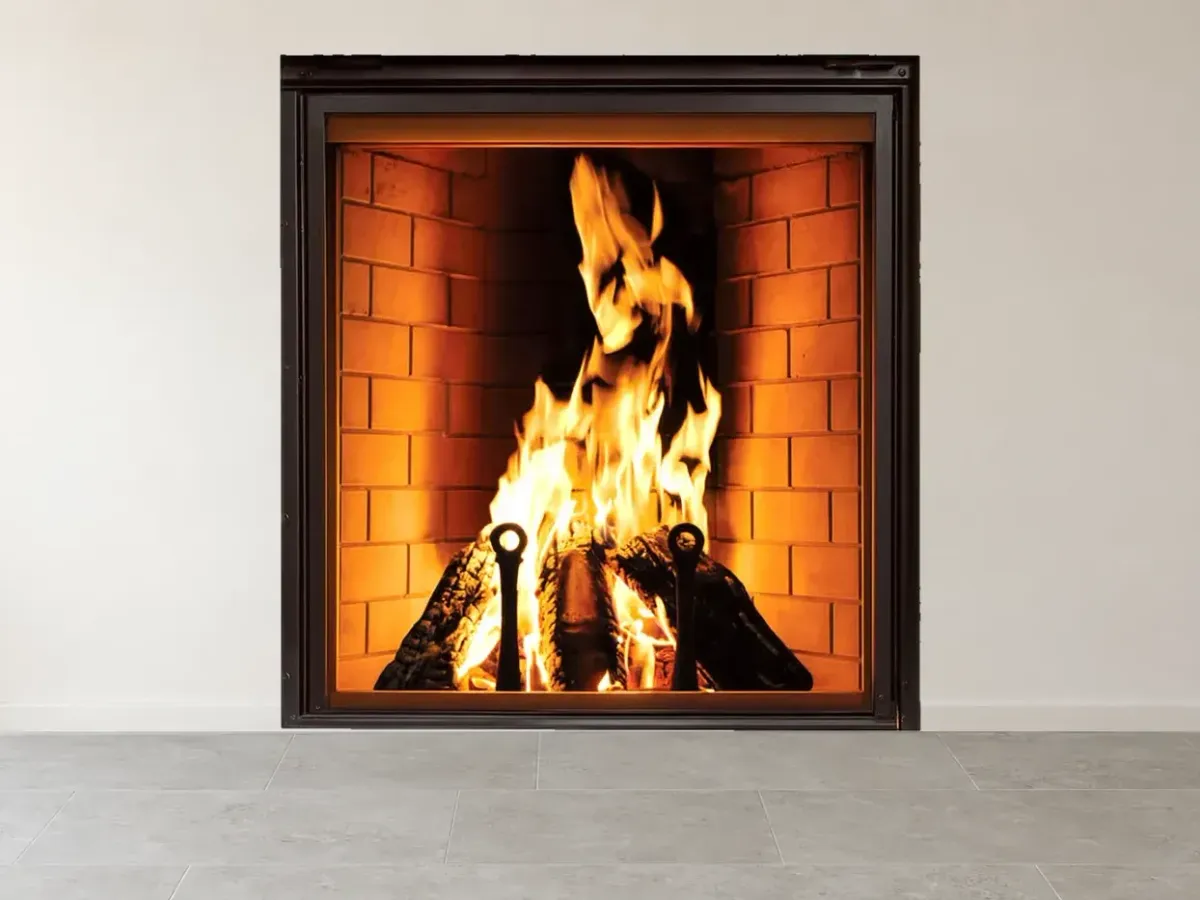
Renaissance Rumford 1000 Wood Fireplace
| Launched | 2008[14][13] |
|---|---|
| Company | Industrial Chimney Company (ICC)[3][10] |
| Founders | Ray Bonar, Doug Singer, and André Bibaud, who started ICC in 1991[12][2] |
| Hometown | Saint-Jérôme, Quebec[3] |
| Owner | ICC's founding and employee partners, as of 2016[12] |
| Known For | The Rumford 1000, an open wood fireplace that won an EPA Clean Air Excellence Award[14] |
| Signature Models | Rumford 1000, Rumford 1500, Uptown 600, Linear 50[1] |
| Fuel | Wood only[1][3] |
| Made In | Saint-Jérôme, Quebec, Canada[12][3] |
| Manufacturer's Site | icc-rsf.com/fireplace/renaissance ↗ |
On This Page
- How Did Renaissance Fireplaces Start?
- What Is a Rumford Fireplace?
- How Is a Renaissance Different From an Open Masonry Fireplace?
- Is a Renaissance Fireplace EPA Certified?
- Who Owns Renaissance Fireplaces?
- Where Are Renaissance Fireplaces Made?
- What Does Renaissance Make Today?
- Can I Still Get Parts for an Older Renaissance?
- Renaissance Timeline
- Renaissance Models
- Past Renaissance Models: Manuals and Brochures
- Frequently Asked Questions
How Did Renaissance Fireplaces Start?
With a chimney company. About 1990, Ray Bonar was a hearth products distributor in western Canada, Doug Singer was vice president of engineering at a chimney maker, and André Bibaud was Singer's second in command. The three decided they could make venting better, and after a year and a half of planning they started Industrial Chimney Company, better known as ICC.[12] ICC dates its founding to 1991.[2]
Fireplaces came later. ICC bought the RSF fireplace line and in 2001 moved it from northern British Columbia to Quebec.[12] Then, in 2008, ICC started designing what it calls prestige fireplaces, and Renaissance was born.[13] The spark was personal: while Ray Bonar was building his own house, he couldn't find a fireplace that suited it.[13]
The result was the Renaissance Rumford 1000, first shown at the Hearth, Patio & Barbecue Association trade show in February 2008.[14] ICC filed for its patent that same month, naming Bibaud and Louise Cléroux as inventors,[19] and filed the Renaissance Rumford Fireplace trademark in Canada in January 2008 and in the United States in February.[18][17] Renaissance's first website, online by August 2008, promised “a romantic open fire with very low emissions.”[11] The timing was hard, though. Bonar later said ICC introduced the line just as new-home building collapsed, so sales were slow for the first few years.[12]
“Our Renaissance models were designed to be clean burning, environmentally friendly, conventional fireplaces.”
Ray Bonar, in Hearth & Home (2016)[12]
What Is a Rumford Fireplace?
It's a fireplace shape that's more than 200 years old. Count Rumford was born Benjamin Thompson in Woburn, Massachusetts, in 1753.[21] He sided with the British in the American Revolution, was knighted by King George III, and was made a count in Bavaria.[20] His essay on chimney fireplaces was published in 1796.[20]
Rumford made fireplaces smaller and shallower, with side walls angled wide open so they'd throw more heat into the room. He also streamlined the throat, the narrow passage where the smoke leaves the firebox, so the smoke would carry away cleanly with little loss of the room's warm air. The result is the tall, shallow fireplace that carries his name. Rumford fireplaces were common from 1796 until about 1850, and Thomas Jefferson had them built at Monticello.[21][20]
Renaissance builds that shape in steel and refractory instead of brick.[3] The Rumford 1000's firebox is 27½ inches wide at the front, 13½ inches wide at the back, and 12¾ inches deep.[3][4] The Rumford 1500's is 35½ inches at the front and 21¾ at the back.[5] ICC's patent describes side walls set at about 120 degrees to the back wall, an insulated firebox, and a divider in the throat that splits the rising air into smooth front and rear channels.[19]
“Remove those local hindrances which forcibly prevent the smoke from following its natural tendency to go up the chimney.”
Count Rumford, on his fireplace design, quoted by Buckley Rumford Fireplaces[21]
How Is a Renaissance Different From an Open Masonry Fireplace?
Start with where the heat goes. The EPA says most traditional open fireplaces lose over 90 percent of the fire's heat up the chimney, and take much of the room's warm air with it.[16] A Renaissance has a glass door that seals the opening. With the door closed, the fire burns air brought in from outside, so it isn't pulling warm air out of your house.[3]
Then there's the smoke. The Rumford 1000 was developed to beat the low-emission requirements of a new ASTM test standard for low-mass fireplaces, the kind built in a factory instead of by a mason. It uses a sealed outside air intake, a gasketed glass door, and an insulated chimney, and when the EPA honored it in 2009, the agency said it beat the national emission standards for wood stoves and Washington State's 4.5 grams-per-hour limit.[14] The EPA's announcement called it the world's first certified clean-burning open fireplace.[14] Renaissance's own copy puts it as “the world's first certified open-door clean-burning fireplace.”[4]
The chimney matters too. The Rumford 1000, the Rumford 1500, and the Linear 50 are certified with ICC's Model RIS chimney,[3] which Renaissance says is laser-welded stainless steel wrapped in blanket insulation, built to keep cold air out and improve the draft.[3][1]
So what does that mean for you? You still get the sound and smell of a real wood fire. But you get it from a fireplace built to burn far cleaner than an old open hearth, with a door you can close when you want to keep the heat in.
“Renaissance Fireplaces has produced the world's first certified clean burning open fireplace.”
U.S. Environmental Protection Agency (2009)[14]
Is a Renaissance Fireplace EPA Certified?
Not certified, and that's by design. The EPA certifies wood stoves and other wood heaters under its wood heater standard.[15] Under its 2015 rules, a Renaissance counts as a fireplace, not a wood heater, so the certification rules don't apply to it.[3][10][6][7] The Rumford 1000's manual says it's defined as a fireplace mainly for its decorative look, with more than 500 square inches of fire to watch.[10]
What Renaissance has instead is EPA qualification. From 2009 to 2025, EPA's Burn Wise program ran a voluntary program for cleaner fireplaces,[15] and Phase 2 qualified models were about 70 percent cleaner than unqualified ones.[16] EPA's list includes the Rumford 1000 at 3.0 grams per kilogram of wood, the Rumford 1500 at 3.4, and the Uptown 600 at 4.76, with door-closed Rumford versions as low as 0.68.[15] The Linear 50 isn't on the list.[15] The EPA itself notes that a qualified fireplace isn't “certified” or “regulated” under its wood heater standard, and it sends you to your state or local air agency for the rules where you live.[15]
For safety, Renaissance lists its fireplaces to UL 127 and ULC S610.[3] If your town limits wood burning, ask your dealer and your local air agency before you buy.
Who Owns Renaissance Fireplaces?
Industrial Chimney Company. Renaissance Fireplaces is a division of ICC, and its catalog and manuals give ICC's address in Saint-Jérôme, Quebec.[3][10] The Renaissance Rumford Fireplace trademark and the Renaissance patent are both held by I.C.C. Compagnie de Cheminées Industrielles Inc., at the same Saint-Jérôme address.[17][18][19][3]
As of 2016, ICC was owned by the people who ran it. That year, Hearth & Home reported that the three original partners were still its active owners, that Bonar and Singer shared the CEO duties, and that Bibaud led research and development. Key employees had also been given the chance to become partners, and about a dozen were active in day-to-day operations.[12]
Renaissance has one sibling fireplace brand: RSF, which ICC bought and moved to Quebec in 2001.[12][2] The two lines do different jobs. Bonar said he and Singer bought RSF because they liked the idea of a built-in fireplace that burned and heated like a wood stove, while Renaissance models “were never designed to be heating units.”[12] The RSF story has its own page: RSF.
Where Are Renaissance Fireplaces Made?
In Saint-Jérôme, Quebec. In 2016, Hearth & Home reported that every ICC product was built in its 120,000-square-foot factory and headquarters there, with almost 250 employees.[12] ICC says today that the plant, after a 30,000-square-foot addition, sits on more than 20 acres, runs around the clock all year, and employs about 200 people.[2]
The fireplaces are heavy, steel-built units that ship in crates. A Rumford 1000 ships at 720 pounds and a Linear 50 at 1,130.[3]
What Does Renaissance Make Today?
Four wood-burning fireplaces, and nothing else.[1] The Rumford 1000 and the larger Rumford 1500 are the true Rumfords, tall and shallow, with door openings 37 and 42 inches high.[3] Both have a counterweighted glass door and a separate firescreen that slide up into the wall above the fireplace, so you can burn with the door closed, or open the door and listen to the fire behind the screen.[3]
The Uptown 600 is the smallest, with a 600-square-inch view of the fire. Its door and screen glide on vertical rails and tilt forward for cleaning, and it vents through an 8-inch chimney.[3][6] The Linear 50 is the wide one, a 50-inch wall of fire.[3] In 2016, Bonar singled out ICC's new, large linear wood-burning model as a strong seller.[12] Both the Uptown 600 and the Linear 50 come with a heat recovery system that sends warm air through ducts to grilles in the room, though Renaissance says the Linear 50 isn't designed to be used as a heat source.[3][7]
Every model can be drilled for an aftermarket gas log set, but none can take a gas log lighter, because the firebox runs too hot for one.[3] Renaissance says the Rumford 1000 won three Vesta awards in 2008, including Best New Fireplace, a claim we couldn't confirm independently.[8]
Can I Still Get Parts for an Older Renaissance?
Usually, yes. ICC still builds Renaissance fireplaces in Saint-Jérôme, and dealers order parts by model and serial number. Models change under the same name, so the Rumford 1000's documents cover both the 1000B and the newer 1000C.[4]
The warranty runs 30 years. In the first year, Renaissance repairs or replaces defective parts and pays reasonable labor. From the second through the fifth year, it covers the parts but not the labor. From the sixth through the thirtieth year, it sells replacement parts, if they're available, at half the published retail price. Glass and andirons are excluded, and the warranty isn't transferable.[9] Current manuals, exploded parts views, and the warranty are on each model's page on the ICC site.[4][5]
We found no recall of a Renaissance fireplace when we searched the U.S. Consumer Product Safety Commission and Health Canada recall databases in November 2026.[22][23]
Renaissance Timeline
- 1753 Benjamin Thompson, the future Count Rumford, is born in Woburn, Massachusetts.[21]
- 1796 Rumford's essay on chimney fireplaces is published.[20][21]
- 1991 Ray Bonar, Doug Singer, and André Bibaud start Industrial Chimney Company.[12][2]
- 2001 ICC moves the RSF fireplace line from northern British Columbia to Quebec.[12]
- 2008 ICC starts designing prestige fireplaces, and the Renaissance Rumford 1000 debuts at the hearth industry's trade show in February.[13][14]
- 2009 The Rumford 1000 wins an EPA Clean Air Excellence Award, and Canada registers the Renaissance Rumford Fireplace trademark.[14][18]
- 2011 The trademark is registered in the United States.[17]
- 2013 U.S. Patent 8,479,723 is granted for the low-emission fireplace design.[19]
- 2016 ICC turns 25, and a new large linear model is selling well.[12]
- 2025 EPA's Burn Wise program ends. Its list still shows three Renaissance models as Phase 2 qualified.[15]
- 2026 The lineup is the Rumford 1000, Rumford 1500, Uptown 600, and Linear 50.[1]
Renaissance Models
All four current Renaissance wood-burning fireplaces: the Rumford 1000, the Rumford 1500, the Uptown 600, and the Linear 50. Not every dealer carries every model, so enter your zip and we'll show you what's available near you.
Wood Fireplaces (4)
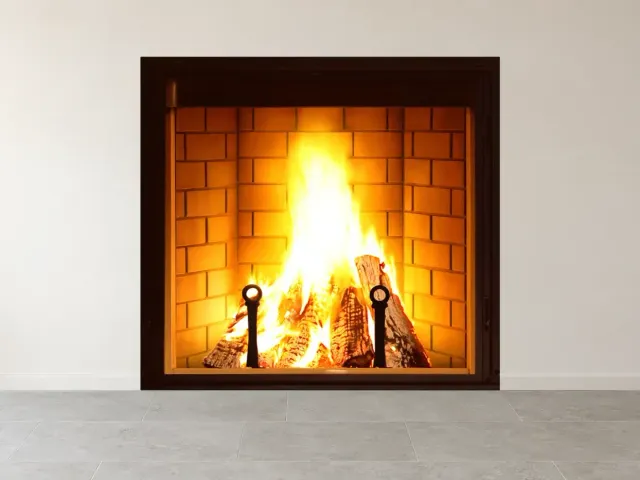 Rumford 1500Renaissance · Wood Fireplace
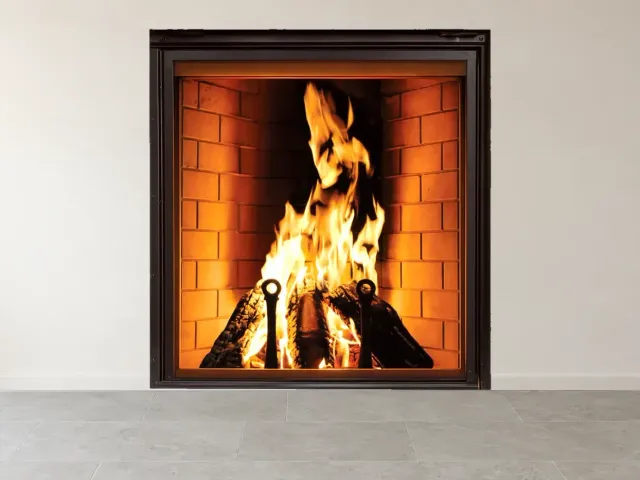 Rumford 1000Renaissance · Wood Fireplace
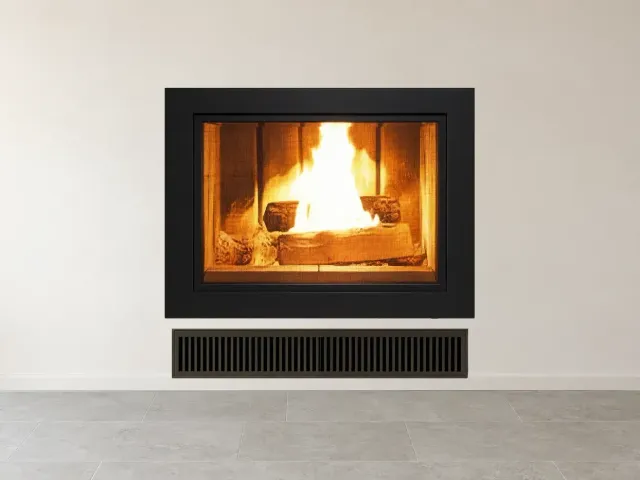 Uptown 600Renaissance · Wood Fireplace
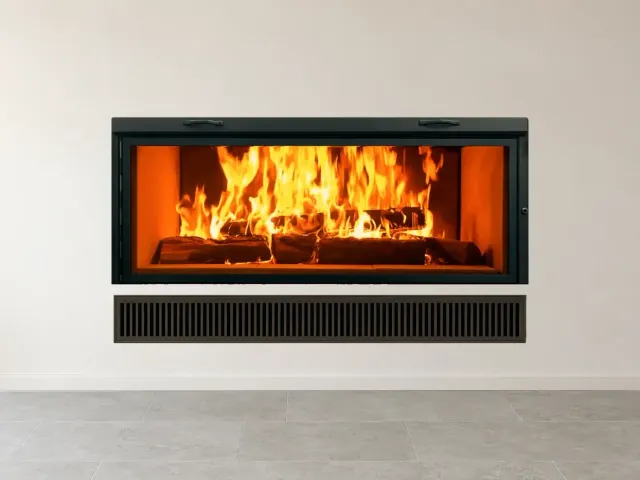 Linear 50"Renaissance · Wood Fireplace
Past Renaissance Models: Manuals and Brochures
Have an older Renaissance? These are the discontinued models we found a manual or brochure for, 6 in all. Each one links to its documents, and the full past-models page has what each model was, its specs, and what replaced it.
| Model | Fuel and Type | Years | Documents |
|---|---|---|---|
| Renaissance Rumford 1000 (Original) | Wood Fireplace | About 2008–2014 | 4 documents |
| Renaissance Rumford 1000H | Wood Fireplace | About 2009–2011 | 5 documents |
| Renaissance Rumford 1500 (Original) | Wood Fireplace | About 2010–2014 | 4 documents |
| Renaissance Rumford 1000B | Wood Fireplace | About 2014–2025 | 6 documents |
| Renaissance Rumford 1500B | Wood Fireplace | About 2014–2025 | 6 documents |
| Renaissance Linear 50 SP | Wood Fireplace | About 2017–early 2020s | 5 documents |
Frequently Asked Questions
Who founded Renaissance Fireplaces?
Industrial Chimney Company (ICC), the Quebec chimney maker that Ray Bonar, Doug Singer, and André Bibaud started in 1991. ICC launched Renaissance in 2008, after Bonar couldn't find a fireplace he liked for the house he was building.
Who owns Renaissance Fireplaces?
Industrial Chimney Company. Renaissance is a division of ICC, which was owned by its three founding partners and a group of employee partners when Hearth & Home profiled it in 2016.
Are Renaissance and RSF the same company?
Yes. Both are made by ICC in Saint-Jérôme, Quebec. RSF builds wood fireplaces made to heat a house like a wood stove, while Renaissance builds open-style wood fireplaces made for the look and sound of the fire. See our RSF page.
Where are Renaissance fireplaces made?
In Saint-Jérôme, Quebec, at ICC's factory and headquarters.
What does Renaissance make?
Wood-burning fireplaces only: the Rumford 1000, the Rumford 1500, the Uptown 600, and the Linear 50. Each has a glass door and a screen that slide up out of sight.
What is a Rumford fireplace?
A tall, shallow fireplace with wide-angled side walls and a streamlined throat, designed by Count Rumford in the 1790s to throw more heat into the room and send the smoke up the chimney. Renaissance builds that shape in steel and refractory, with a sealed glass door and an insulated chimney.
Is a Renaissance fireplace EPA certified?
No, because the EPA counts it as a fireplace, not a wood heater, so the certification rules don't apply. Instead, the Rumford 1000, Rumford 1500, and Uptown 600 qualified at the Phase 2 level of EPA's voluntary fireplace program, which ran until 2025. Check your local wood-burning rules with your dealer before you buy.
Was there a Renaissance recall?
We didn't find one. When we searched the CPSC and Health Canada recall databases in November 2026, no recall named Renaissance or Industrial Chimney Company. If you're unsure about your fireplace, ask your dealer to check the serial number.
Can I still get parts for my old Renaissance?
Usually. ICC still builds Renaissance fireplaces, and dealers order parts by model and serial number. On the Rumford 1000, the listing label is on the left counterweight channel, behind the open door and screen. Manuals and parts diagrams are on the ICC website.
Where can I buy a Renaissance fireplace?
From a local Renaissance dealer. Enter your zip or postal code in our finder and we'll show you the local dealers who can help.
Find a Local Dealer for Your Fireplace Project
Enter your zip or postal code. We'll show you what's available near you, the local dealers who can help, and a free Project Guide & Parts List you can take to any dealer.
Not every dealer carries every model. We'll show you what's available near you, the local dealers who can help, and a free Project Guide you can take to any dealer.
More Brands
53 models →Quadra-FireColville, Washington · Since 1979
17 models →HarmanHalifax, Pennsylvania · Since 1979
15 models →Vermont CastingsRandolph, Vermont · Since 1975
12 models →PelProValue pellet stoves · Part of HHT since 2012
5 models →WoodProValue wood stoves · Hearth & Home Technologies
3 models →Kozy HeatLakefield, Minnesota · Since 1976
31 models →Pacific EnergyDuncan, British Columbia · Since 1978
26 models →Town & CountryDuncan, British Columbia · Since 2002
14 models →RSFSaint-Jérôme, Quebec · Clean-Burning Wood Fireplaces
7 models →
Sources
- ICC-RSF: What Is a Renaissance Fireplace? (2026)
- ICC-RSF: A Bit of History (2026)
- Renaissance Fireplaces: catalog 2023–2024, with specifications (2024)
- ICC-RSF: Renaissance Rumford 1000, with documents (2026)
- ICC-RSF: Renaissance Rumford 1500 (2026)
- ICC-RSF: Renaissance Uptown 600 (2026)
- ICC-RSF: Renaissance Linear 50 (2026)
- ICC-RSF: Renaissance awards (2026)
- Renaissance Fireplaces: 30 Years Limited Warranty (May 2016)
- Renaissance: Rumford 1000 installation manual (June 2025)
- Renaissance Fireplaces: home page (August 2008, archived)
- Hearth & Home: Relationships Matter (October 2016)
- INT Design: Renaissance Fireplaces, the Prestige of Quebec (February 2022)
- U.S. EPA: Northwest Orgs. Receive National Recognition for Creative Clean Air Projects (May 13, 2009, archived)
- U.S. EPA Burn Wise: List of Qualified Fireplaces and Fireplace Retrofit Devices (program ran 2009–2025)
- U.S. EPA Burn Wise: Choosing the Right Fireplace or Fireplace Retrofit Device (2026)
- USPTO: RENAISSANCE RUMFORD FIREPLACE trademark, registration 3949671 (filed February 6, 2008; registered April 26, 2011)
- Canadian Intellectual Property Office: RENAISSANCE RUMFORD FIREPLACE trademark, TMA747577 (filed January 18, 2008; registered September 14, 2009)
- U.S. Patent 8,479,723, Low-Emission Fireplace Assembly (André Bibaud and Louise Cléroux, filed 2009, granted 2013)
- Library of Congress: Thomas Jefferson and the Rumford Fireplace (January 2026)
- Buckley Rumford Fireplaces: What Is a Rumford Fireplace, Anyway?, by Jim Buckley (2010)
- U.S. Consumer Product Safety Commission: recalls database, fireplace recalls (searched November 6, 2026)
- Health Canada: Recalls and Safety Alerts, search for Renaissance fireplace (searched November 6, 2026)
Renaissance Rumford is a trademark of I.C.C. Compagnie de Cheminées Industrielles Inc.. Find My Fireplace is independent and not affiliated with or endorsed by Renaissance Fireplaces or Industrial Chimney Company. No brand pays to be on this page. Product details are drawn from the manufacturer's published brochures and manuals; our evaluations are our own.
Product images may be computer renderings; confirm finishes and options before purchase.