
Reliable, clean-burning heat for every corner of Snohomish County.
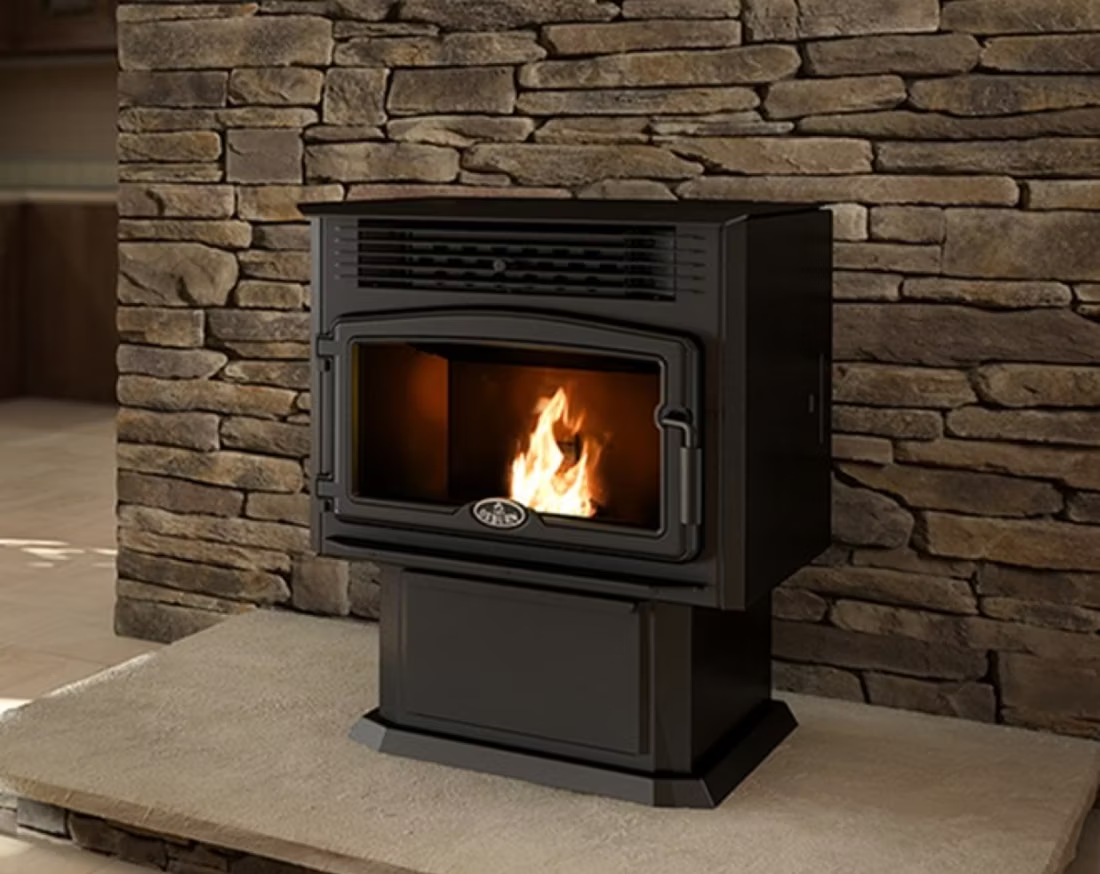
From the Puget Sound waterfront in Everett and Edmonds to the Cascade foothill towns of Darrington and Granite Falls, pellet stoves deliver steady, thermostatic heat that stays legal during regional burn bans. Find the right unit and connect with a trusted local dealer.
Every Project Starts From One of These Five Situations
Mild winters, strict burn bans, and pellet stoves built for both.
Snohomish County stretches from sea level at Puget Sound to the Cascade foothills near Darrington, Index, and Gold Bar, all within a Zone 4C marine climate where winter lows average around 35°F. With a long, mild heating season stretching from fall well into spring, the cold here is long but mild—nowhere near the sub-zero stretches of a place like Duluth, MN or Burlington, VT. That combination—lots of damp, chilly days rather than brutal cold snaps—is exactly the profile pellet stoves handle well: consistent, thermostatically controlled heat that doesn't require the overnight fire management a wood stove does.
It also helps that Snohomish County has a direct stake in the pellet stove industry: Travis Industries, maker of Lopi, Quadra-Fire, and Fireplace Xtrordinair pellet appliances, is headquartered in Mukilteo, right in the county. Regional pellet brands like Bear Mountain, Lignetics, and Pacific Pellet keep local supply steady and pricing competitive because the mills aren't far away. The other local factor is air quality: the Puget Sound Clean Air Agency issues burn ban advisories during winter stagnation events and periods of heavy wildfire smoke, and EPA-certified pellet stoves are typically exempt from the restrictions that apply to older, uncertified wood stoves and open fireplaces—a real advantage for anyone who wants reliable heat without checking the burn ban status every cold morning.
Three steps. No salesperson until you're ready.
Tell us about your project
Your zip code, your situation, and the fuel you're leaning toward—or let the answers point you to one.
See what's actually available
The brands dealers within 100 miles genuinely carry—real options, never a catalog mirage.
Get your dealer & Project Guide
A trusted local dealer, plus the free Project Guide & Parts List that names every component of the job.
Frequently Asked Questions
How much does a pellet stove or insert installation cost in Snohomish County?
Most pellet stove and insert installations in Snohomish County run between roughly $3,500 and $7,500, depending on the unit, whether it's a freestanding stove or an insert going into an existing masonry fireplace, and whether new venting needs to be run. Inserts using an existing chimney with a stainless liner tend to land on the lower end; new freestanding installations that need fresh through-wall venting, a hearth pad, and electrical work for the auger and blower run higher. Homes in Everett, Lynnwood, and Edmonds with straightforward venting paths are usually toward the lower end of that range; installs in rural foothill areas near Darrington or Sultan can run slightly higher once travel and material delivery are factored in.
What size pellet stove do I need for my Snohomish County home?
Sizing depends on square footage, insulation, and whether the stove is your primary heat source or a supplement to a heat pump or furnace. Because winter lows in the county average around 35°F rather than the deep cold of an inland climate, most homes near Puget Sound—Everett, Mill Creek, Marysville—do fine with a small-to-medium pellet stove rated for 1,000 to 1,800 square feet. Homes farther east toward the Cascade foothills, in Darrington, Index, or Gold Bar, sit at higher elevation and see colder, longer winters, so a medium-to-large unit is usually the better call there. A local dealer will size the stove to your actual floor plan and insulation level during an in-home visit, which matters more than a generic square-footage chart.
Are pellet stoves exempt from burn bans in Snohomish County?
In most cases, yes. The Puget Sound Clean Air Agency, which covers Snohomish County, issues burn ban advisories during winter temperature inversions and heavy wildfire smoke events, and EPA-certified pellet stoves are generally allowed to keep operating when Stage 1 burn bans restrict uncertified wood stoves and open-hearth fireplaces. Stage 2 burn bans are more restrictive and can affect all solid-fuel devices depending on the severity of the air quality event, so it's worth checking current advisories during a bad smoke week. This exemption is one of the biggest reasons homeowners in valley communities like Snohomish, Monroe, and Lake Stevens—where smoke tends to settle during inversions—choose pellet over an older wood stove.
Do I need a permit to install a pellet stove in Snohomish County?
Yes—a building permit is required for a new pellet stove or insert installation. If you're inside city limits (Everett, Lynnwood, Edmonds, Marysville, Monroe, Arlington, or the city of Snohomish all have their own building departments), the permit goes through that city. In unincorporated parts of the county, it goes through Snohomish County Planning and Development Services. Most local hearth dealers handle the permit application and inspection scheduling as part of the installation, so you generally don't have to navigate it yourself.
Where can I buy pellet fuel in Snohomish County?
Regional pellet brands including Bear Mountain, Lignetics, and Pacific Pellet are widely stocked at hardware stores, farm supply retailers, and hearth shops throughout the county, and pricing tends to be favorable compared to areas farther from Pacific Northwest pellet mills. Buying a season's supply—typically 2 to 3 tons for a home using a pellet stove as primary heat—in late summer or early fall, before the first cold snap drives up demand, is the usual strategy locally. Local dealers can also point you toward suppliers who deliver by the pallet, which is worth it if you don't want to haul 40-pound bags yourself.
What's the best pellet stove for Snohomish County's climate?
For most homes in the county's marine climate, a mid-size EPA-certified pellet stove with a large hopper capacity is the sweet spot—enough to run overnight without a refill, without being oversized for a climate that rarely sees extreme cold. Worth noting: Travis Industries, which makes the Lopi, Quadra-Fire, and Fireplace Xtrordinair lines, is based right in Mukilteo, so several well-regarded pellet stove lines have local roots and strong regional dealer support. For higher-elevation homes near Darrington or Index, where winters run colder and longer, a larger-hopper unit with a higher max BTU output is worth discussing with a local dealer.
Will my pellet stove work during a power outage?
No—pellet stoves need electricity to run the auger that feeds fuel and the blower that distributes heat, so they shut down when the power does. That matters in Snohomish County, where windstorms off the Sound and heavy wet snow in the Cascade foothills regularly knock out power for hours or days, particularly in tree-lined and rural areas around Granite Falls, Index, and Sultan. If backup heat during outages is a priority, some homeowners pair a pellet stove for daily convenience with a small wood stove or battery backup system for outage coverage. Ask a local dealer about battery backup options for the auger and blower if this is a concern for your property.
How often does a pellet stove need cleaning and service?
Pellet stoves need more frequent light cleaning than wood stoves but less heavy chimney work. Plan on emptying the ash pan and wiping the burn pot weekly during regular use, a deeper cleaning of the exhaust passages and hopper every month or two, and a full professional service once a year—checking the auger motor, gaskets, blower, and venting. Local hearth dealers and service techs throughout the county typically charge $150 to $250 for an annual service visit, and it's worth scheduling before burning season starts each fall.
Pellet stove vs. wood stove—which is right for my Snohomish County home?
Wood stoves burn douglas fir, red alder, or lodgepole pine that can be self-cut with a Forest Service permit through the Mt. Baker-Snoqualmie National Forest (typically $5 to $20 per cord during the May-to-October cutting season), work without electricity during outages, and appeal to homeowners in the county's more rural stretches who already cut and split their own wood. Pellet stoves are cleaner, easier to operate day-to-day, hold heat more consistently, and—importantly for this area—are generally exempt from Puget Sound Clean Air Agency burn ban restrictions that can sideline older wood stoves during winter inversions or smoke events. For homes near Puget Sound where convenience and air quality compliance matter most, pellet usually wins. For rural properties where power outages are common and firewood is cheap or free, wood still has a strong case.
Why is my open fireplace making my house colder?
Open fireplaces suck—literally. As the fire burns, it consumes air your furnace already paid to heat and pulls it out through the chimney, so the house is actually colder after the fire goes out than before you lit it. An insert fixes this: it seals the chimney, puts fixed glass across the front, and turns that hole in your house into a real heat source.
What's the difference between an insert and a zero-clearance fireplace?
An insert is a fireplace that slides into a pre-existing wood-burning fireplace—if you don't have one, there's nothing to insert it into. A zero-clearance fireplace is built into a framed wall, which makes it the answer for remodels and new construction. Simple test: existing masonry fireplace means insert; blank or framed wall means zero-clearance.
Can I install a fireplace myself?
If you're putting a fire in your house on purpose, it's best to work with an expert. Unless you're genuinely experienced in framing, gas line, vent pipe, and the national code on clearances to combustibles, have a professional do it—and ideally the same company that sells you the fireplace, so warranty, service, and liability all live under one roof.
What is an in-home preview and do I need one?
It's a visit where a hearth professional measures your space, confirms the model you picked actually works in your home, and walks the specs—framing, gas line, venting, finish work—before anything is ordered. Some details you just can't know until you see the house. Never make a down payment without one; it's the single most-skipped step that burns buyers.
Stove and Fireplace Dealers in Snohomish County
Listings include WhyFire partner dealers, dealers we have verified as authorized for the brands we recommend, and established local businesses that carry hearth products. Every listing shows which one it is. The ones marked Preferred run on WhyFire's software, so they can show you real pricing and book your appointment right here. No manufacturer pays for placement. How we verify dealers →
Ecco Supply
T.d.r Masonry LLC
Anderson Fireplace
All Points Heating
Rich's For The Home
Four Day Fireplace
Sundance Energy Services, Inc.
Island Gas Piping & Installations, LLC
Pristine Sweeps
Kirkland Fireplace
All Seasons Spa & Stove
Ace Freeland Home
Whidbey Heating And Stoves
Rich’s Woodstoves & Spas
Pellet Brands Stocked Around Snohomish County
Manufacturers will point you to the nearest stocking dealer.
Find your pellet fireplace in Snohomish County.
Tell us a bit about your home and I'll match you with a trusted local dealer and send over a free Project Guide & Parts List—the exact pellet stove or insert, vent kit, and installation plan for your Snohomish County home.
Find Your Fireplace →