
Is a pellet stove the right fit for your Granite Falls home?
Pellet heat is a smaller niche here than in colder, drier parts of Washington. We'll help you figure out whether it makes sense for your house—and connect you with a local dealer if it does.
Every Project Starts From One of These Five Situations
A mild Cascade foothills climate that leans on electric and gas.
Granite Falls sits at just 427 feet in the Snohomish County foothills of the Cascades, in marine climate zone 4C, where the average winter low is a relatively mild 29°F. Winters bring a real, months-long heating season, but nowhere near the sub-zero stretches of inland towns like Bismarck or Duluth. That combination of moderate cold and heavy Pacific moisture is a big part of why pellet stoves never became the default heating appliance in Granite Falls the way they have in colder, drier corners of the country.
Most homes here run on Puget Sound Energy electricity (residential rate around 14.6 cents per kWh) for heat pumps and baseboard heat, with propane and gas fireplaces covering zone heat and ambiance—which is why gas and electric are the standard fuels on this page's data, while wood and pellet are marked not-applicable. Pellet fuel isn't unavailable: Bear Mountain, Lignetics, and Pacific Pellet all distribute into the Puget Sound corridor, and hardware and feed stores around Snohomish County carry bagged fuel. But locally, pellet stoves tend to show up for specific reasons—a detached shop or ADU, backup heat for the power outages that come with living among timber and above-ground lines near the Mt. Baker-Snoqualmie National Forest, or a homeowner who simply prefers a visible flame to a heat pump.
Three steps. No salesperson until you're ready.
Tell us about your project
Your zip code, your situation, and the fuel you're leaning toward—or let the answers point you to one.
See what's actually available
The brands dealers within 100 miles genuinely carry—real options, never a catalog mirage.
Get your dealer & Project Guide
A trusted local dealer, plus the free Project Guide & Parts List that names every component of the job.
Frequently Asked Questions
Are pellet stoves actually used in Granite Falls, or is this a rare choice?
They're genuinely uncommon as primary heat. Granite Falls' mild, marine climate (winter lows averaging 29°F) means most homes get by fine on a Puget Sound Energy-powered heat pump or a gas fireplace for supplemental warmth, and that's reflected in local buying patterns—pellet and wood heat both show up far less here than in colder or drier parts of Washington. That said, we do see pellet stoves installed in detached shops, ADUs, and homes where the owner wants a real flame plus a hedge against the power outages that are a fact of life in the timbered foothills around town. If that's your situation, a pellet stove can still be a smart, honest choice—we just won't pretend it's the neighborhood default.
There's national forest right next to town—why isn't wood or pellet heat more popular?
It's a fair question. The Mt. Baker-Snoqualmie National Forest sits right on Granite Falls' doorstep, and cutting permits run a modest $5 to $20 per cord during the May-to-October season—cheap access to douglas fir, red alder, and lodgepole pine. But cheap firewood access hasn't translated into widespread wood or pellet heat here, mainly because the climate doesn't demand it the way colder inland towns do, and because Puget Sound Energy's electric rates make heat pumps a low-hassle, no-hopper-refilling option for most households. Solid fuel heat in Granite Falls tends to be a deliberate choice—shop heat, backup heat, or a hobbyist's preference—rather than a financial necessity.
What does a pellet stove installation cost in Granite Falls?
Expect a range broadly similar to what's typical across the Puget Sound region—roughly $3,000 to $6,000 for a freestanding pellet stove with a hearth pad and through-wall PL venting, or a bit less for a pellet insert going into an existing masonry opening. Because pellet appliances aren't a high-volume product locally, fewer dealers stock them compared to gas fireplaces or heat pump equipment, so pricing and lead times can vary more than they would in a market where pellet heat is the norm. A local hearth retailer can give you a firm number after seeing your space.
Where can I actually buy pellets near Granite Falls?
Regional brands like Bear Mountain, Lignetics, and Pacific Pellet distribute into the Puget Sound corridor and show up at hardware and feed stores throughout Snohomish County, even though you won't find the wall-of-pallets stacking you'd see in a colder pellet-heavy market. Expect to pay somewhere in the neighborhood of $250 to $320 per ton, with prices ticking up in fall as demand rises. Because pellet heat is a smaller niche here, it's worth calling ahead to confirm stock rather than assuming a store carries it year-round.
Do I need a permit to install a pellet stove in Granite Falls?
Yes—a building permit is required, handled through the City of Granite Falls Building Department if you're inside city limits, or Snohomish County Planning and Development Services if your property is in the surrounding unincorporated area. Most hearth dealers who install pellet appliances in this area handle the permit paperwork as part of the job. One genuine upside worth knowing: pellet stoves are typically exempt from the wood-smoke curtailment periods that Puget Sound Clean Air Agency can impose during poor air quality days, since they burn more cleanly and consistently than open wood-burning appliances.
Is a pellet stove a good backup heat source during a Granite Falls power outage?
Not on its own—this is the honest caveat with pellet heat. Pellet stoves rely on an electric auger to feed fuel and a blower to push heat into the room, so a standard unit goes dark the moment the power does, same as your furnace. Given that Granite Falls sits in wooded, hilly terrain near the Mt. Baker-Snoqualmie National Forest where above-ground power lines see real outages during windstorms, a pellet stove alone isn't the fail-safe some homeowners expect. Pairing one with a small battery backup or a generator closes that gap; without it, a wood stove or a battery/propane-based option is the more outage-proof choice.
What size pellet stove do I need for a home in Granite Falls?
Sizing depends on square footage, ceiling height, and how much of the home you're trying to heat. As a rough guide: small units (rated for roughly 1,000 sq ft or less) work well for a shop, ADU, or single large room; mid-size units (1,000–2,000 sq ft) cover most Granite Falls floor plans, especially given the area's mild winter lows; larger units are rarely necessary here the way they might be in a colder inland climate. Because most homes in town use a pellet stove as supplemental rather than primary heat, sizing tends to run a little smaller than you'd see in a full-time pellet-heated home elsewhere in the state.
Pellet vs. gas vs. electric—what's the right call for my Granite Falls home?
Given local conditions, gas and electric are the more mainstream picks. Electric heat pumps, run on Puget Sound Energy service, handle Granite Falls' relatively mild winter lows (around 29°F) efficiently and require zero fuel handling. Gas fireplaces or propane units offer instant zone heat and work well as a secondary source. Pellet stoves make the most sense when you specifically want a real flame, have a detached space to heat, or want a fuel-storage-based backup rather than relying entirely on the grid—just go in knowing it's a smaller, more deliberate category here than gas or electric.
What's the difference between a freestanding pellet stove and a pellet insert?
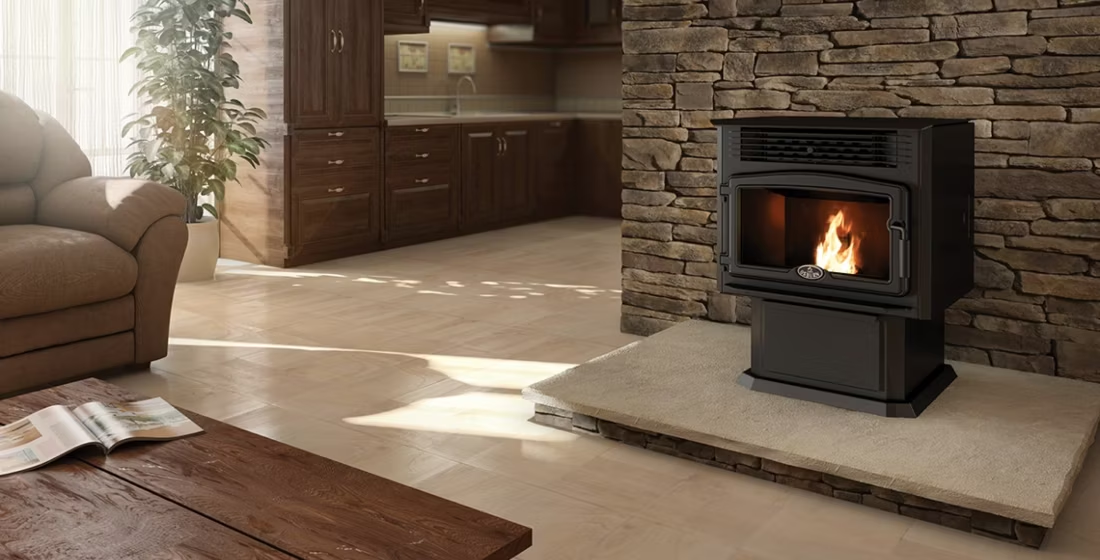
A freestanding pellet stove sits on its own hearth pad and vents through a wall or existing chimney chase—it can go almost anywhere with the right clearances, which makes it a common choice for shops and ADUs around Granite Falls. A pellet insert is built to slide into an existing masonry fireplace opening, useful if your home has an older wood-burning fireplace you'd like to convert to something with a hopper and thermostat instead of cordwood. Since wood-burning fireplaces are less common in newer Granite Falls construction, most local pellet installs end up being freestanding units rather than insert conversions—but a dealer can confirm which fits your specific fireplace opening.
What's the difference between an insert and a zero-clearance fireplace?
An insert is a fireplace that slides into a pre-existing wood-burning fireplace—if you don't have one, there's nothing to insert it into. A zero-clearance fireplace is built into a framed wall, which makes it the answer for remodels and new construction. Simple test: existing masonry fireplace means insert; blank or framed wall means zero-clearance.
How often does a pellet stove need cleaning?
A clean pellet stove is a happy pellet stove. Plan on cleaning the burn pot about once a week when you're burning regularly—ash and clinkers gum up the air holes just like a pellet barbecue. Most pellet stove problems trace back to skipped cleaning that nobody explained up front. Some designs make it easy with a trapdoor burn pot: pull a lever and the gunk drops into the ash pan.
How much should I budget for a fireplace?
For an average home—covering the fireplace, the vent pipe, and basic installation—a budget between $3,900 and $5,500 gives you a lot of options across wood, gas, and pellet. By the time you add finish work, gas line, and electrical, the average complete installation lands between $5,000 and $12,000 all-in. In a remodel or new build, a good rule is to put about 2.5% of the total project cost toward the fireplace.
Can I install a fireplace myself?
If you're putting a fire in your house on purpose, it's best to work with an expert. Unless you're genuinely experienced in framing, gas line, vent pipe, and the national code on clearances to combustibles, have a professional do it—and ideally the same company that sells you the fireplace, so warranty, service, and liability all live under one roof.
Nearby Dealers
Hearth shops serving Granite Falls and the surrounding area. Every listing shows whether it is a WhyFire partner, a dealer we have verified as authorized for the brands we recommend, or a local business carrying hearth products. No manufacturer pays for placement. How we verify dealers →
Four Day Fireplace
All Seasons Spa & Stove
Anderson Fireplace
Ecco Supply
T.d.r Masonry LLC
Island Gas Piping & Installations, LLC
All Points Heating
Rich's For The Home
Sundance Energy Services, Inc.
Pellet Brands Stocked Around Granite Falls
Manufacturers will point you to the nearest stocking dealer.
Find your pellet option in Granite Falls.
Tell us about your home and how you'd use a pellet stove—shop heat, backup heat, or ambiance—and we'll match you with a trusted local dealer and a free Project Guide & Parts List, including the right vent kit for your setup.
Find Your Fireplace →