
Reliable pellet heat for Everett's mild, wet winters.
At sea level with winter lows averaging 35°F, Everett doesn't need a wood-burning workhorse—it needs clean, efficient, thermostat-like heat. I'll match you with a trusted local dealer who can size and install the right pellet unit for your home.
Every Project Starts From One of These Five Situations
A clean-burning fit for a temperate climate.
Everett sits right at the edge of Puget Sound, just 8 feet above sea level, and the marine air keeps things mild by national standards—winter lows average 35°F and the city logs about 4,824 heating degree days a year, a fraction of what places like Duluth or Fargo see through a full winter. That's not a climate that demands 20-hour overnight burns from a catalytic wood stove. It's a climate where a pellet stove's steady, programmable output is often the better match: enough supplemental heat to take the edge off a damp Snohomish County evening without the wood-splitting and creosote management that come with cordwood.
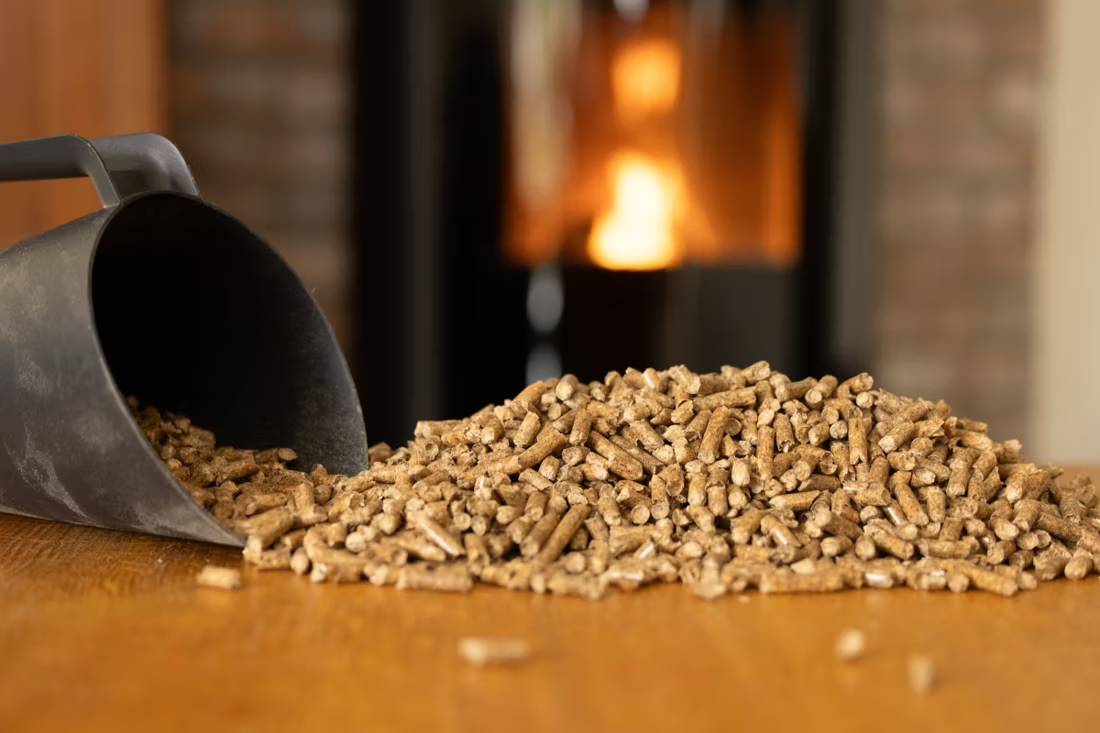
Pellet appliances also line up well with a concern that's become more common here in recent fire seasons—wildfire smoke drifting in from eastern Washington and British Columbia. Pellet stoves burn cleaner than most wood stoves and don't require the same air-quality tradeoffs. Regional brands like Bear Mountain, Lignetics, and Pacific Pellet are widely stocked at hearth dealers around Everett, so fuel supply isn't the constraint—the main thing to plan around is that pellet stoves need electricity for the auger and blower. Puget Sound Energy serves the area at roughly 14.6 cents per kWh, and given how often Puget Sound windstorms knock out power in Snohomish County, a battery backup or generator plan is worth discussing with your installer if you're relying on the stove as a real heat source rather than just ambiance.
Three steps. No salesperson until you're ready.
Tell us about your project
Your zip code, your situation, and the fuel you're leaning toward—or let the answers point you to one.
See what's actually available
The brands dealers within 100 miles genuinely carry—real options, never a catalog mirage.
Get your dealer & Project Guide
A trusted local dealer, plus the free Project Guide & Parts List that names every component of the job.
Frequently Asked Questions
How much does a pellet stove installation cost in Everett?
Most pellet stove and insert installations in the Everett area run in the $4,000 to $7,000 range, depending on whether you're inserting into an existing masonry fireplace or installing a freestanding unit that needs new venting through an exterior wall. Homes in older Everett neighborhoods with a working chimney typically land toward the lower end since the flue liner work is simpler. Newer construction without a fireplace already in place, common in developments out toward 98208 and 98213, runs higher because the installer has to run new vent pipe from scratch. A local dealer will quote a firm number after seeing your space.
Why choose pellet over wood in a place like Everett?
Everett's mild, wet climate—winter lows averaging 35°F rather than the sub-zero cold snaps that make a big wood stove essential elsewhere—means a lot of local homeowners don't want to deal with splitting and stacking cordwood for a modest heating need. Douglas fir, red alder, and lodgepole pine are the woods folks do cut locally, often with a permit from Mt. Baker-Snoqualmie National Forest at $5 to $20 per cord, but that's a bigger commitment than most Everett households are looking to make. A pellet stove gives you a similar ambiance and real supplemental heat without the wood supply chain, at the cost of needing grid power to run the auger and blower.
What size pellet stove do I need for an Everett home?
Given Everett's relatively mild heating load—about 4,824 heating degree days a year, well under half of what colder interior climates see—most homes here do fine with a small to mid-size pellet stove rated for 1,000 to 1,800 square feet, especially if it's supplementing a gas or electric furnace rather than serving as the sole heat source. Larger, older homes near Rucker Hill or in the Bayside neighborhood with less insulation sometimes step up to a bigger unit, but oversizing is rarely necessary here the way it might be in a colder inland climate zone.
Do I need a permit to install a pellet stove in Everett?
Yes. Depending on your address, you'll pull a building permit through the City of Everett Permit Services office or Snohomish County Planning and Development Services if you're outside city limits. The permit covers the appliance installation and the venting, and most established local hearth dealers handle the paperwork and schedule the inspection as part of the job, so you're not tracking down forms yourself.
What happens to my pellet stove if the power goes out?
It stops working—pellet stoves rely on an electric auger to feed fuel and a blower to distribute heat, so unlike a wood stove, they go cold the moment the power drops. That matters in Everett specifically because Puget Sound Energy's lines through Snohomish County see regular outages during fall and winter windstorms off the Sound. If you want heat you can count on during a multi-day outage, ask your dealer about a small battery backup system sized for a pellet stove, or consider keeping a wood-burning option as a true off-grid fallback.
Where do I buy pellets in the Everett area, and what do they cost?
Local hearth shops and several big-box retailers around Everett stock regional brands like Bear Mountain, Lignetics, and Pacific Pellet, which are milled from Pacific Northwest softwood and hold up well in the Puget Sound area's humidity if stored properly. Expect to pay somewhere in the neighborhood of $250 to $320 per ton depending on brand and season—prices tend to tick up in late fall as demand picks up, so buying a season's supply in September or early October before the rush is the common local strategy.
How should pellets be stored in Everett's damp climate?
Moisture is the real enemy of pellet fuel here, more so than in drier climates, since Everett's marine air keeps ambient humidity high most of the year. Pellets need to stay in a dry garage, basement, or shed—never a damp crawlspace or an uncovered spot outdoors—and should stay in their original sealed bags until you're ready to burn them, since a bag that's been opened and left in humid air can start absorbing moisture within days and turn to sawdust in the hopper.
Are pellet stoves a good option during wildfire smoke season?
Yes, and it's one of the more practical reasons local dealers report a steady uptick in pellet stove interest. Pellet appliances burn more completely and cleanly than most wood stoves, contributing far less particulate to already smoke-heavy air during the late-summer wildfire smoke events that have become more common in the Puget Sound region in recent years. If you're weighing wood versus pellet partly on air-quality grounds, that's a real point in the pellet column, alongside the lower day-to-day maintenance.
How much maintenance does a pellet stove need in Everett?
Plan on a weekly ash pan cleaning during regular use and a full professional service—burn pot, exhaust fan, venting, and gaskets—once a year, ideally before the heating season ramps up in October. Everett's humidity doesn't create the same creosote buildup concerns as a wood-burning chimney, but it does mean components can corrode faster if the stove sits unused and damp over a mild, wet summer, so a pre-season check with your local dealer is worth scheduling every year rather than skipping it when things seem fine.
What's the difference between an insert and a zero-clearance fireplace?
An insert is a fireplace that slides into a pre-existing wood-burning fireplace—if you don't have one, there's nothing to insert it into. A zero-clearance fireplace is built into a framed wall, which makes it the answer for remodels and new construction. Simple test: existing masonry fireplace means insert; blank or framed wall means zero-clearance.
Why is my open fireplace making my house colder?
Open fireplaces suck—literally. As the fire burns, it consumes air your furnace already paid to heat and pulls it out through the chimney, so the house is actually colder after the fire goes out than before you lit it. An insert fixes this: it seals the chimney, puts fixed glass across the front, and turns that hole in your house into a real heat source.
What is an in-home preview and do I need one?
It's a visit where a hearth professional measures your space, confirms the model you picked actually works in your home, and walks the specs—framing, gas line, venting, finish work—before anything is ordered. Some details you just can't know until you see the house. Never make a down payment without one; it's the single most-skipped step that burns buyers.
How much should I budget for a fireplace?
For an average home—covering the fireplace, the vent pipe, and basic installation—a budget between $3,900 and $5,500 gives you a lot of options across wood, gas, and pellet. By the time you add finish work, gas line, and electrical, the average complete installation lands between $5,000 and $12,000 all-in. In a remodel or new build, a good rule is to put about 2.5% of the total project cost toward the fireplace.
Nearby Dealers
Hearth shops serving Everett and the surrounding area.
Island Gas Piping & Installations, LLC
Pellet Brands Stocked Around Everett
Manufacturers will point you to the nearest stocking dealer.
Get your free Project Guide & Parts List for a pellet stove in Everett.
Tell me about your home and heating goals, and I'll match you with a trusted local Everett-area dealer and send a free Project Guide & Parts List—sized for the Puget Sound climate, with the vent kit and parts specified.
Find Your Fireplace →