
Find the right hearth for Snohomish County's wet, mild winters.
Wood, gas, pellet, and electric fireplace resources for every city and community in Snohomish County—from Everett to Darrington to the foothill towns near the Mt. Baker-Snoqualmie National Forest. Find the right unit and connect with a trusted local hearth retailer.
Every Project Starts From One of These Five Situations
Mild, damp heating season across Snohomish County, Washington.
Snohomish County stretches from Puget Sound lowlands near Everett up into the Cascade foothills toward Darrington and Index. With an average winter low around 35°F and a winter heating load in the middle of the pack, this is a milder climate than places like Duluth MN or Bismarck ND—but the marine damp cold and long grey stretches make consistent, efficient heat a real need for most of the year. Douglas fir, red alder, and lodgepole pine are the common local wood species, and wildfire smoke in late summer is the main air quality concern rather than winter inversions.
What you'll find on this hub: hearth retailers, service technicians, and fuel suppliers serving every community in the county—from the Highway 2 corridor towns to Everett and the I-5 suburbs down through Lynnwood and Edmonds. Pick your fuel below to drill into specifics—local dealers, installation costs, recommended units, and the resources that match your project. Whether you're heating a Puget Sound bungalow or a foothill cabin near the Mt. Baker-Snoqualmie National Forest, this is the starting point.
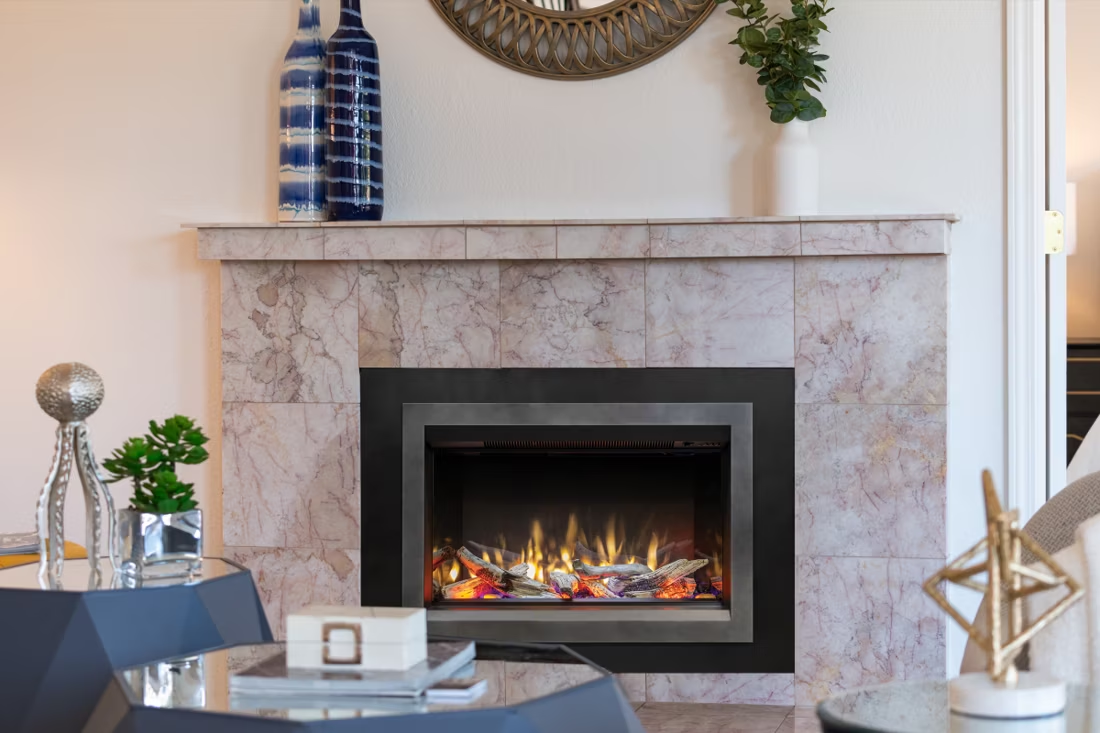
Four fuels. One honest answer for Snohomish County.
Three steps. No salesperson until you're ready.
Tell us about your project
Your zip code, your situation, and the fuel you're leaning toward—or let the answers point you to one.
See what's actually available
The brands dealers within 100 miles genuinely carry—real options, never a catalog mirage.
Get your dealer & Project Guide
A trusted local dealer, plus the free Project Guide & Parts List that names every component of the job.
Frequently Asked Questions
Which fuel works best in Snohomish County?
It depends on your home and where in the county you live. Gas is the most common choice in the I-5 corridor—Everett, Lynnwood, Edmonds, Mill Creek—where PSE natural gas service is widely available and homeowners want instant, thermostat-controlled heat without wood-handling. Wood remains popular in the foothill and rural areas—Darrington, Sultan, Index, Granite Falls—where properties are larger, firewood (often douglas fir or red alder) is locally accessible, and backup heat during winter storm outages matters. Pellet stoves are a solid middle ground countywide, and regional brands like Bear Mountain and Lignetics keep pellet supply steady even outside fire season. Electric is popular as a supplemental or secondary-room option in condos and townhomes throughout the county's denser areas, where venting a wood or gas unit isn't practical. Because Snohomish County winters are mild compared to inland climates, no single fuel is a must-have—the choice is mostly about convenience, aesthetic, and outage resilience.
Do I need a permit to install a fireplace in Snohomish County?
In most cases, yes. New wood stoves, wood inserts, gas fireplaces, gas inserts, gas stoves, and pellet stoves typically require a building permit, and gas installations also need a separate gas line permit completed by a licensed gas-fitter. Wood-burning appliances must meet current EPA emissions standards to be installed. Electric fireplaces generally don't require a permit unless the installation involves hardwiring a built-in unit into a new electrical circuit. Permit jurisdiction depends on where you live—within incorporated cities like Everett, Marysville, or Lynnwood, permits go through the city; in unincorporated Snohomish County, they go through the county. Most local hearth retailers handle the permitting process as part of the installation, so homeowners typically don't have to navigate it alone.
Are there air quality restrictions on wood burning in Snohomish County?
Unlike inland basin communities that deal with winter inversions, Snohomish County's main air quality concern is wildfire smoke during late summer and early fall, driven by regional wildfire activity rather than local wood-stove use. That said, the Puget Sound Clean Air Agency can still issue burn bans during periods of poor air quality, and new wood stove installations must meet EPA New Source Performance Standards for emissions. If you're installing a wood stove in Snohomish County, choosing an EPA-certified unit keeps you compliant year-round and reduces smoke output regardless of season. Checking the Puget Sound Clean Air Agency's burn ban status during wildfire season is a good habit if you plan to burn wood in late summer.
Can one local hearth retailer handle all four fuel types?
Many hearth retailers serving Snohomish County carry at least three of the four fuel types, and several I-5 corridor dealers carry all four—wood, gas, pellet, and electric—which is useful if you're cross-shopping and want to see working displays side by side. Retailers closer to the foothills, serving Darrington, Sultan, and Granite Falls, tend to emphasize wood and pellet more heavily given the larger rural lot sizes and firewood access in those areas. Fuel suppliers focused purely on pellet or firewood delivery are a separate category from full-service hearth retailers who handle sales, permitting, and installation. If you're not sure which fuel fits your home, a multi-fuel dealer can walk you through the trade-offs for your specific situation and location in the county.
How does service work in the more rural parts of Snohomish County?
Most service technicians are based in the Everett-Lynnwood corridor and travel out to the foothill and Highway 2 communities—Sultan, Gold Bar, Index, Darrington, and Granite Falls. Expect a modest travel fee for these longer service calls, and expect scheduling to tighten up once fall weather sets in and demand for chimney sweeps and gas inspections rises across the county. Pre-season service, ideally scheduled in late summer before wildfire smoke season and the first cold snap, is easier to book than a mid-winter emergency call. For rural properties that rely on wood as backup heat during winter storm-related power outages, an annual chimney inspection before the season starts is worth prioritizing.
What's the typical cost range for fireplace installation across all fuel types in Snohomish County?
Ranges vary by fuel and by how much existing infrastructure is in place. Wood stove or insert installation runs roughly $4,000-$8,500 for a typical install, more for new construction requiring full chimney work. Gas fireplace, insert, or stove installation runs about $4,000-$10,000 depending on gas line work and venting, with lower costs when existing PSE gas service is already in place. Pellet stove or insert installation typically runs $4,000-$7,000. Electric fireplace costs range from $200-$3,000 for the unit itself, plus $400-$1,200 in labor for anything beyond a plug-and-play install. For specific cost detail tied to local retailer pricing, see the county + fuel pages above.
How much should I budget for a fireplace?
For an average home—covering the fireplace, the vent pipe, and basic installation—a budget between $3,900 and $5,500 gives you a lot of options across wood, gas, and pellet. By the time you add finish work, gas line, and electrical, the average complete installation lands between $5,000 and $12,000 all-in. In a remodel or new build, a good rule is to put about 2.5% of the total project cost toward the fireplace.
Does a fireplace add value to my home?
On average, a fireplace adds back to the home about the same amount you spent installing it. Add the monthly savings from heating the rooms you actually use instead of the whole house—often hundreds of dollars a year—and the value case is strong before you even count what a fire does for how your family uses the room.
I know I want a fireplace—where do I actually start?
Do two things today: snap a photo of the wall or fireplace you want to transform, and take a tape measure to the space—width, height, depth. Those two artifacts answer most of a hearth professional's first questions. Then settle fuel (wood, gas, pellet, or electric) and set a realistic budget: $3,900–$5,500 covers fireplace, vent, and basic install for most homes.
Can I install a fireplace myself?
If you're putting a fire in your house on purpose, it's best to work with an expert. Unless you're genuinely experienced in framing, gas line, vent pipe, and the national code on clearances to combustibles, have a professional do it—and ideally the same company that sells you the fireplace, so warranty, service, and liability all live under one roof.
Stove and Fireplace Dealers in Snohomish County
Listings include WhyFire partner dealers, dealers we have verified as authorized for the brands we recommend, and established local businesses that carry hearth products. Every listing shows which one it is. The ones marked Preferred run on WhyFire's software, so they can show you real pricing and book your appointment right here. No manufacturer pays for placement. How we verify dealers →
Ecco Supply
T.d.r Masonry LLC
Anderson Fireplace
All Points Heating
Rich's For The Home
Four Day Fireplace
Sundance Energy Services, Inc.
Coastal - Marysville
Island Gas Piping & Installations, LLC
Coastal - Monroe
Pristine Sweeps
Kirkland Fireplace
All Seasons Spa & Stove
Ace Freeland Home
Whidbey Heating And Stoves
Rich’s Woodstoves & Spas
Find your fireplace in Snohomish County.
Pick your fuel below and I'll help match you with a trusted local dealer and a free Project Guide & Parts List—a plan for your specific project with the exact parts, vent kit, and a recommended installer near you.
Find Your Fireplace →