
Consistent Heat Without the Woodpile.
Pellet stoves bring clean, thermostat-controlled heat to Mill Creek East homes—no splitting, stacking, or hauling cordwood. Find the right unit and connect with a trusted local dealer.
Every Project Starts From One of These Five Situations
Convenience meets clean air in Mill Creek East.
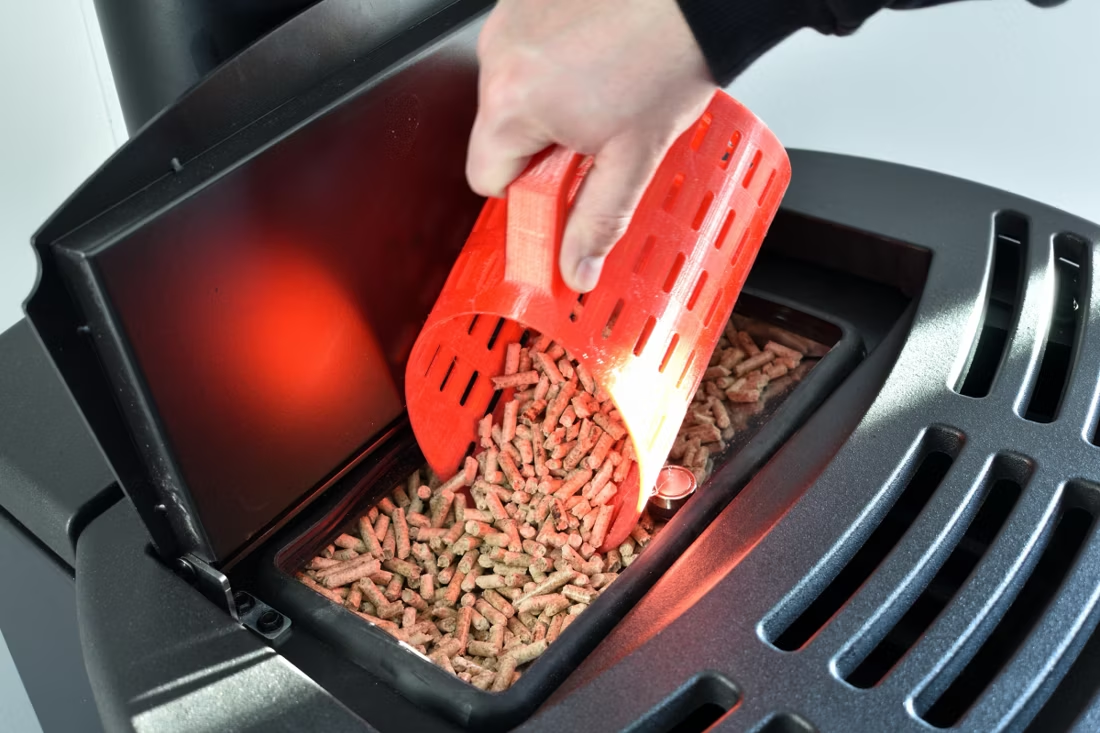
Mill Creek East sits in Snohomish County at just 358 feet elevation, in a marine west coast climate (zone 4C) where winter lows average a mild 37°F—nothing like the deep-freeze conditions of Duluth MN or Fargo ND. Still, the region logs a long, steady heating season lasting much of the year, meaning homes need steady, dependable heat through a long, damp Pacific Northwest winter. Pellet stoves fit that pattern well: load the hopper, set the thermostat, and the stove maintains a consistent burn without the daily tending a wood stove requires.
Pellet heat also sidesteps some of the tradeoffs unique to this area. Late-summer wildfire smoke is a recurring air quality concern here, and the Puget Sound Clean Air Agency occasionally issues burn advisories that affect open wood burning—pellet stoves burn cleaner and are typically unaffected. And because Puget Sound Energy delivers electricity at roughly 14.6 cents per kWh, a pellet stove's low per-BTU fuel cost, using bagged pellets from regional producers like Bear Mountain, Lignetics, or Pacific Pellet, can meaningfully offset a home's electric heating load during the coldest stretches of winter.
Three steps. No salesperson until you're ready.
Tell us about your project
Your zip code, your situation, and the fuel you're leaning toward—or let the answers point you to one.
See what's actually available
The brands dealers within 100 miles genuinely carry—real options, never a catalog mirage.
Get your dealer & Project Guide
A trusted local dealer, plus the free Project Guide & Parts List that names every component of the job.
Frequently Asked Questions
How much does a pellet stove installation cost in Mill Creek East?
Most freestanding pellet stove installations in the Mill Creek East area run roughly $3,000 to $6,000, depending on the unit and whether venting can run through an existing wall or requires new roof penetration. Converting an existing masonry or gas fireplace into a pellet insert typically lands a bit higher, in the $4,000 to $7,000 range, since it involves a liner kit sized for pellet venting rather than a standard chimney flue. A local hearth dealer will walk your home before quoting a firm number, since venting path is the biggest cost swing.
Pellet vs. wood—which makes more sense for a Mill Creek East home?
Wood stoves burning local species like Douglas fir, red alder, or lodgepole pine offer real fire ambiance, work without electricity during outages, and can be fed with wood cut on Mt. Baker-Snoqualmie National Forest land under a $5–$20 per cord permit. Pellet stoves trade that self-sufficiency for convenience: no splitting or stacking, a cleaner burn during wildfire-smoke season, and a hopper that can run 24-plus hours unattended on a full load. Given Mill Creek East's mild winter lows (averaging 37°F) rather than sustained deep cold, many homeowners here lean toward pellet for the lower daily effort, reserving wood or a fireplace for ambiance rather than survival heat.
What size pellet stove do I need for my home?
Because Mill Creek East's winters are moderate rather than extreme, most homes here don't need a stove sized for worst-case cold. A small unit (rated for 1,000–1,300 sq ft) is often enough as a supplemental heat source alongside central heating, while a medium unit (1,300–2,200 sq ft) can serve as primary heat for an open-concept main floor. Ceiling height, how open the floor plan is, and how well the home is insulated all shift these numbers—a local dealer can size your space accurately during an in-home visit rather than relying on a rule of thumb.
Will my pellet stove still work if the power goes out?
Not without a backup power source. Pellet stoves rely on an electric auger to feed fuel and a blower to distribute heat, so a standard unit shuts down in a power outage—a real consideration in Snohomish County, where windstorms off Puget Sound periodically knock out Puget Sound Energy service for hours or occasionally days. Some homeowners pair a pellet stove with a small battery backup or generator sized to run the auger and blower; ask your local dealer about compatible backup options if outage resilience matters to you. If uninterrupted heat during outages is the top priority, a wood stove is worth comparing as well.
What's the difference between a pellet stove and a pellet insert?
A pellet stove is a freestanding unit that sits on its own hearth pad and vents through a wall or existing chimney chase—it can go almost anywhere in a room. A pellet insert is built to slide into an existing masonry or prefab fireplace opening, using a sealed liner run up the old flue. For Mill Creek East homes with an underused wood-burning fireplace, an insert is usually the more efficient upgrade, converting a heat-losing open hearth into a controlled, thermostat-driven heat source. Homes without an existing fireplace are typically better suited to a freestanding stove.
Do I need a permit to install a pellet stove in Mill Creek East?
Yes. Since Mill Creek East is unincorporated, building permits for a new pellet stove installation go through Snohomish County Planning and Development Services rather than a city building department. The permit covers the appliance listing, clearances, and venting termination location. Most hearth dealers in the area handle the permit application and inspection scheduling as part of the installation, so it's rarely something homeowners have to manage on their own.
Where do I get pellet fuel in Mill Creek East, and what does it cost?
Regional producers like Bear Mountain, Lignetics, and Pacific Pellet supply most of the bagged pellet fuel sold at hardware stores and hearth shops throughout the Puget Sound area, with 40-lb bags typically running $5 to $7—roughly $250 to $350 per ton if you buy by the pallet ahead of winter. Because this region gets damp, wet winters, dry indoor storage matters more here than in drier climates; a garage or shed with a moisture barrier under the pallet keeps pellets from swelling and jamming the auger.
Do wildfire smoke or air quality rules affect pellet stove use here?
Wildfire smoke drifting in from eastern Washington and British Columbia is a recurring late-summer concern in the Puget Sound region, and the Puget Sound Clean Air Agency does issue burn bans during the worst inversion or smoke events. Pellet stoves burn substantially cleaner than open wood fires and are generally exempt from the more restrictive wood-burning curtailment stages, which is one of the practical reasons they've become a popular choice for homeowners in Snohomish County who still want supplemental wood-pellet heat without worrying about burn-ban days.
Pellet stove vs. electric heat pump—which is the better fit?
With Mill Creek East's mild winter lows and a long, steady heating season lasting much of the year, a ductless heat pump handles the bulk of most homes' heating and cooling needs efficiently at Puget Sound Energy's 14.6-cent residential rate. A pellet stove doesn't replace that system so much as complement it—providing zone heat for a main living space, a hedge against rising electric rates, and a warmer, more radiant feel than forced air on the coldest, dampest days. Many local homeowners run the heat pump as their baseline system and fire up the pellet stove during cold snaps or when spending most of the evening in one room.
How often does a pellet stove need cleaning?
A clean pellet stove is a happy pellet stove. Plan on cleaning the burn pot about once a week when you're burning regularly—ash and clinkers gum up the air holes just like a pellet barbecue. Most pellet stove problems trace back to skipped cleaning that nobody explained up front. Some designs make it easy with a trapdoor burn pot: pull a lever and the gunk drops into the ash pan.
What's the difference between an insert and a zero-clearance fireplace?
An insert is a fireplace that slides into a pre-existing wood-burning fireplace—if you don't have one, there's nothing to insert it into. A zero-clearance fireplace is built into a framed wall, which makes it the answer for remodels and new construction. Simple test: existing masonry fireplace means insert; blank or framed wall means zero-clearance.
Does a fireplace add value to my home?
On average, a fireplace adds back to the home about the same amount you spent installing it. Add the monthly savings from heating the rooms you actually use instead of the whole house—often hundreds of dollars a year—and the value case is strong before you even count what a fire does for how your family uses the room.
What is an in-home preview and do I need one?
It's a visit where a hearth professional measures your space, confirms the model you picked actually works in your home, and walks the specs—framing, gas line, venting, finish work—before anything is ordered. Some details you just can't know until you see the house. Never make a down payment without one; it's the single most-skipped step that burns buyers.
Nearby Dealers
Hearth shops serving Mill Creek East and the surrounding area.
Island Gas Piping & Installations, LLC
Pellet Brands Stocked Around Mill Creek East
Manufacturers will point you to the nearest stocking dealer.
Find your pellet stove in Mill Creek East.
Tell us a bit about your home and we'll match you with the right pellet stove or insert, plus a free Project Guide & Parts List—including the vent kit—and a recommended local dealer to install it.
Find Your Fireplace →