
Pellet Stoves in a Mild Puget Sound Climate.
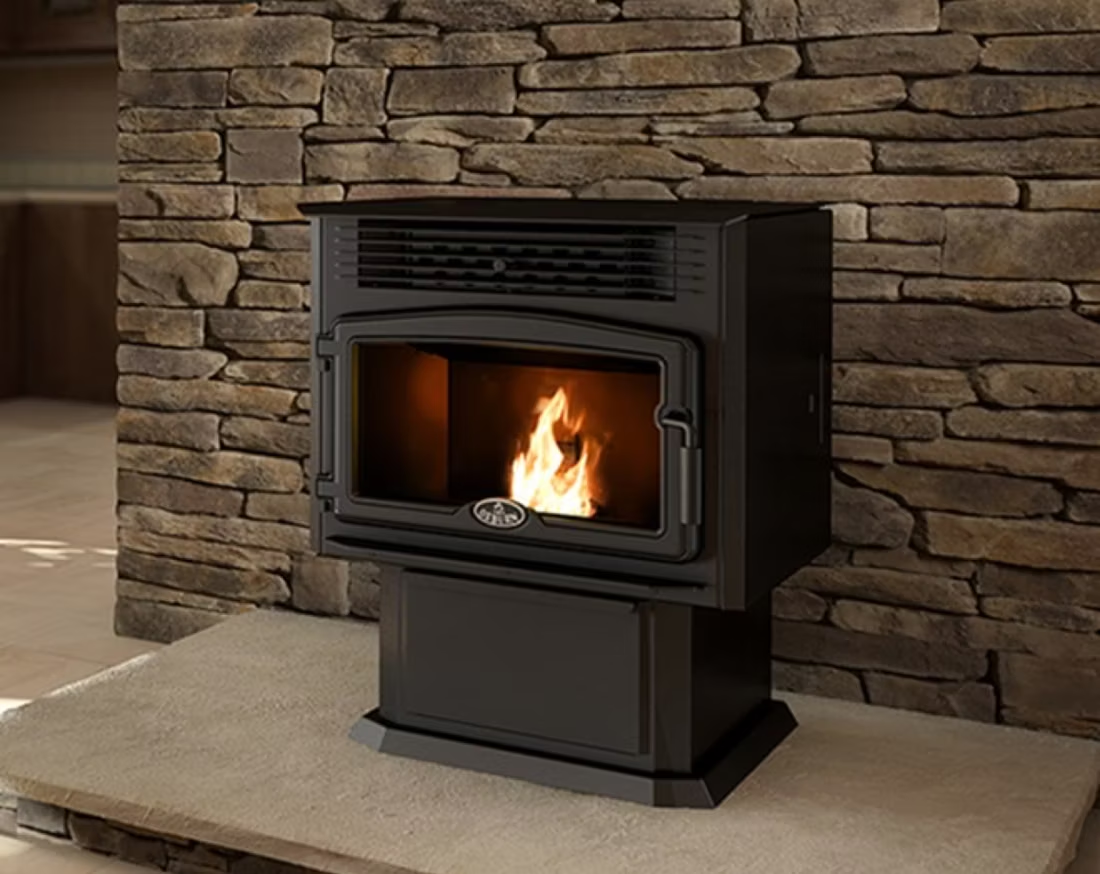
Esperance's marine-moderated winters mean most homes run on gas or an electric heat pump—but a pellet stove can still make sense as a secondary heat source or a cabin-like focal point in the right room.
Every Project Starts From One of These Five Situations
Marine climate keeps pellet stoves rare in Esperance.
Esperance is a small unincorporated community of about 4,300 people tucked between Edmonds and the Puget Sound shoreline, sitting at just 451 feet in elevation. Winters here are shaped far more by the marine layer off the Sound than by Cascade cold air—the average winter low is a mild 37°F, and while the heating season stretches long, running from early fall well into late spring, it rarely produces the kind of hard, sustained cold that makes a pellet hopper worth tending. Compare that to a place like Duluth, MN or Burlington, VT, where overnight lows routinely sit below zero for weeks—that's the climate where a 40-pound bag of pellets and a 24-to-40-hour burn cycle really earns its keep. In Esperance, that need mostly isn't there.
That's why both wood and pellet appliances register as niche choices locally, while gas and electric heat carry the load—Puget Sound Energy serves nearly every home in the area, and a gas furnace or ductless heat pump handles day-to-day comfort without anyone splitting kindling or hauling pellet bags. Still, a fair number of Esperance homeowners install a pellet stove or insert anyway: for the ambiance of real flame without the mess of cordwood, as a secondary heat source in an older, drafty room, or because they split time with a cabin or second property in a colder part of the state where regional brands like Bear Mountain, Lignetics, and Pacific Pellet are already a household name. If that's you, a local hearth dealer can tell you honestly whether it's worth it for your specific house.
Three steps. No salesperson until you're ready.
Tell us about your project
Your zip code, your situation, and the fuel you're leaning toward—or let the answers point you to one.
See what's actually available
The brands dealers within 100 miles genuinely carry—real options, never a catalog mirage.
Get your dealer & Project Guide
A trusted local dealer, plus the free Project Guide & Parts List that names every component of the job.
Frequently Asked Questions
Does a pellet stove actually make sense for a home in Esperance?
For most Esperance homes, not as primary heat—the marine climate here just doesn't demand it the way it does in colder, drier parts of Washington or the inland Northwest. Where a pellet stove does make sense locally is as supplemental heat in a specific room (a bonus room, a detached shop, an older addition with weak insulation) or as a design choice for homeowners who want real flame without cordwood storage and chimney maintenance. If your goal is lowering your Puget Sound Energy bill or heating the whole house, a heat pump or gas furnace upgrade will usually deliver more value per dollar than a pellet appliance in this climate.
What does a pellet stove or insert installation cost in the Esperance area?
In the greater Puget Sound area, pellet stove and insert installs typically run $3,000 to $6,500, depending on whether you're placing a freestanding stove with a new hearth pad and vent kit, or retrofitting an insert into an existing masonry fireplace using the existing chimney as a chase. Because pellet units are less common here than gas or electric equipment, expect most local hearth dealers to carry them as one option among several rather than as a specialty—which is actually useful, since it means you're getting an honest comparison against gas and electric alternatives rather than a pellet-only sales pitch.
Why don't more Esperance homes burn wood or pellets given the nearby national forest?
Access to fuel isn't the limiting factor—the Mt. Baker-Snoqualmie National Forest issues personal-use firewood cutting permits for $5 to $20 per cord during the May-through-October season, so wood is available for anyone willing to cut it. The real reason wood and pellet heat stay niche in Esperance is climate: with winter lows averaging 37°F and no sustained hard freezes, the value proposition of a labor-intensive fuel source is weaker here than it is in colder inland climates. Most households that do want the wood-heat experience treat it as a secondary or ambiance system rather than their main source of warmth.
What do most homes in Esperance use for heat instead of pellet?
The default in Esperance is electric—usually a ductless or central heat pump—served by Puget Sound Energy at a residential rate of roughly $0.146 per kWh, often paired with a gas furnace or gas fireplace for supplemental warmth on the coldest days. Both gas and electric are rated as standard, mainstream choices for this climate zone, which is part of why pellet stoves stay a specialty item here rather than a common retrofit.
Will a pellet stove keep my house warm if the power goes out?
Not on its own, and this is worth knowing before you buy. Pellet stoves rely on an electric auger to feed fuel and a blower to distribute heat, so a power outage shuts the unit down completely unless you have it wired to a battery backup or a generator. In Esperance, the realistic outage risk is fall and winter windstorms off the Sound that can knock out Puget Sound Energy service for hours or occasionally days—if backup heat during an outage is your priority, a wood stove or a propane unit with a standing pilot is the more dependable choice than pellet.
Do I need a permit to install a pellet stove in Esperance?
Yes. Esperance is unincorporated, so building permits for a new hearth appliance, including venting through an exterior wall or roof, go through the Snohomish County Building Division rather than a city hall. Most hearth dealers that sell and install pellet stoves in the area will pull the permit and schedule the inspection as part of the job, so you're not coordinating that piece yourself.
Where can I buy pellets locally, and what do they cost?
Regional brands like Bear Mountain, Lignetics, and Pacific Pellet are the ones you'll most commonly find at Puget Sound-area hearth shops, feed stores, and home improvement retailers. Pricing in this part of Washington generally runs in the $300 to $400 per ton range, though because pellet demand is lower here than in colder regions of the state, it's worth checking with a local dealer on current stock before assuming year-round availability the way you might in a market where pellet heat is the norm.
Do wildfire smoke advisories affect pellet stove use in Esperance?
Wildfire smoke is the primary air quality concern in this part of Snohomish County, typically a late-summer issue rather than a winter one, and it's driven by regional smoke events rather than local burning. Pellet stoves burn cleaner than open wood fires and are generally not the target of the kind of winter burn curtailments that apply to uncertified wood stoves in other parts of the state, but it's still worth checking current air quality guidance in your area before heavy use during a smoke event.
Pellet vs. gas vs. electric—what's actually the right call for an Esperance home?
For most Esperance homeowners, a gas furnace or fireplace and an electric heat pump will outperform a pellet stove on convenience, whole-home coverage, and total cost of ownership in this mild, wet climate—which is exactly why both are rated standard here while pellet is not. Pellet still wins on a few specific fronts: it produces a real flame and glowing fire pellet appliances gas units can't fully replicate, it can serve as inexpensive supplemental heat for one problem room, and pellets store more compactly than cordwood. If none of those specific reasons apply to your situation, your money is usually better spent on the heat pump or gas side of the house.
Why is my open fireplace making my house colder?
Open fireplaces suck—literally. As the fire burns, it consumes air your furnace already paid to heat and pulls it out through the chimney, so the house is actually colder after the fire goes out than before you lit it. An insert fixes this: it seals the chimney, puts fixed glass across the front, and turns that hole in your house into a real heat source.
What's the difference between an insert and a zero-clearance fireplace?
An insert is a fireplace that slides into a pre-existing wood-burning fireplace—if you don't have one, there's nothing to insert it into. A zero-clearance fireplace is built into a framed wall, which makes it the answer for remodels and new construction. Simple test: existing masonry fireplace means insert; blank or framed wall means zero-clearance.
How much should I budget for a fireplace?
For an average home—covering the fireplace, the vent pipe, and basic installation—a budget between $3,900 and $5,500 gives you a lot of options across wood, gas, and pellet. By the time you add finish work, gas line, and electrical, the average complete installation lands between $5,000 and $12,000 all-in. In a remodel or new build, a good rule is to put about 2.5% of the total project cost toward the fireplace.
Can a fireplace actually lower my heating bill?
Yes—by creating a comfort zone. A furnace heats every square foot of the house just to warm the one room you're in; a gas fireplace on low burns roughly a sixth of the gas a typical furnace does. Set the furnace around 55–60 degrees as a baseline, then heat the rooms your family actually uses. Families who heat this way commonly save $20–$60 a month.
Nearby Dealers
Hearth shops serving Esperance and the surrounding area. Every listing shows whether it is a WhyFire partner, a dealer we have verified as authorized for the brands we recommend, or a local business carrying hearth products. No manufacturer pays for placement. How we verify dealers →
Pristine Sweeps
Rich's For The Home
Sundance Energy Services, Inc.
All Points Heating
Kirkland Fireplace
T.d.r Masonry LLC
Island Gas Piping & Installations, LLC
Ecco Supply
Rich’s Woodstoves & Spas
Anderson Fireplace
Economy Hearth & Home
Ace Freeland Home
Four Day Fireplace
Whidbey Heating And Stoves
Economy Wiring
Sunrice Gas & Chimney Services
Pellet Brands Stocked Around Esperance
Manufacturers will point you to the nearest stocking dealer.
Find your pellet stove in Esperance.
Tell us about your home and how you'd use a pellet stove, and we'll give you a straight answer along with a free Project Guide & Parts List—including the vent kit—and a match with a trusted local dealer who can install it correctly.
Find Your Fireplace →