
Find the right electric fireplace for your Delaware County home.
No venting, no gas line, no chimney—just a plug-in or hardwired unit sized right for your room, installed by a trusted local dealer serving Chester, Media, Upper Darby, and the rest of Delaware County.
Every Project Starts From One of These Five Situations
Zone heat and ambiance without the venting work.
Delaware County sits in climate zone 4A, with a milder heating load than most of Pennsylvania—around 4,289 heating degree days and winter lows that average in the high 20s. That's a moderate climate compared to places like Buffalo NY or Duluth MN, and it means most homes here don't need a primary heating appliance running around the clock. It's exactly the kind of climate where electric fireplaces do well: they add supplemental warmth to a den, finished basement, or bedroom addition, and they hold their own as a design centerpiece in condos and townhomes across Upper Darby, Springfield, and the Main Line-adjacent boroughs where a wood-burning or gas install isn't practical or permitted.
Electric units skip the chimney, the flue, and the gas line entirely—which matters in a county with a lot of older row homes, rehabbed twins, and condo associations that restrict exterior venting. A qualified local dealer can match wattage and BTU output to your room size, wire in a dedicated circuit if the unit calls for one, and set you up with a built-in or insert that fits an existing fireplace opening. It's a straightforward project by hearth standards, but sizing and electrical prep still matter, which is why we match you with someone local rather than pointing you at a big-box return line.
Three steps. No salesperson until you're ready.
Tell us about your project
Your zip code, your situation, and the fuel you're leaning toward—or let the answers point you to one.
See what's actually available
The brands dealers within 100 miles genuinely carry—real options, never a catalog mirage.
Get your dealer & Project Guide
A trusted local dealer, plus the free Project Guide & Parts List that names every component of the job.
Frequently Asked Questions
How much does an electric fireplace installation cost in Delaware County?
Most electric fireplace and insert installations in Delaware County run in the $400 to $1,200 range. A plug-in insert that drops into an existing masonry fireplace opening sits at the low end—often just the cost of the unit plus a trim kit. Built-in wall units or units that need a dedicated 20-amp circuit run higher, since that involves an electrician pulling new wire, especially in older homes in Chester or Media where panel capacity can be tight. Your local dealer will tell you upfront whether your existing outlet is sufficient or whether electrical work is needed before install day.
Do electric fireplaces actually put out real heat, or are they just for looks?
Most electric fireplaces sold today include a fan-forced heater rated around 4,600 to 5,000 BTU, enough to noticeably warm a single room of 400 square feet or so—comparable to a space heater, just built into a more attractive cabinet. In Delaware County's climate, where winter lows average in the high 20s rather than sub-zero cold, that's plenty of supplemental heat for a den, basement, or sunroom. What you won't get is whole-home heating capacity; electric units are built for zone heat and ambiance, not for replacing your furnace on the coldest night of the year.
Do I need a permit to install an electric fireplace in Delaware County?
In most cases, no—a plug-in electric insert or freestanding unit that uses a standard household outlet doesn't require a building permit. If your installation involves running a new dedicated circuit or doing any wall modification for a built-in unit, that electrical work typically needs to be pulled by a licensed electrician and may require a permit through your local municipality's building department (Chester, Media, and Upper Darby each handle permitting locally rather than through the county). Your local dealer can tell you whether your specific project crosses that line before you commit.
What's the difference between an electric insert and an electric wall-mount fireplace?
An electric insert is built to slide into an existing fireplace opening—a common retrofit in Delaware County's older housing stock, where many row homes and twins have a masonry firebox that hasn't been used for wood burning in years. A wall-mount or built-in unit is designed to be recessed into new framing or mounted flush on a wall, which is more common in newer construction, condo remodels, or finished basements without an existing fireplace. Both plug into standard household power in most cases; the difference is really about what opening (if any) you're working with.
Can an electric fireplace serve as my main heat source?
Not really, and any honest local dealer will tell you that upfront. Electric fireplaces are built for zone heating—warming the room they're in—not for carrying the heating load of a Delaware County home through a full winter. With around 4,289 heating degree days a year here, your furnace or boiler is still doing the real work; the electric unit is there for the extra warmth in a specific room, for ambiance, or as a low-maintenance alternative when a chimney or gas line isn't an option, like in a condo or a top-floor apartment.
Are electric fireplaces a good fit for condos and townhomes in Delaware County?
Yes—this is one of the more common projects local dealers handle in denser parts of the county like Upper Darby and parts of Chester. Condo associations frequently restrict or prohibit exterior venting, chimneys, or gas line penetrations through shared walls, which rules out wood and often complicates gas installs. An electric insert or wall-mount unit sidesteps all of that: no venting, no combustion byproducts, and in most cases no structural changes to the building. It's a straightforward path to a real fireplace feature in a unit where other fuels aren't realistic options.
What's the difference between a 120V and 240V electric fireplace?
Most electric fireplaces sold for residential use run on standard 120V household power and plug into a regular outlet—no electrician needed unless you're relocating the outlet itself. A smaller number of larger built-in units, particularly wider linear models, are wired for 240V and require a dedicated circuit installed by a licensed electrician. For most Delaware County homes retrofitting an existing fireplace opening or adding a modest wall unit, 120V covers it. Your local dealer will spec the right voltage based on the unit size you choose.
How long do electric fireplaces last, and do they need much maintenance?
A quality electric fireplace typically lasts 10 to 15 years with minimal upkeep—there's no chimney to sweep, no gas line to inspect, and no creosote to worry about. The main maintenance items are periodic dusting of the heater vents and, on some models, replacing the LED light strip after many years of use. Because there's no combustion involved, there's also no annual safety inspection requirement the way there is for wood or gas appliances in Delaware County—one more reason electric is popular for low-maintenance secondary living spaces like finished basements and guest suites.
Wood or pellet heat isn't common here—why not?
Delaware County's mild climate zone (4A) and moderate heating load—around 4,289 heating degree days, with winter lows averaging in the high 20s—mean most households never developed a wood-heat culture the way colder, more rural parts of Pennsylvania have. Add in dense suburban and row-home development across much of the county, tighter lot sizes, and township ordinances that often restrict solid-fuel appliances or outdoor wood storage, and wood and pellet stoves stay a niche choice here, mostly limited to a handful of rural pockets. Gas and electric cover the vast majority of fireplace and insert installs countywide, which is part of why we don't emphasize wood or pellet options on this page.
Does an electric fireplace need a vent or chimney?
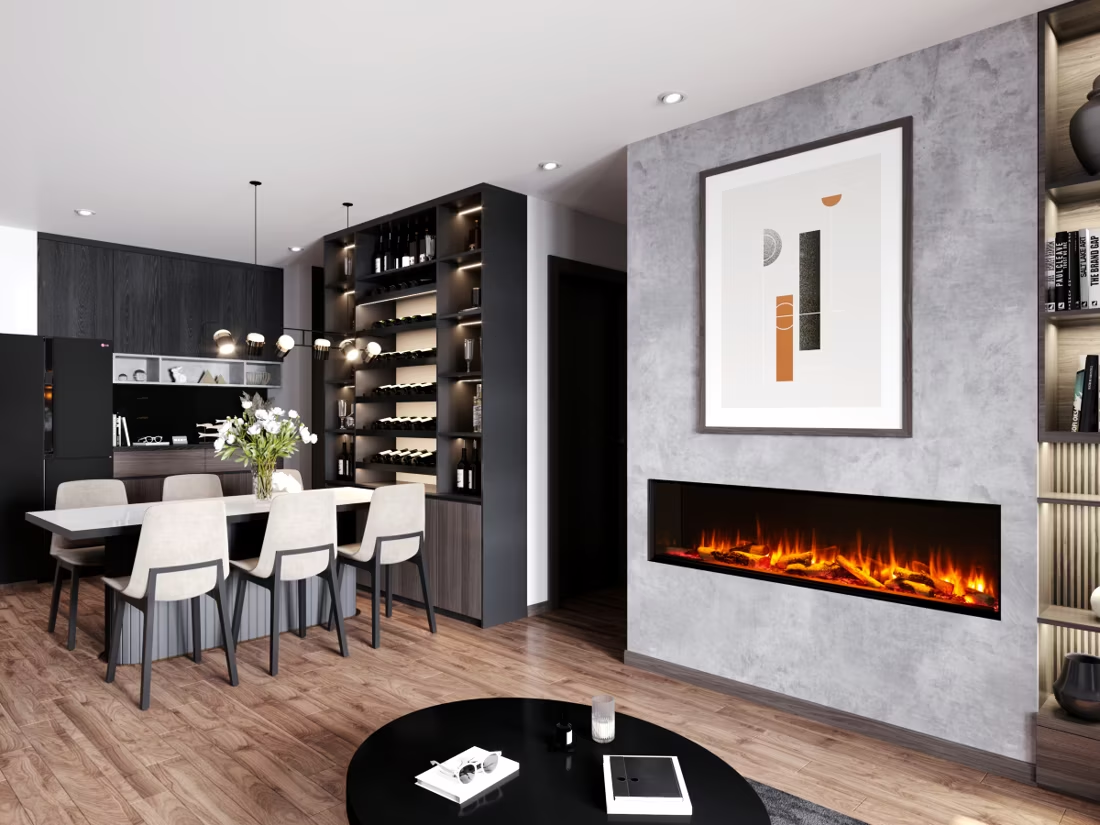
No—that's its superpower. An electric fireplace needs a wall and an outlet, period. No vent pipe, no gas line, no clearances to design around, which is why it works in bedrooms, offices, apartments, and walls where venting a gas or wood unit would be impractical or impossible. Installation is typically the simplest and least expensive of any fireplace type.
Can I put a TV above my fireplace?
Yes—with an asterisk. Fireplaces are hot and TVs don't like heat. Either put a mantel between them to deflect rising warmth, or choose a fireplace with heat-management technology that creates a cool zone on the wall above—the wall stays around 125 degrees, barely warm, while the room still gets full heat. If you like clean lines and don't want a mantel, heat management is the answer.
Can I install a fireplace myself?
If you're putting a fire in your house on purpose, it's best to work with an expert. Unless you're genuinely experienced in framing, gas line, vent pipe, and the national code on clearances to combustibles, have a professional do it—and ideally the same company that sells you the fireplace, so warranty, service, and liability all live under one roof.
Does a fireplace add value to my home?
On average, a fireplace adds back to the home about the same amount you spent installing it. Add the monthly savings from heating the rooms you actually use instead of the whole house—often hundreds of dollars a year—and the value case is strong before you even count what a fire does for how your family uses the room.
Stove and Fireplace Dealers in Delaware County
Listings include WhyFire partner dealers, dealers we have verified as authorized for the brands we recommend, and established local businesses that carry hearth products. Every listing shows which one it is. The ones marked Preferred run on WhyFire's software, so they can show you real pricing and book your appointment right here. No manufacturer pays for placement. How we verify dealers →
Comfort Home & Hearth
Halco Grills And Fireplaces
Halligan's Hearth And Home
Norristown Chimney
Athenia Mason Supply Wilmington LLC
Ah Angersterin Inc
Wertz & Co,Inc
McCloskey's Garden & Hearth
Ambler Fireplace And Patio
Delaware Brick
First State Hearth Services
Find your electric fireplace in Delaware County.
Tell us a bit about your room and your existing fireplace opening (if you have one), and we'll match you with a trusted local dealer and send over a free Project Guide & Parts List for your electric fireplace project.
Find Your Fireplace →