
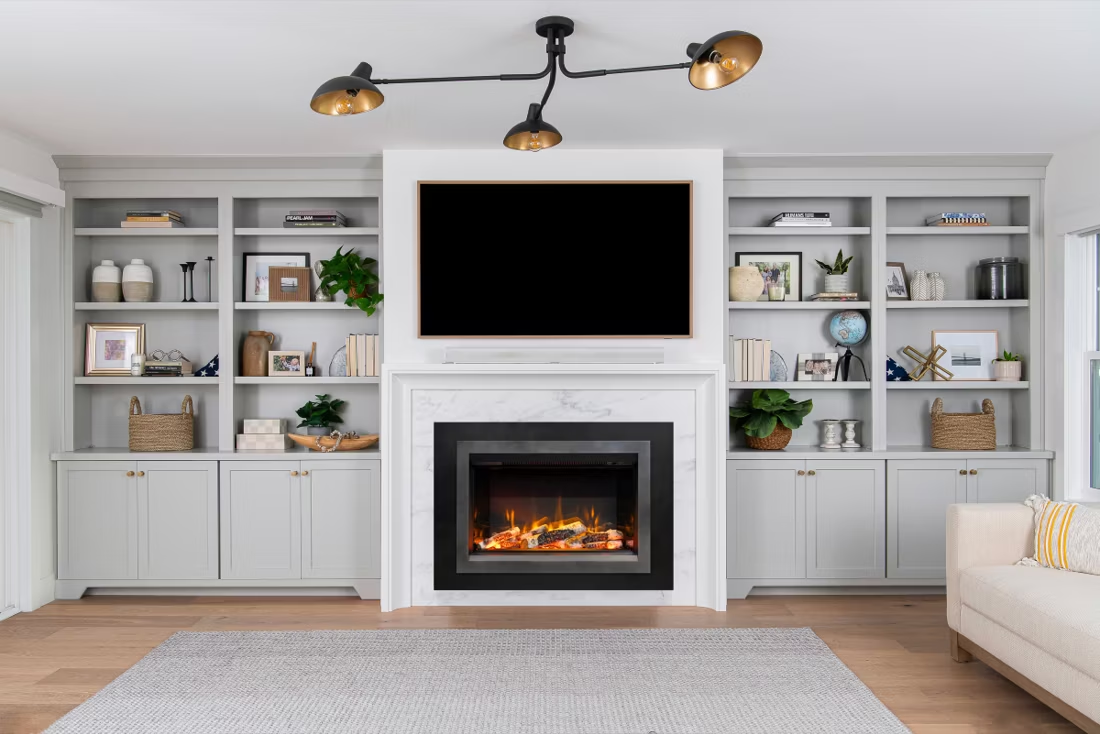
The fireplace upgrade that fits Glenolden's rowhomes and twins.
No chimney, no gas line, no masonry work—just plug in and light it up. Find the right electric unit for your home and connect with a trusted local dealer.
Every Project Starts From One of These Five Situations
No chimney? No problem.
Glenolden is a tightly built Delaware County borough of brick twins, rowhomes, and post-war Cape Cods on small lots just outside Philadelphia—the kind of housing stock where running a new masonry chimney or gas line simply isn't practical, and in many attached homes, isn't possible at all. At 85 feet of elevation with a climate zone 4A profile and about 4,510 heating degree days, Glenolden's winters are real but moderate—nothing close to a place like Duluth, MN, where sub-zero stretches demand a stove that can carry a whole house through the night. That milder profile is exactly why electric fireplaces work so well here: most homeowners want supplemental warmth and ambiance in a living room or finished basement, not a primary heat source for a Minnesota-style winter.
With PECO Energy serving the borough at a residential rate around 14.7 cents per kWh, an electric insert or wall-mount unit costs pennies an hour to run and installs in an afternoon—no venting, no combustion byproducts, and no building permit hassle in most cases. For Glenolden's older housing stock, where many units never had a working fireplace to begin with, electric is often the only realistic path to getting a real hearth feature installed without touching the exterior wall or roofline.
Three steps. No salesperson until you're ready.
Tell us about your project
Your zip code, your situation, and the fuel you're leaning toward—or let the answers point you to one.
See what's actually available
The brands dealers within 100 miles genuinely carry—real options, never a catalog mirage.
Get your dealer & Project Guide
A trusted local dealer, plus the free Project Guide & Parts List that names every component of the job.
Frequently Asked Questions
How much does an electric fireplace installation cost in Glenolden?
Costs vary widely by unit type. A plug-in electric insert that drops into an existing mantel or opening typically runs $300 to $1,500 for the unit itself, with little to no installation labor since it just needs a standard 120V outlet. A built-in wall unit or linear electric fireplace that requires an electrician to add a dedicated circuit or a 240V line for a larger heater typically runs $800 to $2,500 including labor, especially in Glenolden's older twins where panel capacity sometimes needs a look before adding a circuit. Local dealers will quote a firm price after seeing your wall, framing, and electrical panel.
Are electric fireplaces a good fit for Glenolden's rowhomes and twins?
Yes—this is where electric units tend to outperform every other fuel option. Glenolden's shared-wall rowhomes and twins often can't accommodate a new chimney or exterior vent termination without encroaching on a neighbor's property line or violating setback rules, and many renters and condo owners face lease or association restrictions on anything requiring venting. An electric insert or wall-mount unit sidesteps all of that—it needs a wall opening and an outlet, nothing more, which is why it's become the default recommendation for attached homes throughout the borough.
Do I need a permit for an electric fireplace in Glenolden?
In most cases, no—a plug-in electric fireplace that uses an existing standard outlet doesn't require a permit through Glenolden Borough. If your installer needs to add a new dedicated circuit or run a 240V line for a larger built-in unit, that electrical work typically does require a permit and should be pulled by a licensed electrician, since Delaware County inspectors check new circuit work at final. Ask your local dealer whether your chosen unit needs new wiring before you budget for the project.
How much does it cost to run an electric fireplace with PECO's rates?
At PECO's residential rate of roughly 14.7 cents per kWh, a typical 1,500-watt electric fireplace running on high for eight hours costs about $1.75 a day, or roughly $50 to $55 a month if used as regular evening supplemental heat through a Glenolden winter. Most owners run the flame effect alone—which uses only a few watts—far more often than the heater, since the heat isn't usually needed except on the coldest days when the average low sits around 26°F.
Will an electric fireplace heat my whole house?
No—and this is worth being upfront about. Most electric fireplaces are rated to heat a single room, typically 400 to 1,000 square feet depending on the unit's wattage, and they're built for zone heating rather than whole-house use. For a Glenolden twin or rowhome, that's usually exactly the point: supplemental warmth in the room you're actually using, layered on top of your existing gas or oil furnace, rather than a replacement for central heat. If you're looking for a unit that can genuinely carry more square footage, a local dealer can point you toward higher-output models, but no electric fireplace will replace a furnace in a Delaware County winter.
What's the difference between an electric insert, electric stove, and wall-mount unit?
An electric insert is built to slide into an existing fireplace opening or mantel surround, which suits older Glenolden homes with a fireplace shell but no working chimney. A freestanding electric stove sits on the floor like a wood stove and works well in a room with no existing fireplace opening at all. A wall-mount or linear electric fireplace hangs on the wall like a flat-screen TV and is popular in finished basements and newer renovations where a sleek, modern look matters more than a traditional mantel. All three plug into standard or dedicated circuits and need no venting.
Will my electric fireplace work during a power outage?
No—this is the one real tradeoff worth knowing before you buy. Because electric fireplaces run entirely on household power, they shut off the moment the electricity goes out, unlike a battery-backed gas unit that can keep running with a dead grid. If backup heat during a Delaware County ice storm or nor'easter is a priority for your home, a gas fireplace or a wood-burning option elsewhere in the house is a better fit for that specific need—plenty of Glenolden homeowners pair an electric unit for everyday ambiance with a gas fireplace as their outage backup.
Why don't more Glenolden homes have wood-burning fireplaces?
Between the borough's dense rowhome and twin-home layout, shared walls, and small lot sizes, adding or maintaining a wood-burning chimney is genuinely impractical for most Glenolden properties—there's often no clearance for proper venting and no easy way to run a chimney through a shared roofline. A handful of older detached homes in town do still have working masonry fireplaces, but new wood stove installations are uncommon here. That's part of why electric and gas have become the practical defaults for homeowners who want real hearth features without a major structural project.
Electric vs. gas fireplace—which is right for my Glenolden home?
Gas fireplaces put out real, sustained heat and can be equipped with battery-backed ignition that keeps working in a power outage—a genuine advantage during a Delaware County winter storm. Electric fireplaces install in an afternoon with no gas line or venting, cost far less upfront, and are the only realistic option in many attached Glenolden units where venting isn't possible. If your home already has gas service and you want a fireplace that can serve as real backup heat, gas is usually the better fit. If you want fast installation, low upfront cost, and flexibility to place the unit almost anywhere in the house, electric wins. Many owners end up choosing based on which room they're heating and whether that room can accommodate venting at all.
Does an electric fireplace need a vent or chimney?
No—that's its superpower. An electric fireplace needs a wall and an outlet, period. No vent pipe, no gas line, no clearances to design around, which is why it works in bedrooms, offices, apartments, and walls where venting a gas or wood unit would be impractical or impossible. Installation is typically the simplest and least expensive of any fireplace type.
Can I put a TV above my fireplace?
Yes—with an asterisk. Fireplaces are hot and TVs don't like heat. Either put a mantel between them to deflect rising warmth, or choose a fireplace with heat-management technology that creates a cool zone on the wall above—the wall stays around 125 degrees, barely warm, while the room still gets full heat. If you like clean lines and don't want a mantel, heat management is the answer.
Does a fireplace add value to my home?
On average, a fireplace adds back to the home about the same amount you spent installing it. Add the monthly savings from heating the rooms you actually use instead of the whole house—often hundreds of dollars a year—and the value case is strong before you even count what a fire does for how your family uses the room.
Can a fireplace actually lower my heating bill?
Yes—by creating a comfort zone. A furnace heats every square foot of the house just to warm the one room you're in; a gas fireplace on low burns roughly a sixth of the gas a typical furnace does. Set the furnace around 55–60 degrees as a baseline, then heat the rooms your family actually uses. Families who heat this way commonly save $20–$60 a month.
Nearby Dealers
Hearth shops serving Glenolden and the surrounding area. Every listing shows whether it is a WhyFire partner, a dealer we have verified as authorized for the brands we recommend, or a local business carrying hearth products. No manufacturer pays for placement. How we verify dealers →
Rettinger Fireplace Systems Inc
Comfort Home & Hearth
McCloskey's Garden & Hearth
Norristown Chimney
Halligan's Hearth And Home
Halco Grills And Fireplaces
Ambler Fireplace And Patio
Athenia Mason Supply Wilmington LLC
Ah Angersterin Inc
Maple Glen Mechanical
Wertz & Co,Inc
Electric Service in Glenolden
An electric fireplace's heater draws about 1,500 watts—pennies per hour at local rates.
Peco Energy Co
Find your electric fireplace in Glenolden.
Tell us about your room and your home's wiring, and we'll match you with the right electric insert, stove, or wall-mount unit—plus a free Project Guide & Parts List and a trusted local dealer to install it.
Find Your Fireplace →