
Find the right fireplace for your Delaware County home.
Gas and electric fireplace resources for every borough and township in Delaware County—from Chester to Media to Havertown—plus wood and pellet options for the exurban pockets where they still make sense. Get matched with a trusted local dealer.
Every Project Starts From One of These Five Situations
Suburban heating across Delaware County, Pennsylvania.
Delaware County sits just southwest of Philadelphia and is one of the most densely populated counties in Pennsylvania—about 263,897 residents packed into roughly 184 square miles of boroughs, townships, and river towns like Chester, Upper Darby, and Media. Winters here are moderate by national standards: climate zone 4A, an average winter low near 27°F, and roughly 4,289 heating degree days a year—cold enough to run a furnace daily from November through March, but nowhere near the deep-freeze territory of places like Burlington, VT or Duluth, MN. That mix of mild winters and tight suburban lots shapes what actually gets installed here.
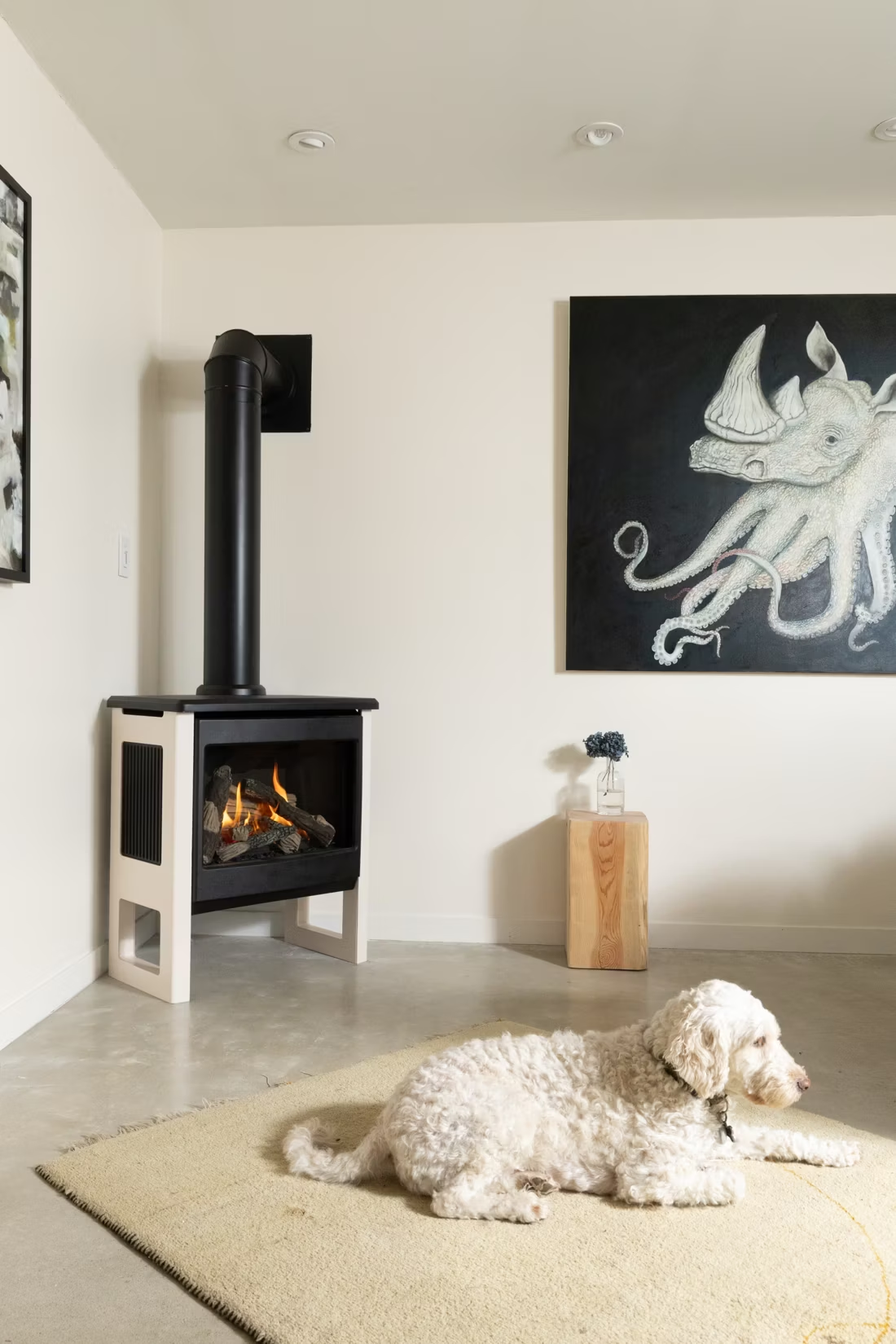
Because most Delaware County properties are twins, row homes, or suburban lots with tight setbacks—and because gas lines run through nearly every township from Radnor to Marcus Hook—gas fireplaces and inserts dominate new installs, with electric units filling in for condos, apartments, and rooms where venting isn't practical. Wood-burning and pellet appliances are uncommon here: a handful of older homes in exurban pockets like Chadds Ford and Concord still have working masonry fireplaces that burn oak, hickory, maple, or cherry, and regional pellet suppliers like Energex, Hamer Pellet Fuel, and Greene Team Pellet Fuel still serve the scattered households that kept a pellet stove running. But across most of the county's 49 municipalities, gas and electric are the practical starting point. Pick your fuel below to see local dealers, install costs, and the resources that actually apply to your street.
Four fuels. One honest answer for Delaware County.
Three steps. No salesperson until you're ready.
Tell us about your project
Your zip code, your situation, and the fuel you're leaning toward—or let the answers point you to one.
See what's actually available
The brands dealers within 100 miles genuinely carry—real options, never a catalog mirage.
Get your dealer & Project Guide
A trusted local dealer, plus the free Project Guide & Parts List that names every component of the job.
Frequently Asked Questions
Which fuel works best in Delaware County?
For most Delaware County homes, it comes down to gas or electric. Delaware County is one of the most densely built counties in Pennsylvania—twins, row homes, and suburban lots from Chester to Havertown to Newtown Square—and nearly every township has gas service running to the curb, which makes a gas fireplace or insert the easiest, cleanest upgrade for an existing masonry opening. Electric fireplaces fill in where venting a gas line isn't practical—apartments in Upper Darby, condos along the Route 1 corridor, or rooms where running gas piping would mean tearing into finished walls. Wood-burning fireplaces are uncommon here; the exceptions are older homes on larger exurban lots in places like Chadds Ford or Concord Township, where a masonry fireplace burning local oak, hickory, or cherry is more of a legacy feature than a primary heat source. Pellet stoves are rarer still—most of the demand for local pellet suppliers like Energex or Greene Team Pellet Fuel comes from a small number of longtime pellet-stove owners, not new installs.
Do I need a permit to install a fireplace in Delaware County?
Usually yes, but there's a wrinkle specific to this county: Delaware County doesn't run a single centralized building department the way some counties do. Its 49 boroughs and townships—Media, Upper Darby, Springfield, Radnor, and the rest—each administer their own building permits and inspections. That means the permit process for a gas fireplace, gas insert, or gas stove (which also requires a licensed gas-fitter for the line work) runs through your specific municipality, not a county office. Electric fireplace installs generally skip a permit unless you're hardwiring a built-in unit into a new circuit. If you're one of the few homeowners installing a wood or pellet appliance, your municipality's code office will still want to sign off on venting and clearances. Most local retailers who install regularly in the county already know which office to call for your address.
Are there air quality restrictions on wood burning in Delaware County?
No—Delaware County doesn't have the winter inversion or non-attainment issues that trigger burn bans in some parts of the country, and there's currently no local wood-smoke curtailment program here. That said, wood burning is uncommon enough in the county that it rarely comes up as a policy issue at all; most of the existing masonry fireplaces that still burn oak, hickory, or cherry are occasional-use units in older homes on the county's western edge, not daily heat sources. If you do have a working wood fireplace, normal common-sense practice applies—seasoned hardwood, an annual sweep, and basic care during stagnant air days—but you won't run into a mandatory curtailment notice like homeowners in western inversion valleys sometimes do.
Can one local hearth retailer handle all four fuel types?
Not really, and that's a reflection of local demand rather than a gap in service. Most Delaware County hearth retailers concentrate on gas fireplaces, inserts, and stoves, plus electric units—that's what the county's housing stock and gas infrastructure actually call for. A few dealers keep a wood-burning insert or two on the showroom floor for the handful of Chadds Ford and Concord Township customers who want one, but full wood-burning product lines are rare. Pellet stoves are essentially absent from local showrooms; if you already own one, you're more likely dealing directly with a regional fuel supplier like Energex, Hamer Pellet Fuel, or Greene Team Pellet Fuel for bagged pellets than a local retailer for the appliance itself. If gas and electric are your realistic options—which is true for most of the county—you'll have plenty of dealers to choose from.
How does hearth service work across a county this densely populated?
Easier than in most counties, honestly. With roughly 263,897 residents packed into a compact footprint, service technicians covering Delaware County rarely deal with the long rural drives that add cost elsewhere—a tech based near Media or Broomall can reach Chester, Ridley, Havertown, and Newtown Square all in the same day without a travel fee. Annual gas fireplace inspection and cleaning is the most common service call in the county; chimney sweeps for the remaining wood-burning fireplaces are a smaller, more occasional niche. Because the county is so built-out, scheduling is generally straightforward outside of the peak fall rush (September–November), when everyone remembers their fireplace at once.
What's the typical cost range for a fireplace project across fuel types in Delaware County?
Costs track closely with what actually gets installed here. Gas fireplace, insert, or stove: roughly $4,000–$10,000 depending on whether you're converting an existing masonry opening or running new gas line and venting. Electric fireplace: $200–$3,000 for the unit itself, plus $400–$1,200 in labor for anything beyond a plug-and-play install—which covers most wall-mount and insert jobs in the county's condos and row homes. Wood-burning installs are rare enough that pricing runs higher than in wood-heavy regions, often $6,000–$12,000, since fewer local contractors keep the parts and expertise in regular rotation. Pellet stove installs are similarly uncommon and priced case-by-case. For exact numbers tied to your project, see the gas and electric county pages above—that's where most Delaware County searches actually land.
Wood, gas, pellet, or electric—how do I choose?
Match the fuel to your life, not the other way around. Wood: lowest fuel cost and total power-outage independence, but you're hauling and stacking. Gas: press a button, set a thermostat, no maintenance to speak of. Pellet: wood economics with automatic feeding, in exchange for weekly cleaning and a need for electricity. Electric: plugs in anywhere with honest supplemental heat. Nobody regrets the fuel that fits how they actually live.
Does a fireplace add value to my home?
On average, a fireplace adds back to the home about the same amount you spent installing it. Add the monthly savings from heating the rooms you actually use instead of the whole house—often hundreds of dollars a year—and the value case is strong before you even count what a fire does for how your family uses the room.
How much should I budget for a fireplace?
For an average home—covering the fireplace, the vent pipe, and basic installation—a budget between $3,900 and $5,500 gives you a lot of options across wood, gas, and pellet. By the time you add finish work, gas line, and electrical, the average complete installation lands between $5,000 and $12,000 all-in. In a remodel or new build, a good rule is to put about 2.5% of the total project cost toward the fireplace.
Can I install a fireplace myself?
If you're putting a fire in your house on purpose, it's best to work with an expert. Unless you're genuinely experienced in framing, gas line, vent pipe, and the national code on clearances to combustibles, have a professional do it—and ideally the same company that sells you the fireplace, so warranty, service, and liability all live under one roof.
Stove and Fireplace Dealers in Delaware County
Listings include WhyFire partner dealers, dealers we have verified as authorized for the brands we recommend, and established local businesses that carry hearth products. Every listing shows which one it is. The ones marked Preferred run on WhyFire's software, so they can show you real pricing and book your appointment right here. No manufacturer pays for placement. How we verify dealers →
Comfort Home & Hearth
Halco Grills And Fireplaces
Halligan's Hearth And Home
Norristown Chimney
Athenia Mason Supply Wilmington LLC
Ah Angersterin Inc
Wertz & Co,Inc
McCloskey's Garden & Hearth
Ambler Fireplace And Patio
Delaware Brick
First State Hearth Services
Find your fireplace match in Delaware County.
Tell us about your gas, electric, wood, or pellet project and we'll match you with a trusted local Delaware County dealer, plus a free Project Guide & Parts List—the exact parts, vent kit included, and the dealer we recommend for your home.
Find Your Fireplace →