
Real heat, zero venting, for Swarthmore's older homes.
No chimney, no gas line, no exterior penetration through a century-old facade. Find the right electric fireplace or insert and connect with a trusted local dealer near Swarthmore College.
Every Project Starts From One of These Five Situations
The easiest way to add real heat to an old house.
Swarthmore is a small, walkable Delaware County borough built up around Swarthmore College, with housing stock that skews old: Victorian twins, 1920s colonial revivals, and post-war brick homes with plaster walls and, in many cases, no masonry chimney at all. Winters here are moderate by national standards—average lows around 26°F and a heating season comparable to climate zone 4A, noticeably milder than places like Burlington, VT or Buffalo, NY. Most homes need supplemental zone heat for a few cold months, not a primary furnace replacement.
That's exactly the gap electric fireplaces fill. There's no venting to run through a historic facade, no gas line to trench, and no borough sign-off on flue placement—just a dedicated circuit for a built-in unit, or a standard outlet for a plug-in insert. PECO Energy serves the borough at roughly $0.1474 per kWh, which makes an electric fireplace an inexpensive way to add ambiance and supplemental warmth to a den, sunroom, or bedroom without opening up a wall for a chimney chase.
Three steps. No salesperson until you're ready.
Tell us about your project
Your zip code, your situation, and the fuel you're leaning toward—or let the answers point you to one.
See what's actually available
The brands dealers within 100 miles genuinely carry—real options, never a catalog mirage.
Get your dealer & Project Guide
A trusted local dealer, plus the free Project Guide & Parts List that names every component of the job.
Frequently Asked Questions
How much does an electric fireplace installation cost in Swarthmore?
Plug-in electric inserts and freestanding stoves run $200 to $700 for the unit itself, with no installation cost beyond plugging into an existing 120V outlet. Built-in wall units or linear electric fireplaces that require a dedicated 240V circuit typically run $1,500 to $4,000 installed once you factor in the unit, an electrician for the circuit work, and any surround or mantel carpentry. For Swarthmore's older homes, the bigger cost driver is usually electrical panel capacity—some borough homes still have older panels that need a subpanel or upgrade before a hardwired unit can be added, which a local electrician can assess during a walkthrough.
Do I need a permit to install an electric fireplace in Swarthmore?
A plug-in electric fireplace that uses an existing outlet typically doesn't require a permit. A built-in or wall-mounted unit that requires a new dedicated circuit does need an electrical permit through Swarthmore Borough code enforcement, since it involves running new wiring. There's no chimney or venting inspection involved—the entire permit process, when one is needed, is limited to the electrical work, which most local installers handle as part of the job.
How much does it cost to run an electric fireplace in Swarthmore?
Most electric fireplaces draw around 1,500 watts on the highest heat setting. At PECO Energy's residential rate of about $0.1474 per kWh, that works out to roughly 22 cents an hour to run at full heat—closer to a few cents an hour on the flame-only, no-heat setting. Compared to running a gas insert or firing up a whole-house furnace for a single occupied room, an electric fireplace is a genuinely inexpensive way to take the chill off a home office or sunroom during Swarthmore's moderate but real winter cold snaps.
Can an electric fireplace fit into my home's existing fireplace opening?
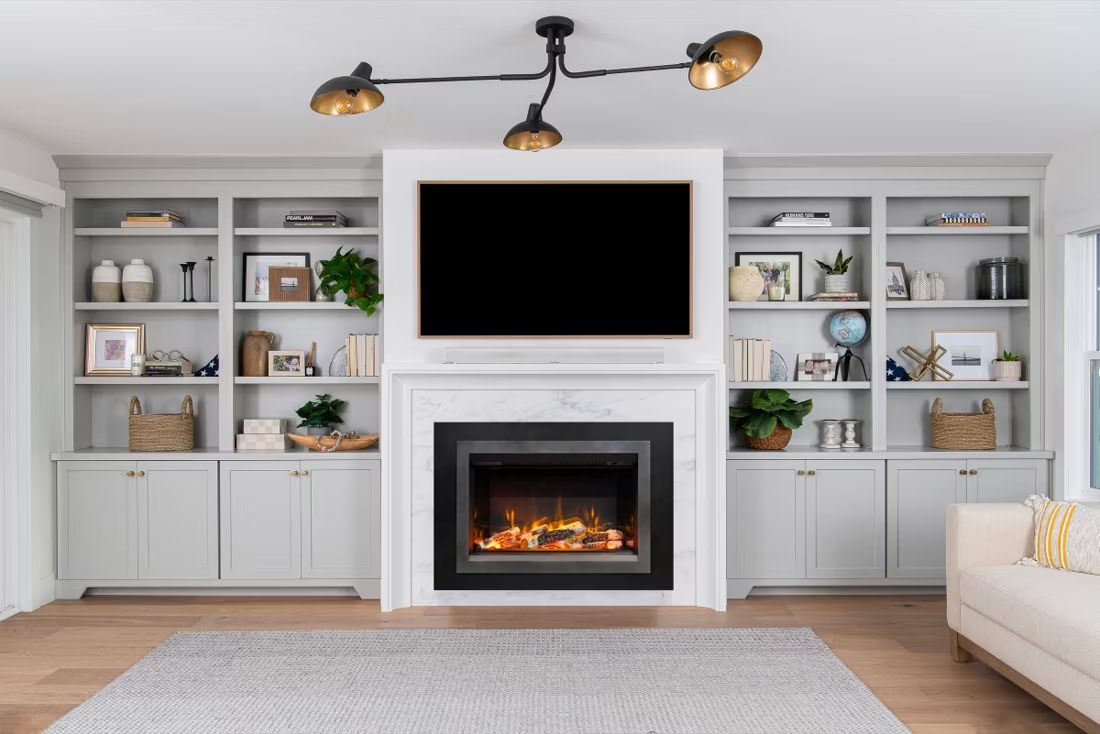
Yes—this is one of the most common projects for Swarthmore's older housing stock. If your home has an existing masonry fireplace that's been closed off, capped, or is simply too drafty and inefficient to use, an electric log insert slides into that opening and plugs into a nearby outlet (or is hardwired if you want a cleaner look). It preserves the mantel and surround you already have while eliminating the draft and the need for chimney maintenance entirely. For homes without any existing fireplace opening, a wall-mounted linear unit or a freestanding electric stove are the more common alternatives.
What's the difference between an electric fireplace, insert, and stove?
An electric insert is built to slide into an existing fireplace opening, using the surround you already have. A built-in electric fireplace is a wall unit, often recessed and framed like a piece of millwork, common in living rooms and primary bedrooms in newer Swarthmore construction. A freestanding electric stove looks like a traditional wood stove but plugs into an outlet, which works well in rooms without any fireplace opening at all—a sunroom addition or finished basement, for example. All three heat the same way; the choice mostly comes down to what opening (if any) you're working with.
Will an electric fireplace actually heat a room, or is it just for looks?
A quality electric fireplace with a 1,500-watt heater will genuinely warm a single room—figure 400 to 600 square feet under normal ceiling heights—which covers most bedrooms, dens, and sunrooms in Swarthmore's borough homes. It won't replace a furnace for the whole house, and it isn't meant to given the area's moderate 4A climate and its comparatively mild winter heating load. Where it earns its keep is as zone heat: warming the one room you're actually using so you can turn the thermostat down elsewhere, plus year-round ambiance from the flame effect with the heater switched off.
Electric vs. gas fireplace—which makes more sense for my Swarthmore home?
Gas is a strong option in Swarthmore too, and many borough homes have natural gas already run for a furnace or water heater, which keeps gas fireplace installation costs down. Gas delivers higher heat output and a more realistic flame, but it requires venting, gas line work, and annual professional service. Electric skips all of that—no venting, no combustion, no gas line—which matters most in homes where running a vent through a historic facade or slate roof is impractical, or in a condo or twin home where you don't control the exterior wall. If you want maximum heat output and already have gas service, gas usually wins. If you want the simplest possible install with the lowest ongoing maintenance, electric is hard to beat.
Wall-mounted or mantel-style—which fits Swarthmore homes better?
It depends on the room and the house. Swarthmore's Victorian twins and colonial revivals often have a defined fireplace wall with existing millwork, which suits a mantel-style electric fireplace or an insert into the existing opening. Newer construction and finished basements, where there's no fireplace wall to work with, are better candidates for a slim linear wall-mounted unit, which needs only a few inches of depth and no mantel at all. A local dealer can walk your specific room and tell you which format actually fits the wall you have in mind.
Are electric fireplaces safe around kids and pets?
Yes, and it's one of the strongest reasons homeowners near Swarthmore College—including rental properties and homes with young families—choose electric over a wood or gas alternative. The glass front stays cool to the touch since there's no real flame or combustion involved, there's no soot, no gas line to leak, and most models include an automatic shutoff timer and a flame-only mode that runs with the heater off entirely. It's about as close to zero-risk supplemental heat as the hearth category gets.
Do electric fireplaces actually produce heat?
Yes—most put out around 4,800–5,000 BTUs from a standard outlet, which comfortably warms a bedroom, office, or den as a comfort-zone heater. What they won't do is carry a whole house the way wood, gas, or pellet can. Think of electric as ambiance-first with honest supplemental heat: flames on with no heat in July, flames plus warmth in January.
Can I put a TV above my fireplace?
Yes—with an asterisk. Fireplaces are hot and TVs don't like heat. Either put a mantel between them to deflect rising warmth, or choose a fireplace with heat-management technology that creates a cool zone on the wall above—the wall stays around 125 degrees, barely warm, while the room still gets full heat. If you like clean lines and don't want a mantel, heat management is the answer.
What is an in-home preview and do I need one?
It's a visit where a hearth professional measures your space, confirms the model you picked actually works in your home, and walks the specs—framing, gas line, venting, finish work—before anything is ordered. Some details you just can't know until you see the house. Never make a down payment without one; it's the single most-skipped step that burns buyers.
Can a fireplace actually lower my heating bill?
Yes—by creating a comfort zone. A furnace heats every square foot of the house just to warm the one room you're in; a gas fireplace on low burns roughly a sixth of the gas a typical furnace does. Set the furnace around 55–60 degrees as a baseline, then heat the rooms your family actually uses. Families who heat this way commonly save $20–$60 a month.
Nearby Dealers
Hearth shops serving Swarthmore and the surrounding area. Every listing shows whether it is a WhyFire partner, a dealer we have verified as authorized for the brands we recommend, or a local business carrying hearth products. No manufacturer pays for placement. How we verify dealers →
Comfort Home & Hearth
Halco Grills And Fireplaces
Halligan's Hearth And Home
Norristown Chimney
Athenia Mason Supply Wilmington LLC
Ah Angersterin Inc
Wertz & Co,Inc
McCloskey's Garden & Hearth
Delaware Brick
First State Hearth Services
Electric Service in Swarthmore
An electric fireplace's heater draws about 1,500 watts—pennies per hour at local rates.
Peco Energy Co
Find your electric fireplace in Swarthmore.
Tell us about your room and your home's wiring, and we'll put together a free Project Guide & Parts List—the right unit, the exact parts, and a trusted local Swarthmore-area dealer to install it.
Find Your Fireplace →