
Add real warmth to your Saint Davids home—no gas line, no chimney required.
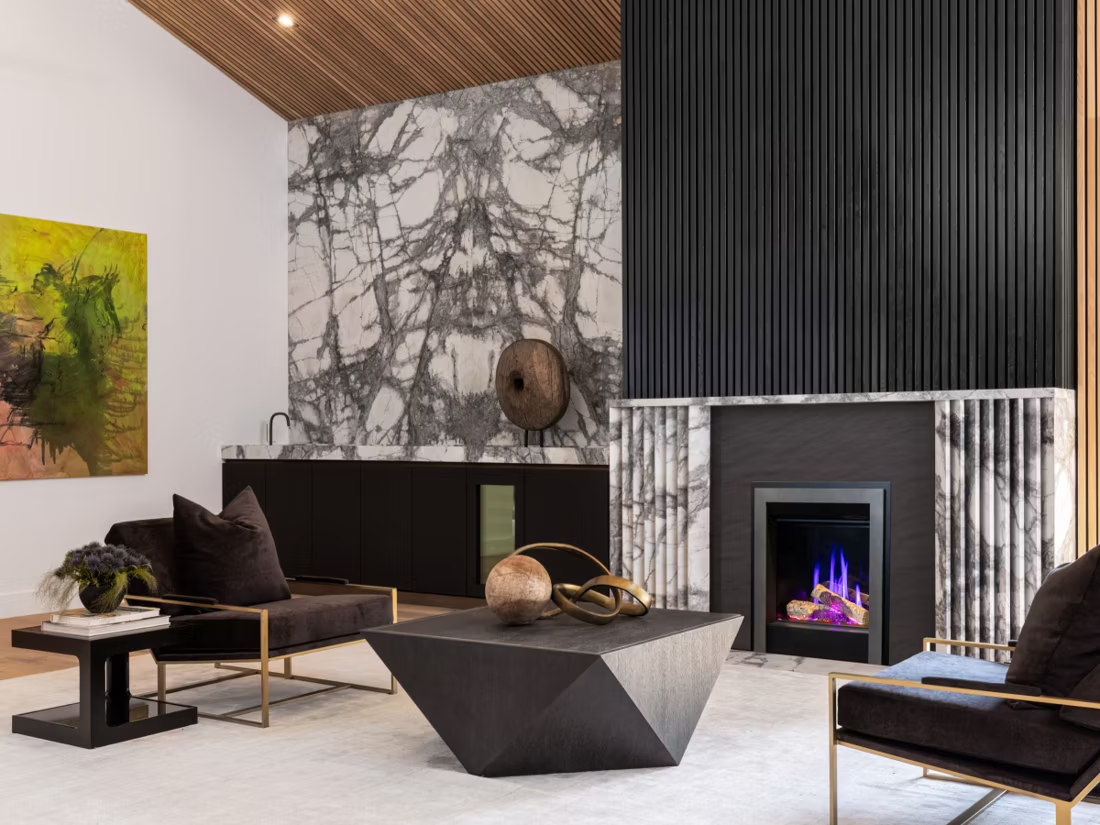
For the stone Colonials and Tudors of Radnor Township's Main Line, an electric fireplace adds zone heat and real ambiance without touching a chimney or running new gas. Find the right unit and connect with a trusted local dealer.
Every Project Starts From One of These Five Situations
Zone heat and ambiance for the Main Line's historic housing stock.
Saint Davids sits inside Radnor Township, Delaware County, a Main Line community built up around Villanova University and lined with pre-war stone Colonials, Tudors, and converted carriage houses. Winters here are moderate by national standards—an average low of 23°F and a moderate heating season overall, nowhere near the long, harsh winters you'd see in a place like Buffalo, NY. That means most Saint Davids homes run central oil, gas, or heat pump systems for whole-house heat, and don't need a wood stove or gas insert to survive January.
What they do need, often, is supplemental warmth in a single room—a study, sunroom, or finished basement—without opening up a historic stone chimney that was never built for a modern liner, or running a new gas line through a house on the local historic register. That's where electric fireplaces do their best work: no venting, no combustion byproducts, no annual sweep, and installation that a licensed electrician can usually handle in a day. PECO Energy Company serves the area at roughly 14.7 cents per kWh, which keeps the cost of running a fireplace as supplemental zone heat modest, even if it wouldn't make sense as a primary heat source for the whole house.
Three steps. No salesperson until you're ready.
Tell us about your project
Your zip code, your situation, and the fuel you're leaning toward—or let the answers point you to one.
See what's actually available
The brands dealers within 100 miles genuinely carry—real options, never a catalog mirage.
Get your dealer & Project Guide
A trusted local dealer, plus the free Project Guide & Parts List that names every component of the job.
Frequently Asked Questions
How much does an electric fireplace installation cost in Saint Davids?
A plug-in electric insert or wall-mount unit typically runs $300 to $1,200 installed, since most just need an existing outlet and a mounting bracket. A built-in linear electric fireplace with custom millwork or a mantel surround—common in Main Line living room remodels—runs closer to $1,500 to $4,000, largely because it usually calls for a dedicated 20-amp circuit and an electrician to run it. Local dealers can quote a firm number once they know whether you're working with an existing fireplace opening or building new.
Do I need a permit to install an electric fireplace in Saint Davids?
A plug-in unit that uses an existing outlet generally doesn't require a permit. If your installation needs a new dedicated circuit or any electrical panel work—common with built-in linear units—that portion of the job requires an electrical permit through Radnor Township's Building & Planning Department. Most licensed electricians who install these units pull the permit as part of the job, so it's worth confirming that's included in your quote before work starts.
How much does it cost to run an electric fireplace in Saint Davids?
Most electric fireplaces draw around 1,500 watts on their heat setting. At PECO's residential rate of about 14.7 cents per kWh, that works out to roughly 22 cents an hour of heater use—closer to a penny or two an hour if you're just running the flame effect without heat. For a home already heating centrally through the winter, using an electric fireplace to warm a single occupied room rather than raising the thermostat for the whole house is often the more economical move, not less.
Can I install an electric fireplace insert into my existing masonry fireplace?
Yes, and it's one of the more common projects in Saint Davids's older stone homes. An electric log or insert unit slides into the existing firebox opening, plugs into a nearby outlet (or a new one added behind the surround), and requires no venting or chimney work at all—a real advantage for historic-register homes where altering the masonry or running a stainless liner isn't an option. The existing chimney can simply be capped or left as-is above the firebox.
What's the difference between an electric fireplace, insert, and stove?
An electric fireplace is typically a built-in unit set into a wall or millwork surround, an electric insert is sized to slide into an existing masonry firebox, and an electric stove is a freestanding cabinet-style unit that sits on the floor like a traditional wood stove but plugs into an outlet. For Saint Davids homes with an existing fireplace opening, an insert is the simplest retrofit. For a sunroom, apartment, or condo near campus without any existing fireplace, a freestanding stove or wall-mounted unit is usually the better fit.
How much heat does an electric fireplace actually put out?
Nearly all residential electric fireplaces top out around 5,000 to 5,200 BTU (roughly 1,500 watts), which is enough to noticeably warm a single room—a den, home office, or sunroom—but not enough to heat an entire Main Line stone house on its own. Given Saint Davids's moderate winters, with average lows in the low 20s, most homeowners here use electric units as zone heat layered on top of central heating rather than as a stand-alone heat source, which matches what the appliance is actually built to do.
Are electric fireplaces a good fit for rentals or condos near Villanova?
Yes—this is one of the more common uses in the 19085/19087 area given the number of rental units and condos serving Villanova University staff and graduate students. A plug-in electric fireplace requires no venting, no gas line, and no landlord-approved structural change, which makes it one of the few fireplace options a renter or condo owner can install without HOA or lease complications. Freestanding units can also move with you if you relocate.
Which electric fireplace brands should I look at?
For built-in linear units, Dimplex, Napoleon, and Amantii are the names most local dealers carry and service, known for realistic flame effects and reliable heaters that hold up over years of daily use. For simpler insert or log-set replacements in an existing firebox, Dimplex and ClassicFlame make widely available options. A local dealer can walk you through flame technology and mantel compatibility during an in-home or showroom consultation rather than you guessing from a spec sheet online.
Electric vs. wood—which makes more sense for a Saint Davids home?
Wood offers real radiant heat and the ambiance of a live fire, and this part of Pennsylvania has good local access to oak, hickory, maple, and cherry cordwood. But most Saint Davids homes are on smaller Main Line lots without easy wood storage, and many of the older stone chimneys need masonry work or a liner before they can safely burn wood again. Electric skips all of that—no chimney inspection, no ash, no smoke—in exchange for a fire that's more about atmosphere and supplemental warmth than serious heat output. For a primary living space where you want convenience and zero maintenance, electric usually wins in this neighborhood; for a dedicated wood-burning household with the chimney to support it, wood remains the higher-heat option.
Can I put a TV above my fireplace?
Yes—with an asterisk. Fireplaces are hot and TVs don't like heat. Either put a mantel between them to deflect rising warmth, or choose a fireplace with heat-management technology that creates a cool zone on the wall above—the wall stays around 125 degrees, barely warm, while the room still gets full heat. If you like clean lines and don't want a mantel, heat management is the answer.
Do electric fireplaces actually produce heat?
Yes—most put out around 4,800–5,000 BTUs from a standard outlet, which comfortably warms a bedroom, office, or den as a comfort-zone heater. What they won't do is carry a whole house the way wood, gas, or pellet can. Think of electric as ambiance-first with honest supplemental heat: flames on with no heat in July, flames plus warmth in January.
Can I install a fireplace myself?
If you're putting a fire in your house on purpose, it's best to work with an expert. Unless you're genuinely experienced in framing, gas line, vent pipe, and the national code on clearances to combustibles, have a professional do it—and ideally the same company that sells you the fireplace, so warranty, service, and liability all live under one roof.
How much should I budget for a fireplace?
For an average home—covering the fireplace, the vent pipe, and basic installation—a budget between $3,900 and $5,500 gives you a lot of options across wood, gas, and pellet. By the time you add finish work, gas line, and electrical, the average complete installation lands between $5,000 and $12,000 all-in. In a remodel or new build, a good rule is to put about 2.5% of the total project cost toward the fireplace.
Nearby Dealers
Hearth shops serving Saint Davids and the surrounding area. Every listing shows whether it is a WhyFire partner, a dealer we have verified as authorized for the brands we recommend, or a local business carrying hearth products. No manufacturer pays for placement. How we verify dealers →
Norristown Chimney
Halligan's Hearth And Home
Ambler Fireplace And Patio
Halco Grills And Fireplaces
Comfort Home & Hearth
Maple Glen Mechanical
Kester Fireplace
Ambler Fireplace & Patio - Chalfont
Sequoia Supply Hatfield Showroom
Electric Service in Saint Davids
An electric fireplace's heater draws about 1,500 watts—pennies per hour at local rates.
Peco Energy Co
Find your electric fireplace in Saint Davids.
Tell us a bit about your home and we'll put together a free Project Guide & Parts List for your Saint Davids electric fireplace project, then match you with a trusted local dealer to install it.
Find Your Fireplace →