
Real Ambiance, No Chimney Required.
Zone heat and instant ambiance for Main Line homes—from Radnor Township Tudors with capped flues to condos near the Wayne train station. Find the right unit and connect with a trusted local dealer.
Every Project Starts From One of These Five Situations
Clean heat that fits historic Main Line homes.
Wayne's housing stock skews old—Victorians, Tudors, and stone colonials built well before 1930, many with masonry fireplaces whose flues have been capped for decades due to insurance concerns, deteriorated liners, or energy-loss worries. With winter lows averaging around 23°F and a moderate winter heating season, Wayne's climate is real but moderate—nothing like the sub-zero stretches homeowners in Buffalo, NY contend with. That means most Wayne homes don't need a primary wood or gas heating appliance; they need supplemental warmth and the look of a real fire without reopening a century-old chimney.
That's where electric fireplaces do their best work. An electric insert drops into an existing firebox opening with no venting, no gas line, and often no permit beyond a basic electrical inspection through Radnor Township. At PECO Energy's residential rate of about $0.1474 per kWh, running a 1,500-watt unit for a few hours on a cold evening costs a fraction of firing up an older home's oil or gas boiler for the same effect. For the townhomes and condos clustered near downtown Wayne—where HOA rules or historic-district guidelines often restrict solid-fuel burning or open gas flame—electric is frequently the only fireplace option that's actually permitted.
Three steps. No salesperson until you're ready.
Tell us about your project
Your zip code, your situation, and the fuel you're leaning toward—or let the answers point you to one.
See what's actually available
The brands dealers within 100 miles genuinely carry—real options, never a catalog mirage.
Get your dealer & Project Guide
A trusted local dealer, plus the free Project Guide & Parts List that names every component of the job.
Frequently Asked Questions
How much does an electric fireplace installation cost in Wayne?
Most electric fireplace projects in Wayne run $500 to $3,000. A plug-in insert that drops into an existing masonry firebox sits at the low end—no wiring changes needed if there's a nearby outlet. A built-in linear unit set into new millwork or a wall, which usually requires a licensed electrician to run a dedicated 120V or 240V circuit, lands in the middle to upper end. Homes needing a mantel surround or custom cabinetry built around the unit push toward the top of that range. Radnor Township requires an electrical permit for new circuit work, which most local installers pull as part of the job.
Can I put an electric insert into my home's existing fireplace?
In most cases, yes, and it's one of the most common requests we see from Wayne homeowners. Many of Wayne's older Victorians and Tudors have a masonry firebox with a flue that's been capped or is no longer serviceable—rather than pay to reline a chimney for wood or gas, homeowners slide an electric insert into that same opening. It restores the visual anchor of the fireplace and adds real supplemental heat, without touching the chimney at all. A local dealer can confirm your firebox dimensions fit a standard insert size before you buy.
Do I need a permit to install an electric fireplace in Wayne?
A plug-in electric fireplace that uses an existing outlet typically needs no permit at all. If you're installing a built-in or wall-mounted unit that requires a new dedicated circuit, Radnor Township Building & Planning requires an electrical permit, and the work should be done by a licensed electrician. There's no mechanical or gas permit involved since electric units don't vent and don't burn fuel—which is a big part of why they're popular in Wayne's historic-district properties, where any exterior chimney or venting modification triggers a much longer review process.
Electric vs. gas fireplace—which makes more sense for a Wayne home?
Gas is a strong option in Wayne for homes already on natural gas service and looking for a primary heat source with real flame and higher BTU output—it's common in newer construction and larger remodels along the Main Line. Electric wins on simplicity: no gas line, no venting, no combustion byproducts, and installation that often takes a single afternoon. For an older Wayne home with a fireplace opening that hasn't been used in years, or a condo where gas line work isn't practical, electric is usually the lower-friction path. Some homeowners run gas for their main living room and add an electric unit in a bedroom, basement, or sunroom for supplemental zone heat.
How much does it cost to run an electric fireplace in Wayne?
At PECO's residential rate of roughly $0.1474 per kWh, a typical 1,500-watt electric fireplace costs about 22 cents an hour to run on full heat, or less on ambiance-only mode with the heater off. Used a few hours a night through Wayne's heating season—which runs roughly November through March given the area's moderate winter heating needs—that adds up to real but modest cost, especially compared to running a whole-house system to warm just one room. Most homeowners use electric units this way: zone heat for the room they're actually in, with central heat set lower elsewhere.
What type of electric fireplace works best for Wayne homes?
It depends on the house. For Wayne's older stone and stucco homes with an existing masonry firebox, an insert sized to that opening is the natural fit. For newer construction or a basement remodel, a built-in linear unit set into a wall gives a more contemporary look and often throws more usable heat. For condos and townhomes near downtown Wayne where drilling into walls isn't an option, a freestanding electric stove or a mantel package that plugs into a standard outlet is the easiest route. A local dealer can walk through your specific room and firebox before recommending a model.
Can an electric fireplace actually heat a room in Wayne's winters?
Electric units can meaningfully heat a single room—most put out around 5,000 BTU, enough for a bedroom, den, or finished basement space. But with winter lows averaging around 23°F and a solid four-plus months of heating season, an electric fireplace isn't sized to replace your home's furnace or boiler as primary heat. Think of it as zone heat: it lets you turn down the thermostat in the rest of the house and keep the room you're actually using comfortable, which is where most of the real savings come from.
Why don't more homes in Wayne use wood stoves, given all the oak and hickory around here?
Delaware County's mature tree canopy is full of oak, hickory, maple, and cherry, but wood-burning appliances are genuinely uncommon in Wayne itself. Much of the borough falls within local historic-district guidelines that make new chimney construction or masonry modification a slow, review-heavy process, and many Main Line condos and townhome associations simply don't allow solid-fuel burning. A handful of homeowners with existing, code-compliant chimneys do still run a wood insert, but for most Wayne properties, an electric unit delivers the same visual warmth without touching the chimney, the historic commission, or an HOA board.
How much maintenance does an electric fireplace need?
Very little compared to wood or gas. There's no chimney to sweep, no gas line to service, and no combustion byproducts to worry about. Most upkeep is limited to occasionally dusting the unit, cleaning the glass front, and replacing the LED ember bed or flame bulbs every several years as they dim—a simple task most homeowners handle themselves. Because there's no annual inspection requirement the way there is with gas or wood appliances, electric units are often the lowest-maintenance fireplace option for a Wayne homeowner who wants ambiance without an ongoing service schedule.
Can I put a TV above my fireplace?
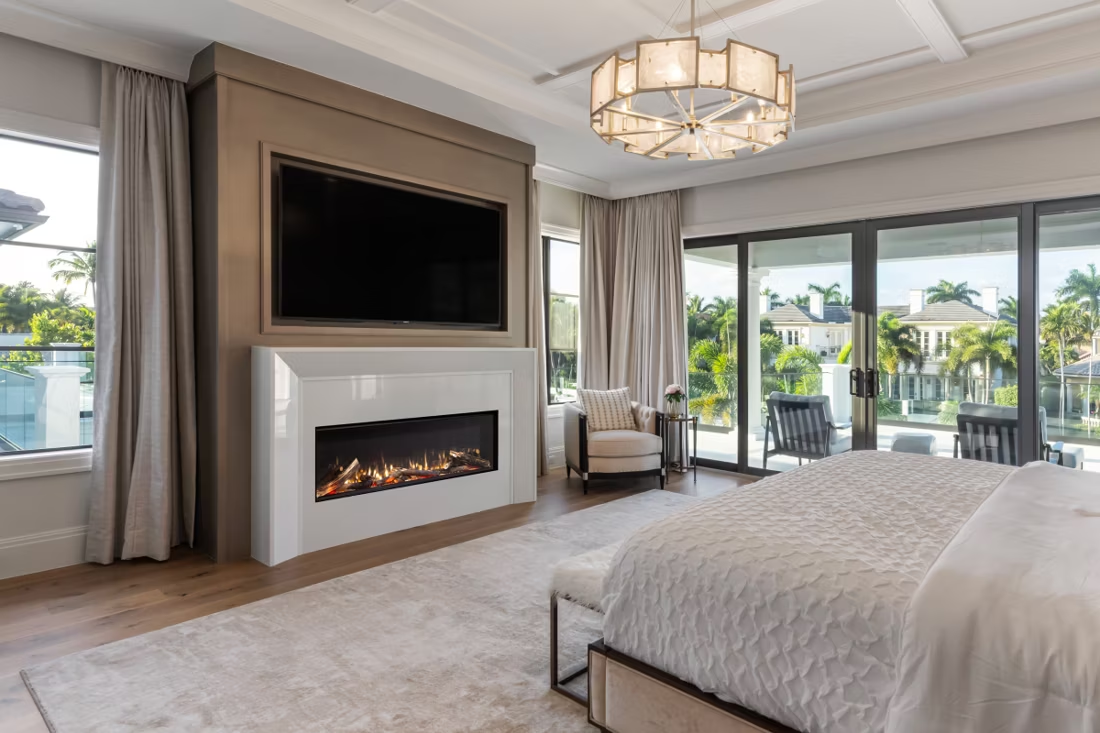
Yes—with an asterisk. Fireplaces are hot and TVs don't like heat. Either put a mantel between them to deflect rising warmth, or choose a fireplace with heat-management technology that creates a cool zone on the wall above—the wall stays around 125 degrees, barely warm, while the room still gets full heat. If you like clean lines and don't want a mantel, heat management is the answer.
Does an electric fireplace need a vent or chimney?
No—that's its superpower. An electric fireplace needs a wall and an outlet, period. No vent pipe, no gas line, no clearances to design around, which is why it works in bedrooms, offices, apartments, and walls where venting a gas or wood unit would be impractical or impossible. Installation is typically the simplest and least expensive of any fireplace type.
Does a fireplace add value to my home?
On average, a fireplace adds back to the home about the same amount you spent installing it. Add the monthly savings from heating the rooms you actually use instead of the whole house—often hundreds of dollars a year—and the value case is strong before you even count what a fire does for how your family uses the room.
What is an in-home preview and do I need one?
It's a visit where a hearth professional measures your space, confirms the model you picked actually works in your home, and walks the specs—framing, gas line, venting, finish work—before anything is ordered. Some details you just can't know until you see the house. Never make a down payment without one; it's the single most-skipped step that burns buyers.
Nearby Dealers
Hearth shops serving Wayne and the surrounding area. Every listing shows whether it is a WhyFire partner, a dealer we have verified as authorized for the brands we recommend, or a local business carrying hearth products. No manufacturer pays for placement. How we verify dealers →
Norristown Chimney
Halligan's Hearth And Home
Halco Grills And Fireplaces
Ambler Fireplace And Patio
Comfort Home & Hearth
Maple Glen Mechanical
Kester Fireplace
Ambler Fireplace & Patio - Chalfont
Sequoia Supply Hatfield Showroom
Estates Chimney Sweep
Electric Service in Wayne
An electric fireplace's heater draws about 1,500 watts—pennies per hour at local rates.
Peco Energy Co
Find your electric fireplace in Wayne.
Tell us a bit about your home and we'll match you with the right electric fireplace or insert—and connect you with a trusted local dealer who can install it right.
Find Your Fireplace →