
Real fireplace ambiance for an island that never needs the heat.
From Kona condo towers to the cool ranch country around Waimea, electric is the fireplace fuel that actually fits Hawai'i County—no venting, no chimney, no combustion. Find the right unit and connect with a trusted local dealer.
Every Project Starts From One of These Five Situations
A fireplace for the look, not the warmth.
Hawai'i County—the Big Island—spans nearly 4,000 square miles and touches almost every major climate zone on the planet, but at sea level it sits squarely in Zone 1A: hot, humid, and mild, with an average winter low of 61°F and almost no need for home heating all year. Compare that to Duluth, MN, which endures one of the harshest, longest heating seasons in the country most winters, and it's obvious nobody in Hilo or Kona is heating a home with a fireplace. With a population of 155,946 spread across Hilo's wet windward coast, Kona's dry leeward side, and the upland ranch country around Waimea, heating load simply isn't part of the equation for most residents.
That's exactly why electric, not wood or gas, is the standard fireplace fuel here. There's no chimney to build, no gas line to run, and no combustion byproducts to manage in a place that already deals with vog—volcanic haze drifting off Kīlauea on certain wind days. Electric units run on standard household current, supplied island-wide by Hawaii Electric Light Company (HELCO), and they're the default choice in the condo towers and vacation rentals of Kona and Waikoloa Resort, where HOA rules and building codes frequently rule out open flame altogether. Up in Volcano Village, sitting around 4,000 feet where morning frost isn't unusual, an electric fireplace can actually contribute real supplemental warmth—one of the few spots on the island where that's true.
Three steps. No salesperson until you're ready.
Tell us about your project
Your zip code, your situation, and the fuel you're leaning toward—or let the answers point you to one.
See what's actually available
The brands dealers within 100 miles genuinely carry—real options, never a catalog mirage.
Get your dealer & Project Guide
A trusted local dealer, plus the free Project Guide & Parts List that names every component of the job.
Frequently Asked Questions
How much does an electric fireplace installation cost in Hawai'i County?
Electric is the least expensive hearth fuel to install anywhere, and that holds in Hawai'i County too. A plug-in electric insert or wall-mount unit can run as little as $300 to $1,500 installed, since there's no venting, no gas line, and often no permit needed beyond basic electrical work. Built-in units requiring a new dedicated 20-amp circuit run higher, typically $1,500 to $4,000, because a licensed electrician has to run new wiring under a County of Hawai'i electrical permit. Either way, it's a fraction of what a wood or gas installation costs—one more reason electric dominates in a climate that doesn't need the heat.
Why would anyone want a fireplace in a climate this warm?
Fair question, given Hawai'i County has almost no winter heating load and a winter low around 61°F at sea level. For most of the island—Hilo, Kona, Puna—an electric fireplace is purely about ambiance: the visual warmth of a hearth in a living room or lanai-facing great room, with zero actual heating need behind it. But the Big Island's elevation range changes the math in a few spots. Volcano Village sits around 4,000 feet and sees real frost some mornings, Waimea (Kamuela) up in ranch country runs noticeably cooler than the coast, and Mauna Kea's summit gets snow most winters. In those pockets, an electric fireplace does modest, genuine supplemental heating—everywhere else, it's décor.
What's the difference between an electric fireplace, insert, and log set?
An electric fireplace is a self-contained unit—freestanding, wall-mount, or built into cabinetry—with its own housing and flame-effect display. An electric insert is sized to slide into an existing masonry or old gas fireplace opening, converting a decorative or unused fireplace into a working electric unit without construction. An electric log set is the simplest option: a plug-in log assembly with a heater and light effect that sits inside an existing firebox. For Hawai'i County homes with an old, unused fireplace left by a previous owner, an insert or log set is usually the fastest, least invasive upgrade.
Are electric fireplaces allowed in condos and vacation rentals?
Yes, and this is one of the biggest drivers of electric fireplace demand on the island. Resort condo towers in Kona and Waikoloa Resort, along with vacation rental properties across the county, often have HOA rules or building codes that prohibit open-flame appliances entirely. Electric units sidestep that issue—no venting, no gas line, no combustion, no fire-code exception required. For a lot of multi-family and short-term-rental properties on the Big Island, electric is close to the only real fireplace option available.
Do I need a permit to install an electric fireplace in Hawai'i County?
Small plug-in units—inserts, log sets, freestanding fireplaces running off a standard outlet—generally don't require a permit. Built-in wall units that need new wiring or a dedicated circuit do require an electrical permit through the County of Hawai'i, and the wiring itself has to be done by a licensed electrician under state electrical code. Most hearth retailers on the island coordinate directly with an electrician, so you're not left chasing paperwork yourself.
How does the humid, volcanic climate affect an electric fireplace?
Better than it affects the alternatives. Hawai'i County's humidity and occasional vog from Kīlauea are hard on wood—it invites termites and rot faster than on the mainland—and gas systems need careful venting to manage coastal condensation. Electric units have no combustion and no moisture-sensitive venting, and modern flame-effect technology, including LED and water-vapor displays, holds up fine in island humidity. It's a low-maintenance choice in a climate that's tough on most building materials.
What's the best electric fireplace for a Hawai'i County home?
For coastal homes in Kona or Hilo where the goal is pure ambiance, a wall-mount or built-in unit with a realistic water-vapor flame effect—the technology used in Dimplex's Opti-myst line, for example—tends to read most convincingly in an open, indoor-outdoor living space. For Volcano Village or Waimea homes that want a bit of genuine supplemental warmth on cool evenings, look for a unit with a higher-wattage heater option, typically 1,500 watts, rather than a flame-only display model. A local retailer can walk through wattage, mounting, and flame-effect options for your specific room.
Electric vs. gas—which is right for my home?
Gas fireplaces are also standard here, mostly running on propane since piped natural gas infrastructure is limited on the island. Gas puts out more real heat, which matters more in the cooler pockets around Waimea and Volcano. Electric wins on install simplicity and cost—no propane tank, no gas line, no venting—and it's typically the only option allowed in condo and resort settings. For most Hawai'i County homes where a fireplace is about atmosphere rather than heat, electric is the simpler, cheaper call. For a rural Waimea property that actually feels the cold on a winter night, gas is worth a look.
Is wood-burning ever used in Hawai'i County?
Rarely, and only for niche reasons. Wood is technically available locally—eucalyptus, ʻōhiʻa, and koa all grow on the island—but with almost no winter heating load, there's essentially no heating need to justify a wood stove, and open burning carries real wildfire risk on the island's dry leeward grasslands. Where wood shows up, it's usually in outdoor imu pits for traditional cooking or on the occasional off-grid rural property, not as home heating. For the vast majority of Hawai'i County homes, electric or gas covers the fireplace experience better, and a local retailer can tell you honestly if wood ever makes sense for your specific property.
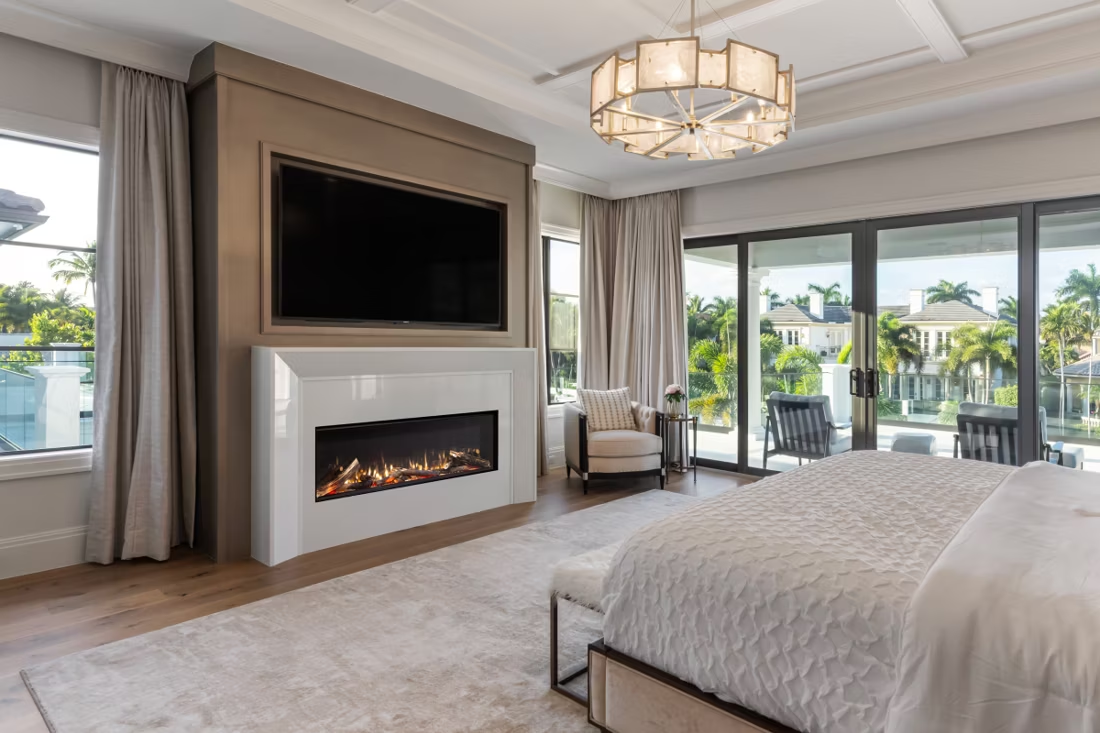
Can I put a TV above my fireplace?
Yes—with an asterisk. Fireplaces are hot and TVs don't like heat. Either put a mantel between them to deflect rising warmth, or choose a fireplace with heat-management technology that creates a cool zone on the wall above—the wall stays around 125 degrees, barely warm, while the room still gets full heat. If you like clean lines and don't want a mantel, heat management is the answer.
Does an electric fireplace need a vent or chimney?
No—that's its superpower. An electric fireplace needs a wall and an outlet, period. No vent pipe, no gas line, no clearances to design around, which is why it works in bedrooms, offices, apartments, and walls where venting a gas or wood unit would be impractical or impossible. Installation is typically the simplest and least expensive of any fireplace type.
Does a fireplace add value to my home?
On average, a fireplace adds back to the home about the same amount you spent installing it. Add the monthly savings from heating the rooms you actually use instead of the whole house—often hundreds of dollars a year—and the value case is strong before you even count what a fire does for how your family uses the room.
How much should I budget for a fireplace?
For an average home—covering the fireplace, the vent pipe, and basic installation—a budget between $3,900 and $5,500 gives you a lot of options across wood, gas, and pellet. By the time you add finish work, gas line, and electrical, the average complete installation lands between $5,000 and $12,000 all-in. In a remodel or new build, a good rule is to put about 2.5% of the total project cost toward the fireplace.
Stove and Fireplace Dealers in Hawaii County
Listings include WhyFire partner dealers, dealers we have verified as authorized for the brands we recommend, and established local businesses that carry hearth products. Every listing shows which one it is. The ones marked Preferred run on WhyFire's software, so they can show you real pricing and book your appointment right here. No manufacturer pays for placement. How we verify dealers →
Fireplace & Home Center
Hawaii Fireplace – Kamuela
Island Pool & Spa Supply
Find your electric fireplace in Hawai'i County.
Tell us about your home and we'll match you with the right electric fireplace, insert, or log set—and a trusted local dealer will hand you a free Project Guide & Parts List with the exact parts and mounting hardware for your space.
Find Your Fireplace →