
Bring fireplace ambiance to your Leilani Estates home.
With an annual heating need of just 168, Leilani Estates homes rarely need a heat source. Electric fireplaces deliver the look and warmth of a real fire without a chimney, propane tank, or firewood pile.
Every Project Starts From One of These Five Situations
Heat's optional here. Ambiance isn't.
Leilani Estates sits on the lower East Rift Zone of Kilauea at 753 feet elevation, in climate zone 1A - the warmest, most humid zone in the entire U.S. classification system. Winter lows average 56 degrees F, and the subdivision's annual heating need comes in at just 168 - a figure so small it barely registers next to a place like Duluth, MN, where that number tops 10,000 most winters. Practically speaking, no home here needs a heat source to get through the season.
That's exactly why electric is the standard fireplace fuel in Leilani Estates: no chimney, no venting, no firewood to source in a community still rebuilding portions of the neighborhood after the 2018 Kilauea eruption reshaped the lower rift zone. Wood and pellet stoves are technically possible but rare here - eucalyptus, ohia, and koa grow locally, but they're valued for lumber and woodworking, not firewood, and there's no real cordwood culture on this side of the island. One number worth knowing before you buy: Hawaii Electric Light Co. bills residential customers around $0.4831 per kWh, among the highest rates in the country, so most buyers here choose an electric fireplace for the look and treat the heat setting as a bonus feature rather than something they'll run all winter.
Three steps. No salesperson until you're ready.
Tell us about your project
Your zip code, your situation, and the fuel you're leaning toward—or let the answers point you to one.
See what's actually available
The brands dealers within 100 miles genuinely carry—real options, never a catalog mirage.
Get your dealer & Project Guide
A trusted local dealer, plus the free Project Guide & Parts List that names every component of the job.
Frequently Asked Questions
How much does an electric fireplace installation cost in Leilani Estates?
Plug-in electric inserts and wall-mounted units typically run $400 to $2,500 installed, since there's no venting or gas line to run - just a standard outlet in most cases. Built-in units that require dedicated wiring, a recessed wall opening, or custom mantel work run higher, often $1,500 to $4,000, because you'll need a licensed electrician to add a circuit. Given HELCO's residential rate near $0.4831/kWh, ask your local dealer about the unit's wattage and whether it has a heat-off ambiance mode - that setting matters more here than in almost any other market we cover.
Does it even make sense to install a fireplace in a climate this warm?
It's a fair question with an annual heating need of just 168 and winter lows that rarely dip below the mid-50s. Most Leilani Estates homeowners who install one aren't chasing warmth - they're after the visual centerpiece a fireplace gives a living room, plus resale appeal. Electric is the standard choice for that use case islandwide: it delivers realistic flame effects with none of the venting, moisture intrusion, or upkeep that wood or gas would require in a tropical, humid setting like this one.
What will it actually cost to run given Hawaii's electric rates?
At HELCO's residential rate of roughly $0.4831 per kWh, a typical 1,500-watt heat setting costs about 72 cents an hour to run - noticeably more than the national average. Most electric fireplace models let you run the flame visual on its own, drawing only 30-50 watts, for pennies an hour. If you want the look without the bill, ask your local dealer to show you a model with an independent flame-only mode before you buy.
Can I install a wood-burning stove in Leilani Estates instead?
You can, but it's uncommon here for a reason. There's no established cordwood supply chain on this part of the island - eucalyptus, ohia, and koa are prized for lumber, carving, and furniture, not firewood, and the tropical humidity makes seasoning wood a challenge. Pair that with a climate that needs almost no supplemental heat, and most homeowners who like the aesthetic of a real fire choose an electric unit with a realistic log-set insert instead, since it gives the same visual with none of the fuel-sourcing headache.
Do I need a permit to install an electric fireplace in Leilani Estates?
A freestanding, plug-in electric fireplace generally doesn't require a permit since it uses an existing outlet. A built-in unit that needs a new dedicated circuit or a recessed wall opening typically requires an electrical permit through the Hawai'i County Building Division, and the wiring work should be done by a licensed electrician. If your home was rebuilt after the 2018 eruption, there's a good chance your electrical panel is newer and already has capacity for an added circuit - worth checking before you budget for panel upgrades.
What's the best electric fireplace for a humid, tropical climate?
Look for units with sealed electronic components and corrosion-resistant housings - the persistent humidity and occasional vog on this part of the island can be harder on hardware than most mainland installers plan for. Brands like Dimplex, Touchstone, and Napoleon offer models built for this kind of exposure. The good news is electric units sidestep the moisture problems that plague masonry chimneys and gas venting in wet climates, since there's no flue drawing outside air and humidity into the house.
How has the 2018 Kilauea eruption affected fireplace installs in the neighborhood?
Large sections of Leilani Estates were destroyed or covered by lava in 2018, and many of the homes standing today were rebuilt afterward with updated 200-amp electrical service - which actually makes adding a wired, built-in electric fireplace easier than it would be in an older, unmodified home. If you're in one of the areas with limited road access, it's worth confirming with your local dealer that their installers service your specific street before scheduling anything.
Electric vs. propane - which fireplace fuel makes more sense here?
There's no piped natural gas on this part of the Big Island, so a gas fireplace in Leilani Estates means propane, delivered and stored in a tank on your property. That works, but it adds a fuel-delivery dependency in a community that has dealt with road closures and access disruptions in recent years. Electric skips that entirely - no tank, no delivery truck, no propane supplier to coordinate with. For most homeowners here, that reliability advantage outweighs propane's higher heat output, especially since heat output isn't the point of a fireplace in this climate to begin with.
Will my electric fireplace still work during a power outage?
No - electric fireplaces are entirely dependent on grid power, and HELCO's lines through Puna have experienced outages during past volcanic activity and storms. That said, since Leilani Estates almost never needs supplemental heat to stay safe (an annual heating need of just 168 is about as low as it gets nationally), losing fireplace ambiance during an outage is an inconvenience here, not a safety issue the way it would be in a cold-climate home. If backup heat matters to you for other reasons, a battery or generator setup sized by an electrician is the more relevant investment.
Do electric fireplaces actually produce heat?
Yes—most put out around 4,800–5,000 BTUs from a standard outlet, which comfortably warms a bedroom, office, or den as a comfort-zone heater. What they won't do is carry a whole house the way wood, gas, or pellet can. Think of electric as ambiance-first with honest supplemental heat: flames on with no heat in July, flames plus warmth in January.
Can I put a TV above my fireplace?
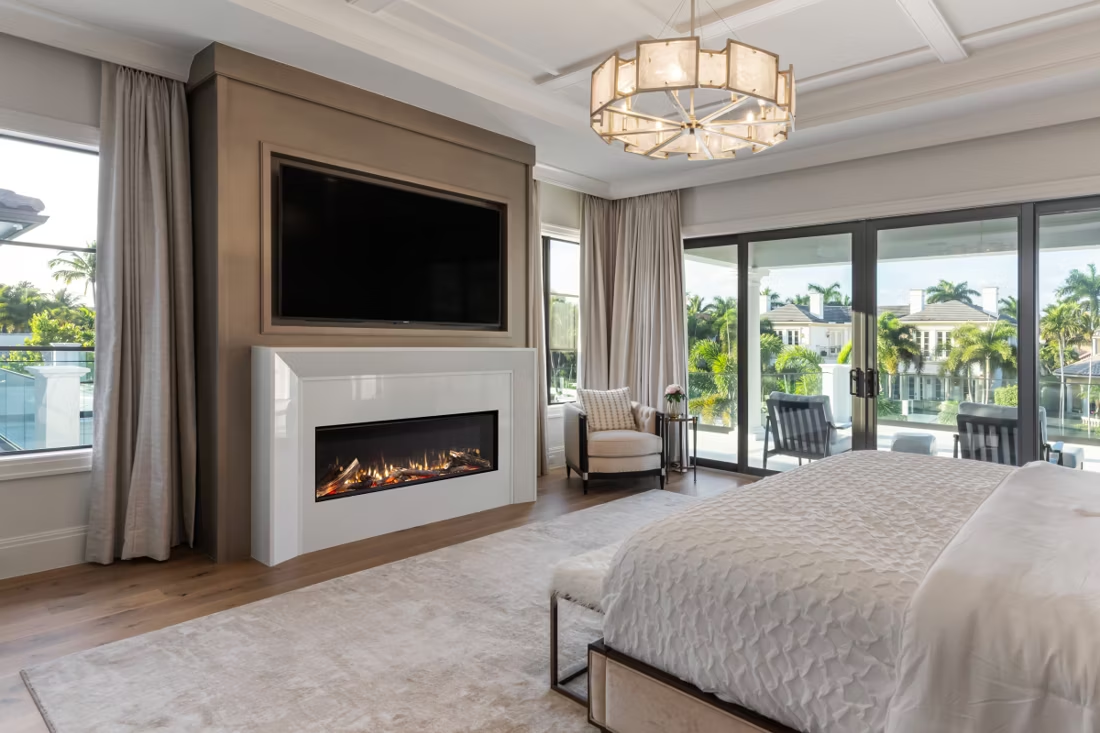
Yes—with an asterisk. Fireplaces are hot and TVs don't like heat. Either put a mantel between them to deflect rising warmth, or choose a fireplace with heat-management technology that creates a cool zone on the wall above—the wall stays around 125 degrees, barely warm, while the room still gets full heat. If you like clean lines and don't want a mantel, heat management is the answer.
What is an in-home preview and do I need one?
It's a visit where a hearth professional measures your space, confirms the model you picked actually works in your home, and walks the specs—framing, gas line, venting, finish work—before anything is ordered. Some details you just can't know until you see the house. Never make a down payment without one; it's the single most-skipped step that burns buyers.
Can a fireplace actually lower my heating bill?
Yes—by creating a comfort zone. A furnace heats every square foot of the house just to warm the one room you're in; a gas fireplace on low burns roughly a sixth of the gas a typical furnace does. Set the furnace around 55–60 degrees as a baseline, then heat the rooms your family actually uses. Families who heat this way commonly save $20–$60 a month.
Nearby Dealers
Hearth shops serving Leilani Estates and the surrounding area. Every listing shows whether it is a WhyFire partner, a dealer we have verified as authorized for the brands we recommend, or a local business carrying hearth products. No manufacturer pays for placement. How we verify dealers →
Fireplace & Home Center
Hawaii Fireplace – Kamuela
Island Pool & Spa Supply
Electric Service in Leilani Estates
An electric fireplace's heater draws about 1,500 watts—pennies per hour at local rates.
Hawaii Electric Light Co Inc
Find your electric fireplace in Leilani Estates.
Tell us about your home and we'll match you with a trusted local dealer and send over a free Project Guide & Parts List - sized to your space, with the right electric fireplace or insert and a plan for the wiring.
Find Your Fireplace →