
Add the glow of a fire to your Kaloko home.
No chimney, no gas line, no combustion—just the look and occasional warmth of a fire, sized right for a home at 3,177 feet on Hualalai's slopes.
Every Project Starts From One of These Five Situations
Fire for atmosphere, not survival.
Kaloko sits at roughly 3,177 feet on the western slopes of Hualalai, in climate zone 1A with an average winter low of 54°F and only a sliver of a heating season each year—a fraction of what a place like Bozeman, MT or Duluth, MN racks up in a single January. Homes here were never built with furnaces or ducted heat in mind, and most families never think about heating at all. That's exactly why electric is the fuel of choice when a homeowner wants a fireplace: there's no wood-burning tradition on the island the way there is on the mainland, and none is really needed.
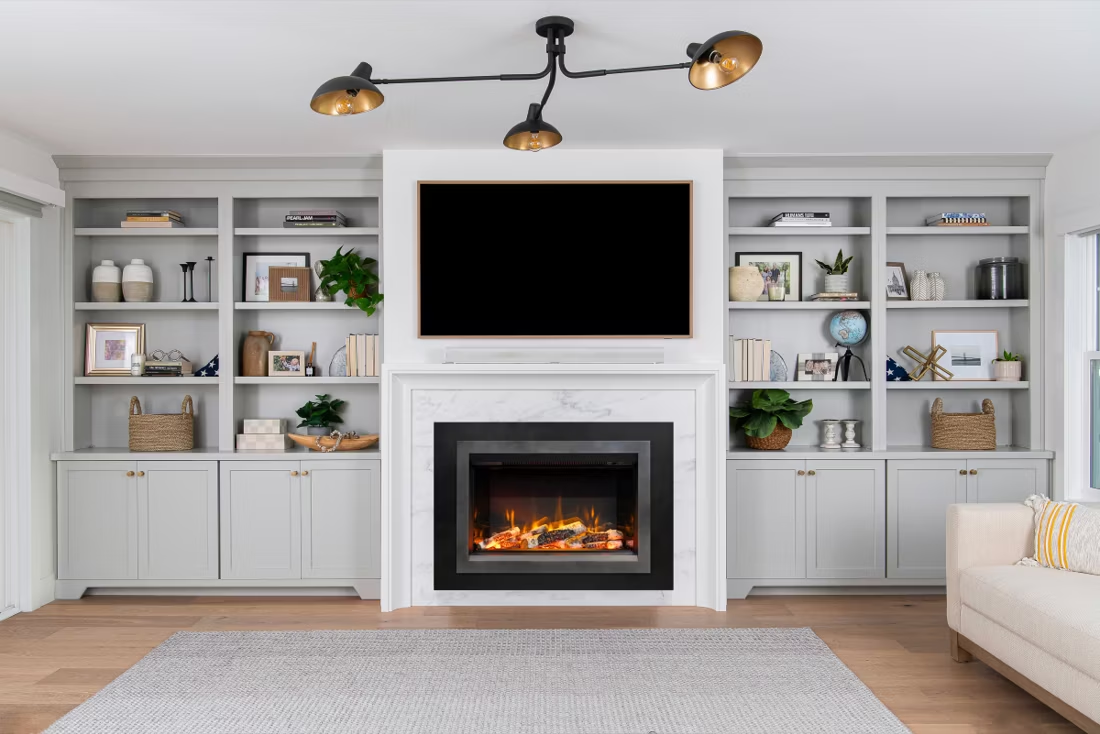
An electric fireplace or insert gives a Kaloko home the visual centerpiece of a fire—real flame effect, a mantel, a focal wall—without a flue, without combustion byproducts, and without touching the roofline of a home built for lava-rock foundations and open lanai living. On the rare evening when temperatures dip into the low 50s upslope, a small electric unit (typically 1,500 watts, about 5,000 BTU of supplemental heat) is plenty to take the chill off a living room. Hawaii Electric Light Co. residential rates run about $0.4831 per kWh—among the highest in the country—so the appeal of electric here is really about occasional, low-draw ambiance rather than running a unit for hours as a primary heat source.
Three steps. No salesperson until you're ready.
Tell us about your project
Your zip code, your situation, and the fuel you're leaning toward—or let the answers point you to one.
See what's actually available
The brands dealers within 100 miles genuinely carry—real options, never a catalog mirage.
Get your dealer & Project Guide
A trusted local dealer, plus the free Project Guide & Parts List that names every component of the job.
Frequently Asked Questions
How much does an electric fireplace installation cost in Kaloko?
Most electric fireplace projects in Kaloko fall into two categories. A plug-in freestanding or wall-mount unit can run $300 to $1,200 installed, since it typically just needs a standard outlet and a mounting bracket—no electrician required in many cases. A built-in electric insert or a linear unit set into a custom wall or cabinetry runs higher, often $1,500 to $3,500, once framing, a dedicated 120V or 240V circuit, and finish carpentry are factored in. Because there's no venting, gas line, or chimney involved, electric is consistently the least expensive fireplace category for Big Island homeowners to install.
Do I need a permit to install an electric fireplace in Kaloko?
A simple plug-in electric fireplace generally doesn't require a permit—it's treated like any other appliance. A built-in unit that requires new electrical wiring or a dedicated circuit typically needs an electrical permit through the County of Hawaii Building Division, since any new circuit work has to be inspected. A licensed local electrician or hearth dealer familiar with Hawaii County code can tell you which category your project falls into before work starts.
Why isn't wood or pellet heat common in Kaloko?
Wood and pellet stoves are essentially nonexistent here, and for good reason—with only a sliver of a heating season each year and winter lows averaging 54°F, there's no real heating load to justify a combustion appliance, and Hawaii has no meaningful residential firewood supply chain or cutting culture the way the mainland does. The native ohia and koa trees common on the island are largely protected (ohia in particular is under conservation pressure from Rapid Ohia Death), and eucalyptus, while present, isn't harvested locally for firewood. Electric is the practical substitute for anyone who wants the visual appeal of a fireplace.
Will an electric fireplace actually heat my Kaloko home?
It can provide meaningful supplemental warmth for a single room, but it's not designed to be a whole-home heat source—and in Kaloko's mild climate, it doesn't need to be. Most electric inserts put out around 4,500–5,000 BTU on high, enough to take the edge off a living room on a cool upslope evening. Homeowners here choose electric fireplaces primarily for the flame visual and focal-point design, with the heat function used only occasionally rather than as a daily necessity.
What will an electric fireplace cost to run given HECO's rates?
Hawaii Electric Light Co. residential rates run about $0.4831 per kWh, which is high compared to the mainland. A typical 1,500-watt electric fireplace run on high for a few hours a few evenings a week costs only a few dollars a month, since most owners use the heat function sparingly and the flame-only mode (with heat switched off) draws very little power. It's a far smaller line item than running central air conditioning or a water heater, which is why electric fireplaces remain a popular, low-commitment upgrade even with the island's above-average electric rates.
What's the difference between an electric insert, a wall-mount, and a freestanding electric fireplace?
A freestanding electric fireplace is a self-contained cabinet unit you plug in and place against a wall—the easiest option for renters or homes where you don't want to alter a wall. A wall-mount unit hangs directly on the wall like a flat-screen TV, creating a sleek linear look popular in newer Kaloko homes with open floor plans. An electric insert is built into a cavity—either an existing masonry opening or new framed cabinetry—for a more custom, built-in appearance. A local dealer can walk through which option fits your wall construction and design goals.
How do I find a local dealer to install an electric fireplace near Kaloko?
Most hearth dealers serving Kaloko are based in nearby Kailua-Kona, and they're used to working with lava-rock and post-and-pier construction common on this side of the island. Since Kaloko is a smaller residential area without its own dealer network, working with a trusted Kona-area installer who can source the unit, coordinate any electrical work with a licensed electrician, and handle delivery logistics to the Big Island is the most reliable path—freight and lead times matter more here than on the mainland.
What size electric fireplace do I need for my Kaloko home?
Sizing an electric fireplace is mostly about the wall or opening you're filling rather than BTU output, since heating an entire home isn't the goal here. A 30–40 inch linear unit suits a standard living room focal wall, while smaller 26–30 inch inserts work for bedrooms or lanai-adjacent rooms. Ceiling height, viewing distance, and whether the unit is a design centerpiece or a secondary feature all factor in—a local dealer can help match a unit to your specific wall dimensions during a quick consultation.
Electric vs. gas fireplace—which makes more sense in Kaloko?
Gas fireplaces are available on the Big Island through propane, since there's no piped natural gas utility serving Kaloko, and they deliver a more traditional flame and real radiant heat—a reasonable choice for a primary living space in a larger home. Electric fireplaces skip the propane tank, gas line, and venting entirely, installing almost anywhere with just a standard or dedicated circuit. For most Kaloko homeowners who want a fireplace mainly for ambiance and design rather than heat output, electric is the simpler, lower-cost route; propane gas makes more sense if you want authentic flame and higher heat capacity in a great room.
Does an electric fireplace need a vent or chimney?
No—that's its superpower. An electric fireplace needs a wall and an outlet, period. No vent pipe, no gas line, no clearances to design around, which is why it works in bedrooms, offices, apartments, and walls where venting a gas or wood unit would be impractical or impossible. Installation is typically the simplest and least expensive of any fireplace type.
Can I put a TV above my fireplace?
Yes—with an asterisk. Fireplaces are hot and TVs don't like heat. Either put a mantel between them to deflect rising warmth, or choose a fireplace with heat-management technology that creates a cool zone on the wall above—the wall stays around 125 degrees, barely warm, while the room still gets full heat. If you like clean lines and don't want a mantel, heat management is the answer.
How much should I budget for a fireplace?
For an average home—covering the fireplace, the vent pipe, and basic installation—a budget between $3,900 and $5,500 gives you a lot of options across wood, gas, and pellet. By the time you add finish work, gas line, and electrical, the average complete installation lands between $5,000 and $12,000 all-in. In a remodel or new build, a good rule is to put about 2.5% of the total project cost toward the fireplace.
Does a fireplace add value to my home?
On average, a fireplace adds back to the home about the same amount you spent installing it. Add the monthly savings from heating the rooms you actually use instead of the whole house—often hundreds of dollars a year—and the value case is strong before you even count what a fire does for how your family uses the room.
Nearby Dealers
Hearth shops serving Kaloko and the surrounding area. Every listing shows whether it is a WhyFire partner, a dealer we have verified as authorized for the brands we recommend, or a local business carrying hearth products. No manufacturer pays for placement. How we verify dealers →
Island Pool & Spa Supply
Hawaii Fireplace – Kamuela
Fireplace & Home Center
Electric Service in Kaloko
An electric fireplace's heater draws about 1,500 watts—pennies per hour at local rates.
Hawaii Electric Light Co Inc
Find your electric fireplace in Kaloko.
Tell us a bit about your home and we'll match you with the right electric fireplace or insert—plus a free Project Guide & Parts List and a trusted local dealer who can install it correctly.
Find Your Fireplace →