
All the Glow, None of the Smoke.
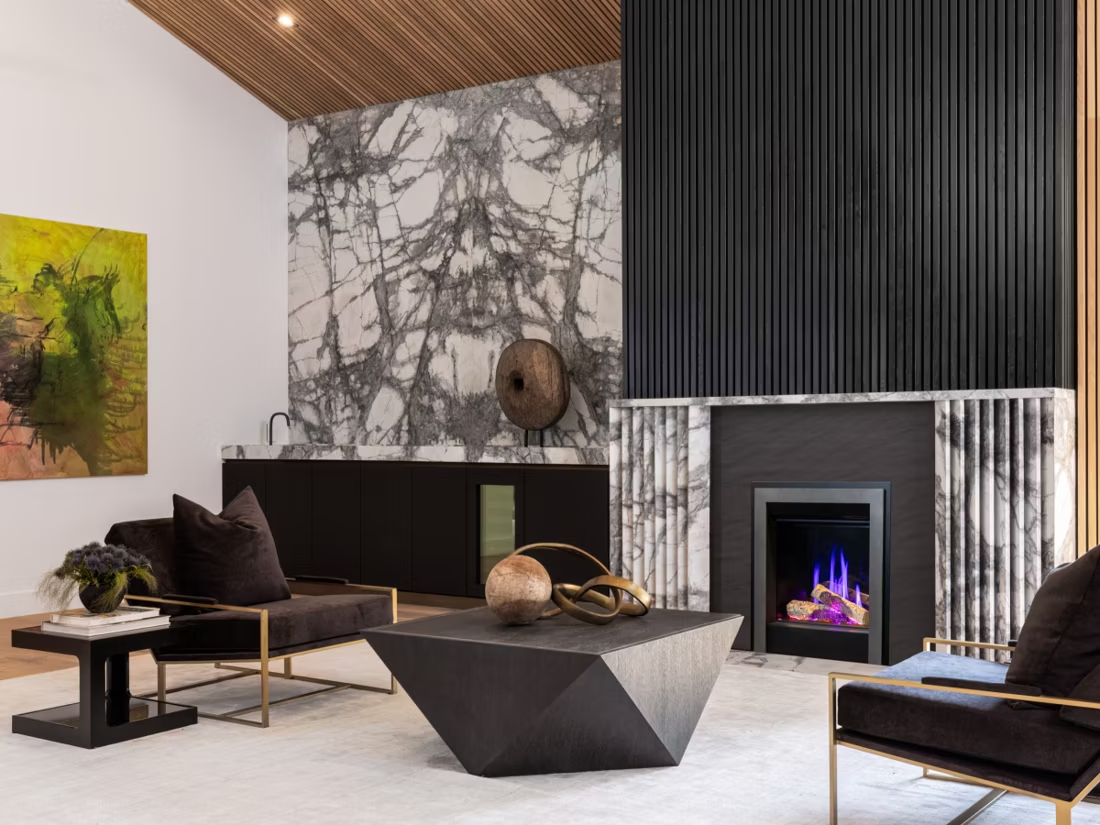
Captain Cook rarely needs a heat source—average winter lows sit around 54°F. An electric fireplace gives you the look and feel of a real fire, without venting, fuel storage, or combustion. Find the right unit and connect with a trusted local dealer.
Every Project Starts From One of These Five Situations
A fireplace built for ambiance, not survival heat.
Captain Cook sits at roughly 2,400 feet in the South Kona coffee belt, above Kealakekua Bay, where the climate is so mild that the entire concept of a home heating season barely exists. For comparison, a place like Duluth, MN has a long, brutal winter heating season that stretches for months—meaning the entire concept of a home heating season barely exists here. Evenings at this elevation do cool into the mid-to-upper 50s, especially December through February, but that's a world away from anything that calls for a wood stove, a gas insert, or a pellet hopper. Those categories are essentially irrelevant in Captain Cook, and it shows: there's no natural gas utility serving South Kona, no cutting-permit infrastructure for heating wood, and no local demand for combustion appliances that need venting through a humid, salt-air roofline.
Electric is the fireplace category that actually makes sense here. There's no chimney to maintain, no combustion byproducts to worry about in a tropical-humid environment, and no fuel to store on a coffee farm property. Hawaii Electric Light Co. serves the area, and at roughly 48 cents per kWh—among the highest residential electric rates in the country—running an electric fireplace as a primary heater would be expensive. But that's not how most Captain Cook homeowners use one. Run in flame-only mode for ambiance, or a real estate stager's finishing touch, or the focal point of a South Kona vacation rental living room, an electric fireplace draws next to nothing and costs pennies a night. When the heat element does get switched on for one of those cooler upcountry evenings, it's a supplemental boost, not a furnace replacement.
Three steps. No salesperson until you're ready.
Tell us about your project
Your zip code, your situation, and the fuel you're leaning toward—or let the answers point you to one.
See what's actually available
The brands dealers within 100 miles genuinely carry—real options, never a catalog mirage.
Get your dealer & Project Guide
A trusted local dealer, plus the free Project Guide & Parts List that names every component of the job.
Frequently Asked Questions
Do people in Captain Cook actually need a fireplace for heat?
Not really, and that's worth being honest about. Captain Cook has such a mild climate that homes essentially never need heat, with an average winter low around 54°F. Compare that to a mainland cold-climate city like Burlington, VT, which has a long, harsh winter heating season lasting most of the year, and it's clear this isn't heating country. Evenings at Captain Cook's roughly 2,400-foot elevation in the coffee belt do get noticeably cooler than sea-level Kailua-Kona, especially in December and January, which is why some homeowners still want a fireplace—just for ambiance, a warm glow on a cool evening, or as a design feature, not survival heat.
How much does an electric fireplace cost to install in Captain Cook?
It depends on the type. Freestanding plug-in units and electric stoves run roughly $150–$600 and need no installation beyond an existing outlet. Wall-mounted linear electric fireplaces typically run $800–$2,000 installed, which may include a licensed electrician adding a dedicated 120V circuit. Built-in electric inserts—the kind installed into existing wall framing or an old masonry firebox—usually run $1,500–$4,000 including trim kit and surround. None of these require venting, a chimney, or gas line work, which keeps costs and installation time well below wood or gas equivalents.
What does it cost to run an electric fireplace with Hawaii Electric Light Co. rates?
Hawaii Electric Light Co. residential rates run around 48 cents per kWh—roughly three times the mainland average. A typical electric fireplace heating element draws about 1,500 watts on high, which works out to around $0.72 an hour if you're running full heat. Most units also have a flame-only mode that draws closer to 100 watts, costing about a nickel an hour for the visual effect alone. Given how rarely Captain Cook actually needs supplemental heat, most owners run flame-only most of the time and only switch on the heater during those cooler upcountry evenings—keeping the electric bill impact minimal despite the high per-kWh rate.
Do I need a permit to install an electric fireplace in Captain Cook?
Plug-in units need no permit at all—they run off a standard outlet like any other appliance. Hardwired built-in units or wall-mounts that require a new dedicated circuit typically need an electrical permit through the County of Hawaiʻi Building Division, and the wiring itself should be done by a licensed electrician. Because there's no combustion, there's no venting inspection, no chimney clearance review, and no gas line permit to coordinate—which is part of why electric installs in Captain Cook are usually the fastest and least involved of any fireplace category.
What's the difference between an electric insert, a wall-mount, and a mantel package?
An electric insert is built to slide into an existing fireplace opening or a framed wall cavity, giving you a finished, flush look—a good option if a home already has an old masonry firebox that never sees real use. A wall-mount is a slim linear unit hung directly on the wall like a piece of art, popular in newer South Kona homes and vacation rentals for a modern look. A mantel package pairs an electric firebox with a surrounding mantel and shelf, giving a more traditional living-room focal point without any of the surround needing to be fire-rated, since there's no open flame or heat load to worry about.
Why aren't wood, gas, or pellet fireplaces really an option in Captain Cook?
With such a mild climate that homes essentially never need heat, there's simply no heating demand to justify them, and the infrastructure isn't there to support them even if a homeowner wanted one. There's no natural gas utility serving South Kona, propane fireplace installs are a rarity reserved for a handful of off-grid or luxury builds, and wood-burning appliances aren't part of the local building culture—the eucalyptus, ohia, and koa that grow in the area are cut for lumber, furniture, and carving, not firewood for heating stoves. Combined with year-round humidity that makes chimney maintenance more of a headache than it's worth, electric is the fireplace category that actually fits Captain Cook.
What features matter most for an electric fireplace in a tropical, humid climate?
Look for units with sealed electronics and corrosion-resistant hardware, since salt air and humidity off Kealakekua Bay can be harder on components than a dry mainland climate. LED flame technology doesn't need combustion air or venting, so it holds up fine indoors regardless of humidity. Because heat is rarely needed, prioritize models with a true flame-only mode that lets you run the visual effect without the heating element engaging—that's the setting most Captain Cook homeowners will use nine months of the year. Simple manual controls are also worth considering over complex smart-home integrations, since Kona-side power blips during storm season can reset finicky electronics.
Does an electric fireplace add value to a South Kona home?
Yes, particularly for the coffee-farm and vacation-rental market that defines much of Captain Cook real estate. A wall-mount or mantel-style electric fireplace gives a living room a finished focal point for staging photos and walkthroughs, without adding any ongoing maintenance burden for a future buyer. For short-term rental owners, it's a low-cost amenity that photographs well and gives guests a cozy touch on the occasional cool upcountry evening—without the liability or upkeep of a real wood-burning unit.
Should I get an electric fireplace or just use a space heater on cool evenings?
A basic space heater will take the chill off a room for less upfront cost, but it won't do anything for ambiance. An electric fireplace with a 4,000–5,000 BTU heat setting gives you both—enough warmth to make a living room comfortable on one of Captain Cook's cooler December or January evenings at elevation, plus a visual focal point the rest of the year when the heat stays off. For most homes here, that combination is worth the modest price difference over a plain heater.
Can I put a TV above my fireplace?
Yes—with an asterisk. Fireplaces are hot and TVs don't like heat. Either put a mantel between them to deflect rising warmth, or choose a fireplace with heat-management technology that creates a cool zone on the wall above—the wall stays around 125 degrees, barely warm, while the room still gets full heat. If you like clean lines and don't want a mantel, heat management is the answer.
How much does an electric fireplace cost to run?
With the heater on, a typical unit draws about 1,500 watts—at average electric rates that's roughly 20 cents an hour. Run the flame effect alone and it costs pennies; the flames are LED-driven and use about as much power as a light bulb. There's no pilot light, no fuel delivery, and essentially no maintenance.
Does a fireplace add value to my home?
On average, a fireplace adds back to the home about the same amount you spent installing it. Add the monthly savings from heating the rooms you actually use instead of the whole house—often hundreds of dollars a year—and the value case is strong before you even count what a fire does for how your family uses the room.
Can I install a fireplace myself?
If you're putting a fire in your house on purpose, it's best to work with an expert. Unless you're genuinely experienced in framing, gas line, vent pipe, and the national code on clearances to combustibles, have a professional do it—and ideally the same company that sells you the fireplace, so warranty, service, and liability all live under one roof.
Nearby Dealers
Hearth shops serving Captain Cook and the surrounding area. Every listing shows whether it is a WhyFire partner, a dealer we have verified as authorized for the brands we recommend, or a local business carrying hearth products. No manufacturer pays for placement. How we verify dealers →
Island Pool & Spa Supply
Hawaii Fireplace – Kamuela
Fireplace & Home Center
Electric Service in Captain Cook
An electric fireplace's heater draws about 1,500 watts—pennies per hour at local rates.
Hawaii Electric Light Co Inc
Find your electric fireplace in Captain Cook.
Tell us a bit about your home and we'll put together a free Project Guide & Parts List for your Captain Cook electric fireplace project—the right unit, the exact parts, and a trusted local dealer to install it.
Find Your Fireplace →