
A fireplace for ambiance, not survival, in Hawaiian Paradise Park.
With winter lows that rarely dip below 61°F, heat isn't the point here—the glow is. Find the right electric unit and connect with a trusted local dealer.
Every Project Starts From One of These Five Situations
The only fireplace fuel that actually makes sense in Puna.
Hawaiian Paradise Park sits at about 150 feet elevation on the windward side of Hawaii Island, in climate zone 1A, with a climate so mild it barely ever needs heating at all. For comparison, a place like Duluth, MN has a long, brutal winter heating season. Wood stoves and pellet stoves—workhorses in cold-climate markets—simply don't have a job to do here, which is why we mark them not applicable for this area. Propane fireplaces show up occasionally in custom-built homes but stay rare. Electric is the fuel that actually fits this climate.
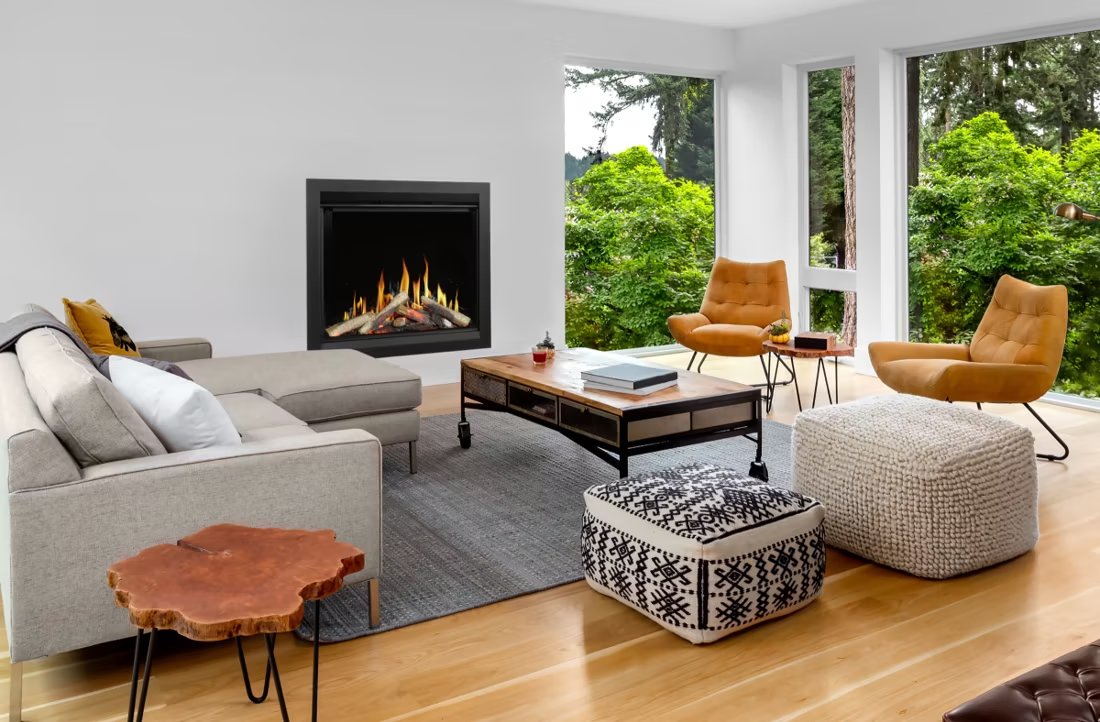
That doesn't mean electric fireplaces are pointless in HPP—it means the job changes. Homeowners here install them for the visual warmth of a fire on a rainy Puna evening, as a design feature in a great room, or for the occasional cooler night up in the higher-elevation streets of the subdivision. Hawaii Electric Light Co. (HELCO) serves the area, and at roughly $0.48 per kWh—among the highest residential electricity rates in the country—running a unit hard as a primary heat source would get expensive fast. The upside: most owners here run theirs a few hours a week for the flame effect rather than for heat, so the bill impact stays modest even at Hawaii's rates.
Three steps. No salesperson until you're ready.
Tell us about your project
Your zip code, your situation, and the fuel you're leaning toward—or let the answers point you to one.
See what's actually available
The brands dealers within 100 miles genuinely carry—real options, never a catalog mirage.
Get your dealer & Project Guide
A trusted local dealer, plus the free Project Guide & Parts List that names every component of the job.
Frequently Asked Questions
How much does an electric fireplace installation cost in Hawaiian Paradise Park?
Costs vary widely by type. A plug-in freestanding or mantel-style electric fireplace runs $300 to $1,200 and needs nothing more than a standard outlet—many homeowners handle the setup themselves. A built-in wall unit or electric insert with a custom surround, recessed mounting, and a dedicated 20-amp circuit typically lands between $1,500 and $3,500 once an electrician is involved. Because there's no gas line, no chimney, and no combustion venting to engineer, electric installs in HPP are consistently the least expensive and fastest fireplace projects a local dealer will quote.
Do I need a permit to install an electric fireplace in Hawaiian Paradise Park?
Usually not for the fireplace itself—a plug-in or factory-built electric unit isn't a combustion appliance, so it falls outside the building and mechanical permit rules that apply to wood or gas installs. If your project involves adding a new dedicated circuit or panel work, that electrical work typically does require a permit through the County of Hawai'i, and it should be pulled by a licensed electrician regardless. A reputable local dealer will tell you upfront whether your specific installation crosses that line.
Why don't you recommend wood stoves for Hawaiian Paradise Park?
Wood heat depends on cold weather to do its job, and HPP doesn't have any—winter lows average 61°F and the area sees essentially no need for heating all year. Species like ohia and koa grow all over the district, but locally they're prized for furniture, carving, and construction lumber, not firewood, and eucalyptus is more often cut for landscaping than for a woodpile. A wood stove would sit unused nearly year-round in this climate, so we list wood as not applicable rather than pretend it's a realistic option here.
Can I get a gas fireplace instead of electric?
You can, but it's uncommon. Hawaiian Paradise Park isn't served by piped natural gas, so a gas fireplace here means a propane system—a tank, regulated line, and vented or direct-vent unit. A small number of custom homes on the island install propane fireplaces for the flame realism, but given the climate and the added cost of tank service and gas-line work, most Puna homeowners choose electric instead and get a comparable visual effect for a fraction of the installation cost.
What's the best type of electric fireplace for a humid coastal climate like this?
Look for units with sealed electronics and a housing rated for humid environments—Puna's salt air and moisture can be hard on cheaper components over time. Wall-mounted and built-in electric fireplaces with metal or composite surrounds hold up better than particleboard mantel packages. Since there's no chimney or vent pipe to worry about corroding, the main thing a local dealer will steer you toward is a unit with a good enclosure and a heater element you can disable entirely—since most owners here run these for the flame, not the heat.
How much does it cost to run an electric fireplace in Hawaiian Paradise Park?
At HELCO's residential rate of about $0.4831 per kWh, running a 1,500-watt heater element continuously would cost around $0.72 per hour—expensive if you used it like a furnace. But most HPP homeowners run their unit in flame-only mode (typically under 100 watts) for ambiance, which costs pennies per hour. If you do want supplemental heat on a cool evening, running the heater a couple hours at a time rather than all day keeps the impact on your bill minor despite the high per-kWh rate.
Will my electric fireplace work if the power goes out?
No—electric fireplaces need grid or battery power to operate, so an outage takes it offline along with everything else in the house. This is worth thinking through in HPP, an area that's experienced real grid disruptions in the past, including extended outages during the 2018 Kilauea eruption in lower Puna. A number of homeowners here already run solar with battery storage for exactly this reason; if backup heat or backup ambiance matters to you, ask your local dealer whether your electric fireplace can run off an existing battery system or inverter.
Does it ever get cold enough in Hawaiian Paradise Park to actually need the heat?
Rarely, and only at the margins. HPP averages a winter low around 61°F, and the upper, higher-elevation streets of the subdivision plus trade-wind-exposed lots can feel noticeably cooler on a rainy night. For those occasions, an electric fireplace with a real heater element (1,000 to 1,500 watts) can take the chill off a single room. It's genuinely supplemental heat for a handful of evenings a year, not a system sized to carry a house through winter.
Electric fireplace vs. a real wood-burning look—what am I giving up?
You give up the crackle, the wood scent, and true radiant heat. What you get in exchange fits HPP well: no chimney to maintain in a humid, salt-air environment, no combustion byproducts, no firewood sourcing (which would mean shipping cordwood to an island with no real commercial firewood supply), and a flame effect you can run without heat at all during the warmer months. For a climate where the fire is mostly there to be looked at, modern LED and mist-based electric flame technology gets close enough that most guests don't look twice.
Does an electric fireplace need a vent or chimney?
No—that's its superpower. An electric fireplace needs a wall and an outlet, period. No vent pipe, no gas line, no clearances to design around, which is why it works in bedrooms, offices, apartments, and walls where venting a gas or wood unit would be impractical or impossible. Installation is typically the simplest and least expensive of any fireplace type.
Can I put a TV above my fireplace?
Yes—with an asterisk. Fireplaces are hot and TVs don't like heat. Either put a mantel between them to deflect rising warmth, or choose a fireplace with heat-management technology that creates a cool zone on the wall above—the wall stays around 125 degrees, barely warm, while the room still gets full heat. If you like clean lines and don't want a mantel, heat management is the answer.
Can I install a fireplace myself?
If you're putting a fire in your house on purpose, it's best to work with an expert. Unless you're genuinely experienced in framing, gas line, vent pipe, and the national code on clearances to combustibles, have a professional do it—and ideally the same company that sells you the fireplace, so warranty, service, and liability all live under one roof.
How much should I budget for a fireplace?
For an average home—covering the fireplace, the vent pipe, and basic installation—a budget between $3,900 and $5,500 gives you a lot of options across wood, gas, and pellet. By the time you add finish work, gas line, and electrical, the average complete installation lands between $5,000 and $12,000 all-in. In a remodel or new build, a good rule is to put about 2.5% of the total project cost toward the fireplace.
Nearby Dealers
Hearth shops serving Hawaiian Paradise Park and the surrounding area. Every listing shows whether it is a WhyFire partner, a dealer we have verified as authorized for the brands we recommend, or a local business carrying hearth products. No manufacturer pays for placement. How we verify dealers →
Fireplace & Home Center
Hawaii Fireplace – Kamuela
Island Pool & Spa Supply
Electric Service in Hawaiian Paradise Park
An electric fireplace's heater draws about 1,500 watts—pennies per hour at local rates.
Hawaii Electric Light Co Inc
Find your electric fireplace in Hawaiian Paradise Park.
Tell us about your space and we'll match you with a trusted local dealer and send over a free Project Guide & Parts List—the right electric unit, mounting or built-in specs, and what it actually takes to get installed.
Find Your Fireplace →