
Pellet stoves are rare in Lake County, but they still show up here.
With a winter low averaging 49°F and only 629 heating degree days a year, Lake County rarely needs supplemental heat—but a small number of homeowners in Tavares, Clermont, Leesburg, Mount Dora, and Eustis still want a pellet stove for backup warmth during a hard freeze or for the ambiance on a screened lanai. We'll help you figure out if it's the right call, and connect you with a real local dealer if it is.
Every Project Starts From One of These Five Situations
A climate that rarely calls for supplemental heat.
Lake County sits in central Florida's citrus country, stretching from Clermont and Mount Dora down through Leesburg and the county seat of Tavares. At climate zone 2A with roughly 629 heating degree days a year, the county has almost no sustained heating season to speak of—compare that to a place like Duluth, MN, which racks up close to 10,000 HDD in a typical winter, or Bozeman, MT, well north of 7,000. Most Lake County winters stay comfortably in the 50s and 60s, with only occasional Arctic outbreaks pushing overnight lows into the 20s and 30s—the kind of events local citrus growers watch closely, since a hard freeze can damage a grove overnight. That's simply not the environment pellet stoves were designed to solve.
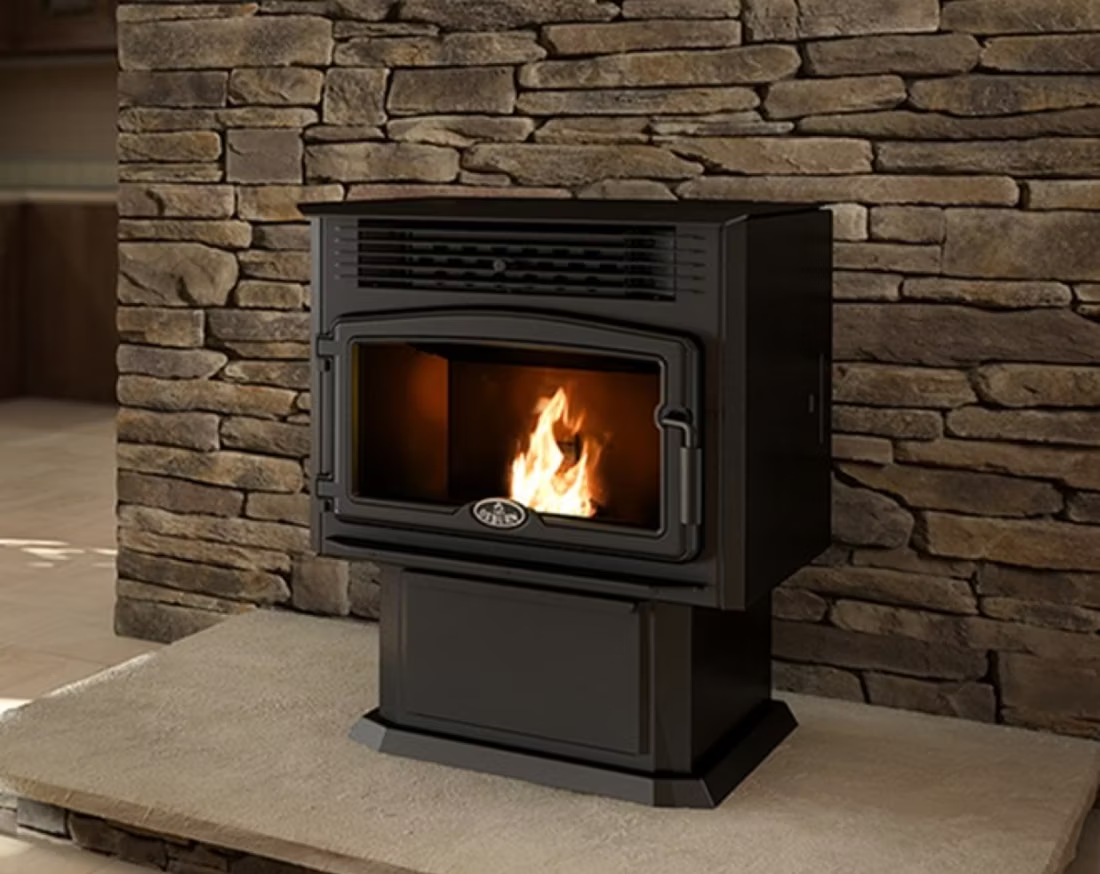
That said, we still get requests. Some come from transplants from Ohio, Wisconsin, or the Northeast who miss the look and feel of a pellet stove and want one for occasional use and nostalgia. Others are rural or acreage homeowners who want a hopper-fed backup heat source for the rare multi-day cold snap. A few are homeowners closing in a screened lanai and want a stove more for atmosphere than BTUs. Pellets themselves aren't hard to find—brands like Lignetics, Hamer Pellet Fuel, and Greenway Renewable Energy move through the broader Florida and Southeast supply chain—but dedicated pellet-stove dealers are thin on the ground in Lake County itself. When we match a homeowner here, it's often with an installer based out of the greater Orlando or Ocala area who covers the county as part of a wider central Florida territory.
Three steps. No salesperson until you're ready.
Tell us about your project
Your zip code, your situation, and the fuel you're leaning toward—or let the answers point you to one.
See what's actually available
The brands dealers within 100 miles genuinely carry—real options, never a catalog mirage.
Get your dealer & Project Guide
A trusted local dealer, plus the free Project Guide & Parts List that names every component of the job.
Frequently Asked Questions
How much does a pellet stove installation cost in Lake County?
Nationally, a pellet stove installation typically runs $3,500 to $6,500 depending on the unit, venting run, and whether a hearth pad is needed for clearance. In Lake County specifically, expect costs to land on the higher end of that range or slightly above, mainly because there are few dedicated pellet-stove dealers based locally—many installs are handled by installers traveling in from the greater Orlando or Ocala market, which can add a trip charge. Given how rarely the fuel gets used here, it's worth getting a firm in-home quote before assuming a number from a national average.
Is a pellet stove actually worth it in a climate like Lake County's?
For most homes here, no—not as a primary heat source. With only about 629 heating degree days a year and winter lows averaging 49°F, Lake County simply doesn't generate the sustained cold that pellet stoves are built to offset. A stove that would run daily for months in a place like Duluth or Fargo might get lit a handful of nights a year here, during the occasional freeze event that also has local citrus growers running wind machines and irrigation to protect their groves. If your goal is genuine supplemental heat for regular use, a gas or electric fireplace is usually the more practical and better-supported choice locally. If your goal is a backup source for rare cold snaps or a specific aesthetic, a pellet stove can still make sense—you just want to go in with realistic expectations.
How does a pellet stove compare to gas or electric options for a Lake County home?
Gas and electric fireplaces are both well-supported, standard options in Lake County, with plenty of local dealers and installers used to servicing them. A pellet stove, by contrast, requires a hopper of fuel, an auger and blower that both run on electricity, and regular ash cleanout—none of which buys you much advantage in a climate that barely dips below 40°F most winters. A gas fireplace gives you instant, adjustable heat with battery-backup ignition options for power outages. An electric insert installs in an afternoon with no venting at all. For most Lake County homeowners weighing the three, gas or electric ends up the more sensible fit; pellet tends to be a choice driven by preference for the fuel itself rather than heating need.
Can I actually buy pellets locally in Lake County?
Yes, though don't expect to find bags stacked at every hardware store the way you might in Minnesota or Wisconsin. Brands like Lignetics, Hamer Pellet Fuel, and Greenway Renewable Energy distribute through the wider Florida and Southeast market, and farm-supply stores or larger home centers in the Orlando and Ocala corridor typically carry them, especially heading into the cooler months. Given the thin local demand, it's smart to buy a season's worth at once rather than plan on picking up pellets on short notice mid-winter.
Who installs pellet stoves in Lake County?
Because pellet-stove demand is low countywide, dedicated installers based inside Lake County are scarce. Most of the qualified dealers who serve Tavares, Clermont, Leesburg, and Eustis for this specific fuel are actually headquartered in the greater Orlando or Ocala metro and treat Lake County as part of a broader central Florida service area. That's fine—what matters is that the installer is certified for venting and clearance work on solid-fuel appliances, not just that they're geographically close. We match homeowners here with dealers who genuinely stock and service pellet units, rather than a general contractor who's installed one or two.
Do I need a permit to install a pellet stove in Lake County?
Yes. Solid-fuel and pellet-burning appliances require a building permit through Lake County's local permitting authority (or the applicable city building department if you're inside Clermont, Mount Dora, Leesburg, or another incorporated city), covering the appliance installation and vent termination clearances. Because these installs are uncommon here, it's worth confirming with your installer that they've pulled a permit for this specific appliance type before, rather than assuming the process is identical to a gas fireplace permit.
What's a realistic reason someone in Lake County would want a pellet stove?
The requests we see tend to fall into a few categories: homeowners who relocated from a colder state and want the familiar hopper-and-auger routine even though they rarely need the heat; rural or acreage properties wanting a backup heat source for the occasional hard freeze that also threatens local citrus groves; and homeowners finishing a screened lanai or bonus room who want the visual and ambiance more than the BTUs. None of these is unreasonable—they're just a different use case than the primary-heat role pellet stoves play in colder parts of the country.
Pellet stove vs. wood stove—does either make sense in Lake County?
Both are unusual choices here, for the same underlying reason: with 629 heating degree days and winter lows averaging 49°F, there's little sustained demand for either. That said, if you're set on one, pellet stoves tend to be more practical for a Florida property—no cutting, splitting, or storing cordwood from local oak, mahogany, or pine, less ash, and a cleaner burn. Wood heat here is more about tradition or off-grid backup than efficiency. If convenience matters at all, pellet edges out wood for the rare Lake County household that wants a solid-fuel appliance.
Will a pellet stove work as backup heat during a power outage?
Not reliably on its own—the auger and blower that feed and distribute a pellet stove's fire both run on electricity, so a standard unit goes cold the moment the power does. In Lake County, most multi-day power outages come from hurricanes in warm months, not winter storms, so pairing a pellet stove with a battery backup or generator matters more here for storm season than for cold-weather backup. If your main concern is winter reliability during a rare freeze, a battery-ignition gas fireplace or a simple electric space heater is usually a more dependable backup than a pellet stove in this climate.
Why is a fireplace insert so efficient?
An insert does two things: it seals the chimney completely, so you stop losing air you already paid to heat, and it radiates warmth into the room through the firebox and glass. Most add a heat-exchange fan that pulls cool room air underneath, wraps it around the hot firebox, and pushes it back out warm. Your home is more efficient before you've even lit the first fire.
Why is my open fireplace making my house colder?
Open fireplaces suck—literally. As the fire burns, it consumes air your furnace already paid to heat and pulls it out through the chimney, so the house is actually colder after the fire goes out than before you lit it. An insert fixes this: it seals the chimney, puts fixed glass across the front, and turns that hole in your house into a real heat source.
Does a fireplace add value to my home?
On average, a fireplace adds back to the home about the same amount you spent installing it. Add the monthly savings from heating the rooms you actually use instead of the whole house—often hundreds of dollars a year—and the value case is strong before you even count what a fire does for how your family uses the room.
Can a fireplace actually lower my heating bill?
Yes—by creating a comfort zone. A furnace heats every square foot of the house just to warm the one room you're in; a gas fireplace on low burns roughly a sixth of the gas a typical furnace does. Set the furnace around 55–60 degrees as a baseline, then heat the rooms your family actually uses. Families who heat this way commonly save $20–$60 a month.
Stove and Fireplace Dealers in Lake County
Pellet Brands Stocked Around Lake County
Manufacturers will point you to the nearest stocking dealer.
See if a pellet stove makes sense for your Lake County home.
Tell us about your home, your reason for wanting a pellet stove, and where you're located in Lake County. We'll give you an honest read on whether pellet is the right fuel for your situation, and if it is, match you with a trusted local dealer and a free Project Guide & Parts List—the exact parts, including the vent kit, for your specific install.
Find Your Fireplace →