
A Rare Fit for Central Florida's Mild Winters.
With only about 923 heating degree days a year, Eustis rarely calls for supplemental heat. If you still want a pellet stove for ambiance, a second home up north, or genuine backup warmth, we'll connect you with a local dealer who tells you honestly what's realistic.
Every Project Starts From One of These Five Situations
Eustis rarely needs supplemental heat, and pellet stoves reflect that reality.
Eustis sits in Lake County at just 80 feet of elevation, in climate zone 2A, where the average winter low hovers around 46 degrees Fahrenheit. The city logs roughly 923 heating degree days a year—compare that to a place like Duluth, Minnesota, which racks up close to 10,000, and it's clear why pellet stoves never became part of the local building vocabulary. Most homes across the 32726, 32736, and 32727 zip codes are built around air conditioning, not heat retention, and a fireplace here is more often a design feature than a heating necessity.
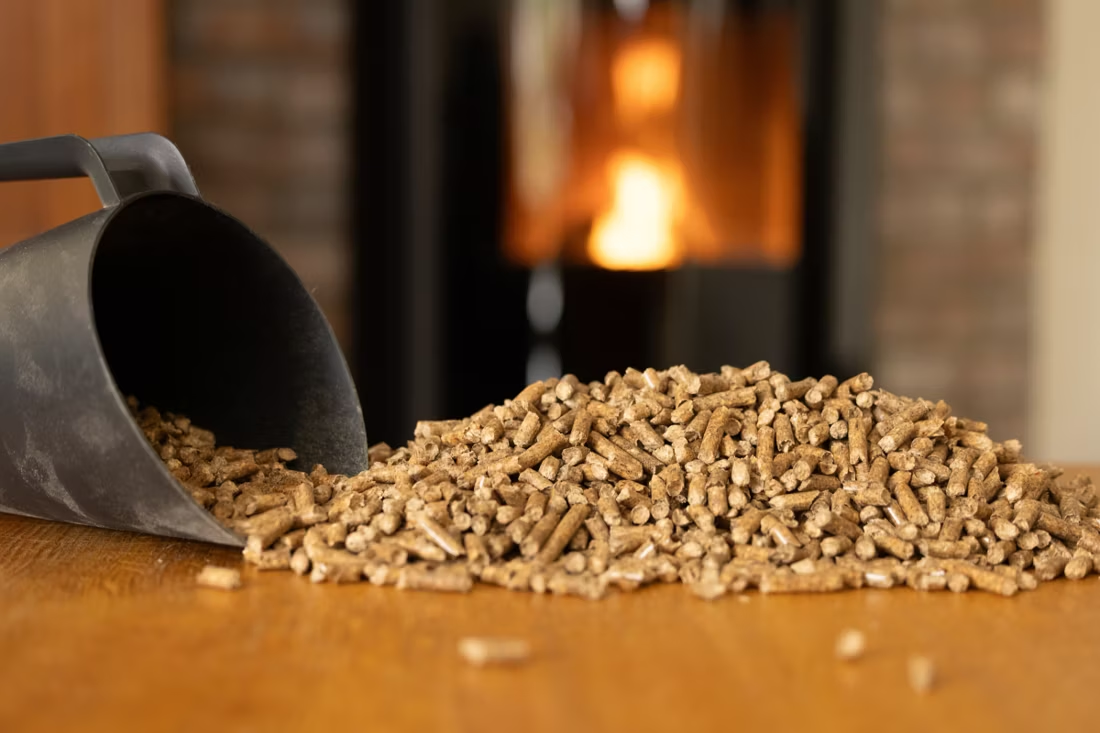
That said, pellet stoves aren't nonexistent in Central Florida. A handful of Eustis homeowners install a small pellet insert or freestanding unit for the ambiance of a real flame, for a lake house or family cabin up north, or as a hedge against the occasional hard freeze that still rolls through Lake County's citrus groves every decade or so. Regional pellet suppliers like Lignetics, Hamer Pellet Fuel, and Greenway Renewable Energy serve pockets of demand across the Southeast, so fuel is available if you go this route—it's just a smaller, more deliberate purchase here than it would be in a heating-dominant climate.
Three steps. No salesperson until you're ready.
Tell us about your project
Your zip code, your situation, and the fuel you're leaning toward—or let the answers point you to one.
See what's actually available
The brands dealers within 100 miles genuinely carry—real options, never a catalog mirage.
Get your dealer & Project Guide
A trusted local dealer, plus the free Project Guide & Parts List that names every component of the job.
Frequently Asked Questions
Do pellet stoves make sense for a home in Eustis?
For most Eustis homes, not really—and we'll tell you that straight rather than sell you a stove you don't need. With an average winter low around 46°F and roughly 923 heating degree days a year, Lake County homes just don't carry enough cold to justify a pellet stove as a primary or even reliable secondary heat source. Where it does make sense is narrower: homeowners who want the look and feel of a real flame, people heating a detached workshop or Florida room during the occasional cold snap, or families splitting time between Eustis and a colder second home. If that's you, a local dealer can size a small unit appropriately rather than talk you into more stove than the climate will ever ask you to use.
How much does a pellet stove installation cost in Eustis?
Costs run similarly to what you'd see anywhere else in the country—the stove itself, venting, and a hearth pad if you don't already have masonry to work with. Because pellet demand is low here, fewer dealers stock pellet units on the showroom floor compared to gas or electric, so expect the installer to special-order the unit and venting kit rather than pull one off the shelf. Get a firm, in-home quote before committing; a local dealer matched through our Project Guide & Parts List will spell out the parts and labor rather than leave you guessing.
Where can I buy pellet fuel in Eustis?
Pellet fuel isn't stocked on every corner the way it would be in Minnesota or Michigan, since so few Lake County homes burn it regularly. Regional brands like Lignetics, Hamer Pellet Fuel, and Greenway Renewable Energy distribute across the Southeast and can typically be special-ordered through farm supply stores or your installing dealer, sometimes by the pallet rather than the single bag. If you go the pellet route, plan to buy a season's supply at once rather than count on walking into a local hardware store mid-winter.
Should I get a pellet stove or a gas fireplace in Eustis instead?
For nearly all Eustis homes, gas is the more practical choice. Natural gas and propane fireplaces are common in this part of Lake County, install cleanly into new construction or existing masonry, and don't require you to store and haul fuel for a climate that rarely needs it. Pellet stoves earn their keep in places with long, hard winters where the labor of loading a hopper pays for itself in fuel savings; in Eustis, where heating season might amount to a few dozen chilly evenings, gas or electric heat generally makes more sense unless you specifically want the pellet-fire experience.
Do I need a permit to install a pellet stove in Eustis?
Yes—any new hearth appliance, pellet included, typically requires a building permit through Lake County's permitting office, and mechanical or electrical work may need its own sign-off depending on the install. Because pellet installs are uncommon here, it's worth confirming with your contractor that they've pulled this specific type of permit before locally, rather than assuming it's routine paperwork for them.
What size pellet stove do I actually need in Eustis?
Smaller than you'd guess from national sizing charts, which are built around northern heating loads. Most Eustis installs that do move forward are compact units meant for a single room, a Florida room, or supplemental warmth on the handful of nights each winter that dip into the 30s. A unit sized for a 2,000-square-foot home in a place like Bozeman, Montana would be wildly oversized here—a local dealer can help you avoid buying more stove than the climate will ever demand.
Will a pellet stove work during a power outage or hard freeze in Eustis?
This is worth knowing up front: pellet stoves require electricity to run the auger that feeds fuel and the blower that distributes heat, so they shut down in a power outage just like your air conditioning does. During the rare hard freezes that hit Lake County's citrus-growing areas, that's the exact moment a pellet stove would go dark. If backup heat during outages matters to you, a wood-burning option or a battery-backed gas unit is more dependable than pellet.
What electric heating options make sense in Eustis instead of pellet?
Given how mild winters are here, many Eustis homeowners skip solid-fuel appliances entirely and use an electric fireplace or heat pump for the occasional cold snap. Rates vary by provider—Duke Energy Florida customers pay around 16.6 cents per kWh, Sumter Electric Cooperative members around 13.1 cents, and City of Leesburg utility customers around 12.9 cents—so the running cost of electric heat is modest for the small number of hours a year it's actually needed. Electric units also install in an afternoon with no venting or fuel storage, which fits a climate where heating is occasional rather than constant.
Pellet vs. wood vs. gas—what actually fits an Eustis home?
Wood and pellet both struggle to justify themselves in Lake County's climate—with local oak, mahogany, and pine mostly staying in the yard rather than the wood pile, and winters too short to make either fuel's labor worthwhile for most households. Gas and electric fireplaces are the standard choice locally because they deliver ambiance on demand without fuel storage, and they scale down easily for a climate where heat is wanted more than needed. If you still want a pellet stove specifically for the flame or for use at a colder second property, that's a reasonable and achievable project—it's just a deliberate choice here, not the default one.
What's the difference between an insert and a zero-clearance fireplace?
An insert is a fireplace that slides into a pre-existing wood-burning fireplace—if you don't have one, there's nothing to insert it into. A zero-clearance fireplace is built into a framed wall, which makes it the answer for remodels and new construction. Simple test: existing masonry fireplace means insert; blank or framed wall means zero-clearance.
Why is my open fireplace making my house colder?
Open fireplaces suck—literally. As the fire burns, it consumes air your furnace already paid to heat and pulls it out through the chimney, so the house is actually colder after the fire goes out than before you lit it. An insert fixes this: it seals the chimney, puts fixed glass across the front, and turns that hole in your house into a real heat source.
How much should I budget for a fireplace?
For an average home—covering the fireplace, the vent pipe, and basic installation—a budget between $3,900 and $5,500 gives you a lot of options across wood, gas, and pellet. By the time you add finish work, gas line, and electrical, the average complete installation lands between $5,000 and $12,000 all-in. In a remodel or new build, a good rule is to put about 2.5% of the total project cost toward the fireplace.
What is an in-home preview and do I need one?
It's a visit where a hearth professional measures your space, confirms the model you picked actually works in your home, and walks the specs—framing, gas line, venting, finish work—before anything is ordered. Some details you just can't know until you see the house. Never make a down payment without one; it's the single most-skipped step that burns buyers.
Nearby Dealers
Hearth shops serving Eustis and the surrounding area.
Pellet Brands Stocked Around Eustis
Manufacturers will point you to the nearest stocking dealer.
Find your pellet stove option in Eustis.
Tell us about your home and your reasons for wanting a pellet stove, and we'll match you with a trusted local dealer and send over a free Project Guide & Parts List—an honest plan with the exact parts, including the vent kit, for your Eustis project.
Find Your Fireplace →