
Find the right fireplace for your Lake County home.
With a 49°F average winter low and only about 629 heating degree days a year, Lake County homes lean on gas and electric fireplaces for ambiance and the occasional cold snap—not wood heat. We'll connect you with a trusted local dealer serving Clermont, Leesburg, Mount Dora, Eustis, Tavares, and the rest of the county.
Every Project Starts From One of These Five Situations
Ambiance-first heating in Central Florida's lake country.
Lake County sits in climate zone 2A with a mild 49°F average winter low and roughly 629 heating degree days per year—a fraction of what a place like Duluth, Minnesota logs before Thanksgiving. That reality shapes what actually gets installed here: wood stoves and pellet stoves, common in cold-climate counties, are genuinely uncommon in Lake County. A handful of homeowners with older masonry fireplaces still burn oak or pine on the rare 30-degree night, but new wood or pellet installations are the exception, not the rule. Gas fireplaces and electric units, by contrast, are the standard choice—valued for ambiance, resale appeal, and the convenience of instant on/off heat during the county's short cool season, roughly December through February.
What you'll find on this hub: hearth retailers, service technicians, and fuel suppliers serving communities across the county—Clermont, Leesburg, Mount Dora, Eustis, Tavares, Groveland, Mascotte, Minneola, and Fruitland Park among them. Pick your fuel below to drill into specifics—local dealers, installation costs, and recommended units. If you're set on wood or pellet despite the climate, we'll point you to dealers who can talk through what that actually looks like in a county built for gas and electric.
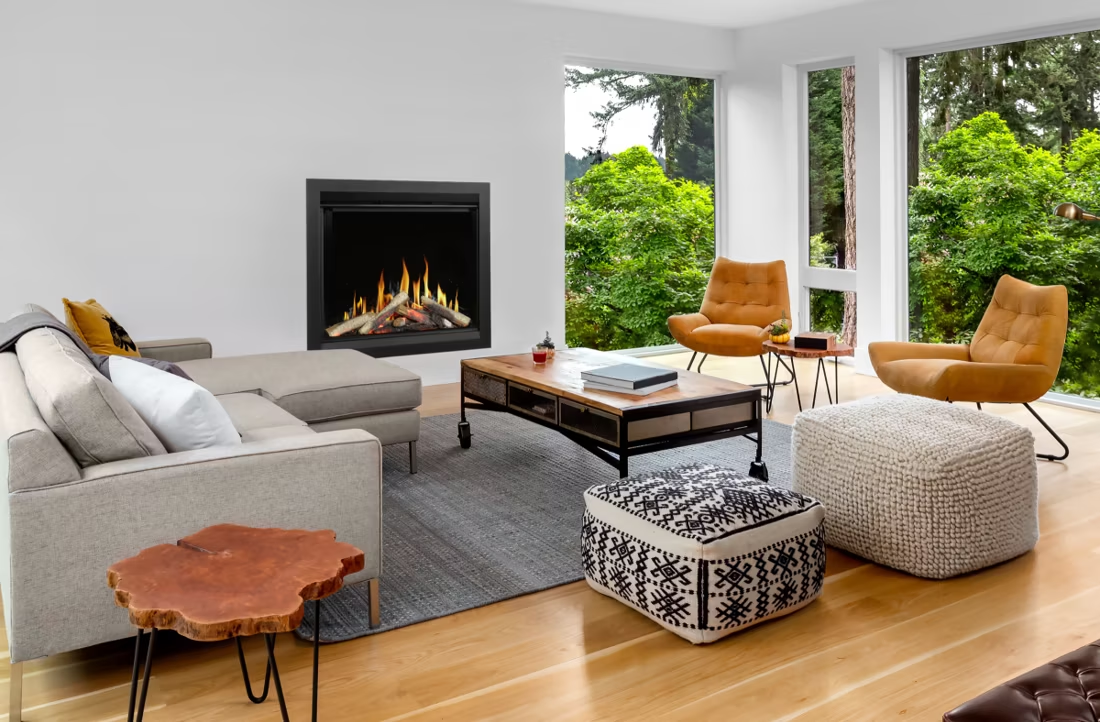
Four fuels. One honest answer for Lake County.
Three steps. No salesperson until you're ready.
Tell us about your project
Your zip code, your situation, and the fuel you're leaning toward—or let the answers point you to one.
See what's actually available
The brands dealers within 100 miles genuinely carry—real options, never a catalog mirage.
Get your dealer & Project Guide
A trusted local dealer, plus the free Project Guide & Parts List that names every component of the job.
Frequently Asked Questions
Which fuel works best in Lake County?
Gas and electric, by a wide margin. With only about 629 heating degree days a year and a 49°F average winter low, Lake County simply doesn't see the sustained cold that makes wood or pellet stoves practical the way they are in a place like Bozeman, Montana. Gas fireplaces (propane in most areas outside city cores, natural gas where it's run) give homeowners instant ambiance and occasional-use warmth without the upkeep of a woodpile or hopper. Electric fireplaces are popular for the same reason plus easy installation—many are plug-and-play, no venting required. Wood stoves aren't unheard of, especially in older Mount Dora or Eustis homes with existing masonry fireplaces, but they're installed for aesthetics and nostalgia, not primary heat. Pellet stoves are essentially absent as a heating appliance here, though pellet fuel itself is sold locally for smokers and grills.
Do I need a permit to install a fireplace in Lake County?
Usually, yes—the details depend on the fuel. Gas fireplace, insert, or stove installations typically require a building permit plus a licensed gas contractor for any new gas line work, whether the fuel is propane or natural gas. Electric fireplaces are often permit-exempt for freestanding, plug-in units, but a built-in electric fireplace that requires new wiring or a dedicated circuit needs an electrical permit. Whether your project falls under city jurisdiction (Clermont, Leesburg, Mount Dora, etc.) or unincorporated Lake County depends on your address—your local building department can confirm which office issues the permit. Because wood and pellet installs are rare here, few local retailers have dedicated experience with those permit paths, so ask directly if that's your plan.
Are there air quality restrictions on burning in Lake County?
No—Lake County has no wood-burning air quality advisories, curtailment periods, or non-attainment designations, unlike wintertime-inversion-prone basins in the Mountain West or wildfire-smoke regions of the Pacific Northwest. Florida's humidity and lack of persistent winter inversions mean smoke doesn't accumulate the same way. That said, because wood-burning appliances are uncommon here to begin with, most local code enforcement and permitting attention goes toward gas line safety and electrical work rather than emissions.
Can one local hearth retailer handle all four fuel types?
Not typically, and that's expected given Lake County's climate. Most retailers here carry gas and electric fireplaces as their core business, with showroom displays built around those two fuels. A few also stock a limited wood-burning line for customers restoring older homes or wanting a traditional look, but pellet stoves are rarely stocked at all—demand simply isn't there in a 2A climate zone with under 700 heating degree days. If you want to compare gas against electric side by side, most retailers can do that in one visit. If you specifically want wood or pellet, expect a smaller selection and possibly a special order.
How does fireplace service work in the smaller towns around Lake County?
Technicians based around Clermont, Leesburg, and Mount Dora travel out to smaller communities like Astatula, Yalaha, Paisley, and Lady Lake for service calls, usually with a modest trip fee for the farther stretches. Gas fireplace inspections and pilot/igniter service make up the bulk of these calls, along with electric fireplace troubleshooting. Because wood chimney sweeps are few and far between in Lake County, homeowners with legacy masonry wood fireplaces in older Eustis or Mount Dora homes may need to book further ahead or look slightly outside the county for a specialist.
What's the typical cost range for fireplace installation across fuel types in Lake County?
Gas fireplace, insert, or stove: roughly $3,500–$8,500 depending on whether it's a straightforward propane hookup or requires new gas line routing. Electric fireplace: $200–$2,800 for the unit itself, with $300–$1,000 in labor for anything beyond a plug-in install, such as a built-in wall unit with new wiring. Wood stove or insert: expect $5,000–$10,000+ if you pursue one, often on the higher end because fewer local installers specialize in the masonry and venting work involved. Pellet stove installs are rare enough in Lake County that pricing varies widely and may require sourcing a unit and installer from outside the immediate area.
Can I install a fireplace myself?
If you're putting a fire in your house on purpose, it's best to work with an expert. Unless you're genuinely experienced in framing, gas line, vent pipe, and the national code on clearances to combustibles, have a professional do it—and ideally the same company that sells you the fireplace, so warranty, service, and liability all live under one roof.
Can a fireplace actually lower my heating bill?
Yes—by creating a comfort zone. A furnace heats every square foot of the house just to warm the one room you're in; a gas fireplace on low burns roughly a sixth of the gas a typical furnace does. Set the furnace around 55–60 degrees as a baseline, then heat the rooms your family actually uses. Families who heat this way commonly save $20–$60 a month.
How much should I budget for a fireplace?
For an average home—covering the fireplace, the vent pipe, and basic installation—a budget between $3,900 and $5,500 gives you a lot of options across wood, gas, and pellet. By the time you add finish work, gas line, and electrical, the average complete installation lands between $5,000 and $12,000 all-in. In a remodel or new build, a good rule is to put about 2.5% of the total project cost toward the fireplace.
Wood, gas, pellet, or electric—how do I choose?
Match the fuel to your life, not the other way around. Wood: lowest fuel cost and total power-outage independence, but you're hauling and stacking. Gas: press a button, set a thermostat, no maintenance to speak of. Pellet: wood economics with automatic feeding, in exchange for weekly cleaning and a need for electricity. Electric: plugs in anywhere with honest supplemental heat. Nobody regrets the fuel that fits how they actually live.
Stove and Fireplace Dealers in Lake County
Listings include WhyFire partner dealers, dealers we have verified as authorized for the brands we recommend, and established local businesses that carry hearth products. Every listing shows which one it is. The ones marked Preferred run on WhyFire's software, so they can show you real pricing and book your appointment right here. No manufacturer pays for placement. How we verify dealers →
Premium Outdoor Products
Orlando Outdoor Living LLC
Rutherford Equipment, Inc.
Central Florida Fireplaces & Gas Services, Inc.
Get matched with a Lake County dealer for your fireplace project.
Tell us about your home and we'll send a free Project Guide & Parts List—the exact parts your project needs, including venting, plus our recommended local dealer serving Lake County.
Find Your Fireplace →