
Keep Your Family Warm and Safe—No Matter What
Lake County's 629 annual heating degree days and 49°F average winter low mean almost no home needs wood heat to get through winter. For the homeowners who still want a real fire in Clermont, Mount Dora, Leesburg, or along the lakes, here's what actually makes sense.
Every Project Starts From One of These Five Situations
Lake County rarely needs the heat—but some homeowners still want the fire.
Lake County sits in climate zone 2A, with roughly 950 lakes scattered between Clermont, Leesburg, Eustis, Tavares, and Mount Dora, and a winter low that averages just 49°F. Compare that to a place like Duluth, Minnesota, which logs over 9,000 heating degree days a year—Lake County logs 629. Freezing nights are rare enough that citrus growers used to run smudge pots for a handful of cold snaps a winter, not a whole season. For nearly every home here, a wood stove or wood fireplace isn't solving a heating problem; central air handlers and heat pumps already do that job year-round.
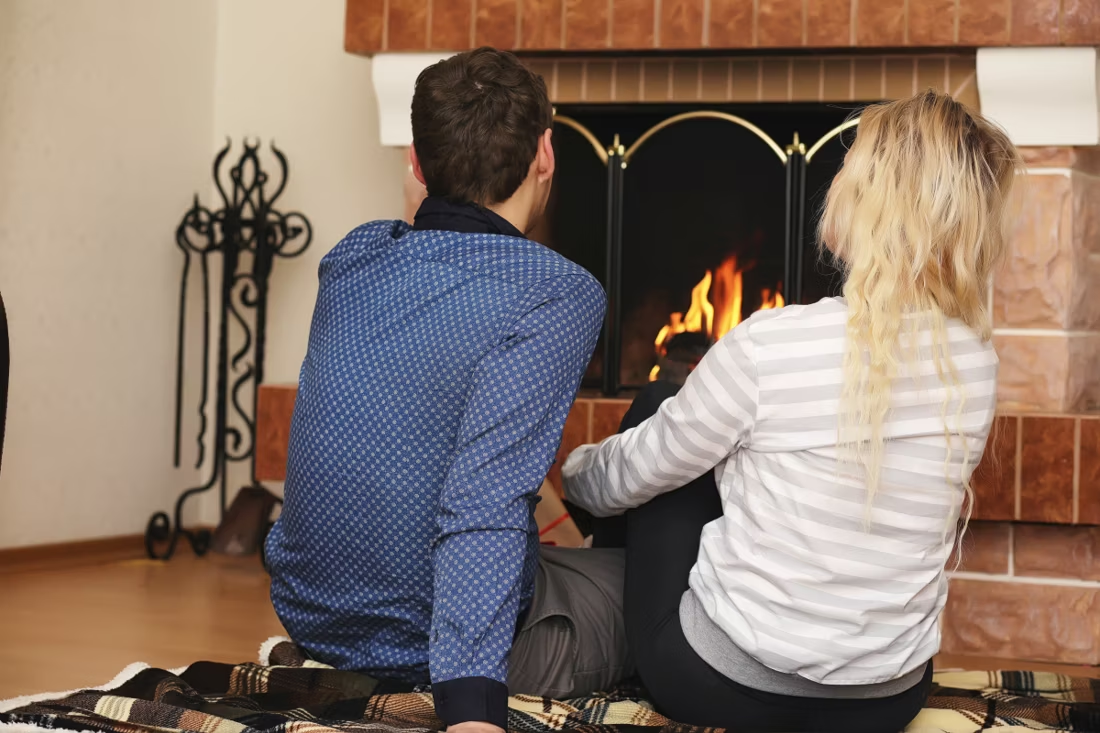
That said, a small number of Lake County homeowners still want a wood-burning fireplace—often in older homes around Mount Dora's historic district, on lakefront properties where a fire on a cool evening is part of the appeal, or in vacation and second homes where the owner is used to wood heat elsewhere. Local oak and pine are readily available as firewood, and there are no air quality restrictions or burn bans in the county to work around. If you're one of the homeowners who wants the real thing—the crackle, the smell, the look—it's absolutely possible here. It's just a lifestyle choice rather than a heating necessity, and that changes what kind of unit and installer make sense.
Three steps. No salesperson until you're ready.
Tell us about your project
Your zip code, your situation, and the fuel you're leaning toward—or let the answers point you to one.
See what's actually available
The brands dealers within 100 miles genuinely carry—real options, never a catalog mirage.
Get your dealer & Project Guide
A trusted local dealer, plus the free Project Guide & Parts List that names every component of the job.
Frequently Asked Questions
How much does a wood-burning fireplace installation cost in Lake County?
Because wood-burning installs are uncommon in central Florida, expect a wider quote range than you'd see in a cold-climate market—typically $3,500 to $8,000 for a factory-built, zero-clearance wood fireplace with insulated Class A chimney pipe run through the roof. Retrofitting into a slab-on-grade home without an existing chase adds framing and roof penetration costs on the higher end. Since few Lake County dealers specialize in wood units specifically, it's worth getting quotes from both local hearth retailers and installers who also serve the Orlando metro area.
Why don't more homes in Lake County have wood heat?
Lake County's climate simply doesn't demand it. At 629 heating degree days a year and a 49°F average winter low, most homes never see a hard freeze, let alone the sustained cold that makes wood heat practical elsewhere. Central heat pumps handle the handful of chilly nights per winter without any trouble. Wood-burning appliances here function as a design and lifestyle feature rather than a heating strategy—which is a different sales conversation, and a different set of dealers, than you'd find in a place like Bismarck or Burlington.
What kind of wood-burning unit makes sense for occasional, ambiance-driven use?
A factory-built, zero-clearance wood fireplace is usually the better fit than a freestanding wood stove for Lake County homes. Stoves are built to hold and radiate heat for hours, which is exactly what you don't want in a well-insulated Florida home on one of the handful of nights a year it's actually cold enough to want a fire—you'll end up opening windows to cool the room back down. A fireplace with a shorter, more contained burn gives you the visual and the ambiance without turning the living room into a sauna.
Do I need a permit to install a wood fireplace in Lake County?
Yes. Even though wood-burning installations are far less common here than in colder states, Lake County's building department still requires a permit for any new wood-burning appliance, including chimney or chase construction and roof penetration. Most licensed hearth installers include the permit and inspection process in their quote, which is one good reason to work with a dealer who installs these regularly rather than a general contractor unfamiliar with the clearance and venting code for solid-fuel appliances.
How do I store firewood without it rotting or attracting pests in this climate?
Central Florida's humidity is the real challenge for wood-burning here—more than the cold ever is. Oak and pine, the two most commonly available local species, both need to be stacked off the ground on a rack or pallet, covered on top but open on the sides for airflow, and kept away from the house to avoid inviting termites, a serious concern anywhere in Lake County. Wood that sits in ground contact or under a tight tarp in this climate molds and softens within a season rather than seasoning properly, so plan on a covered, elevated storage setup from day one if you're keeping a supply on hand.
Can I add a wood-burning fireplace to a home that doesn't already have a chimney?
Yes, and this is actually the more common scenario in Lake County, since most homes here were built without a chimney or masonry fireplace to begin with—there was never a heating reason to include one. A factory-built wood fireplace with insulated Class A pipe can be added to most homes, typically routed up through an interior chase and out through the roof. It's more construction work than retrofitting an existing masonry opening, which is part of why installs here tend to land toward the higher end of the cost range.
Wood, gas, or electric—which fireplace actually makes sense in Lake County?
For most Lake County homeowners, gas or electric is the more practical choice, and it shows in what local dealers stock and install most often. A gas fireplace or insert gives instant, controllable heat for the rare cool evening without the humidity and pest-management headaches of storing firewood, and an electric unit adds ambiance with zero venting requirements at all. Wood is worth choosing specifically if you want the authentic crackle-and-smell experience, have a lakefront or historic property where it fits the character of the home, or already burn wood at a property elsewhere and want the same experience here. There's no wrong answer—it comes down to what you're actually after.
Does adding a wood-burning fireplace affect my homeowners insurance in Lake County?
It can. Many insurers require notification of a new wood-burning appliance and may request proof of a permitted installation and code-compliant clearances before renewal, and some ask for an inspection or a WETT-style report periodically. Because wood-burning installs are uncommon in this part of Florida, it's worth calling your carrier before installation rather than after—a properly permitted install from a licensed hearth dealer generally satisfies these requirements without issue, but an unpermitted DIY setup can complicate a claim.
I bought an older Mount Dora or Eustis home with an existing wood fireplace—repair it or convert it?
Older homes in Lake County's historic districts, particularly around Mount Dora and Eustis, sometimes come with a masonry wood-burning fireplace already in place. If the chimney and firebox check out structurally, restoring it for occasional wood-burning use is straightforward and preserves the original character of the home. Many owners in this situation choose instead to convert to a gas insert or vented gas log set, which uses the existing chimney but trades firewood handling and Florida humidity concerns for instant, no-maintenance heat—a popular choice given how rarely a fire is actually needed for warmth here.
Why is a fireplace insert so efficient?
An insert does two things: it seals the chimney completely, so you stop losing air you already paid to heat, and it radiates warmth into the room through the firebox and glass. Most add a heat-exchange fan that pulls cool room air underneath, wraps it around the hot firebox, and pushes it back out warm. Your home is more efficient before you've even lit the first fire.
What do I measure to size a fireplace insert?
Four numbers tell you what fits: the front width, the front height, the back width, and the overall depth of your existing fireplace opening. Grab a tape measure, jot those down, and snap a photo of the wall—those two things do more to move your project forward than anything else you can do today.
Can a fireplace actually lower my heating bill?
Yes—by creating a comfort zone. A furnace heats every square foot of the house just to warm the one room you're in; a gas fireplace on low burns roughly a sixth of the gas a typical furnace does. Set the furnace around 55–60 degrees as a baseline, then heat the rooms your family actually uses. Families who heat this way commonly save $20–$60 a month.
What is an in-home preview and do I need one?
It's a visit where a hearth professional measures your space, confirms the model you picked actually works in your home, and walks the specs—framing, gas line, venting, finish work—before anything is ordered. Some details you just can't know until you see the house. Never make a down payment without one; it's the single most-skipped step that burns buyers.
Stove and Fireplace Dealers in Lake County
Find out if a wood fireplace fits your Lake County home.
Tell us about your home and how you'd actually use it, and we'll match you with a trusted local dealer and put together a free Project Guide & Parts List—the exact parts, vent kit, and recommended installer for a wood fireplace project in Lake County, or an honest steer toward gas or electric if that's the better fit.
Find Your Fireplace →